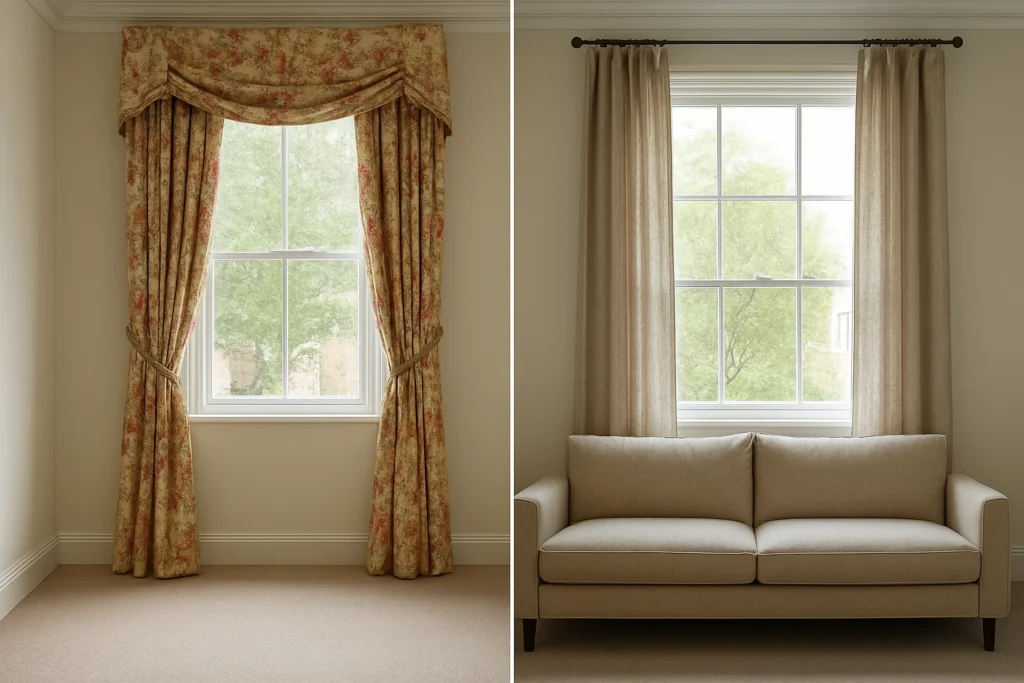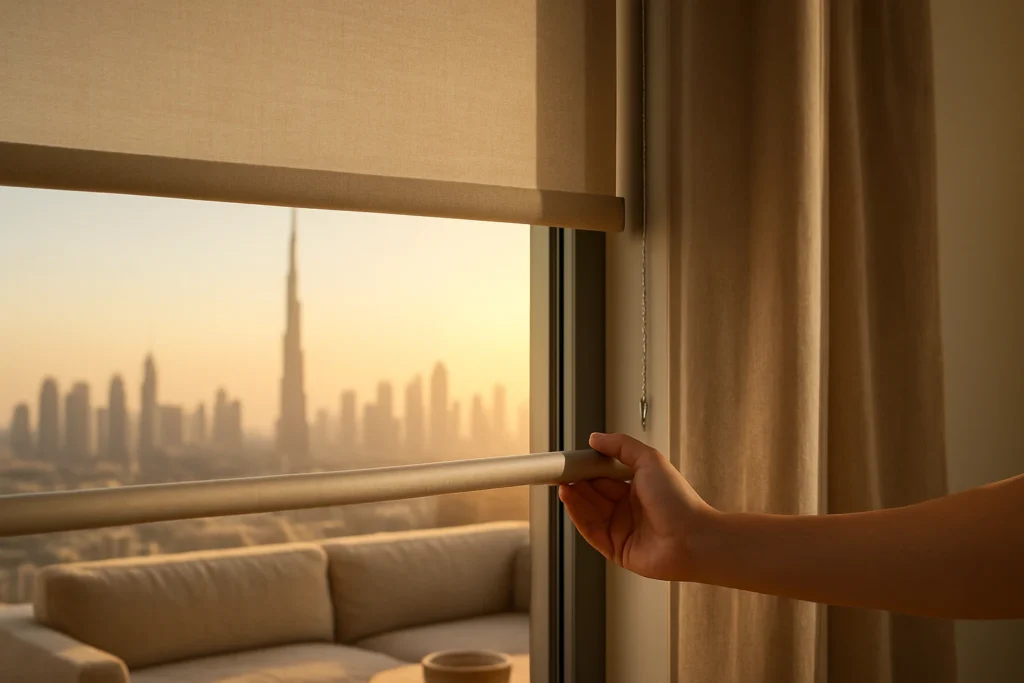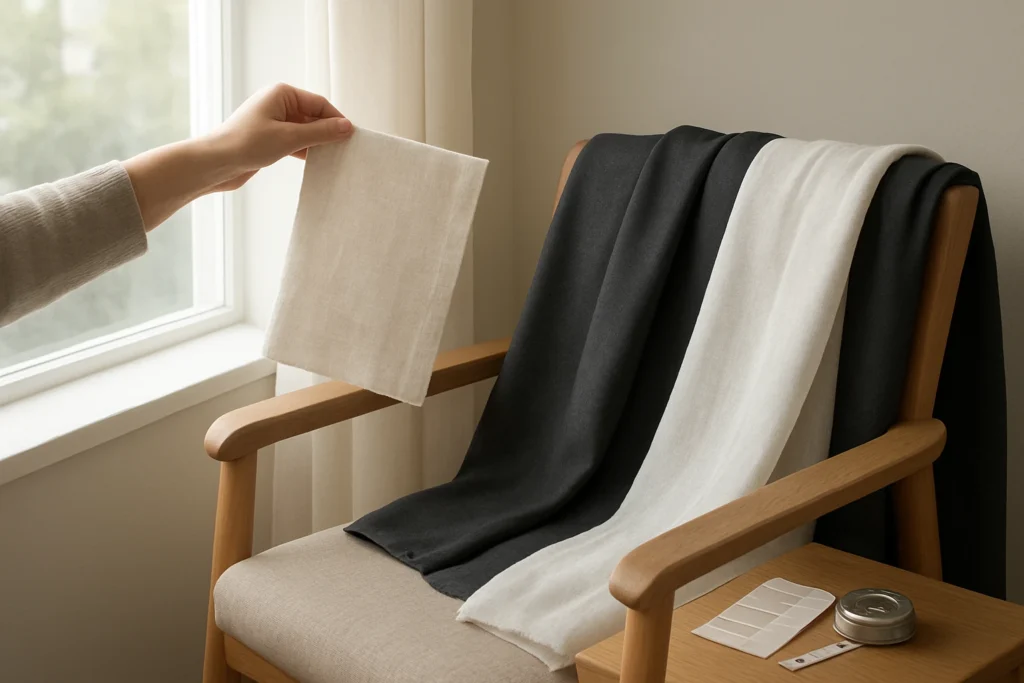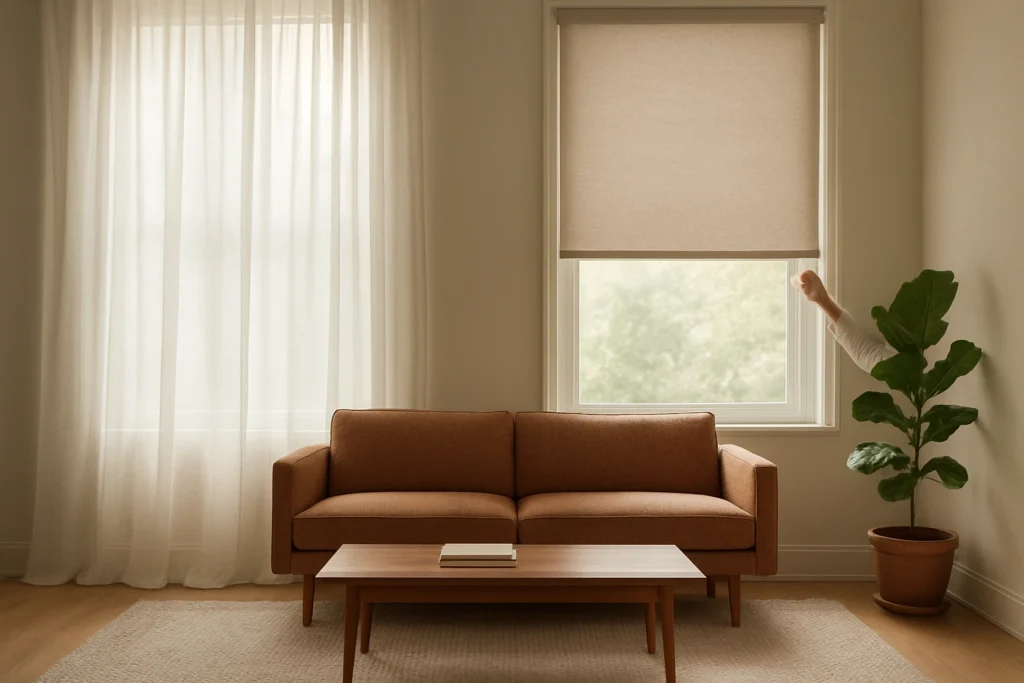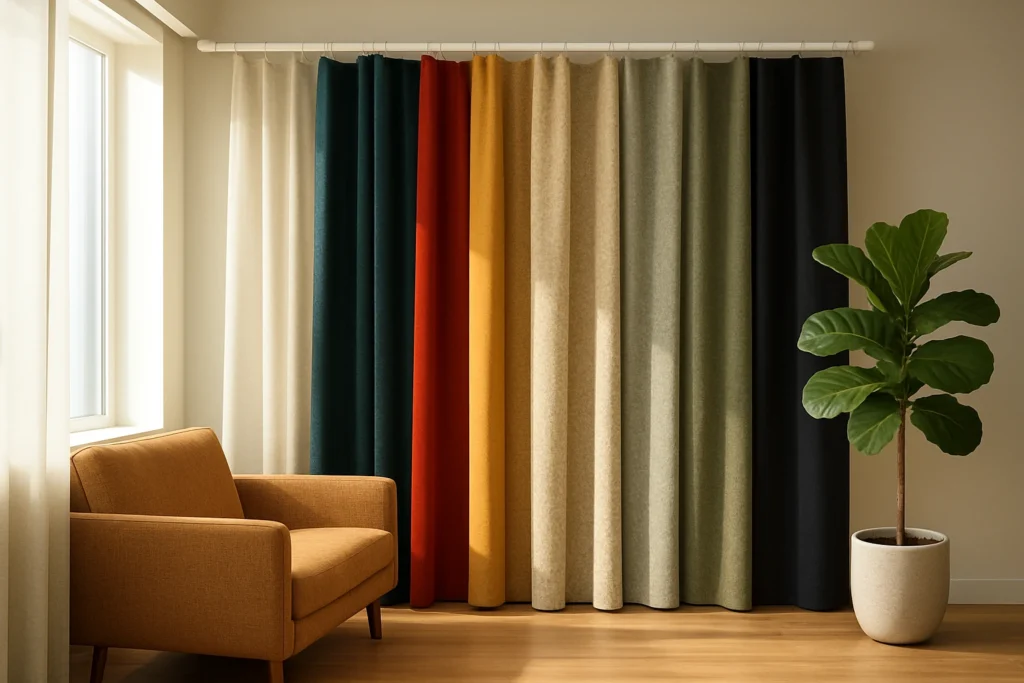
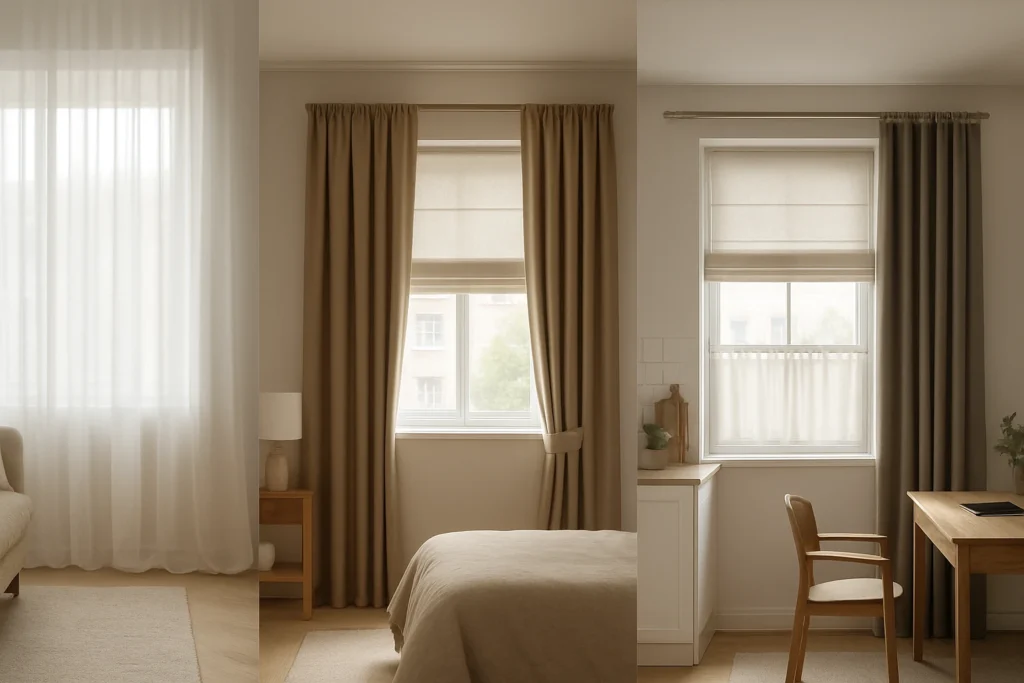
Curtains come in many styles. Each type fits a different room, light level and budget. Choose by fabric, lining and hanging style to get the privacy, insulation and look you want. This article lists 14 curtain types, explains where to use each one and gives practical tips for measuring, hanging and care.
In this guide, Curtains and Blind shows 14 useful curtain types, how each works, and which choices suit different rooms and budgets. Many homeowners find that matching fabric and hanging style makes a window look finished and saves time when measuring and cleaning.
Sheer Curtains
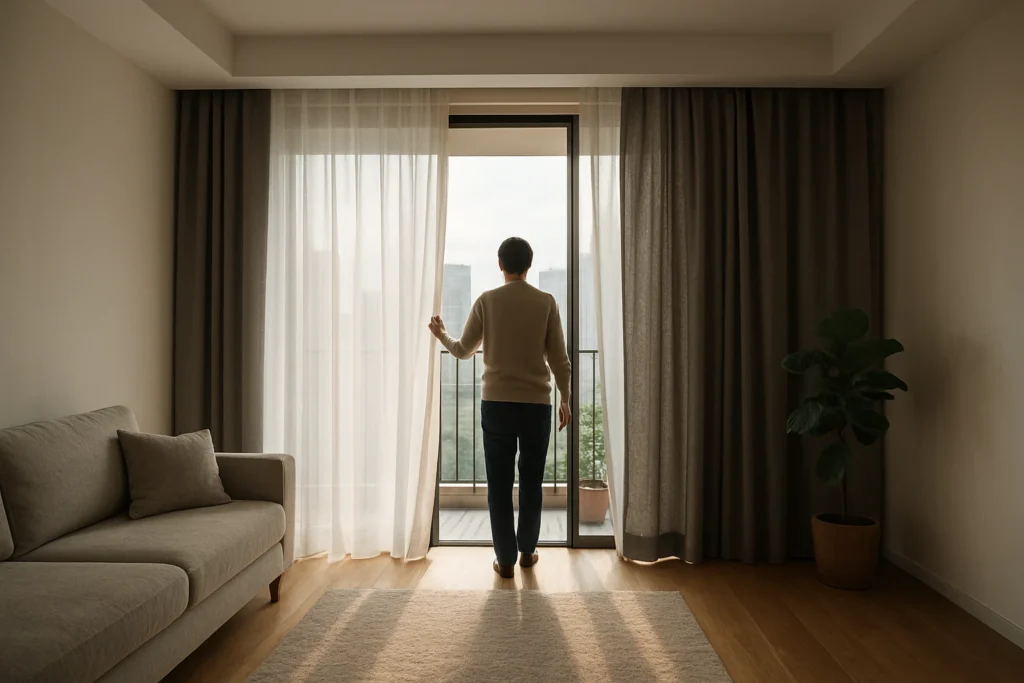
Sheer curtains are light panels that let daylight through while giving gentle privacy. They work well when you want light without full exposure and layer nicely under heavier drapes.

Quick Uses and Tips
Best Rooms:
Living rooms, dining rooms, kitchens where daylight is welcome.
Fabric Choices:
Lightweight voile, linen blends or polyester sheers for low cost and easy care.
Care Tips:
Machine wash on a gentle cycle if the fabric allows. Hang to dry to avoid wrinkles.
Blackout Curtains
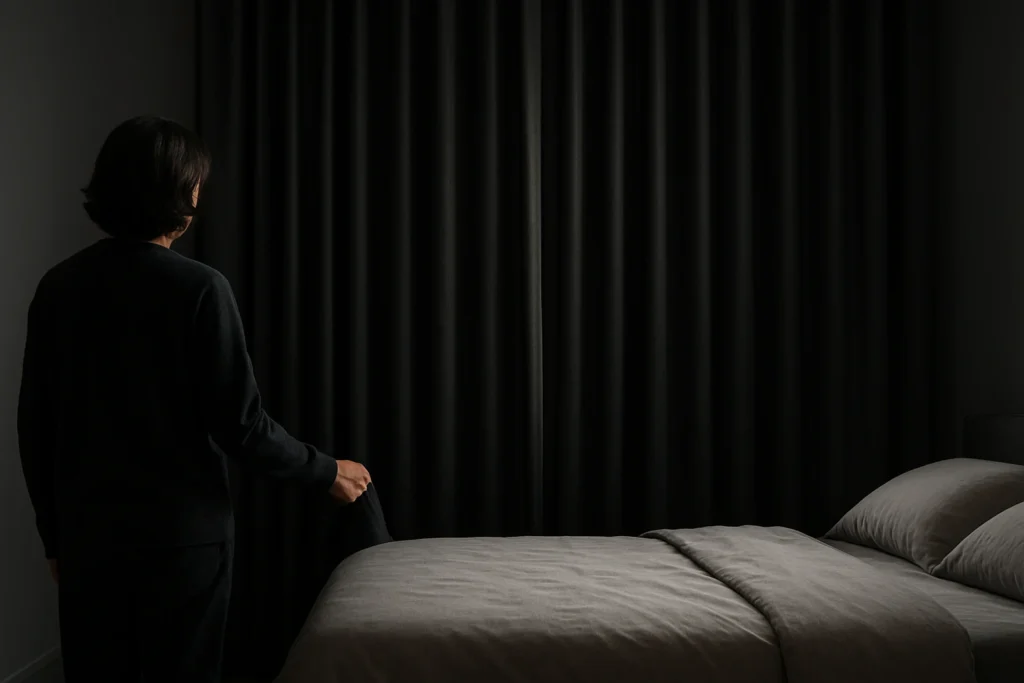
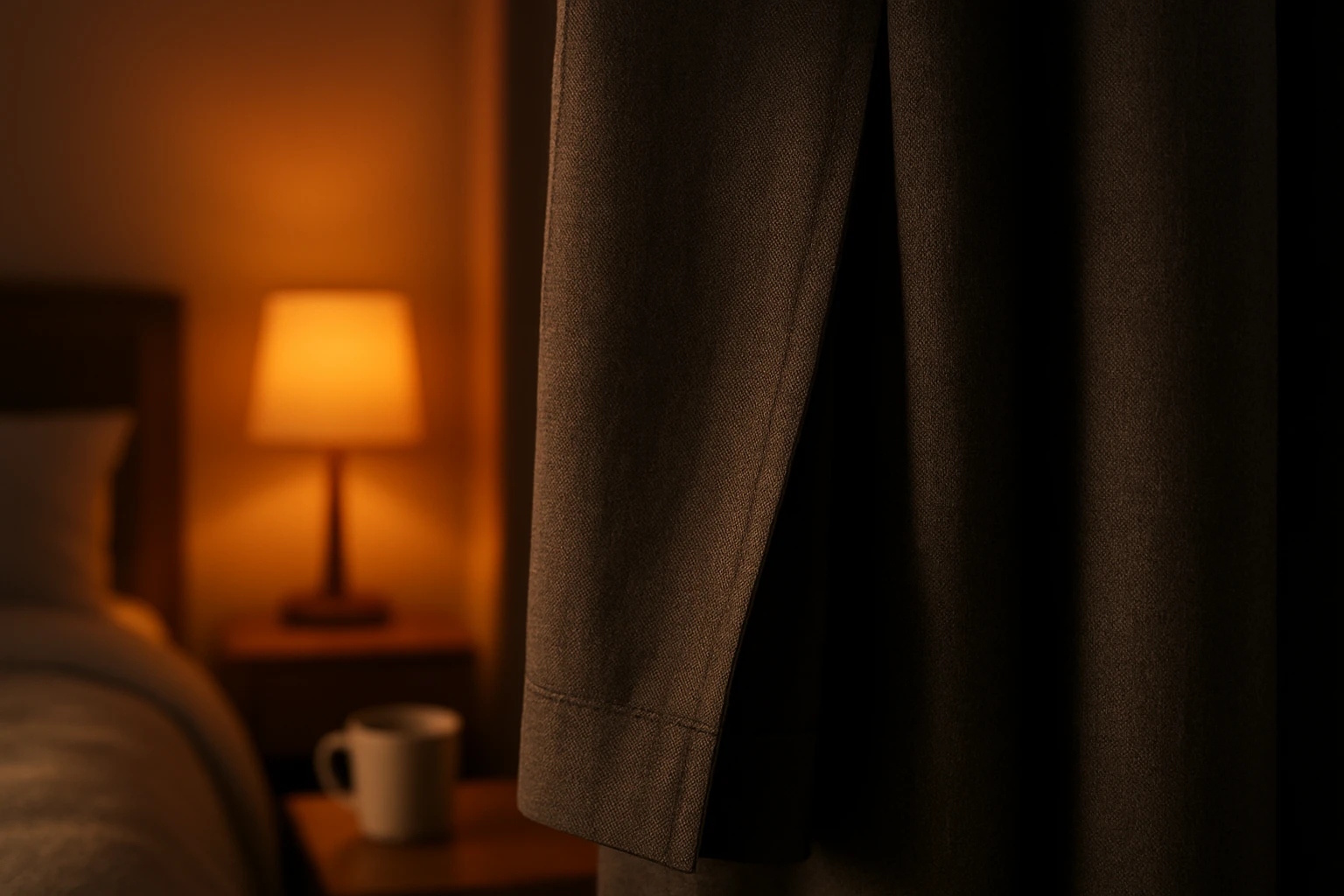
Blackout curtains stop most incoming light and add privacy, which helps sleep. They use a dense weave or a backing that also improves thermal comfort.
Quick Uses and Tips
Best Rooms:
Bedrooms, media rooms and sleep areas for shift workers.
Fabric Choices:
Polyester blends with blackout backing, triple-weave fabrics, or curtain linings added to lighter drapes. See Blackout Curtains
Care Tips:
Spot clean linings or follow the care label. Many blackout materials need gentle handling.
For more on darkening options and sleep benefits, see Room Darkening Curtains That Improve Sleep, Privacy, and Comfort.
Roman Curtains
Roman curtains fold into neat horizontal stacks when raised and lie flat when lowered. They give a tailored look and suit rooms where you want a clean, streamlined window cover.
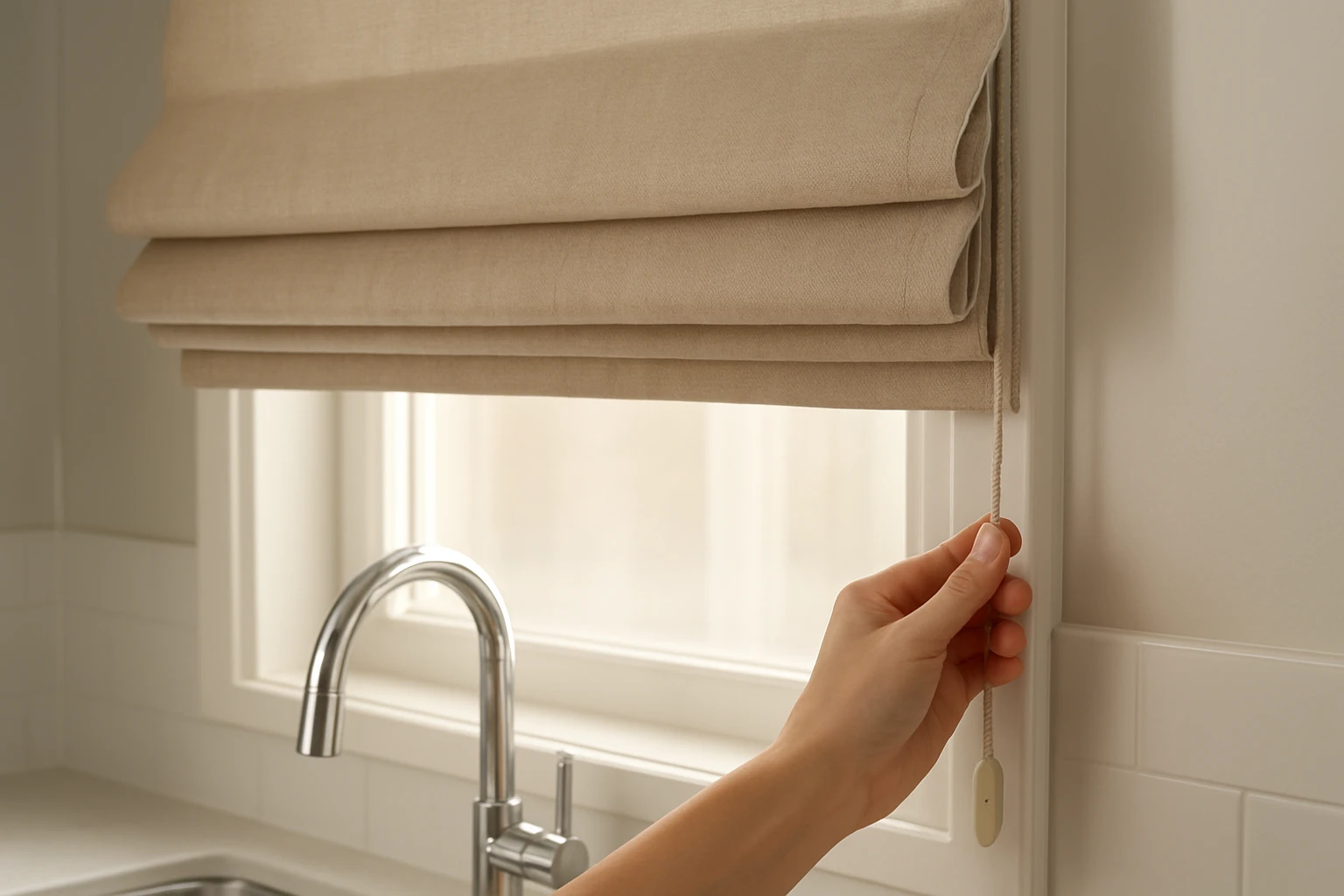
Quick Uses and Tips
Best Rooms:
Kitchens, bathrooms with moisture-resistant fabrics, bedrooms for a clean-lined look.
Fabric Choices:
Cotton blends for casual looks, silk or linen for a dressier feel. See Roman Curtains for options.
Care Tips:
Remove and launder if the lining allows, or spot-clean and steam to refresh.
Velvet Curtains
Velvet curtains add depth, trim light and bring a rich texture to a room. They help with insulation and create a formal, luxurious feel.
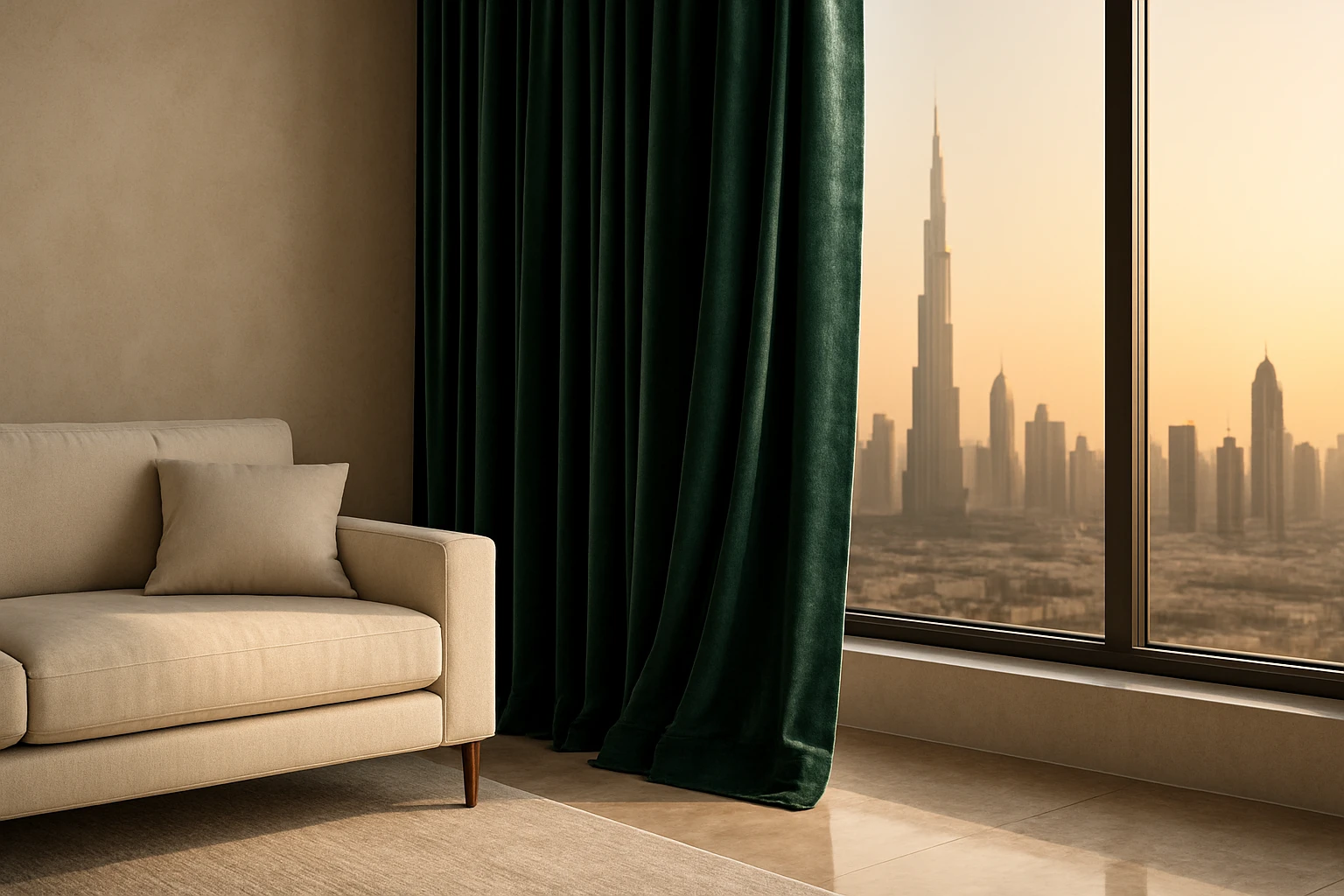
Quick Uses and Tips
Best Rooms:
Living rooms, formal dining rooms, bedrooms where luxury matters.
Fabric Choices:
Crushed or smooth velvet in cotton or synthetic blends for durability. See Velvet Curtains.
Care Tips:
Dry clean when recommended and brush lightly to preserve the pile.
Eyelet Curtains
Eyelet curtains slide onto a pole through metal rings that form even folds. They open and close quickly and suit modern decor.
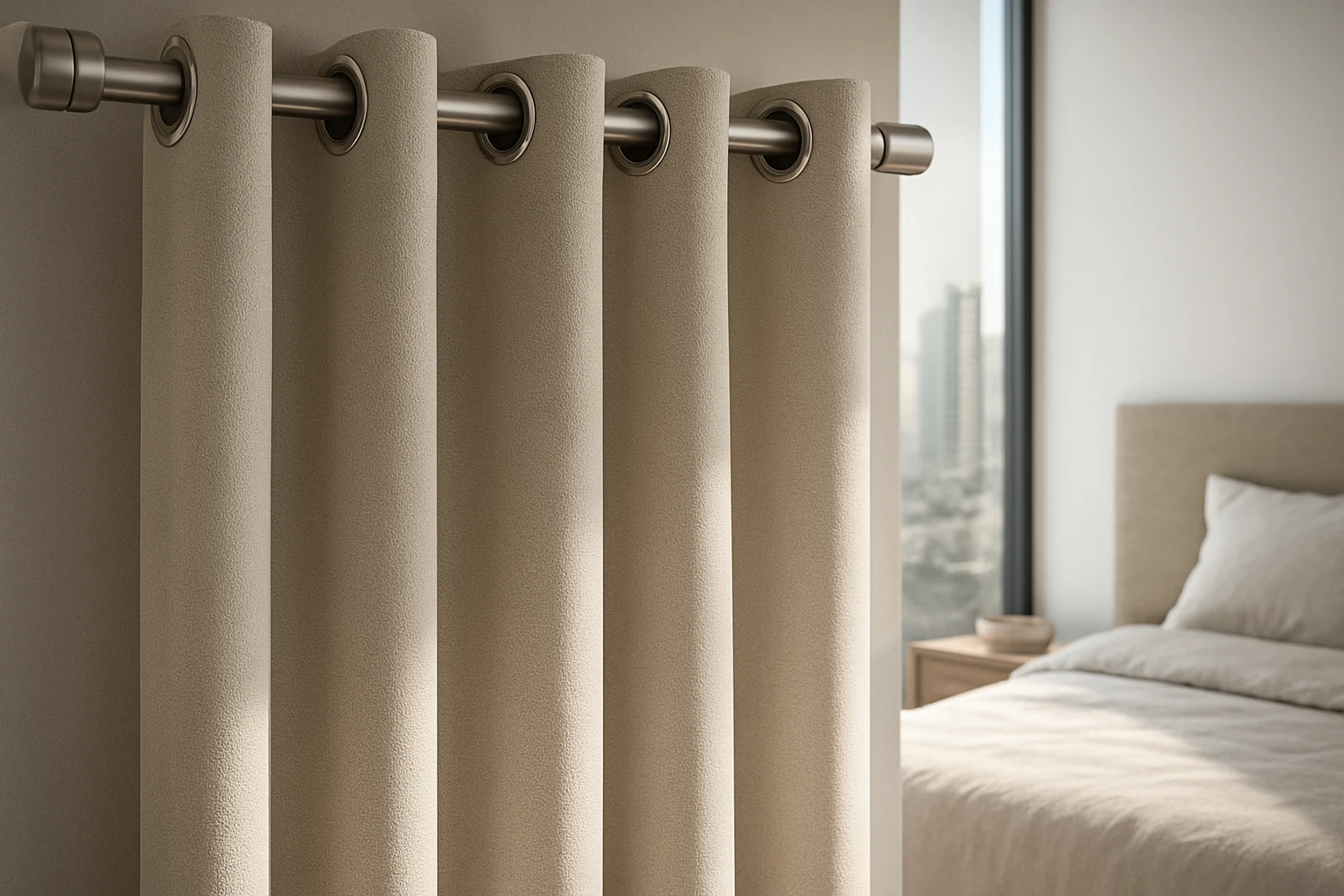
Quick Uses and Tips
Best Rooms:
Bedrooms and living rooms with a contemporary look.
Fabric Choices:
Medium-weight linens and cotton mixes for crisp folds. See Eyelet Curtains.
Care Tips:
Machine wash on gentle if allowed. Reshape folds while damp.
Pinch Pleat Curtains
Pinch pleat curtains have sewn pleats at the top that give a formal, structured appearance and help the fabric hang in elegant folds.
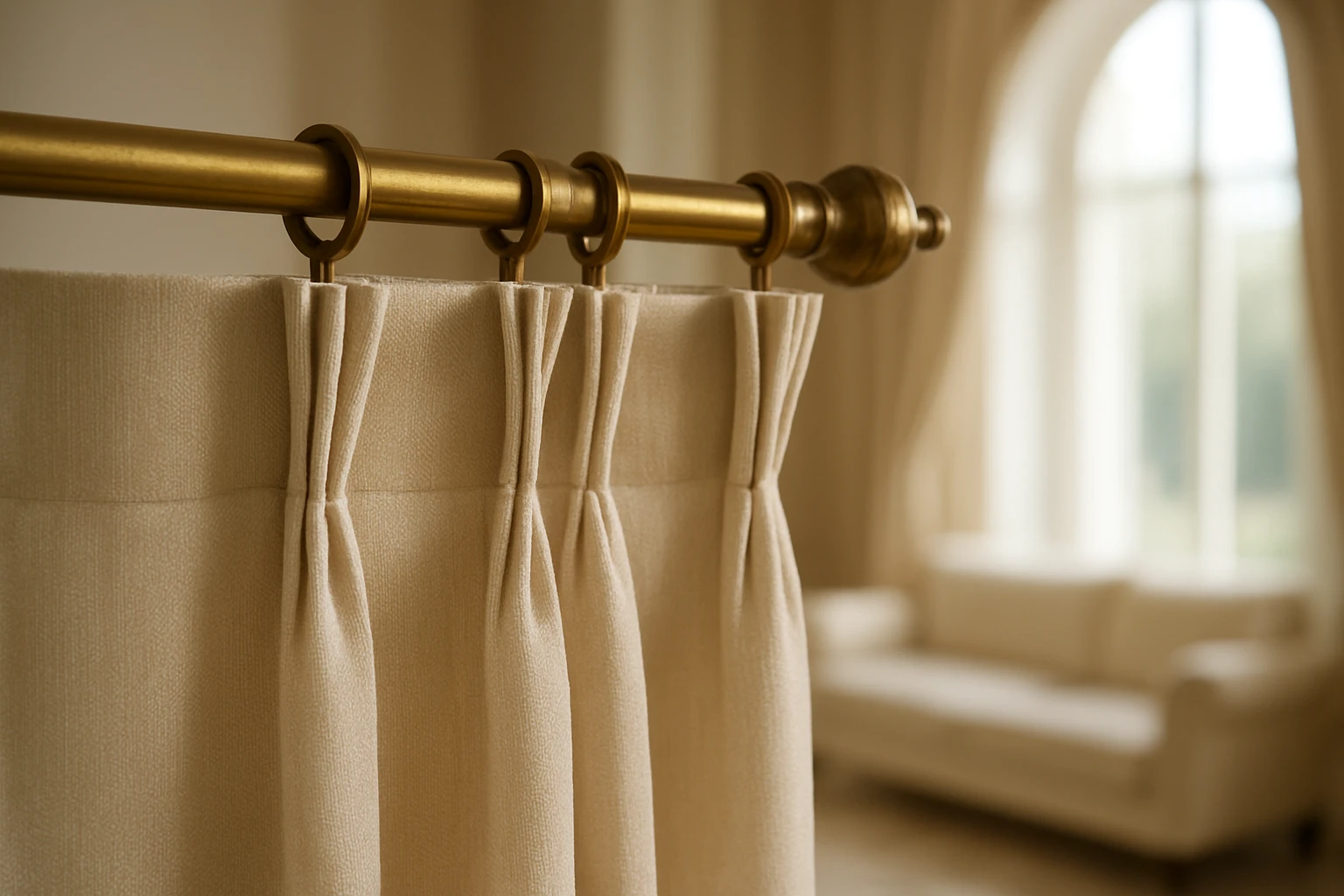
Quick Uses and Tips
Best Rooms:
Formal living areas, dining rooms and classic bedroom styles.
Fabric Choices:
Heavier fabrics like damask or linen blends hold pleats well. See Pinch Pleat Curtains.
Care Tips:
Dry clean for structured fabrics and press pleats gently if needed.
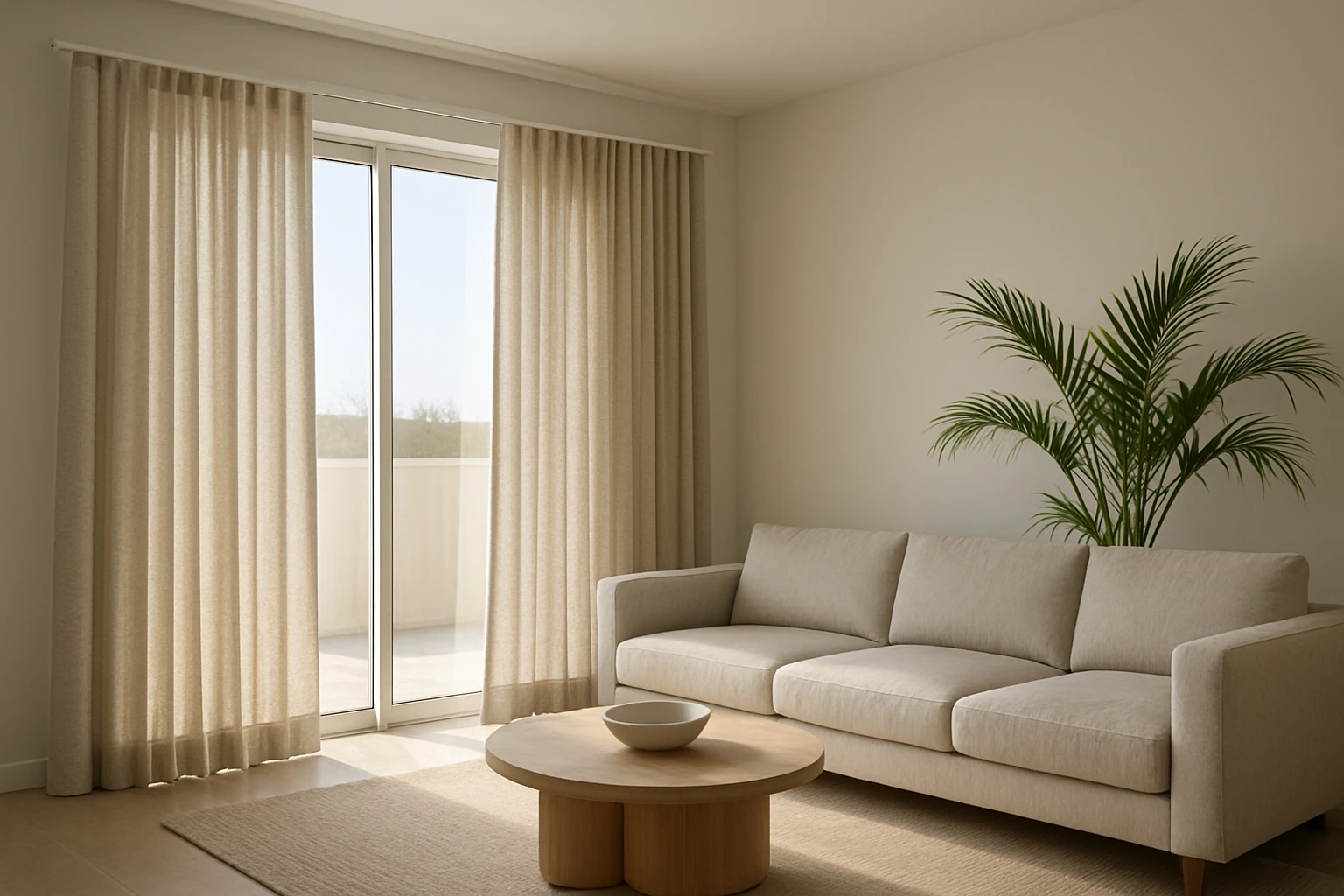
Pencil Pleat Curtains
Pencil pleat curtains have tightly gathered folds that create a soft, full look. They are versatile and work with many track and pole systems.
Quick Uses and Tips
Best Rooms:
Family rooms and bedrooms where fullness is desired on a budget.
Fabric Choices:
Cotton, blends and lighter upholstery fabrics work well. See Pencil Pleat Curtains.
Care Tips:
Machine wash if the label allows and hang to dry to preserve pleats.
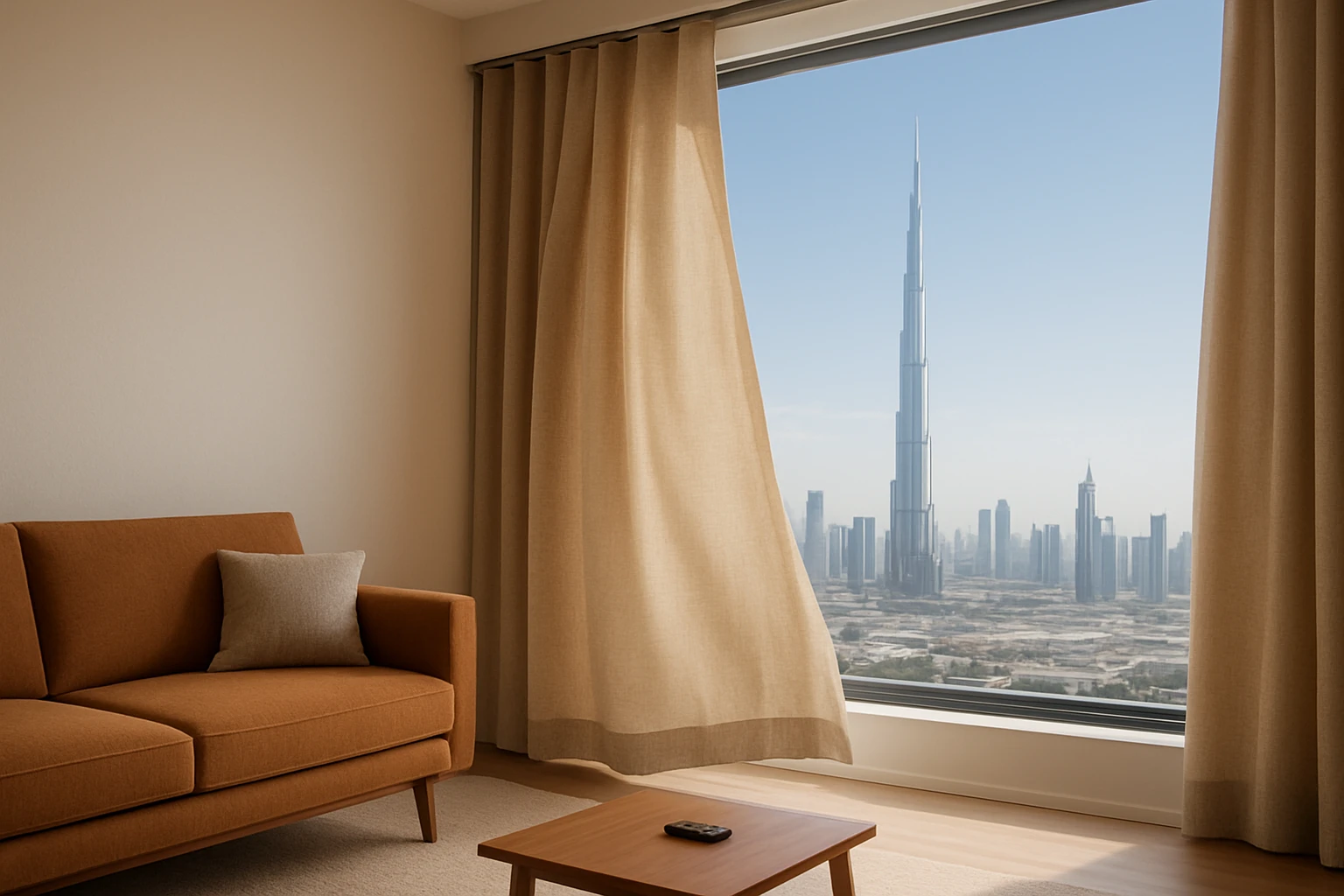
Motorized Curtains
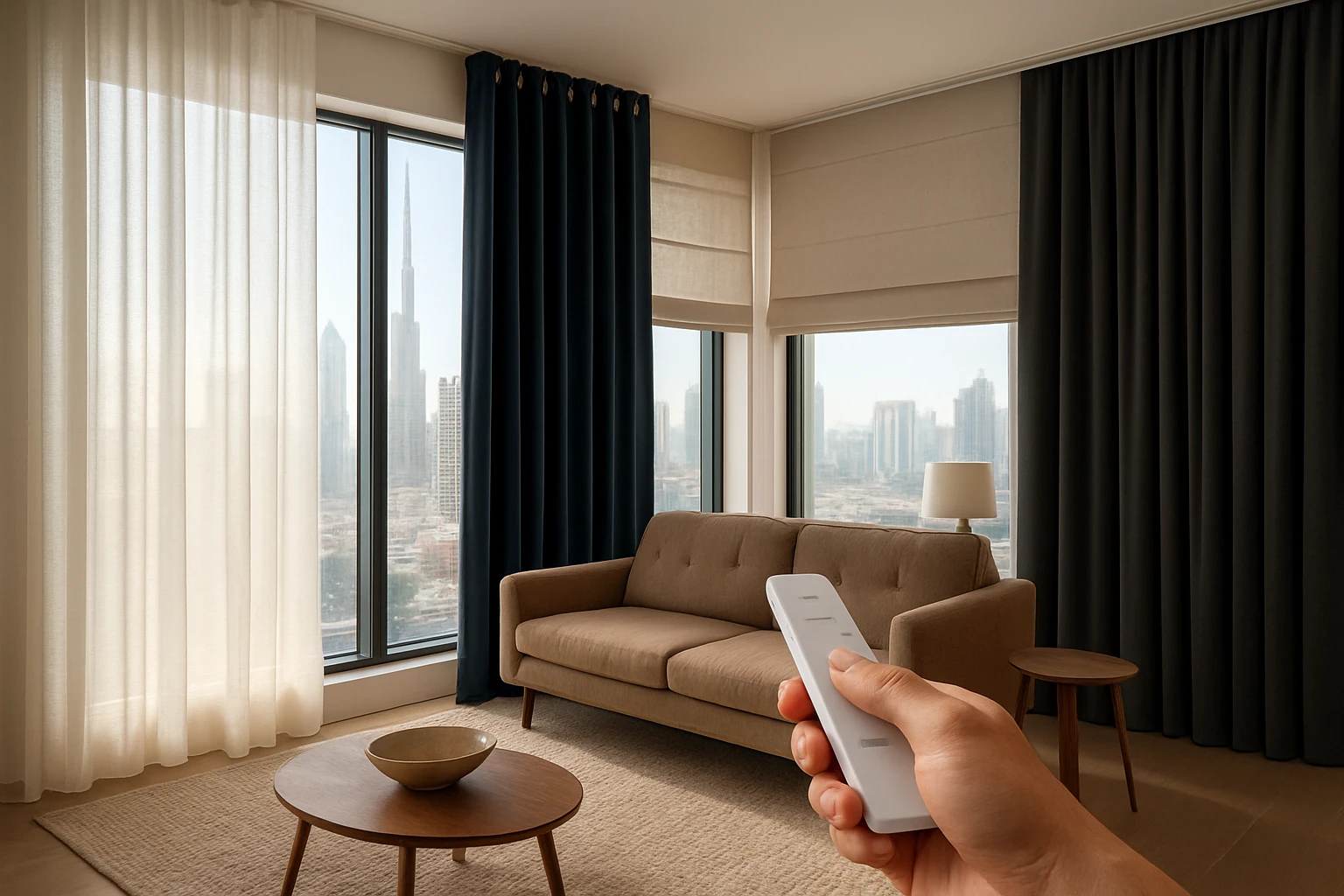
Motorized curtains open and close with a remote or smart control. They are handy for large or high windows and add convenience and accessibility.
Quick Uses and Tips
Best Rooms:
High windows, large glazed walls, smart homes and hard-to-reach windows.
Fabric Choices:
Any compatible fabric, but check weight limits for motor systems. See Motorized Curtains.
Care Tips:
Follow the motor manufacturer’s care notes and keep tracks clean.
For costs and installation options in Dubai, see Motorized & Smart Curtains Dubai: Cost, Installation and Best Options.
Silk Curtains
Silk curtains bring a subtle sheen and a refined look. They are delicate and work best in dry rooms or where dry cleaning is possible.

Quick Uses and Tips
Best Rooms:
Formal living rooms, studies and dining areas that stay dry.
Fabric Choices:
Pure silk for sheen or silk blends for easier care. See Silk Curtains.
Care Tips:
Dry clean only unless the label says otherwise and avoid direct sun to prevent fading.
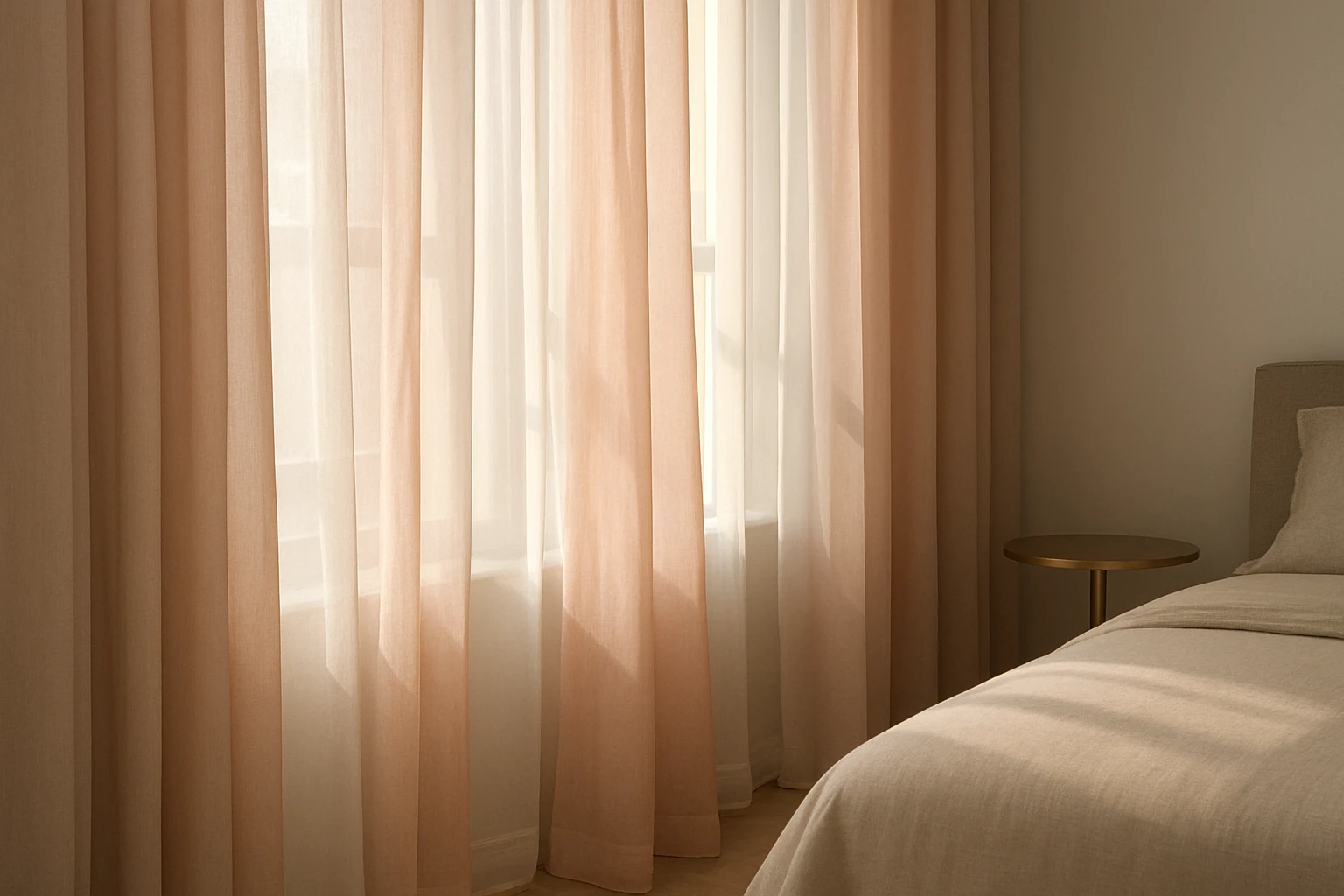
Chiffon Curtains
Chiffon is sheer and floaty, softer than many sheers and great for a romantic, airy feel. It layers well under heavier drapes or works alone in sheltered rooms.
Quick Uses and Tips
Best Rooms:
Bedrooms and lounges where softness and diffuse light are wanted.
Fabric Choices:
Polyester chiffon for easy care, or silk chiffon for a high-end finish. See Chiffon Curtains.
Care Tips:
Hand wash or use a gentle machine cycle and reshape while damp.
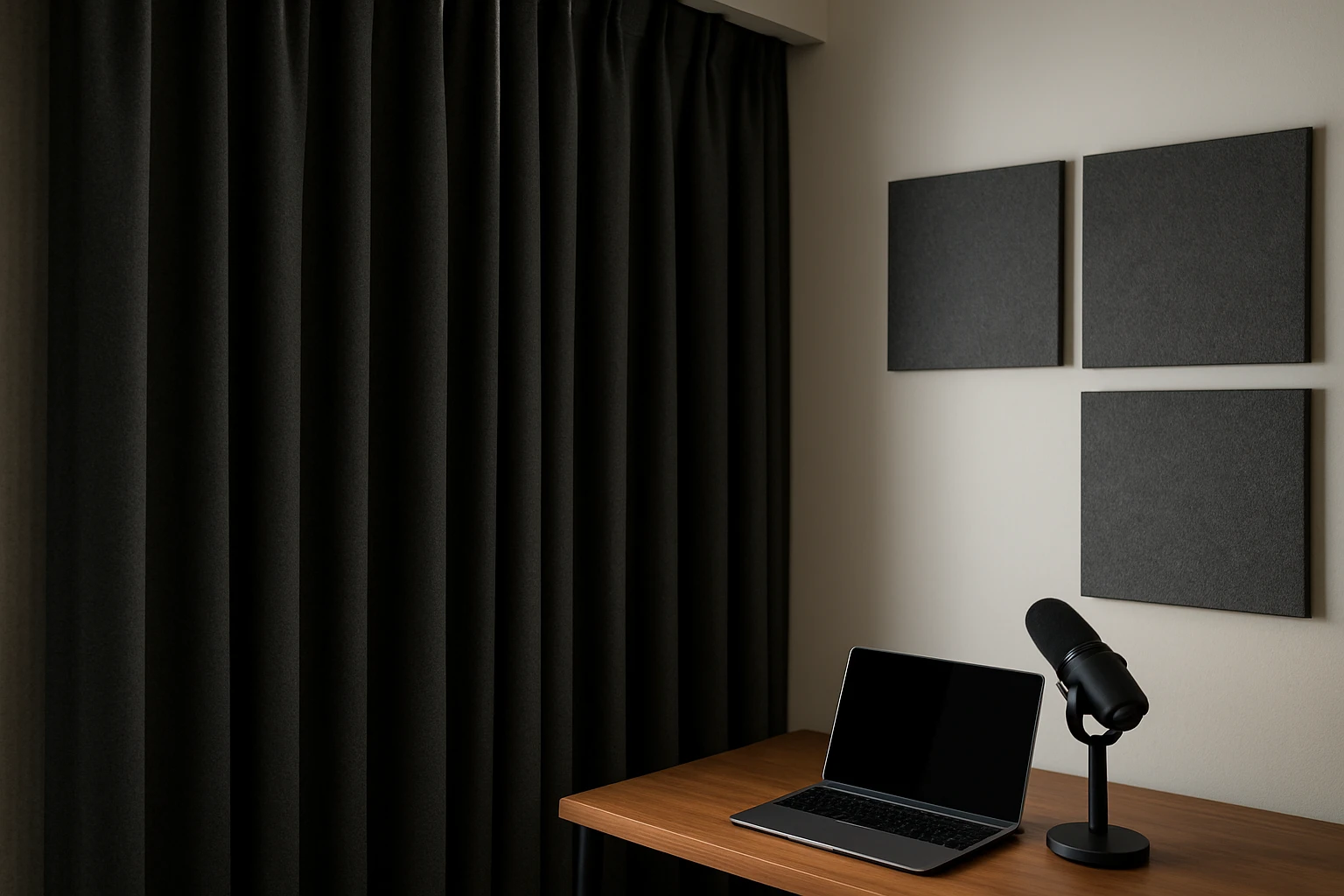
Soundproof Curtains
Soundproof curtains are heavy, dense panels that reduce echo and blunt outside noise. They help most in rooms that need better acoustics and privacy.
Quick Uses and Tips
Best Rooms:
Offices, bedrooms near busy streets and media rooms. See Soundproof Curtains.
Fabric Choices:
Dense polyester layered with liners or specialist acoustic curtains.
Care Tips:
Spot clean or use professional cleaning as the product instructions recommend.
Theatre Curtains
Theatre curtains are heavy, often velvet or velour, and designed to block light and improve acoustics. They are larger in scale and made for stage or media spaces.

Quick Uses and Tips
Best Rooms:
Home theaters, large media rooms and performance spaces. See Theatre Curtains.
Fabric Choices:
Velour, thick velvets or specialized acoustic stage fabrics.
Care Tips:
Professional cleaning is usually best for large, heavy curtains.
Office Curtains
Office curtains balance light control with a tidy, professional look. They often focus on low maintenance and clean lines to reduce glare and add privacy.

Quick Uses and Tips
Best Rooms:
Workspaces, meeting rooms and reception areas. See Office Curtains.
Fabric Choices:
Durable blends that resist fading and have stain treatments.
Care Tips:
Regular light cleaning and quick stain treatment keep them looking good.
Hospital Curtains
Hospital curtains are made for hygiene and durability. They are often fire retardant and easy to clean, and they provide privacy in medical and care settings.
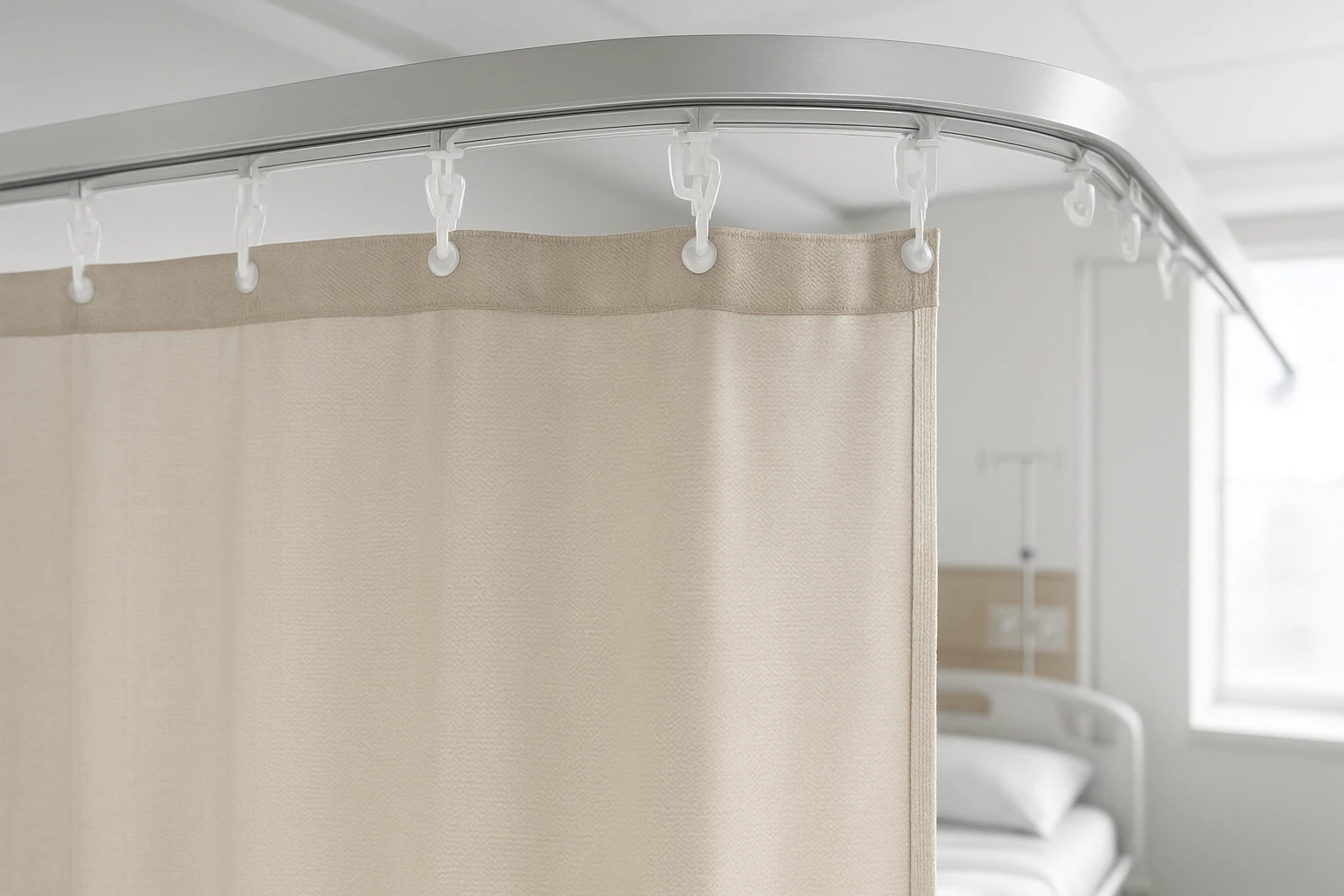
Quick Uses and Tips
Best Rooms:
Medical clinics, care homes and temporary screening areas. See Hospital Curtains.
Fabric Choices:
Antimicrobial, wash-safe fabrics with fire-retardant finishes.
Care Tips:
Follow strict laundering and replacement schedules for hygiene.
Comparison Table
Below is a simple table to compare the 14 curtain types by opacity, maintenance and typical cost level. Use this as a quick reference when matching a curtain to a room.
| Curtain Type | Opacity | Maintenance | Typical Cost Level | Best Room Use |
|---|---|---|---|---|
| Sheer Curtains | Low | Low | Low | Living, dining |
| Blackout Curtains | High | Medium | Medium | Bedrooms, media |
| Roman Curtains | Medium | Medium | Medium | Kitchens, bedrooms |
| Velvet Curtains | Medium-High | High | High | Living, formal rooms |
| Eyelet Curtains | Medium | Low | Low-Medium | Bedrooms, living |
| Pinch Pleat Curtains | Medium | Medium | Medium-High | Formal living, dining |
| Pencil Pleat Curtains | Medium | Low-Medium | Low-Medium | Family rooms |
| Motorized Curtains | Variable | Low | High | Large windows, smart homes |
| Silk Curtains | Low-Medium | High | High | Formal rooms |
| Chiffon Curtains | Low | Medium | Medium | Bedrooms, lounges |
| Soundproof Curtains | High | Medium | Medium-High | Offices, bedrooms |
| Theatre Curtains | Very High | High | High | Home theater |
| Office Curtains | Variable | Low | Medium | Workspaces |
| Hospital Curtains | Variable | Low | Medium | Clinics, wards |
How to Choose Curtains for Each Room
Choose curtains by weighing light, privacy, insulation and style together. Think about fabric weight and lining, the curtain heading and how the panels will hang with furniture and trim.
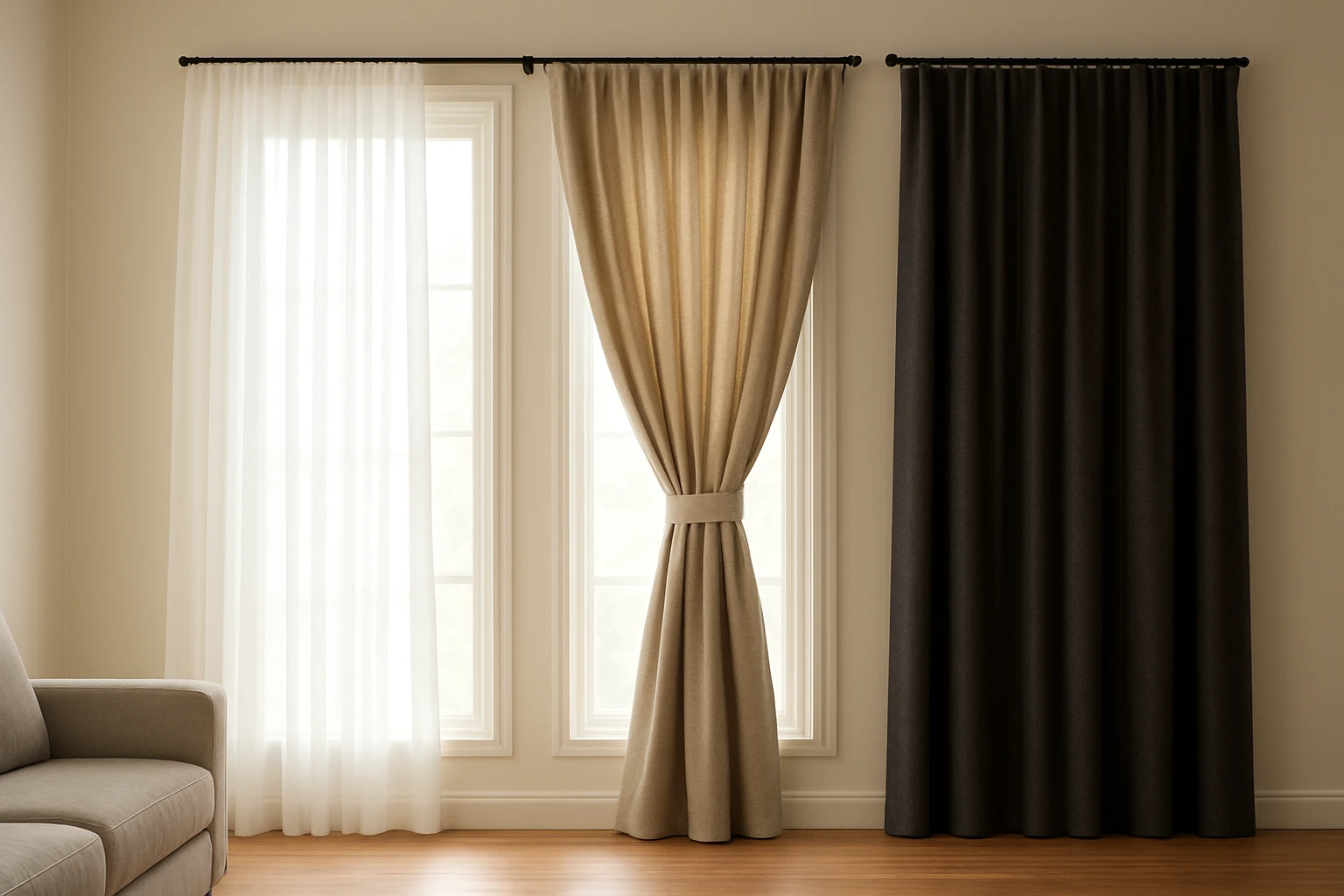
Quick Room Guidance
Living Rooms:
Use sheers with heavier side drapes when you want daylight and the option to darken the room.
Bedrooms:
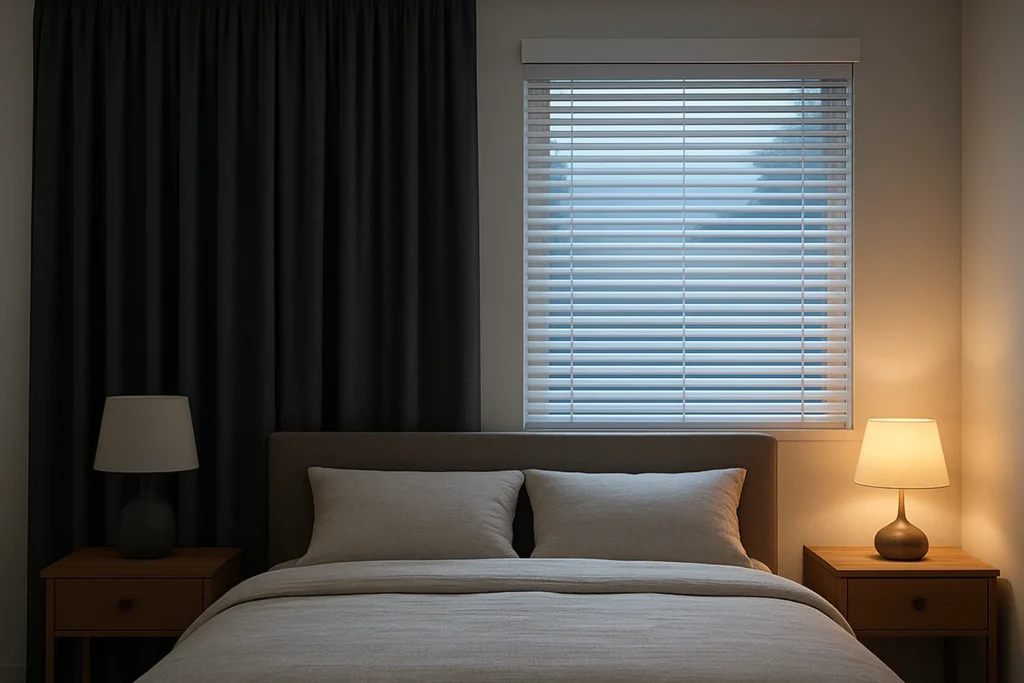
Blackout curtains or a blackout layer with sheers give the best sleep and privacy. See Bedroom Curtains.
Kitchens:
Pick easy-care fabrics and shorter lengths like café curtains or roman styles.
Offices:
Choose neutral, low-maintenance panels that reduce glare and look professional. See Office Curtains.
Layering a sheer and a heavier curtain is the most flexible solution for many rooms.
How to Measure and Hang Curtains
Measure the window width and height carefully and decide how far past the frame you want the curtain to extend for coverage and balance. For a full look, allow 1.5 to 2 times the track width for single-panel fullness, depending on the fabric.
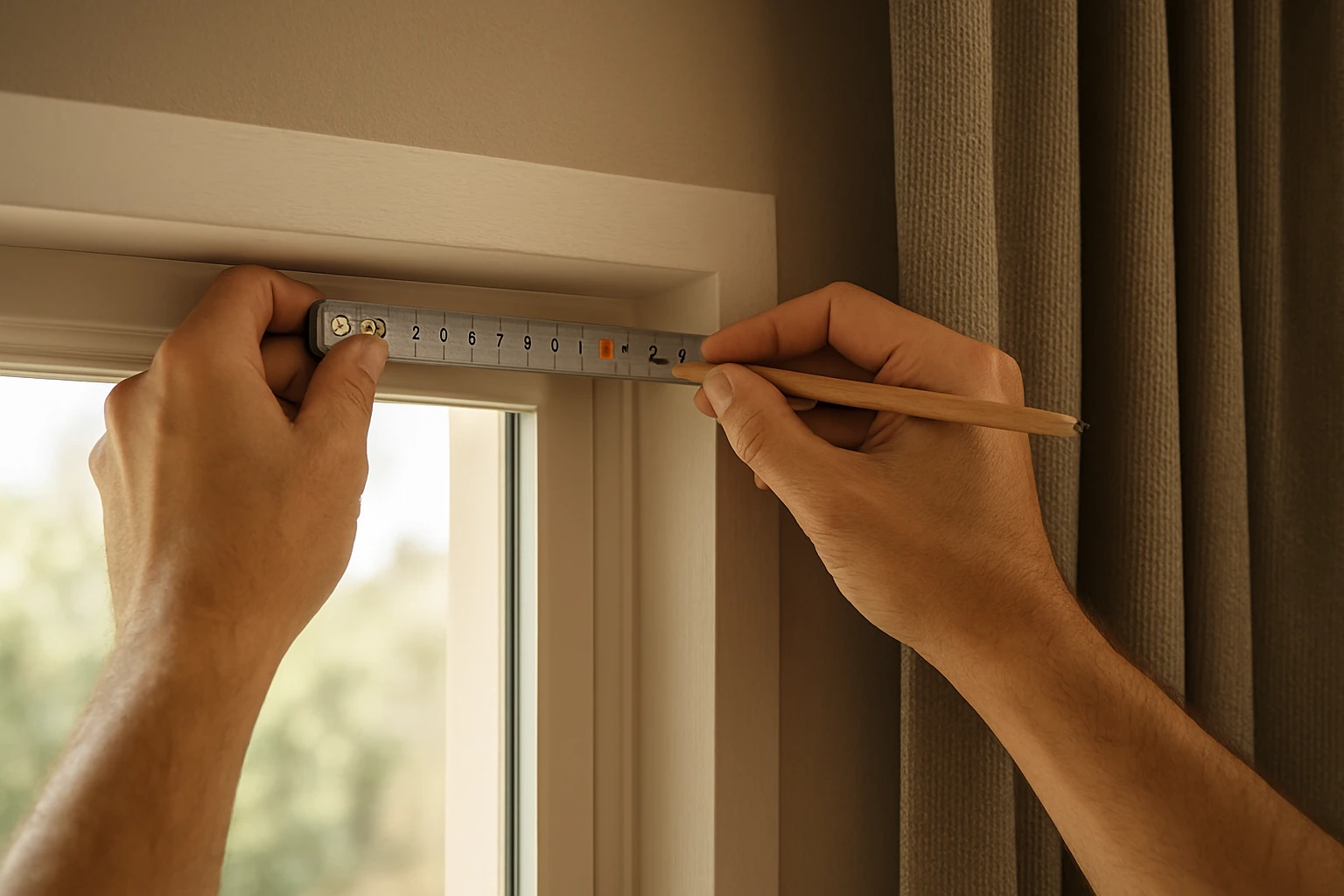
Quick Steps
Measure Width:
Measure the full width of the track or rod, then add any desired overlap.
Measure Drop:
Measure from where the curtain will hang (pole or track top) to where you want the hem to fall, usually just above the floor.
Mounting Tip:
Mount rods 10-15 cm above the frame to make windows feel taller, and extend rods 10-20 cm beyond the frame so curtains clear the glass when open.
For detailed step-by-step measuring and mounting, read How to Measure for Curtains for Any Window Size and How to Hang Curtains: Measure, Mount, and Perfect the Fit.
Care and Cleaning
Different fabrics need different care. In general, sheers and many cottons can be machine washed gently, while silks, velvets and structured pleats often need dry cleaning.
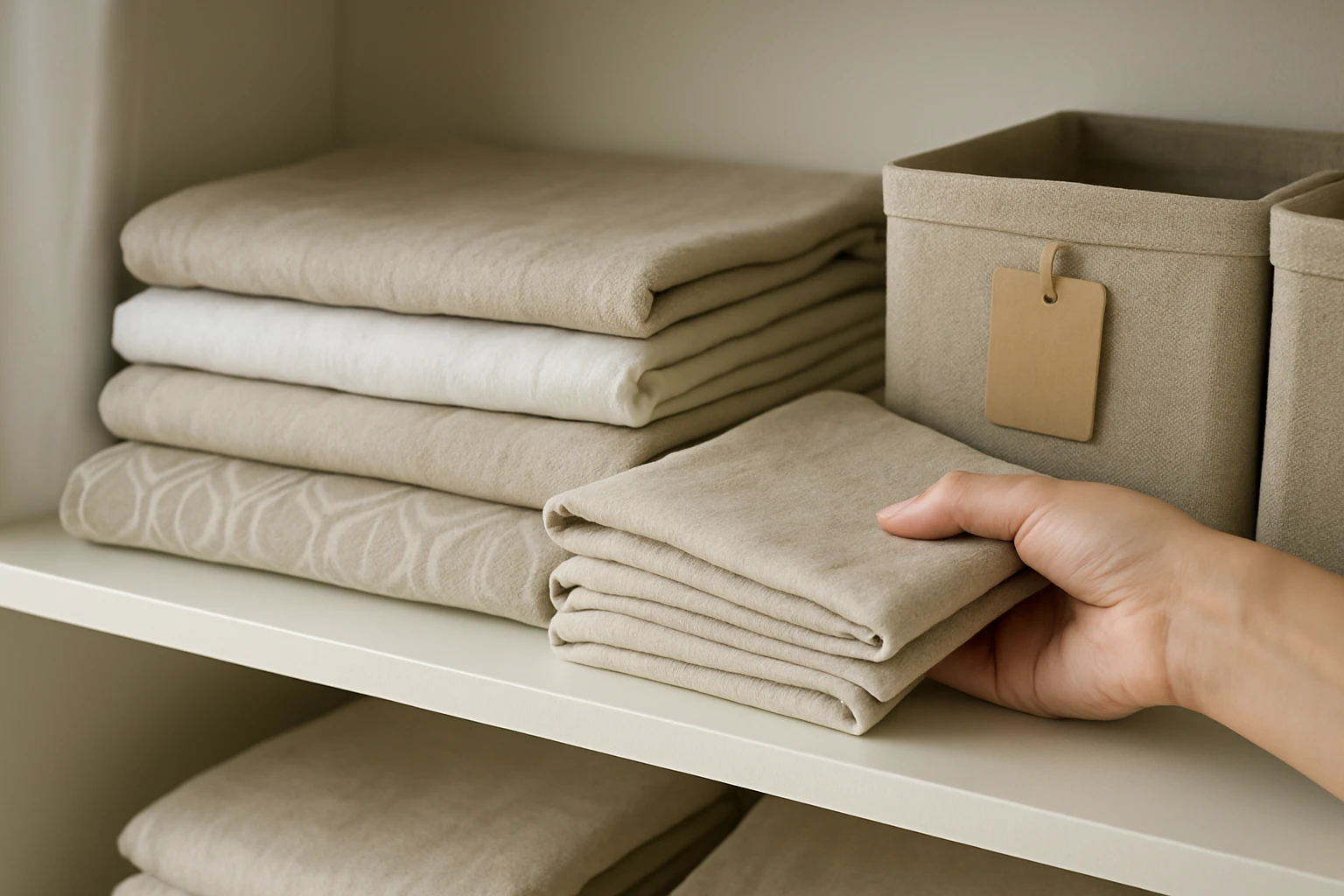
Fabric Care at a Glance
Daily:
Dust or shake lightweight curtains to keep them fresh.
Monthly:
Vacuum with a soft brush attachment for heavier fabrics.
Annual:
Inspect for wear, clean to the manufacturer’s recommendations and rehang to avoid sun damage.
Cost Comparison and Budget Tips
Curtain cost depends on fabric, lining, pleating and hardware. Ready-made panels save money, while made-to-measure work and heavy linings raise costs. Motorized systems and silk or velvet fabrics sit at the top end.
Budget Tips
Save Money:
Choose standard widths and off-the-shelf panels in larger sizes and add a lining if you need more opacity.
Spend Where It Matters:
Invest in good hanging hardware and accurate fitting. A poor fit makes even an expensive fabric look weak.
Final Recommendations
Match the curtain type to the room function first, then to style and budget. Layer sheers with heavier curtains for flexibility. Correct measuring and hanging make the biggest visual difference.

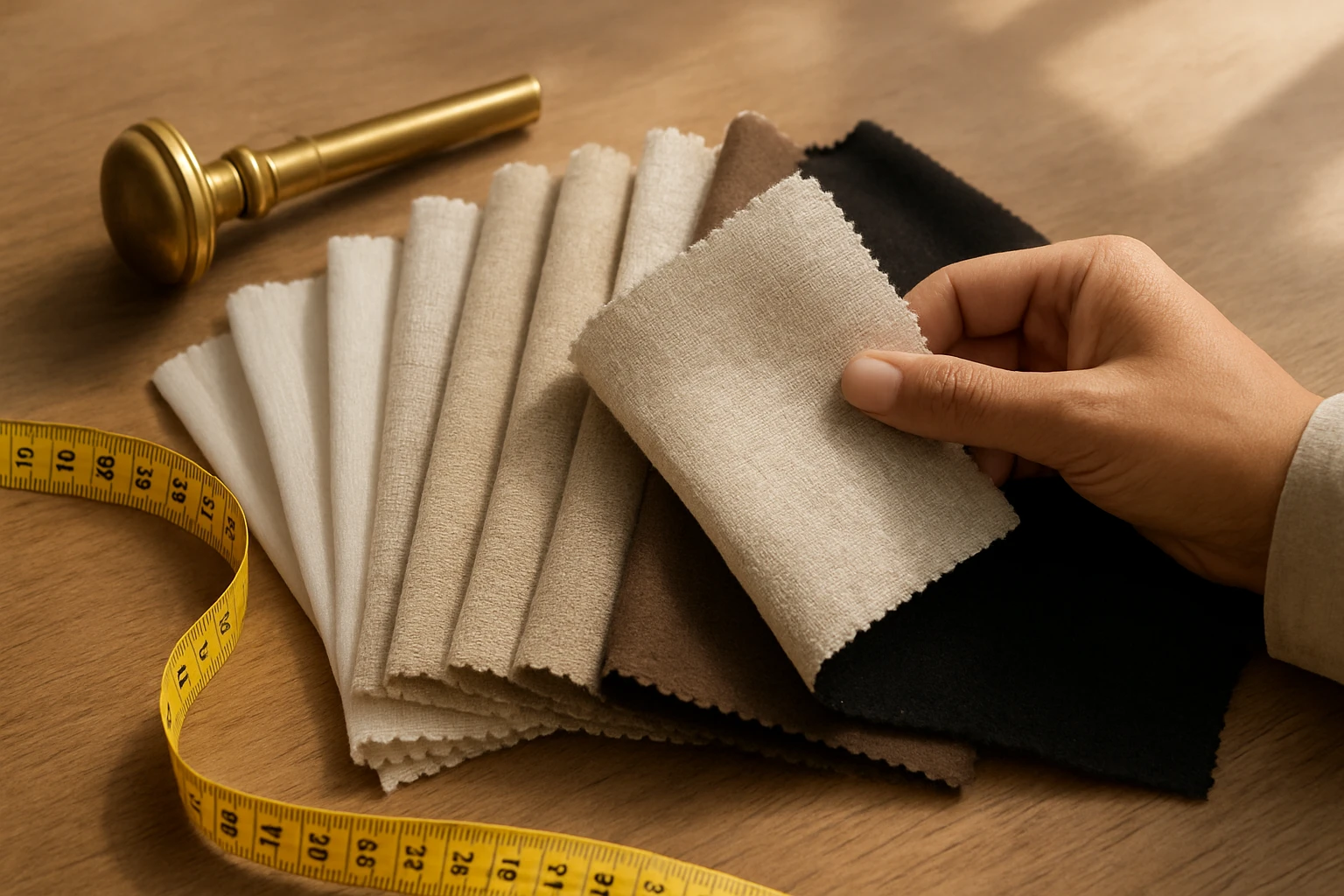
A small investment in good fit and proper lining will give the longest-lasting, best-looking results. If you want made-to-measure options, local specialists can show fabric samples and measure for you.
Frequently Asked Questions
What Curtain Type Is Best for Blocking Light in a Bedroom?
Blackout curtains or heavy theatre-style curtains work best to block light. Use a full-width installation that overlaps the window and consider a blackout lining for lighter fabrics.
How Much Extra Width Should I Add for Curtain Fullness?
Aim for 1.5 to 2 times the track width for a full look. Lighter fabrics can use higher fullness while heavy fabrics look fine near 1.5 times.
Which Curtains Are Easiest to Clean?
Polyester blends, cottons and some linen blends are usually easiest because they can be machine washed on gentle cycles. Always follow the care label and remove hardware if needed.
Can I Mix Curtain Styles on the Same Window?
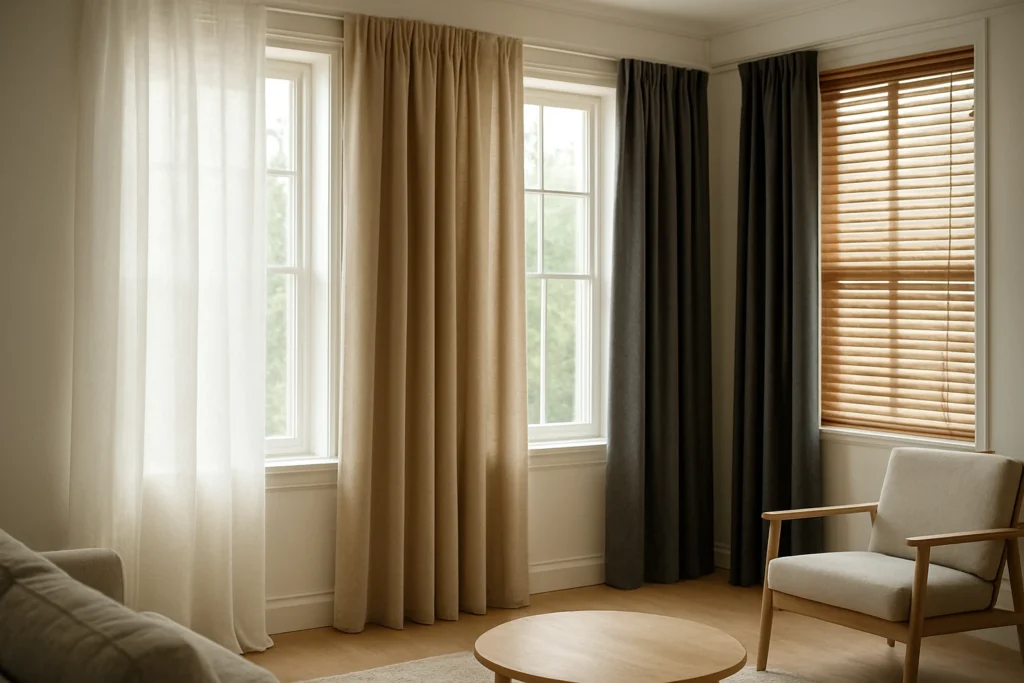
Yes. Layering sheers with heavier drapes is a practical and attractive approach. Roman shades under side drapes can also give a tidy look and flexible light control.
Are Motorized Curtains Worth the Cost?
Motorized curtains add convenience and safety for high or large windows and integrate with smart homes. They come at higher cost but can be worthwhile where manual control is difficult.