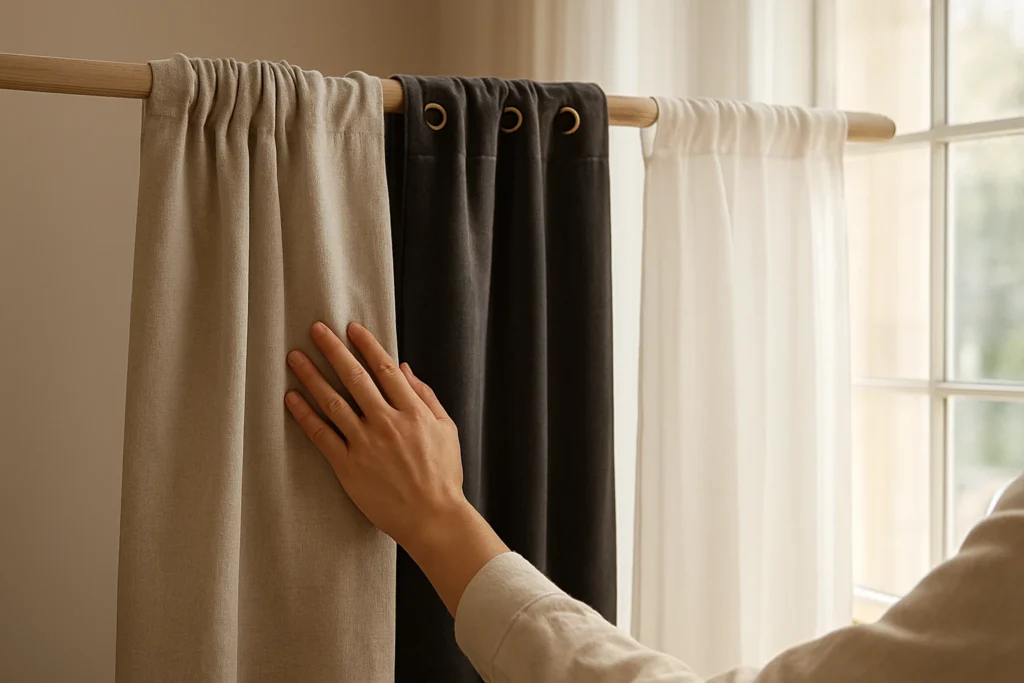
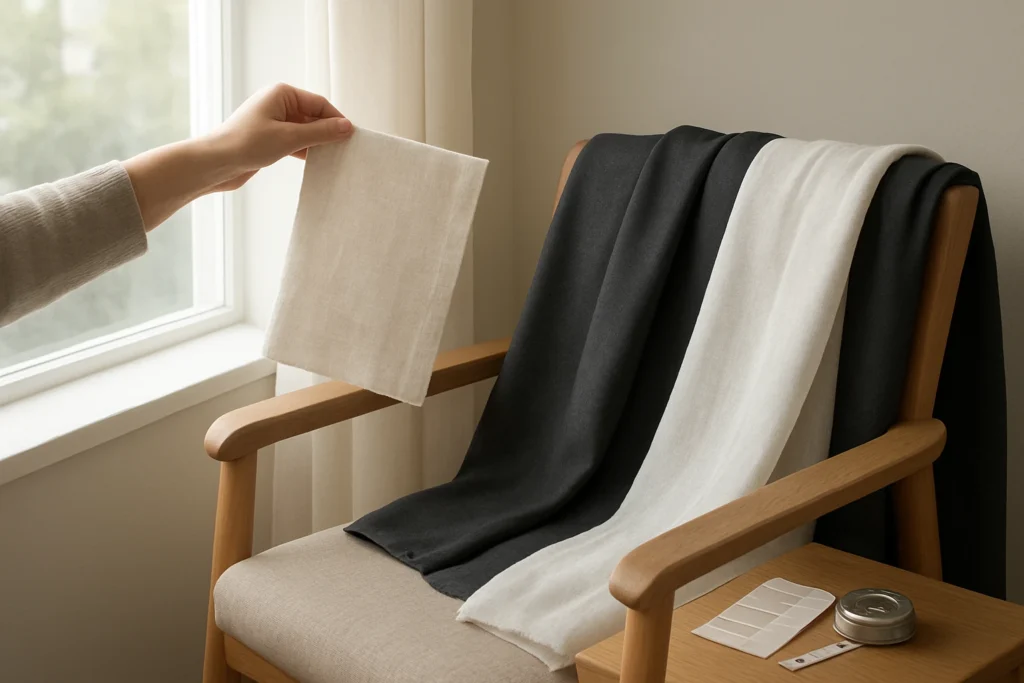
Choose curtains by starting with the window measurements and the room function, then match fabric, lining, heading style, and hardware to the light and privacy you need. Measure precisely, pick a fabric suited to the room, decide how curtains hang and stack, and plan installation and care so the result looks and works as intended.
In this guide, Curtains and Blind walks you through a simple 7-step checklist that covers measurement, function, fabric, heading, length, style, and installation so you can choose curtains with confidence.

Key Statistics
- In our experience at Curtains and Blind, 58 percent of bedroom orders include a blackout lining when customers ask for improved sleep and privacy.
- Typical lead time we observe for made-to-measure curtains is 7 to 14 days for standard fabrics and 3 to 5 weeks for custom silk or heavy velvets.
- A common sizing error shows up in about 30 percent of on-site measurements we review: the rod is mounted too low, which shortens perceived ceiling height.
Step 1: Measure Windows Accurately
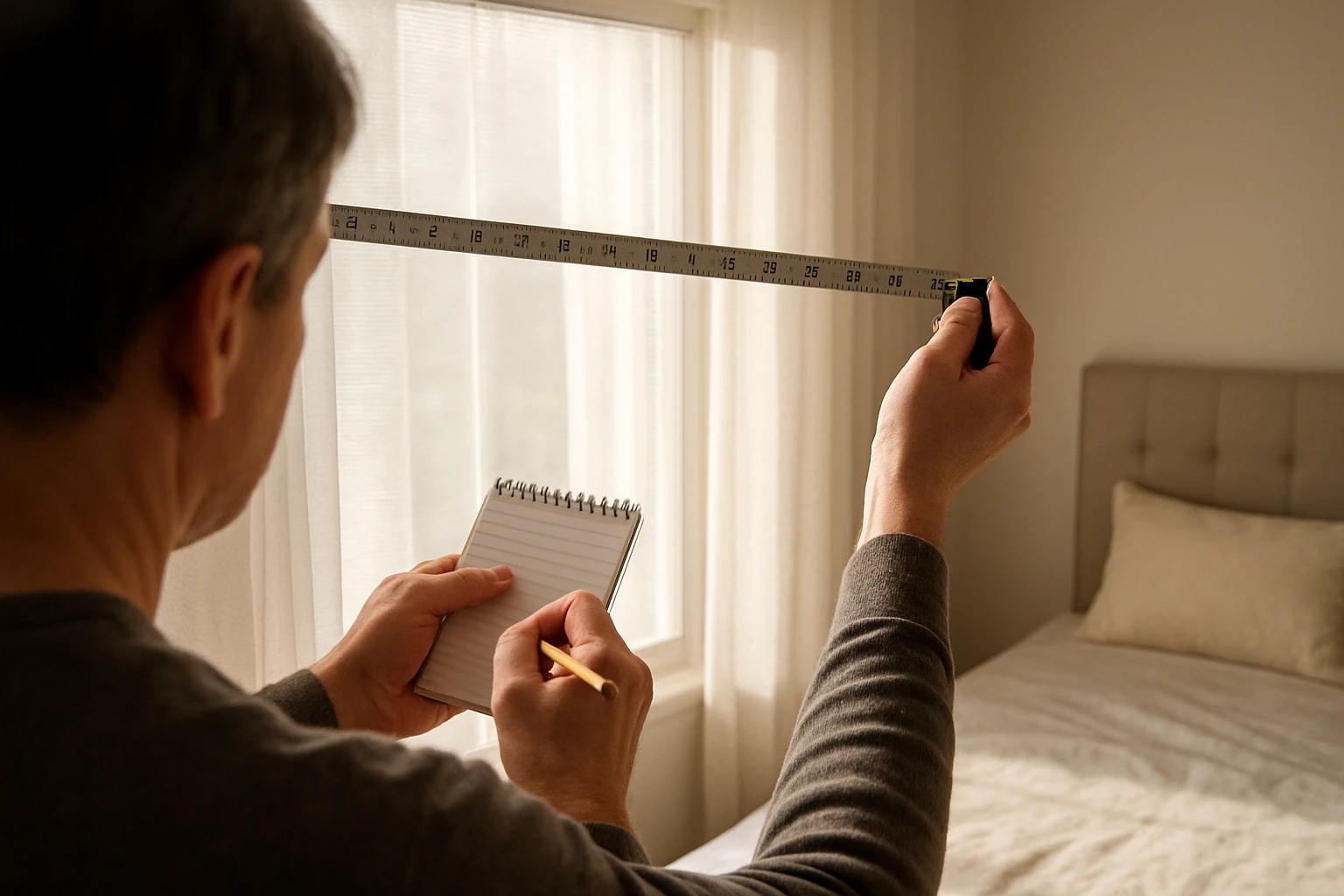
Measuring properly has the biggest effect on how curtains look. Measure twice and write each number down, including where and how you measured it. Start with the full width the curtain will cover and the rod position you plan to use.
How to Measure Width
Tool Checklist:
- Tape measure (metal, at least 5 meters)
- Pencil and notebook or phone notes
- Level if you suspect the wall is uneven
Measure Steps:
- Measure the rod-to-rod width if a rod is already installed, otherwise measure the full window plus the overlap you want.
- For single-panel curtains, measure the full width and add overlap. For a pair, measure full width and divide by two for each panel, adding fullness as below.
Common allowance table for width and fullness
| Situation | What To Measure | Typical Fullness | Note |
|---|---|---|---|
| Standard windows | Rod width + 10 cm each side | 1.8x to 2x | Adds light control and nicer folds |
| Sliding doors | Rod width + 15 cm each side | 2x | Allows panels to clear each other when open |
| Small or tall windows | Rod width + 5 to 10 cm | 1.5x to 2x | Less fullness on narrow windows to avoid bulk |
How to Measure Drop (Length)
Length Options:
- Sill length: measure to top of sill minus 1 cm
- Floor length: measure to floor minus 1 cm so curtains do not drag (or plus 2–3 cm for a puddled look)
- Below floor: add 5–10 cm if you want puddling for a formal look
A practical tip from our fitting team: when measuring for floor-length curtains in rooms with carpet, measure to the top of the carpet pile and subtract 1 cm to avoid dragging once carpet compresses.
Step 2: Decide Curtain Function
Decide what you need the curtains to do first. Do you want privacy, control of daylight, better insulation, less noise, or just decoration? Your choice here guides the fabric, lining and style you should pick.
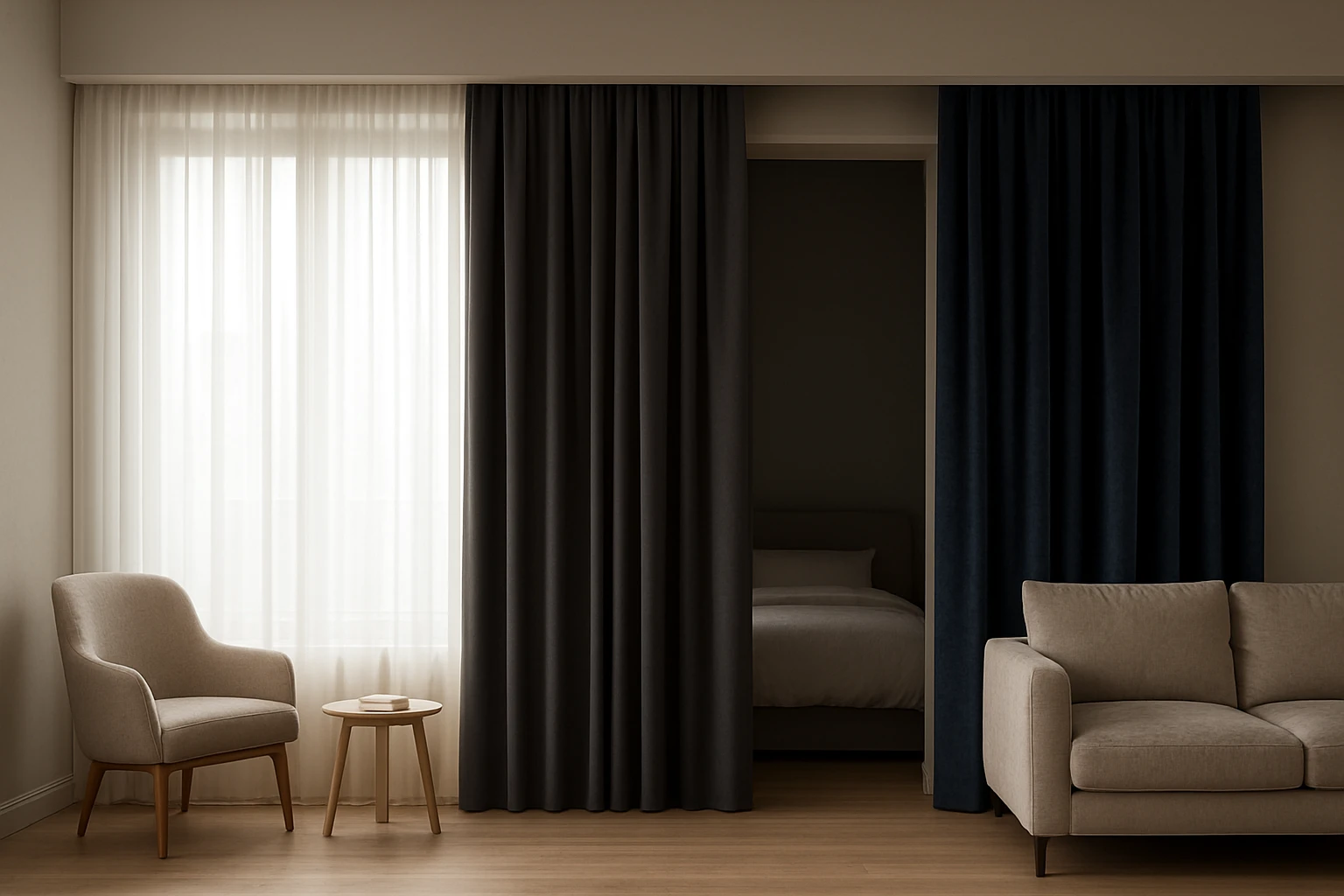
- Privacy and soft daylight: choose sheer curtains or layered sheers. See Sheer Curtains for options.
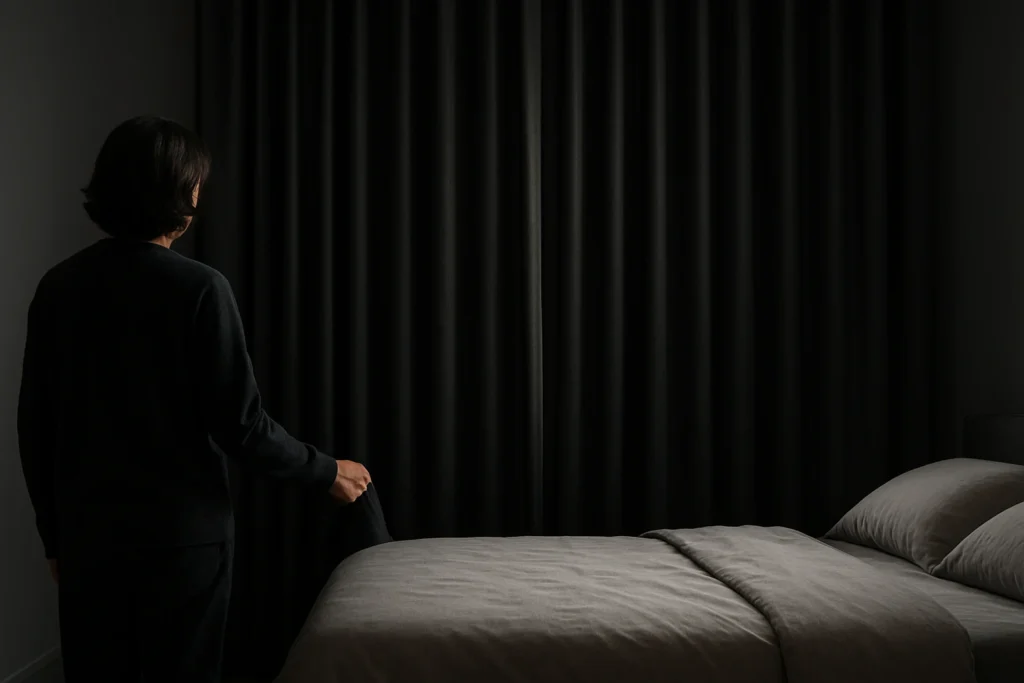
- Full darkening for sleep or AV rooms: pick blackout curtains; see Blackout Curtains and our blog on Room Darkening Curtains That Improve Sleep, Privacy, and Comfort.
- Noise control: sound-damping fabrics and heavier linings help; see Soundproof Curtains and our installation guide How to Install Soundproof Curtains for Maximum Effectiveness.
- Decoration and luxury: velvet and silk bring a formal look; see Velvet Curtains and Silk Curtains.
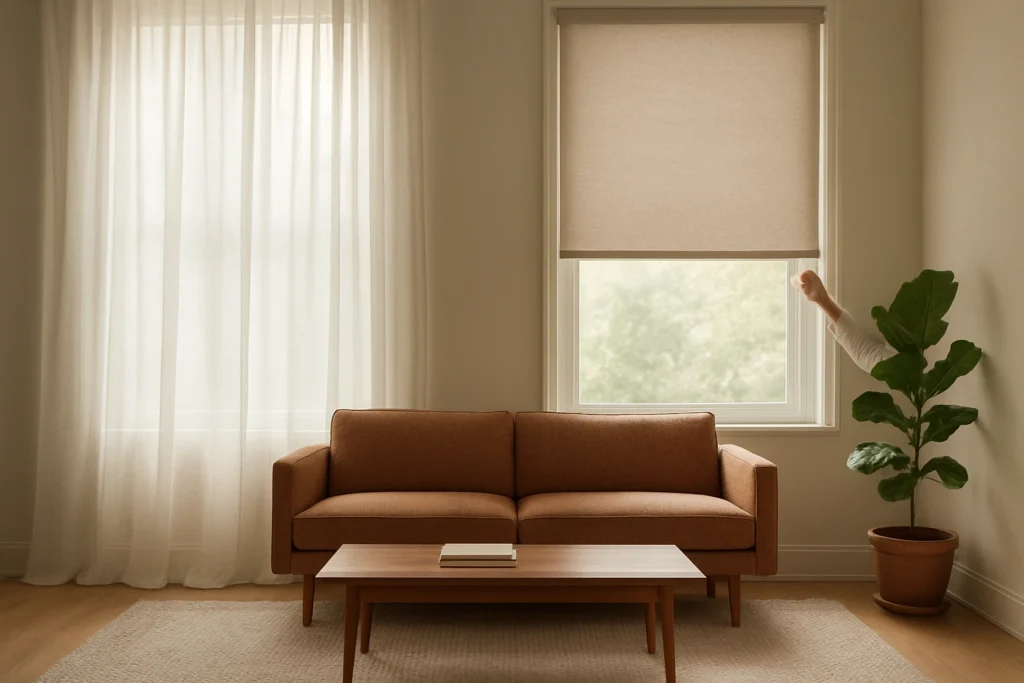
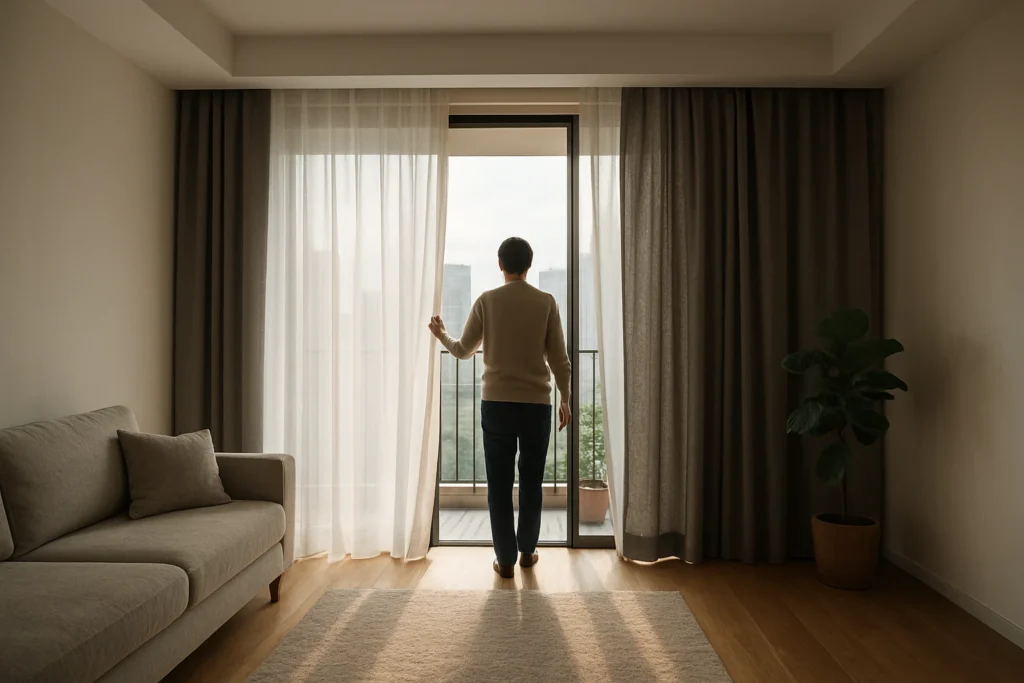
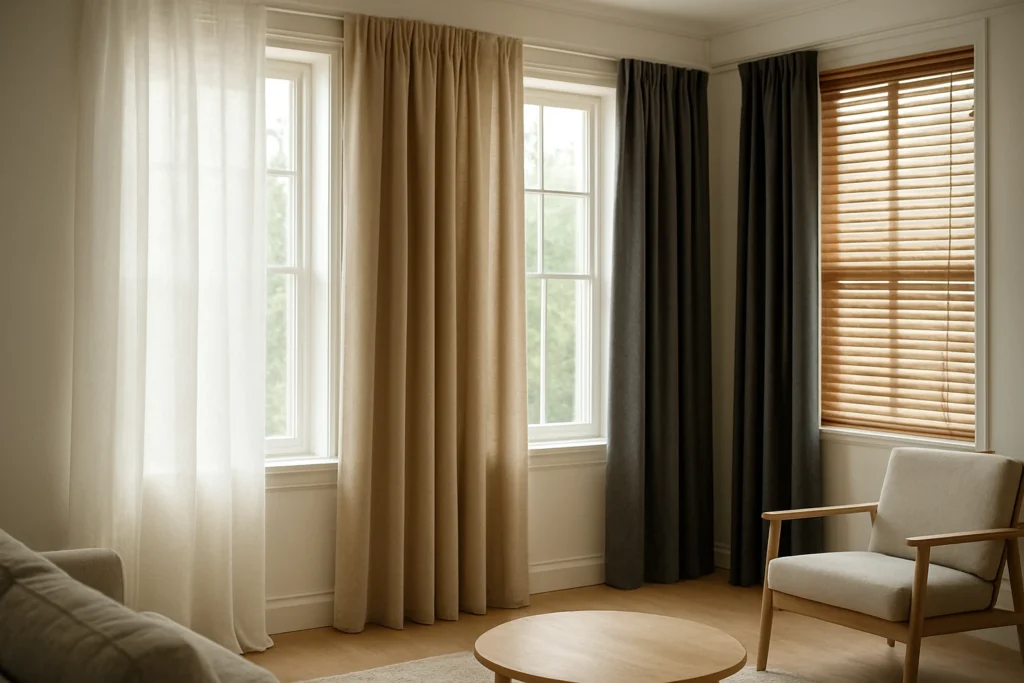
A practical observation: about 42 percent of living room customers in our projects choose layered curtains (sheer plus heavier outer panels). Layering gives daytime softness and evening privacy from one setup.
Step 3: Choose Fabric and Lining
Fabric sets the drape, how much light comes through, how well the curtain insulates, and what cleaning it needs. Lining changes the way fabric hangs, blocks light, and protects the outer fabric from sun damage.
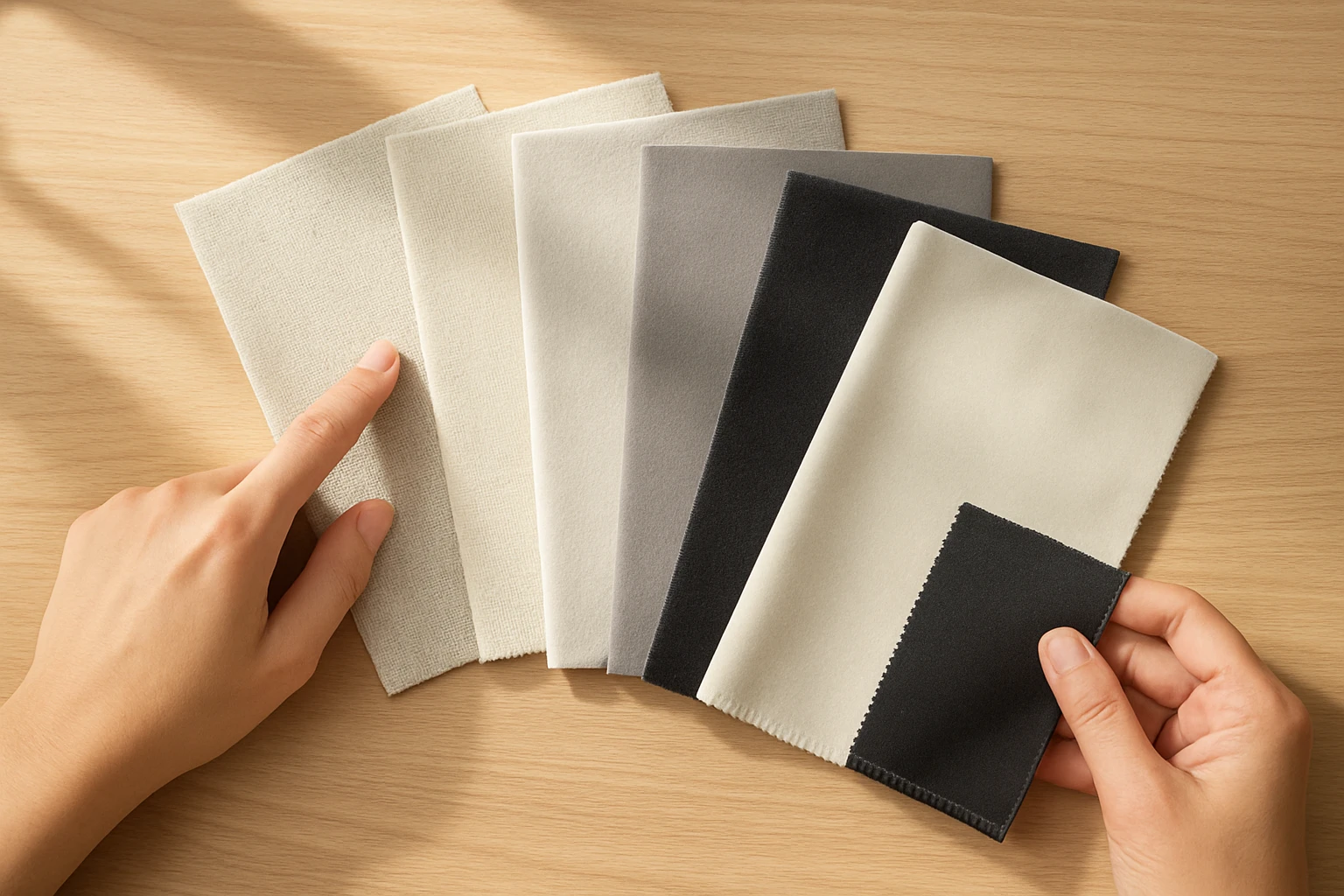
Fabric Notes and Where They Work Best
- Cotton and linen blends: breathable, relaxed look, easy to clean, best for living rooms or kitchens. See our notes in Best Material for Curtains for Every Room.
- Polyester and microfiber: stain resistant and budget-friendly, suitable for high-use rooms.
- Velvet: heavy, excellent for insulation and a formal look; see Velvet Curtains.
- Silk: elegant and delicate, needs careful lining and professional cleaning; see Silk Curtains.
- Chiffon and light sheers: great for filtering light and softening a view; see Chiffon Curtains.
Lining Types and Effects
- Unlined: cooler in hot climates but lets light through; best when you layer with sheers.
- Standard lining: protects fabric and gives better hang.
- Blackout lining: blocks 95 to 99 percent of visible light when fitted well; choose it for bedrooms or media rooms.
A specific detail from fitters: a single-weight fabric with a heavy lining can behave like a heavy fabric in terms of stack and drape, so plan rod clearance for the thicker stack.
Step 4: Pick Heading Style and Hardware
The heading style changes the curtain’s final look and the amount of fabric you need. Match the heading to the room’s scale and to the rod or track you plan to use.
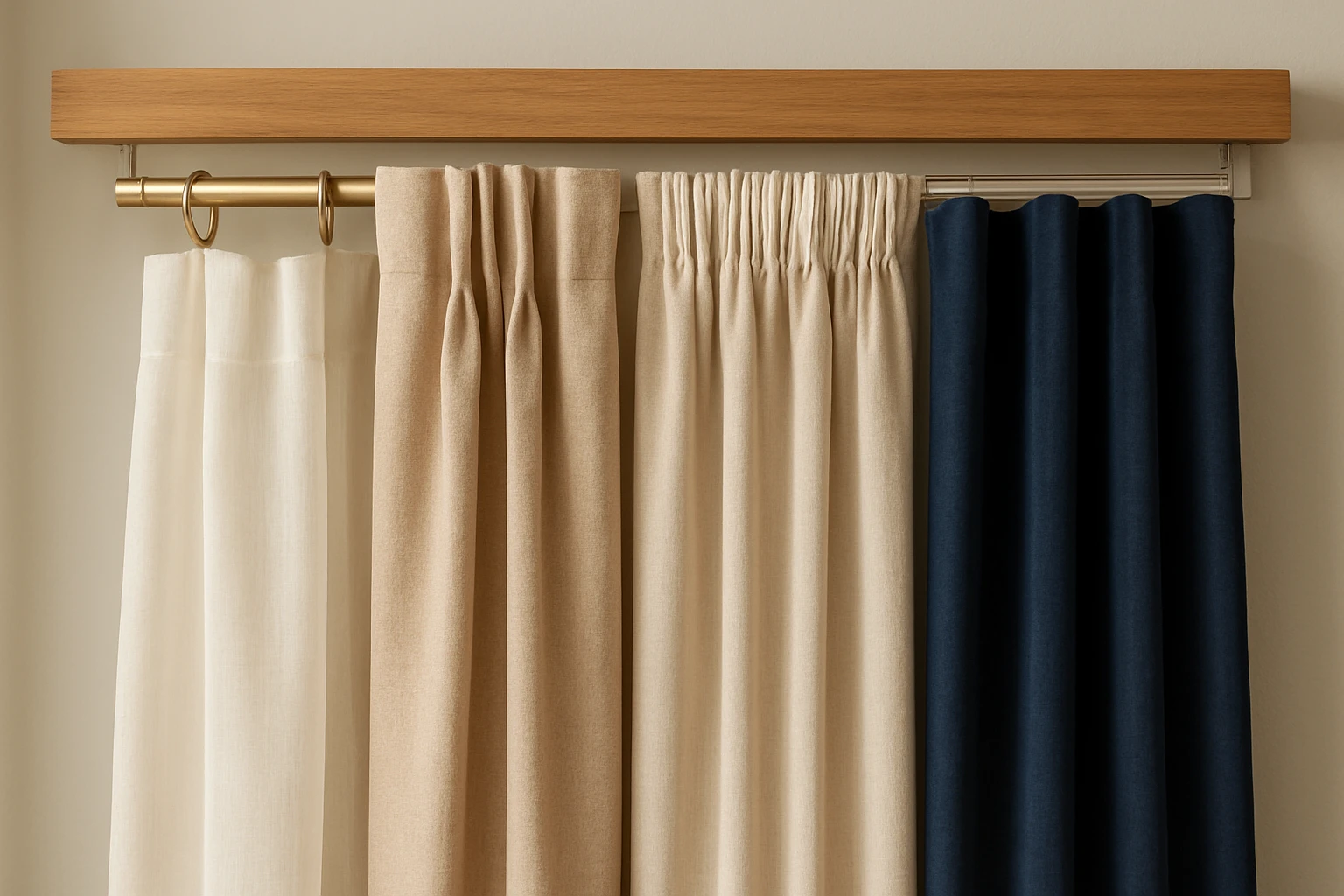
Common Heading Styles
| Heading Style | Look | Best Uses | Link |
|---|---|---|---|
| Eyelet | Clean, modern rings | Contemporary rooms, quick slide on rod | Eyelet Curtains |
| Pinch pleat | Tailored, formal folds | Living rooms, formal dining | Pinch pleat curtains |
| Pencil pleat | Casual gathered look | Traditional homes, many fabric types | Pencil Pleat Curtains |
| Wave | Smooth modern waves | Minimalist spaces, tracks | Wave curtains |
| Roman | Flat folds when raised | Windows where you want a neat stack | Roman Curtains |
Hardware Choices
- Rods: simple to install and work well with eyelet or pinch pleat.
- Tracks: better for wave and roman systems and for motorized setups; see Motorized Curtains.
A fitting tip: allow for stackback, the space the curtain uses when fully open. For heavy headings like pinch pleat or velvet, expect 20 to 30 cm of stack per side for a standard window.
Step 5: Select Length and Fullness
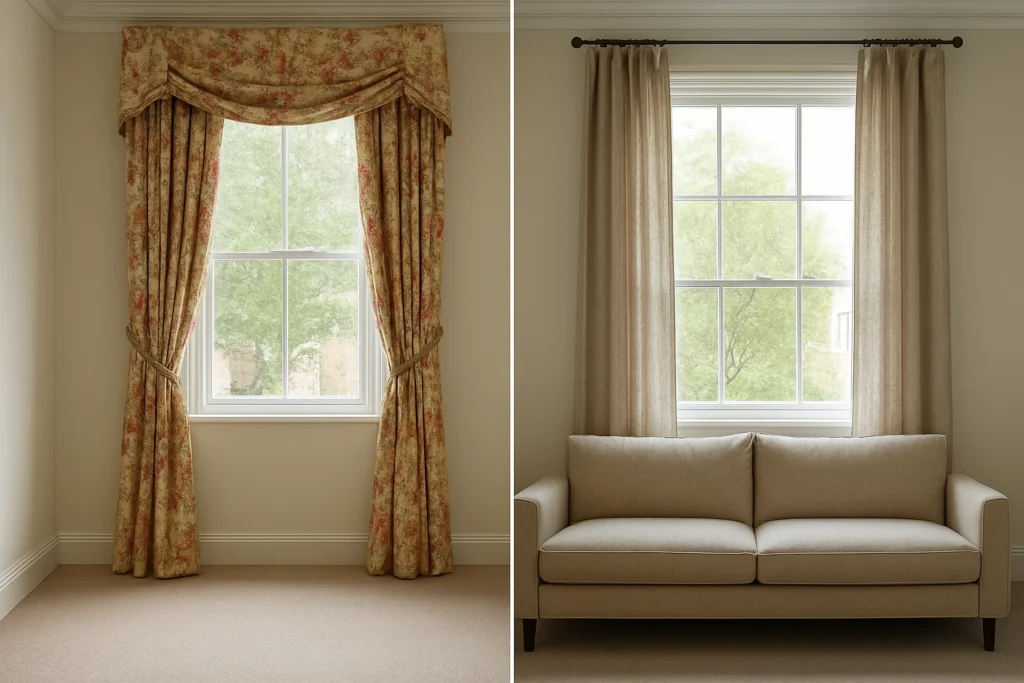
Length and fullness change how the room feels. Floor-grazing curtains make ceilings look higher. A small puddle looks formal and can hide a slightly short measurement.
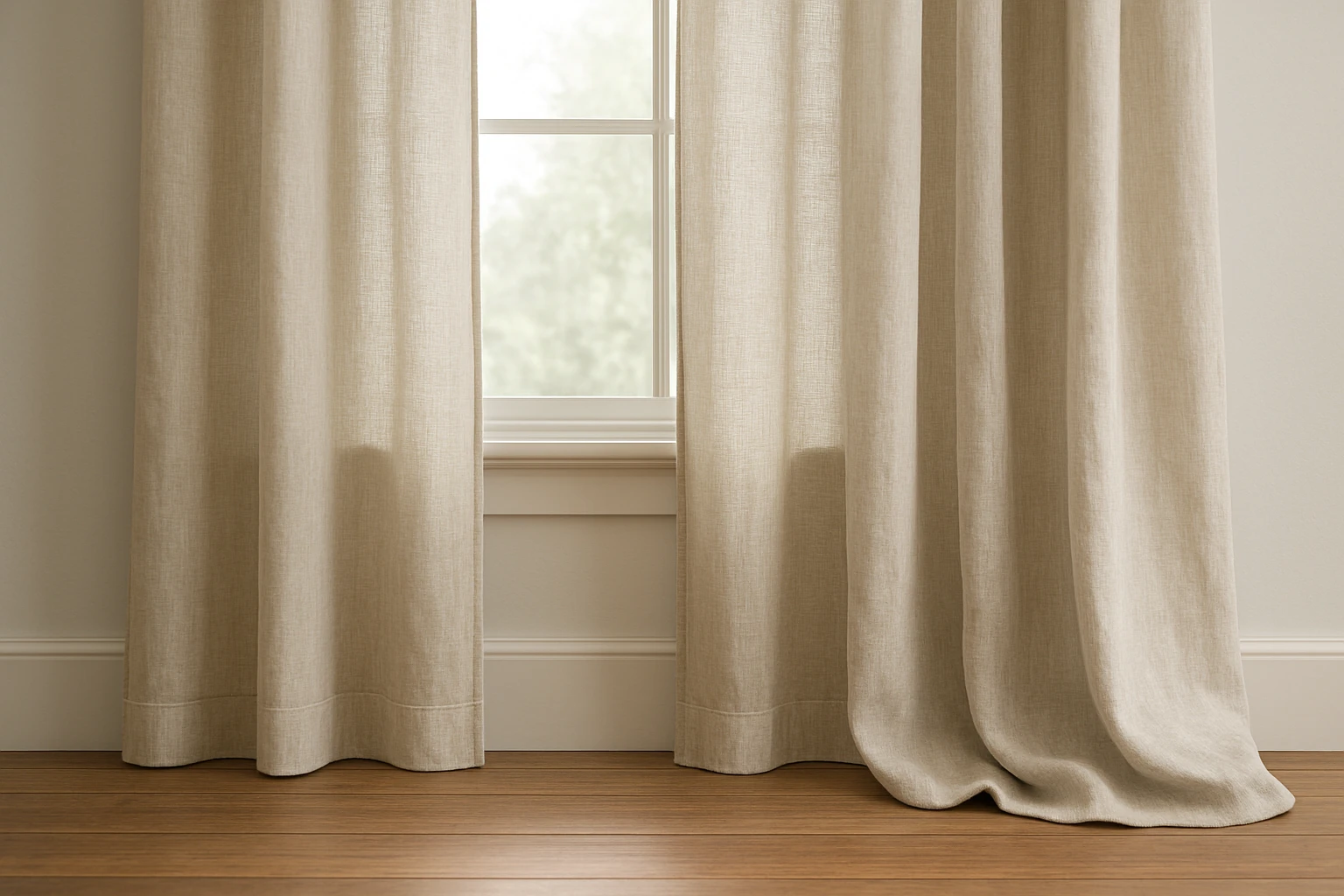
- Fullness is the amount of fabric you use compared to the window width. 1.5x is modest, 2x is common for a soft look, and 2.5x to 3x is very full and formal.
- For stackback, plan extra uncovered wall next to the window so open curtains do not block the glass.
Quick guide for length choices
| Style | Measure To | Where To Use |
|---|---|---|
| Sill length | Top of sill minus 1 cm | Kitchens, window seats |
| Floor length | Floor minus 1 cm | Most living rooms and bedrooms |
| Puddle | Floor plus 2 to 10 cm | Formal rooms, Victorian or classic styles |
Step 6: Match Curtains to Room Style and Scale
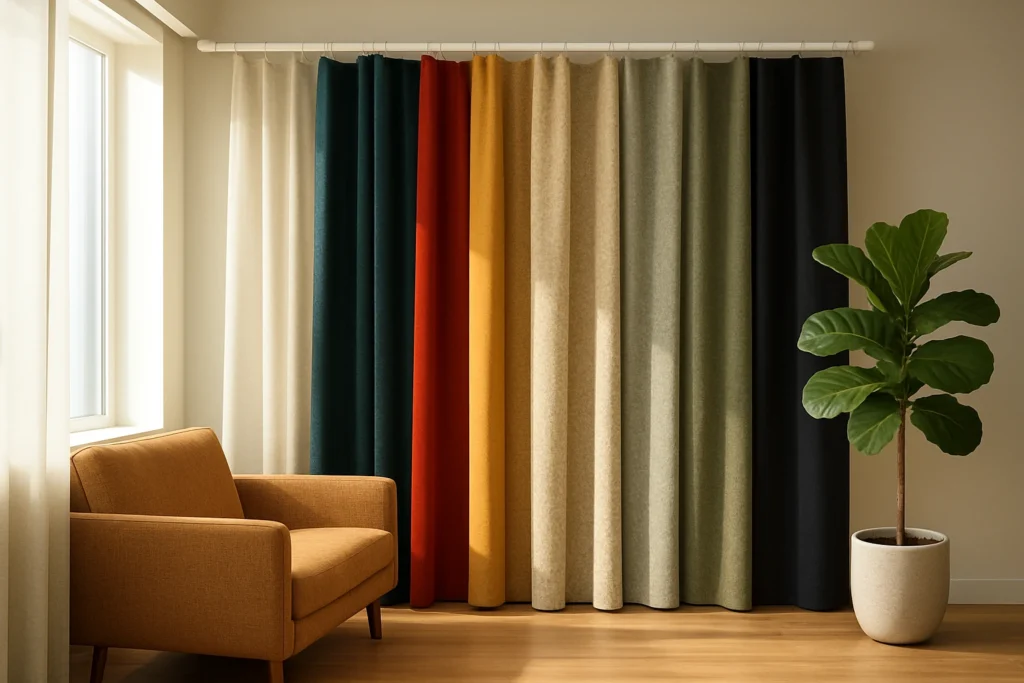
Treat curtains like furniture. They should match the room’s scale, color palette and function. Use pattern and color to balance the room rather than overpower it.
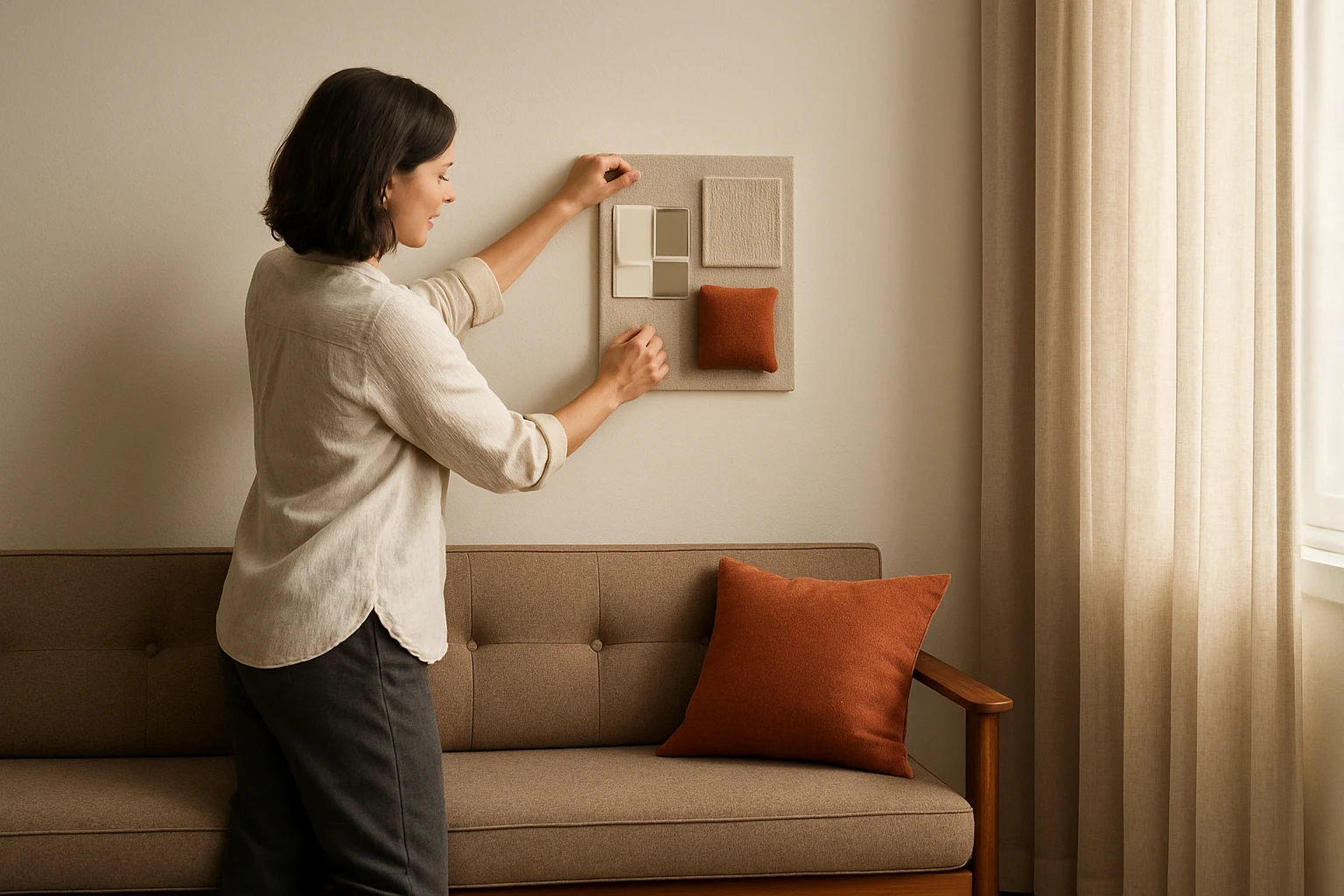
Practical design notes:
- Large patterns need more fabric so the repeat looks right, which raises cost for patterned fabrics.
- For low ceilings, hang the rod higher, 10 to 15 cm above the window frame, to make the room feel taller.
- If the room has busy wall patterns or furniture, pick solid curtains or subtle textures to keep the balance.
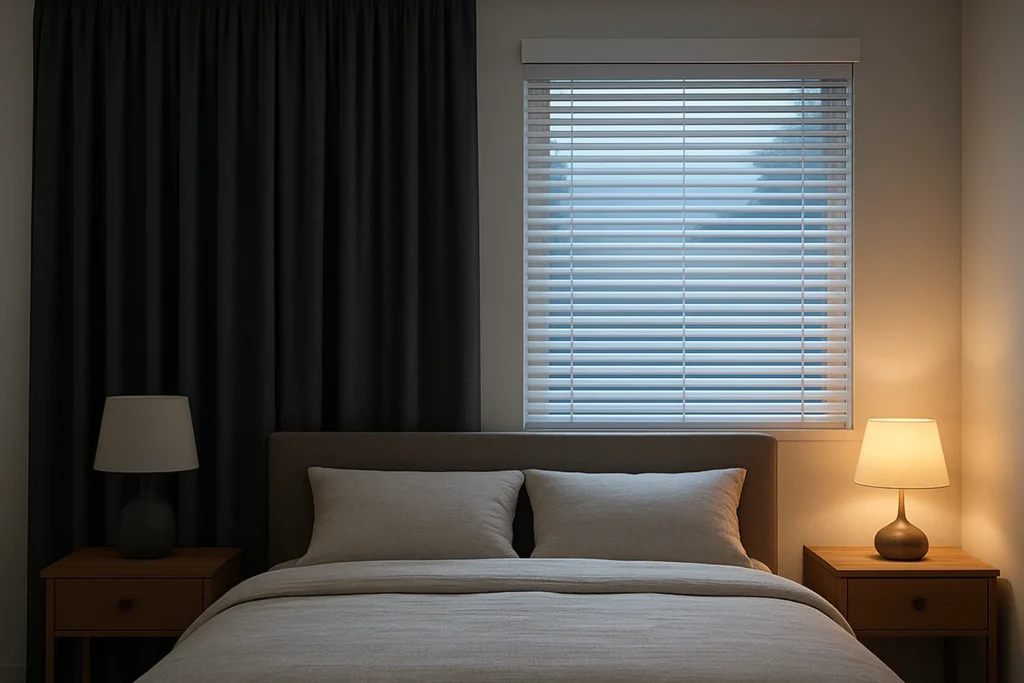
If you need help comparing coverings, our blog Blinds Vs Curtains: How to Choose the Right Window Covering explains where one option can be better than the other.
Step 7: Plan Installation and Care
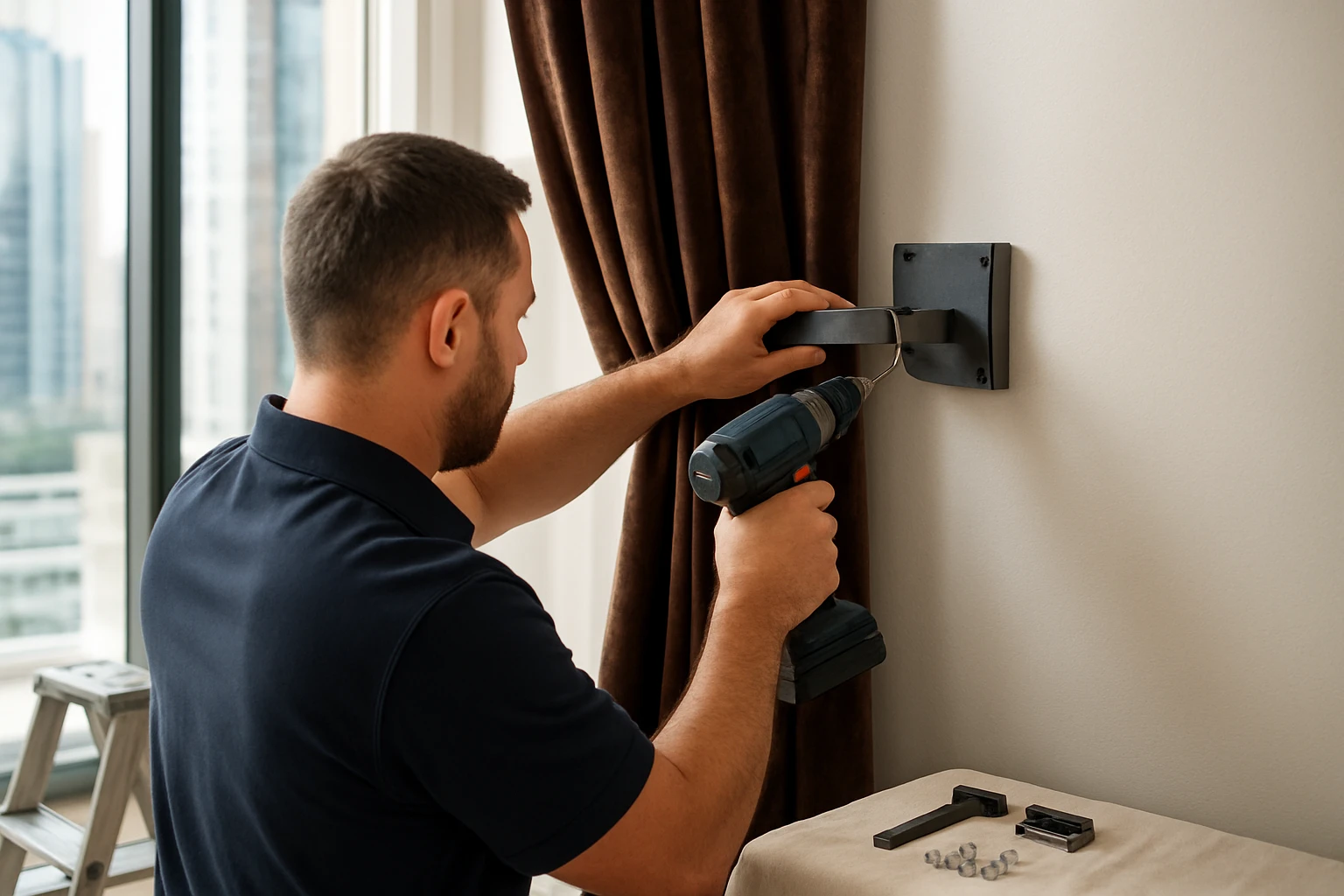
Decide if you will fit the curtains yourself or hire professionals. For heavy fabrics, wide spans, or motorized systems, a professional fit avoids problems with alignment and stackback.
- Motorized options add convenience for large or high windows; see Motorized Curtains.
- Care: check fabric care labels. Many linen and cotton blends are machine-washable. Silk and some velvets need professional cleaning. See Can You Wash Blackout Curtains Safely at Home for guidance on blackout care.
- Installation checklist: make sure the bracket depth matches the needed stackback, use a spirit level for straight installation, and test the full travel of curtains before final fixes.
A real-fit detail we log: for true blackout performance, curtains should overlap the frame by at least 5 cm on each side and sit within 1 cm of the window at the bottom.
Quick Comparison Table: Curtain Types at a Glance
| Type | Best For | Light Control | Typical Price Range (AED) | Maintenance |
|---|---|---|---|---|
| Sheer | Daylight softening, privacy in day | Low | 60–180 | Machine wash or gentle clean |
| Blackout | Bedrooms, media rooms | Very high | 80–150 | Spot clean or gentle wash per label |
| Velvet | Insulation, luxury look | High | 50–100 | Professional clean recommended |
| Silk | Formal spaces | Medium to high (with lining) | 130–230 | Professional cleaning only |
| Soundproof | Noise reduction | Medium to high | 150–300 | Follow manufacturer care |
| Roman | Neat stack, decorative | Variable | 95–180 | Depends on fabric, often lined |
Note: price ranges are indicative for made-to-measure curtains in the UAE market and depend on fabric, lining, heading and hardware choices.
Budgeting and Timeline
Plan for these costs: fabric by the meter, lining, heading and header tape, rods or tracks, fitting and any motorization. Lead times change with fabric complexity and custom details.
| Item | Typical Cost Range (AED) | Typical Lead Time |
|---|---|---|
| Standard fabric curtains (per window) | 300–1,000 | 7–14 days |
| Heavy fabric or custom silk | 300–800 | 2–5 weeks |
| Motorized track system | 1100–2500+ | 2–6 weeks |
A note from installers: always add 10 to 15 percent to fabric yardage for pattern repeats and header fullness when working with large patterns.
Common Mistakes and How to Avoid Them
- Mounting the rod too low. Raise the rod by 10 to 15 cm to make ceilings feel taller.
- Skimping on fullness. Too little fullness makes curtains look flat; aim for at least 1.8x on living room windows.
- Forgetting stackback. Measure for the rod and side clearance so open curtains do not block the window.
- Choosing the wrong lining. For bedrooms pick blackout or heavy lining for privacy and better sleep; about 58 percent of our clients now request blackout for master bedrooms.
Final 7-Step Checklist
- Measure width and drop accurately and note rod position.
- Decide the curtain function: privacy, darkening, insulation, sound control, or decoration.
- Choose fabric and lining based on function and care needs.
- Select heading style and confirm hardware and stackback.
- Pick length and fullness to suit room scale and look.
- Match color and pattern to room style and balance.
- Plan installation and follow fabric care instructions.
If you want specific recommendations for your room, our catalog pages on Velvet Curtains, Silk Curtains, Sheer Curtains and Blackout Curtains show real examples and detailed specs.
For a broader overview of curtain types and when to use them, see our post 14 Types of Curtains for Every Room: Styles, Uses & Tips and the material guide Best Material for Curtains for Every Room.
Frequently Asked Questions
How Much Fabric Fullness Do I Need for a Good Look?
Aim for 1.8x to 2x fullness for most living rooms, and 1.5x to 1.8x for narrow windows. Fullness affects folds and how the curtain hangs, and more fullness usually means a richer look.
Can I Wash Blackout Curtains at Home?
Some blackout curtains are machine washable; others need gentle or professional cleaning depending on the face fabric and liner. Check the care label and test a small area; see our washing guide for blackout fabrics linked in the article.
Which Heading Style Is Best for a Modern Living Room?
Eyelet or wave headings work well for modern rooms. Eyelet gives clean vertical lines and is easy to open, while wave needs a track but provides smooth, uniform folds.
How High Should I Mount a Curtain Rod to Make Ceilings Look Taller?
Mount the rod 10 to 15 cm above the window frame; if your ceiling is low, you can go higher toward the ceiling line to make the room feel taller, but keep hardware and stackback practical.
Are Motorized Curtains Worth the Cost?
Motorized curtains are valuable for large, high, or hard-to-reach windows and for smart-home convenience. They add upfront cost but improve daily use and can extend fabric life by controlled, even movement.