For most bedrooms, heavy blackout or soundproof curtains give the biggest single improvement in sleep. They block light and soften noise at the same time. Blinds can cut daytime glare and add privacy, but alone they often let in light or sound that wakes sleepers. The best choice matches the sleep problem you have and the type of window you own.
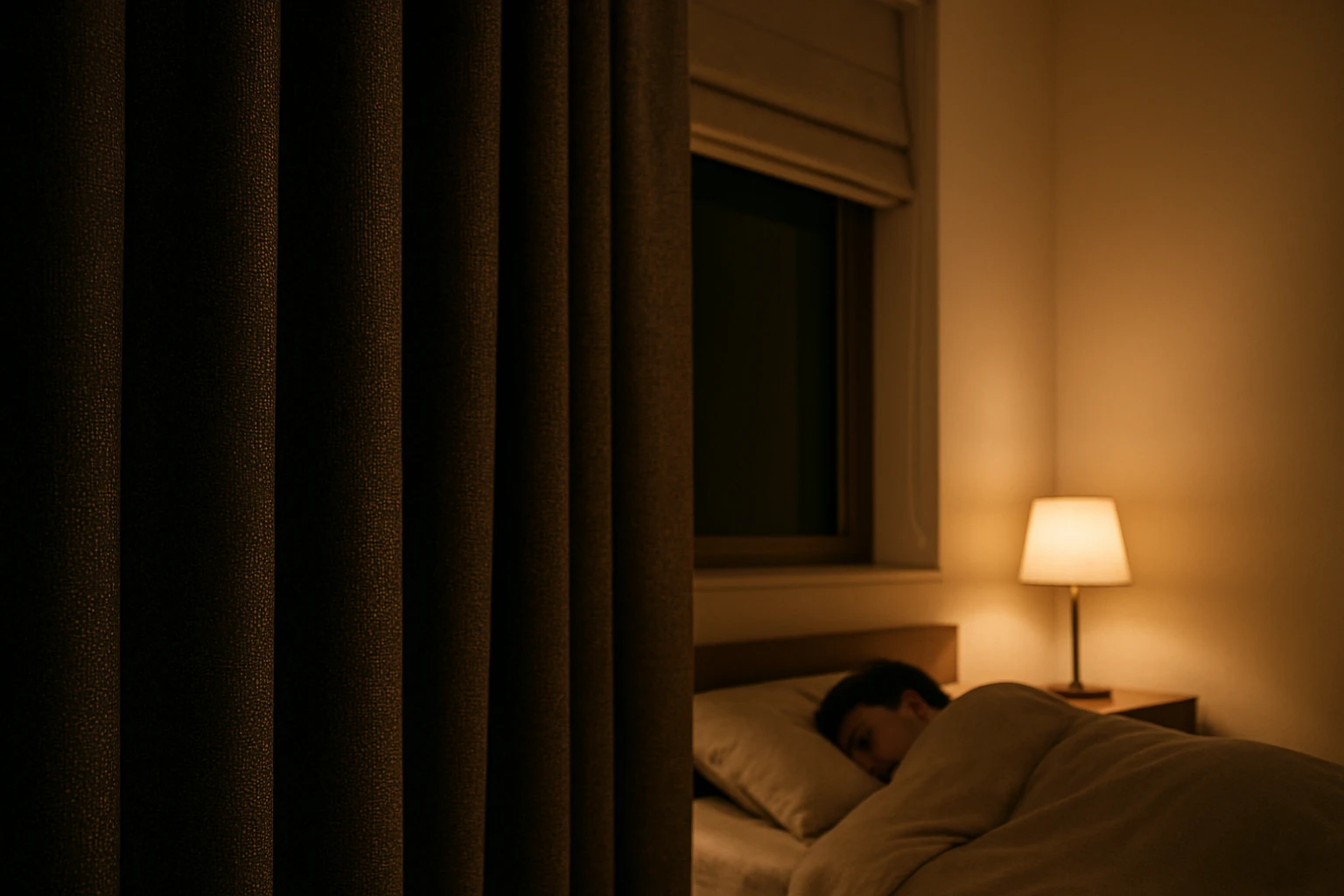
This article compares curtains and blinds for bedrooms and gives clear, practical advice you can use today. In this guide the team at Curtains and Blind explains which options reduce light, cut noise, help with temperature control, and fit common bedroom windows.
How Light Affects Sleep
Light is the most common immediate disruptor of sleep because it signals the brain to wake up. Even a small bright patch on a wall or a gap at a curtain edge can shorten deep sleep and make early waking more likely. Bedrooms that face streetlights or early sun need stronger light control than rooms that face a private yard.
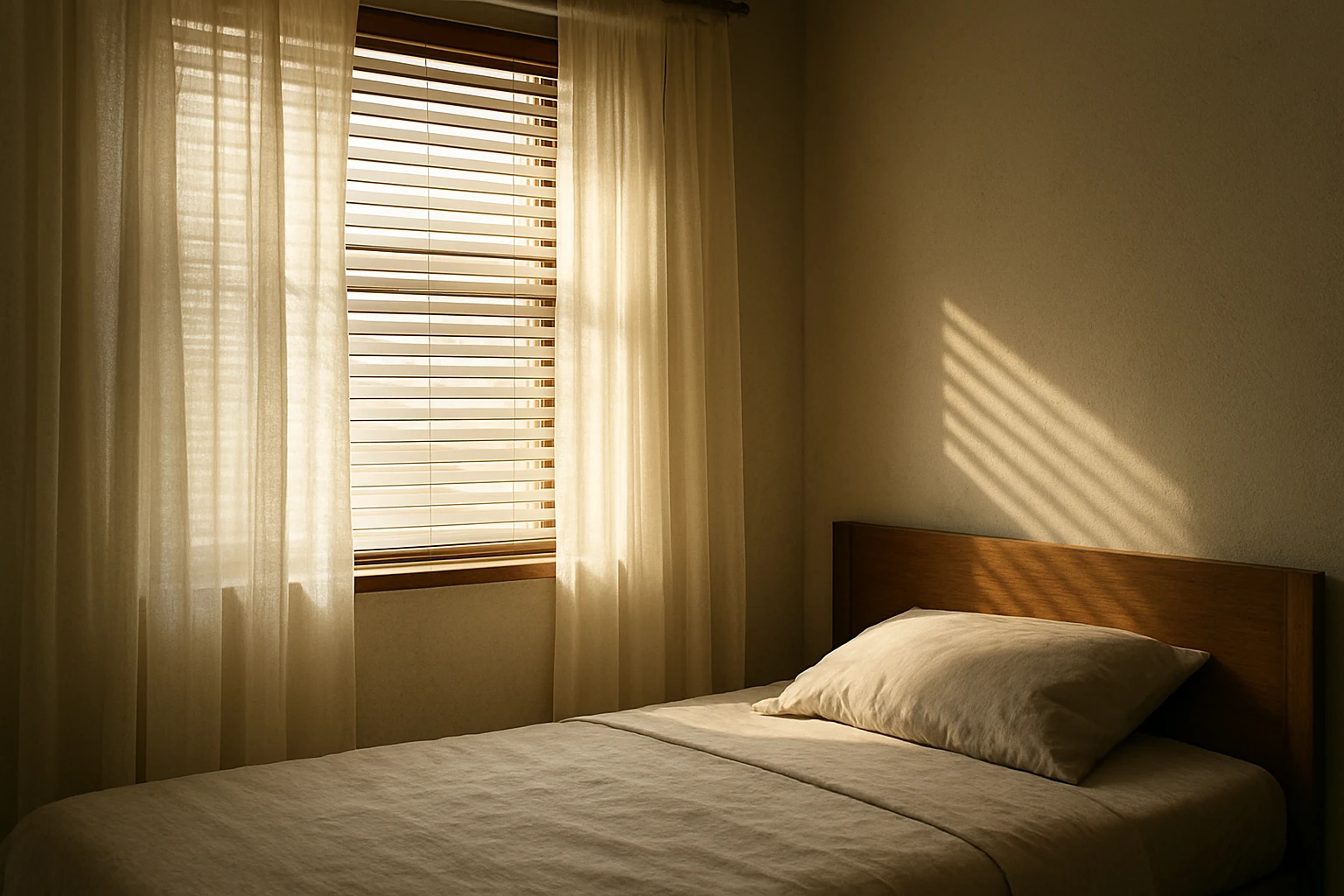
Curtains and blinds reduce light in different ways:
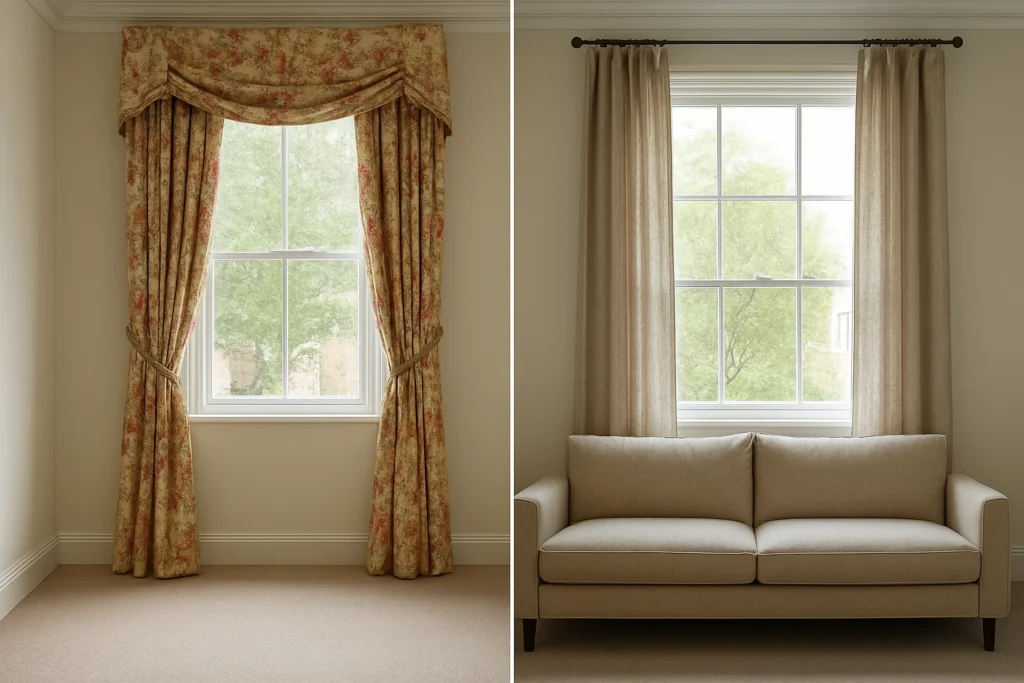
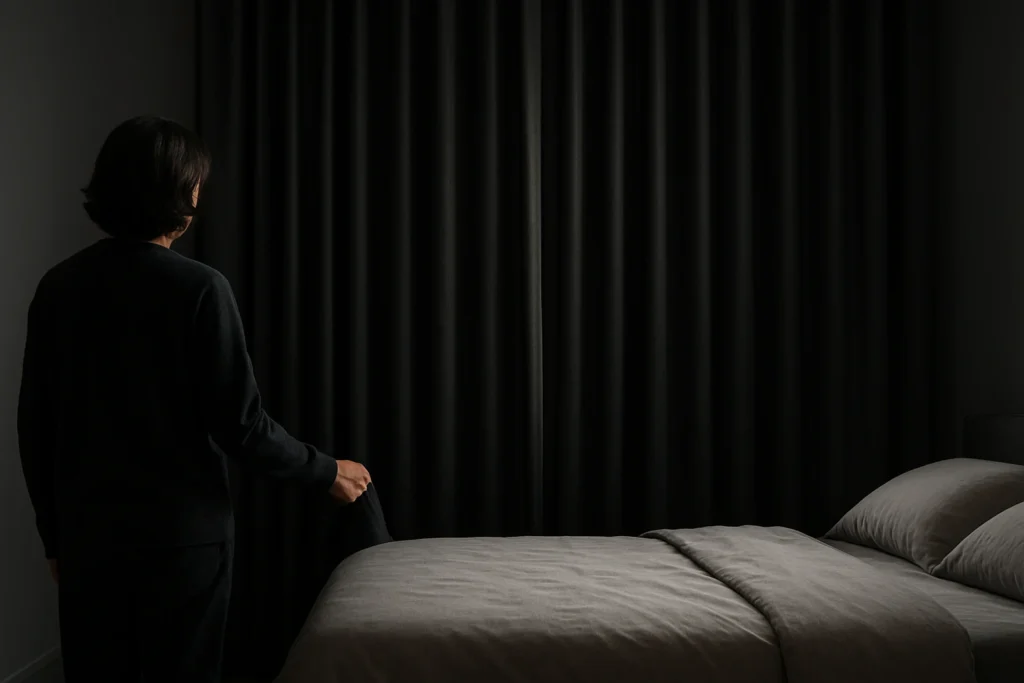
- Curtains, especially blackout curtains, block light with dense fabrics and by overlapping the window frame when mounted correctly. They also work well when layered with sheer panels for daytime privacy. See the post on Room Darkening Curtains That Improve Sleep, Privacy, and Comfort for examples and fabric choices.
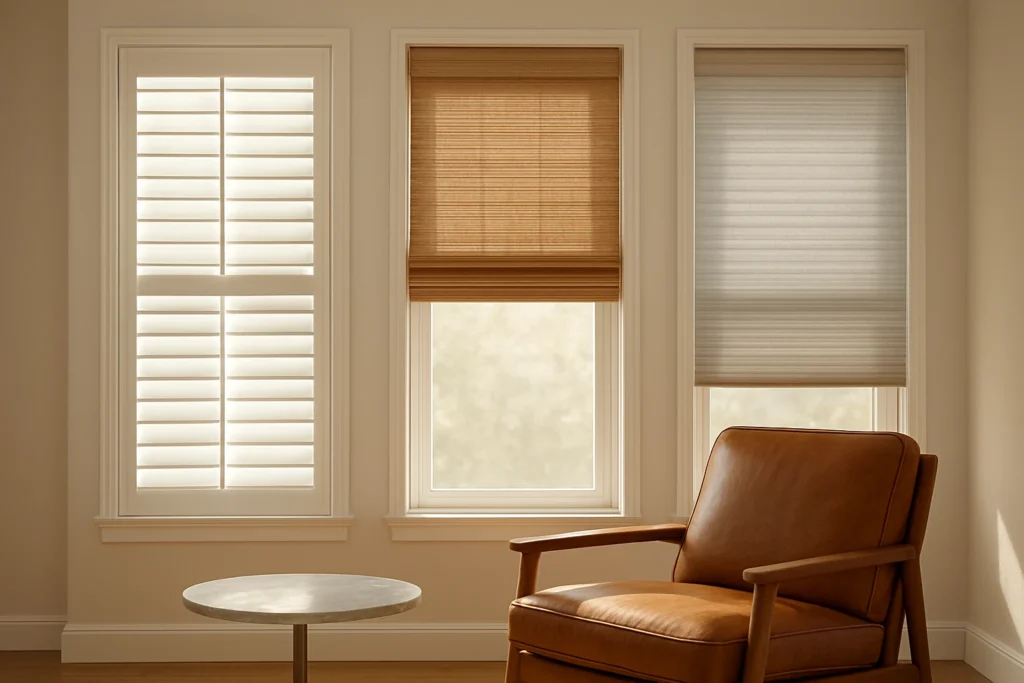
- Blinds block direct view and control incoming light with slats or a solid roll, but many blinds still let light through edges or slat gaps. Roller blinds and Roman blinds provide more continuous coverage than slatted blinds but may need side channels or a curtain layer to be fully darkening.
Practical Light Control Tips
Measure for Full Coverage:
Measure from at least 10 centimetres above the window frame to 15 centimetres on each side to reduce gaps, and order wider or longer panels when a precise fit is not possible.
Add Side Channels for Complete Darkness:
If you need total darkness for shift work or infant sleep, use blackout curtains with Velcro or track-mounted side channels to stop edge light.
Noise Reduction and Sleep
Noise affects sleep differently from light because it can wake a person from light stages and reduce the amount of restorative deep sleep. Windows that face busy streets, playgrounds, or building systems are common sources of sleep disruption.

Curtains are often better at absorbing and scattering sound because of their mass and fabric layers. Heavy fabrics like velvet and specialty soundproof curtains reduce mid and high frequency noise inside the room. Blinds do not add the same mass and therefore have a smaller effect on outside noise unless paired with curtains.
Soundproofing Practical Steps
Use Heavy, Dense Fabrics:
Choose curtains with dense inner linings or add a separate acoustic lining. Adding an acoustic lining of 300 to 500 grams per square metre noticeably reduces traffic rumble in rooms with single-pane windows.
Create an Air Gap:
Mount curtains so they hang several centimetres beyond the window glass. That air gap helps reduce sound transmission compared with installing a blind directly against the glass.
Insulation, Temperature and Comfort
Windows are a major source of heat loss in winter and heat gain in summer. The right window covering keeps the bedroom temperature steadier and reduces night sweats or cold wakes.
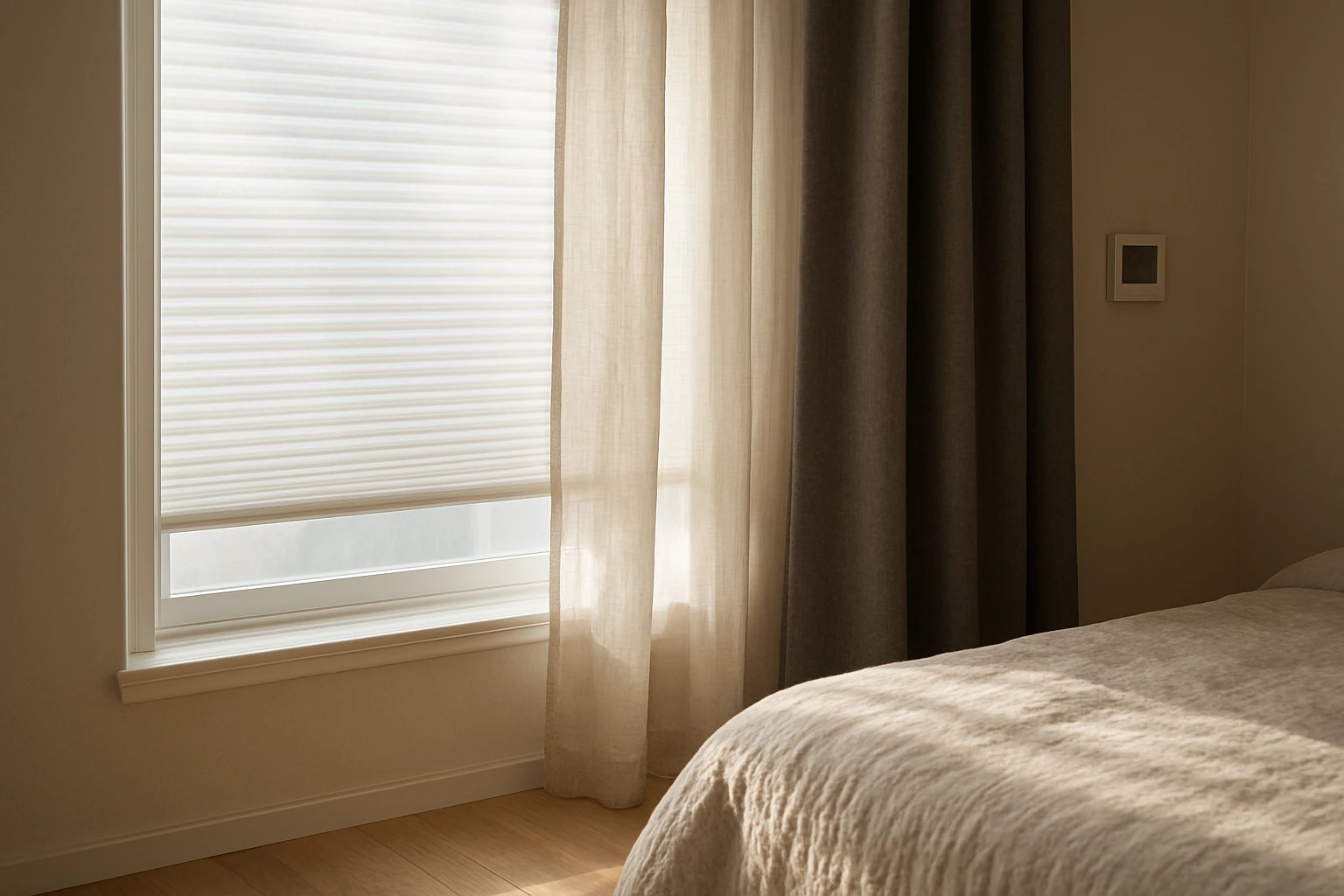
- Thick curtains with thermal linings trap a layer of air at the window and slow heat transfer. Blackout curtains designed for energy conservation work well in both hot and cold climates.
- Blinds made from insulating materials, such as cellular (honeycomb) blinds, provide a compact insulating layer when fitted close to the window. For many windows, a curtain and blind together give better performance than either alone.
Curtains Vs Blinds: Quick Comparison Table
| Sleep Factor | Curtains (Best Types) | Blinds (Best Types) | Notes |
|---|---|---|---|
| Light Blocking | Blackout curtains, lined wave curtains | Roller blinds, Roman blinds with side channels | Curtains overlap edges; blinds may need channels to stop edge light |
| Noise Reduction | Velvet curtains, soundproof curtains | Limited; heavy wooden blinds slightly dampen sound | Curtains add mass; blinds are rigid and thin |
| Insulation | Thermal-lined curtains, heavy velvet | Cellular blinds, layered roller blinds | Curtains with lining trap air; cellular blinds also insulate well |
| Privacy | All curtain types | Venetian blinds, zebra blinds | Blinds allow staged privacy with slats or layers |
| Cleaning | Machine-washable curtains or dry clean | Dust and wipe blinds; some parts removable | Blinds can be easier for light dusting; curtains may need yearly cleaning |
| Cost Range | Mid to high depending on fabric | Low to mid for basic models | Custom fabrics and linings increase cost |
Choosing Based on Your Bedroom Problem
Different sleep issues need different solutions. The table below gives direct recommendations you can follow.
| Sleep Issue | Recommended Primary Solution | Secondary Solution | Why It Works |
|---|---|---|---|
| Early Morning Sun | Blackout curtains mounted outside the frame | Roller blind under curtain | Curtains block edge light; blind gives layered control |
| Street Noise | Soundproof curtains with heavy lining | Thick wooden blinds for interior diffusion | Mass and air gap reduce noise transfer |
| Heat In Summer | Light-coloured thermal curtains | Cellular blinds for insulation | Reflective or insulating layers limit heat gain |
| Privacy At Night | Thick curtains or layered sheer plus heavy curtain | Zebra blinds with closed stripes | Curtains fully block; zebra offers daytime privacy control |
Layering Curtains and Blinds for Best Sleep
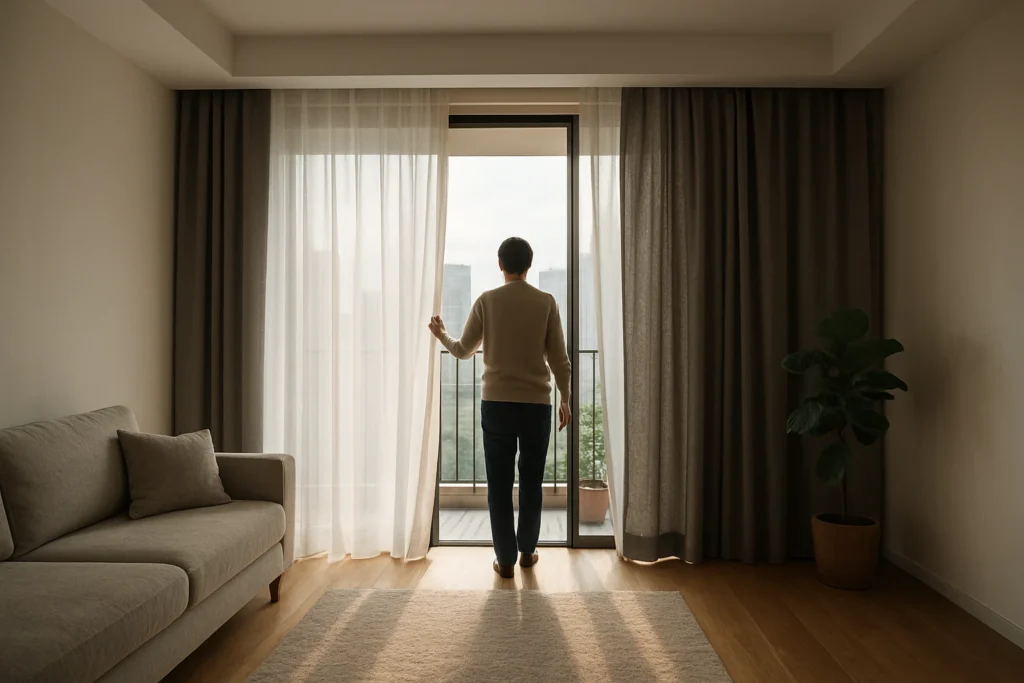
Layering combines the strengths of both systems and is often the best practical option for bedrooms. For example, pairing a sheer curtain with a blackout curtain gives daytime light diffusion and complete darkness for sleep. The post on How to Layer Sheer and Blackout Curtains for Better Light Control shows common track and rod setups.
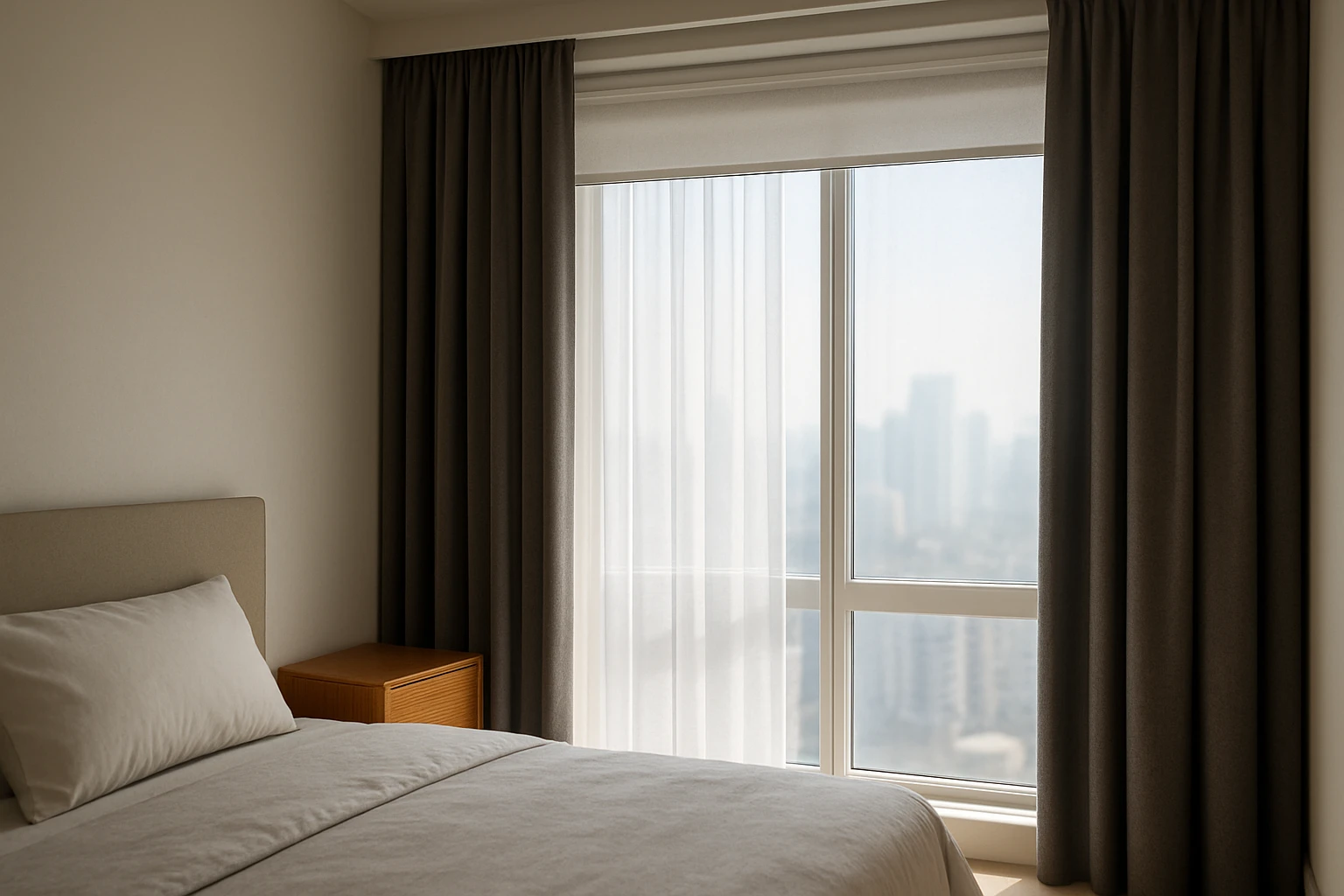
Layering Options:
Sheer Plus Blackout:
Sheers let light in by day for a soft room feel, and a blackout panel pulls across at night for sleep.
Blind Plus Curtain:
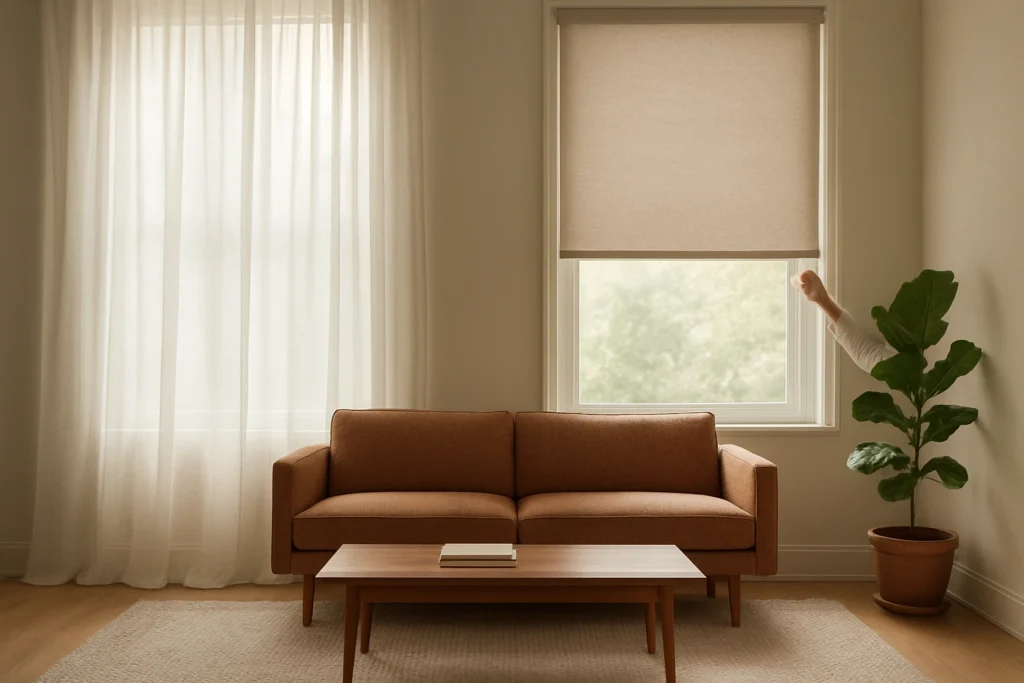
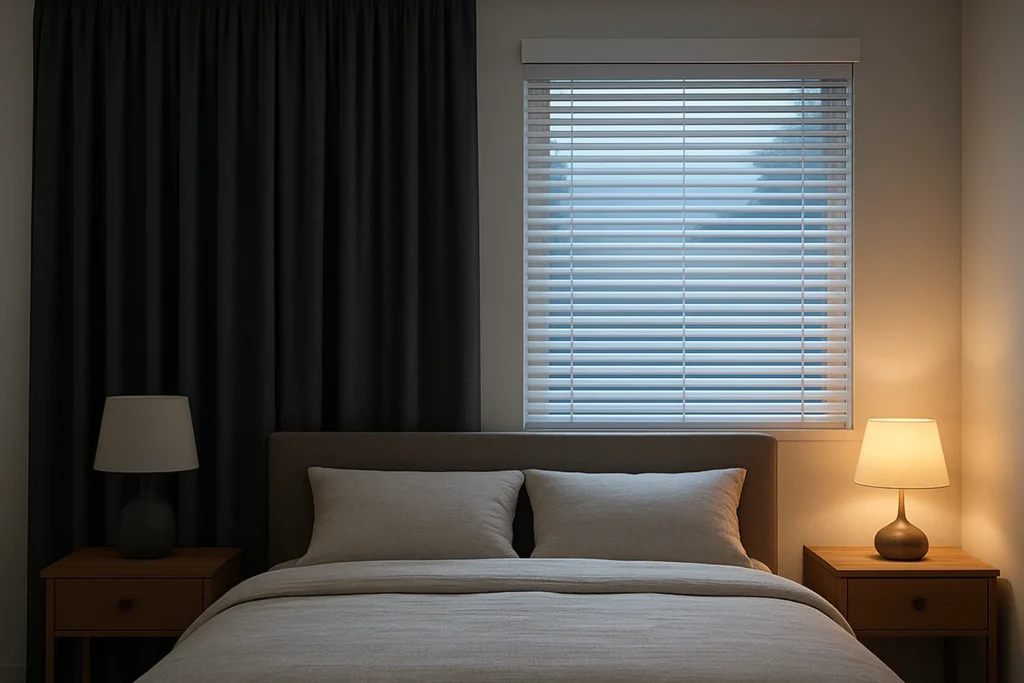
A roller or Roman blind close to the glass reduces daytime glare, and a curtain outside the frame adds light sealing and sound absorption.
Internal Blind Between Glass and Curtain:
For windows with limited frame depth, install a slim blind inside the window and a curtain outside to combine benefits without crowding the sash.
Installation and Mounting Tips
Correct mounting matters as much as the product type. Small gaps and poor fit undo the best fabric choice.
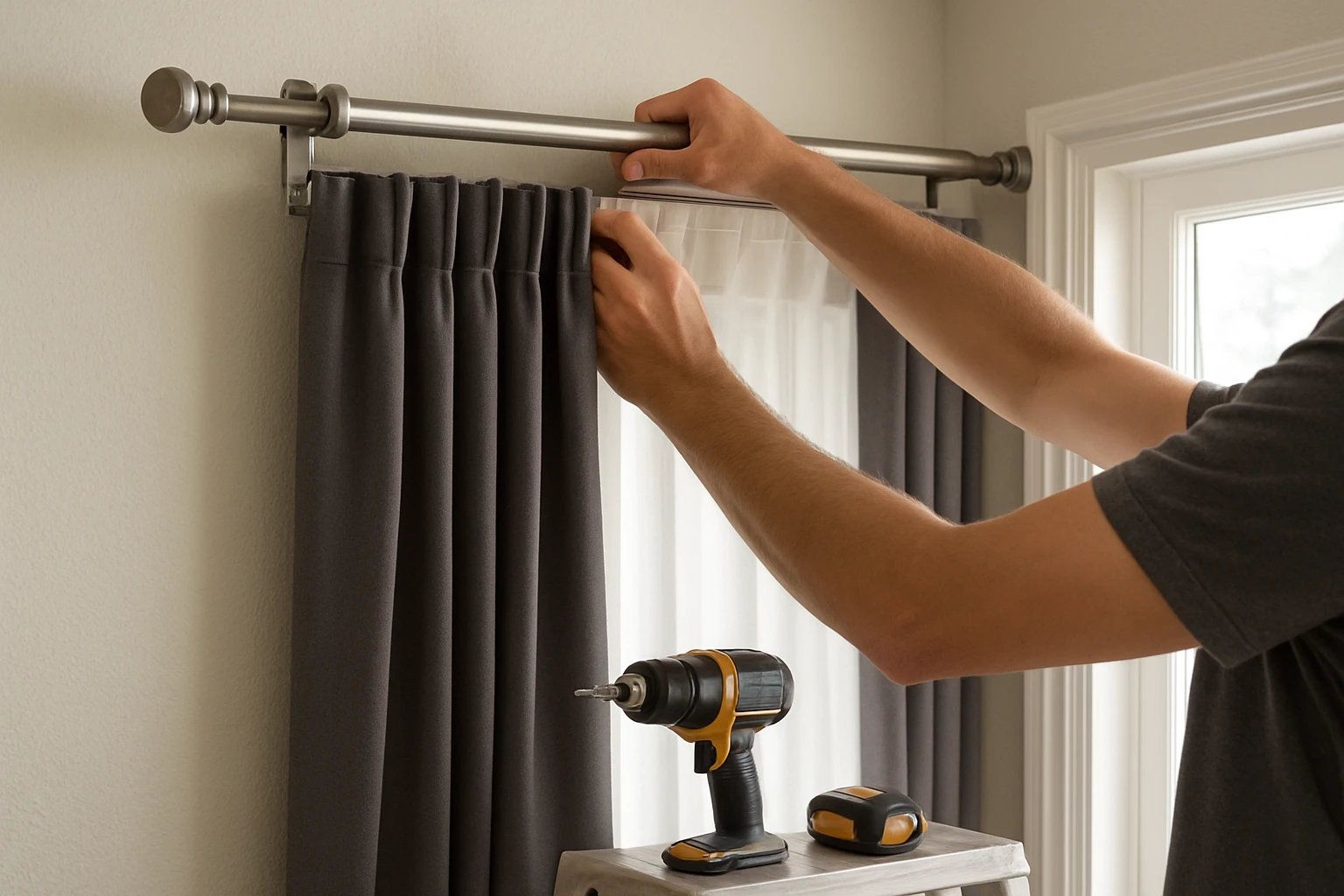
Installation Checklist
- Mount curtain rods at least 10 centimetres above the window head to block higher-angle sun. This also makes windows look taller.
- Order curtains wider than the window so panels stack neatly and cover the frame when closed. A fullness ratio of 2 to 2.5 times the window width works for pleated and wave curtains.
- Use a double track or two rods if you plan to layer sheers and a blackout panel.
- Add side overlap or tracks for blackout needs and Velcro seals for nurseries or shift-worker bedrooms.
Buying Guide: What to Ask For
When you speak to a supplier or measure at a store, ask these specific questions to avoid common mistakes:
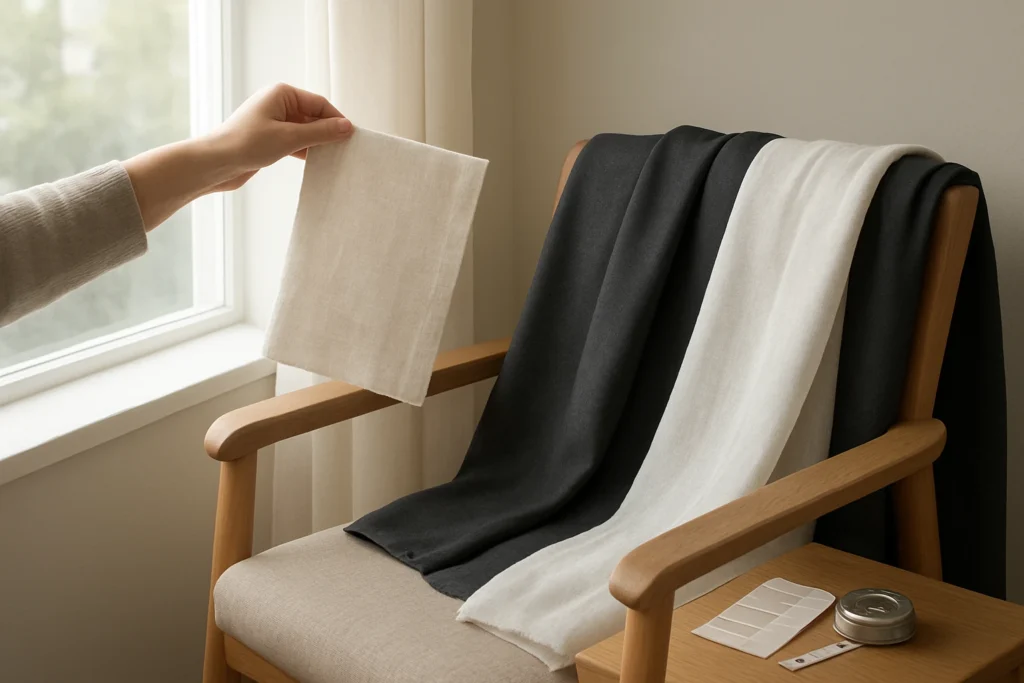
- What is the fabric weight and is there a thermal or acoustic lining available? (We prefer 220g plus for effective blackout curtains.)
- Can I get side channels or a tracked system to block edge light? For tight darkness, side channels are essential.
- For blinds, is there an option that fits inside the frame with minimal light bleed, or will it require additional sealing?
- Are there motorized options if you want timed light control? Motorized curtains offer convenience for shift workers and for rooms with high windows. See Motorized Curtains.
Materials and Styles Worth Considering
Some materials perform better for sleep-related goals:
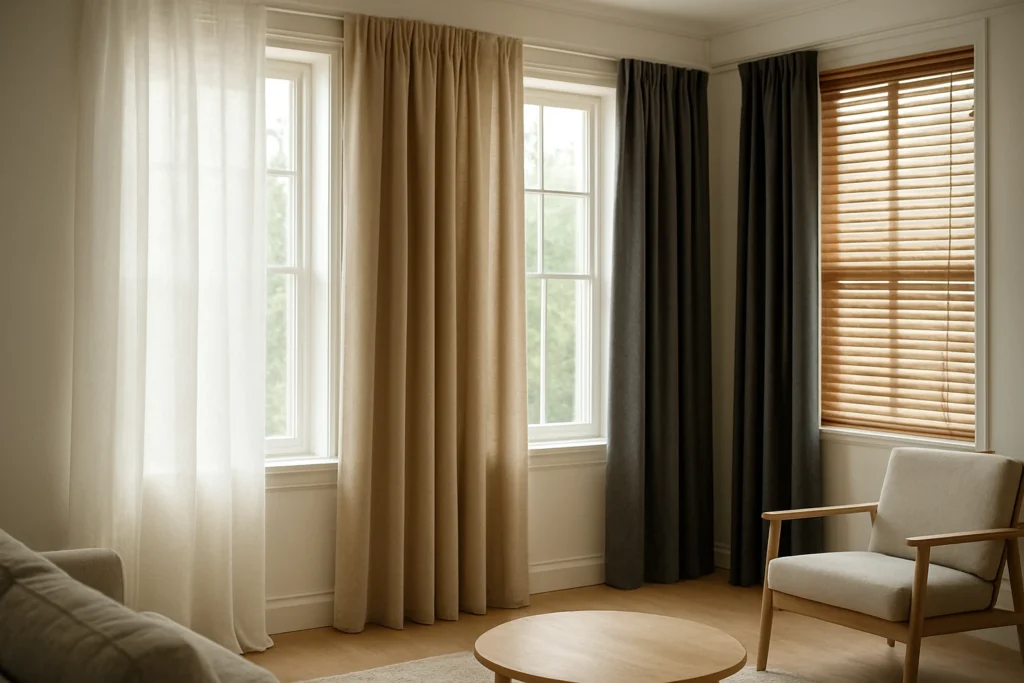
- Velvet and heavy woven fabrics: strong sound absorption and excellent light blocking. See Velvet Curtains.
- Thermal-lined cotton and polyester blends: durable and easier to clean.
- Silk and silk blends: stylish but often require professional cleaning; use as a decorative outer layer rather than the primary blackout layer. See Silk Curtains.
- Wooden and faux-wood blinds: add warmth and some sound diffusion; combine with curtains for best sleep effect. See Wooden Blinds.
- Roller and Roman blinds: clean lines and strong light control when well-fitted. See Roller Blinds and Roman Blinds.
- Zebra and Venetian blinds: offer staged control of light and privacy but usually do not replace a heavy curtain for sleep. See Zebra Blinds and Venetian Blinds.
Cost Considerations and Lifespan
Curtains and blinds vary widely in price depending on fabric, mechanism, and custom fitting. Simple roller blinds are cost effective and last many years with light use. High-quality custom curtains with thermal and acoustic linings cost more but deliver stronger sleep benefits and often last longer when cared for correctly.
A common mistake is buying cheap blinds for a noisy or bright window and then adding curtains later. Plan the full solution first to avoid spending twice.
Maintenance and Cleaning
Keeping coverings clean helps sleep because dust and allergens worsen allergies and nasal congestion.
- Blinds: wipe slats weekly with a microfiber cloth, and deep clean removable parts twice a year.
- Curtains: follow fabric care. Machine-wash sheers and washable curtains two to three times a year; dry-clean heavy fabrics as recommended.
Which Should You Choose: Decision Guide
Start by identifying the bedroom’s dominant sleep problem:
- If light is the main issue, choose blackout curtains as the primary fix and add a blind for daytime flexibility.
- If noise is the main issue, choose heavy soundproof curtains and mount them to create an air gap.
- If temperature swings are the main issue, use thermal-lined curtains possibly combined with cellular blinds.
- If you want minimal fuss and a tidy look, a well-fitted roller blind plus light curtains for style can work, but expect some compromise on complete darkness.
If you cannot decide, a reliable approach is a roller or Roman blind mounted close to the glass plus a full-length blackout curtain on an outer rod. This combo gives layered control, insulation, and the best chance of uninterrupted sleep.
Common Installation Mistakes to Avoid
- Mounting rods too close to the window head which leaves a visible light gap at the top.
- Choosing curtains that are too narrow so they do not stack properly when open.
- Fitting blinds inside a frame without checking for light bleed at the edges when complete darkness is required.
Products to Consider from Curtains and Blind
For bedrooms where sleep is a priority, check these categories on the site: Blackout Curtains, Soundproof Curtains, Sheer Curtains, and Roller Blinds. For more style options consider Velvet Curtains and Roman Curtains.
Summary: Practical Next Steps
- Identify the bedroom window direction and the main sleep issue: light, noise, or temperature.
- Choose a primary solution: blackout or soundproof curtains for serious light or noise problems; insulating blinds if space is tight.
- Plan a layered system if you want both daytime softness and night darkness: blind plus curtain is a reliable choice.
- Measure carefully and ask for side channels or track options if you need total darkness.
Start with one measure and test it for a week before adding the next. A common fix that works in many bedrooms is installing a fitted roller blind plus a lined blackout curtain on an outer track.
Further Reading
- Soundproof Curtains for Quieter Rooms and Better Sleep
- Room Darkening Curtains That Improve Sleep, Privacy, and Comfort
- How to Layer Sheer and Blackout Curtains for Better Light Control
- Blinds Vs Curtains: How to Choose the Right Window Covering
Frequently Asked Questions
Are Blackout Curtains Always Better Than Blinds for Sleep?
Blackout curtains usually block more light and add sound absorption, so they are often better for sleep. Blinds can be effective when tightly fitted or when paired with curtains. The best choice depends on whether light, noise, or temperature is the main problem.
Can Blinds Alone Give a Dark Bedroom for Shift Work?
Some blinds, like well-fitted roller or cellular blinds with side seals, can give a very dark room, but small light gaps are common. For guaranteed darkness, add a blackout curtain over the blind or use side channels.
Do Soundproof Curtains Really Reduce Street Noise?
Heavy, densely lined curtains reduce mid and high frequency noise inside the room by absorbing sound and creating an air gap. They do not replace double glazing for very loud low frequency noise, but they often give a useful reduction that helps sleep.
What Is the Easiest Maintenance Option for Bedrooms?
Roller blinds and Venetian blinds are easiest to dust regularly. For curtains, choose machine-washable fabrics or removable linings so you can clean them seasonally without professional service.
Should I Choose Motorized Curtains for Better Sleep?
Motorized curtains help if you need timed light control, for example to open after sunrise or close at a set bedtime. They are useful for high windows or for people who sleep on irregular schedules, but they add cost and require a reliable power option.