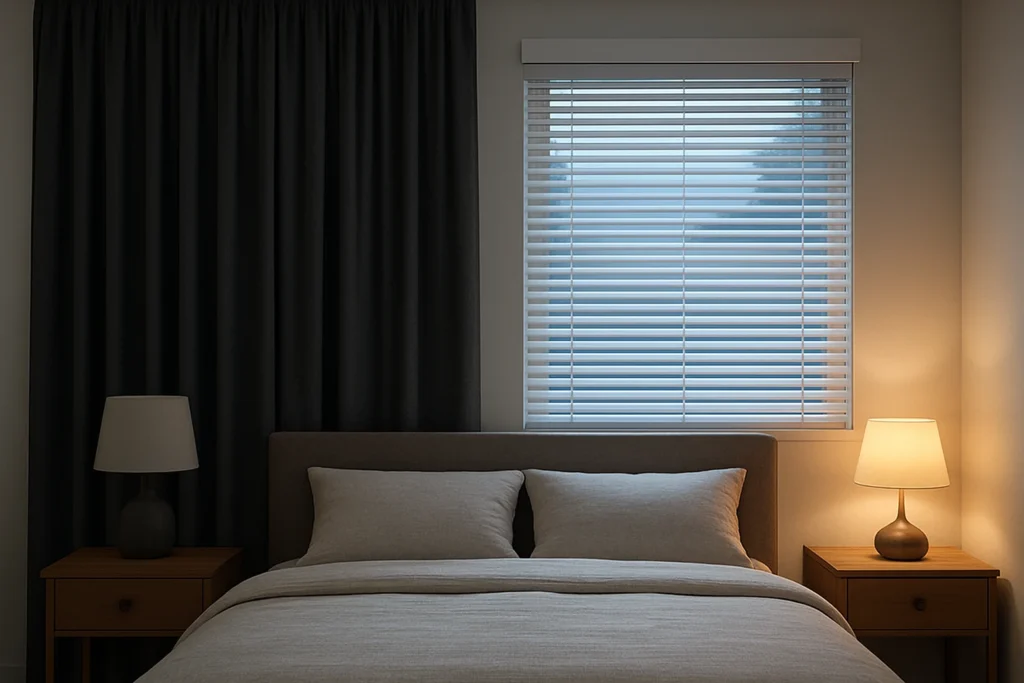
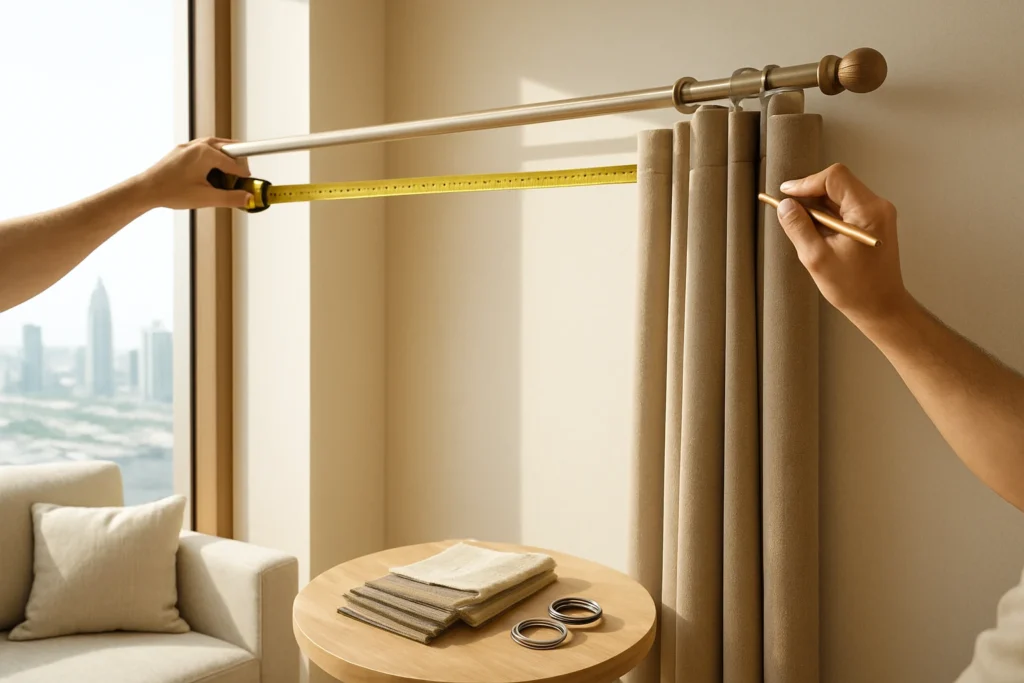
Measuring curtains starts with a simple plan so the fabric fits, hangs well and looks right in the room. Below you will find clear steps for width and drop, notes for common header styles, a standard measurement table, and a checklist to use when ordering. The team at Curtains and Blind recommends measuring twice and writing each number down as you go.
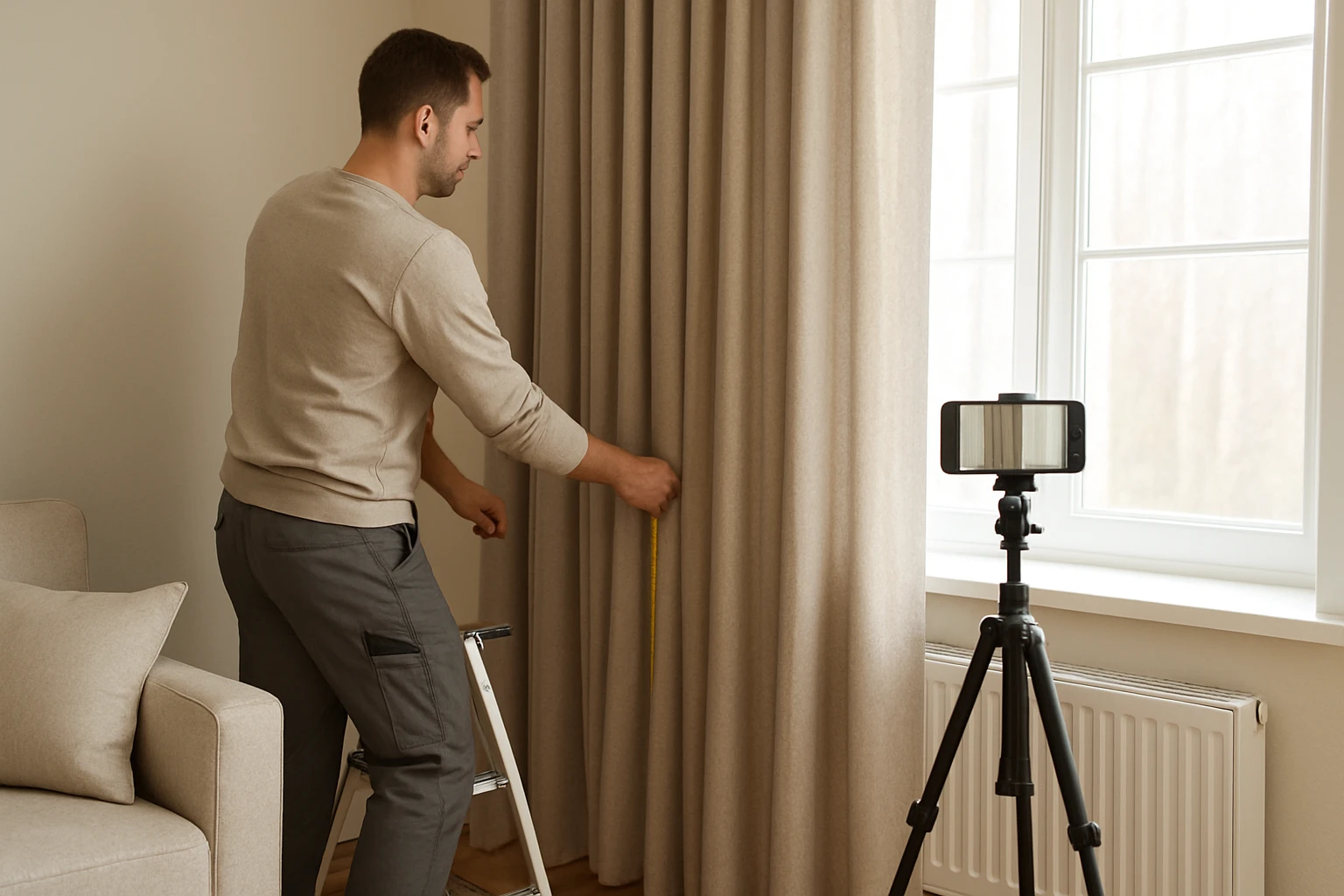
Measure the curtain width by the full width of the pole or track, adding extra for fullness and overlap. Measure the drop from the top of the pole or track to the desired finished length. Record measurements in millimetres or centimetres, measure twice, and note if you measured to a pole or track for accurate cutting.
Key Statistics
- Recommended fullness range: 1.5x to 2.5x the pole or track width for most styles.
- Common finished drops: sill height 90–120 cm, below-sill 130–160 cm, floor length 200–280 cm depending on ceiling height.
- Typical measurement error from DIY attempts: 2–6 cm when not noting pole vs track position.
Why Accurate Measurements Matter
Curtains that are too narrow leave the window exposed. Curtains that are the wrong length can make the room look unbalanced. Accurate measurements stop surprises when the curtains arrive and cut down on wasted fabric and extra fittings. If you tell the supplier the exact numbers and whether you measured to a pole or a track, they can make the curtains to hang right the first time.
Tools You Need Before You Start
Use simple, reliable tools and a helper when you can. The right tools make measuring quick and clear, and a second pair of hands keeps the tape level across wide spans.

Must-Have Tools
- Retractable tape measure with metric and imperial markings or a small laser measure for very wide spans.
- Step stool or ladder to reach the top of the pole or track safely.
- Notepad and pencil to record each measurement and label it clearly.
- Spirit level if you think the pole or track might not be level.
How to Measure Curtain Width
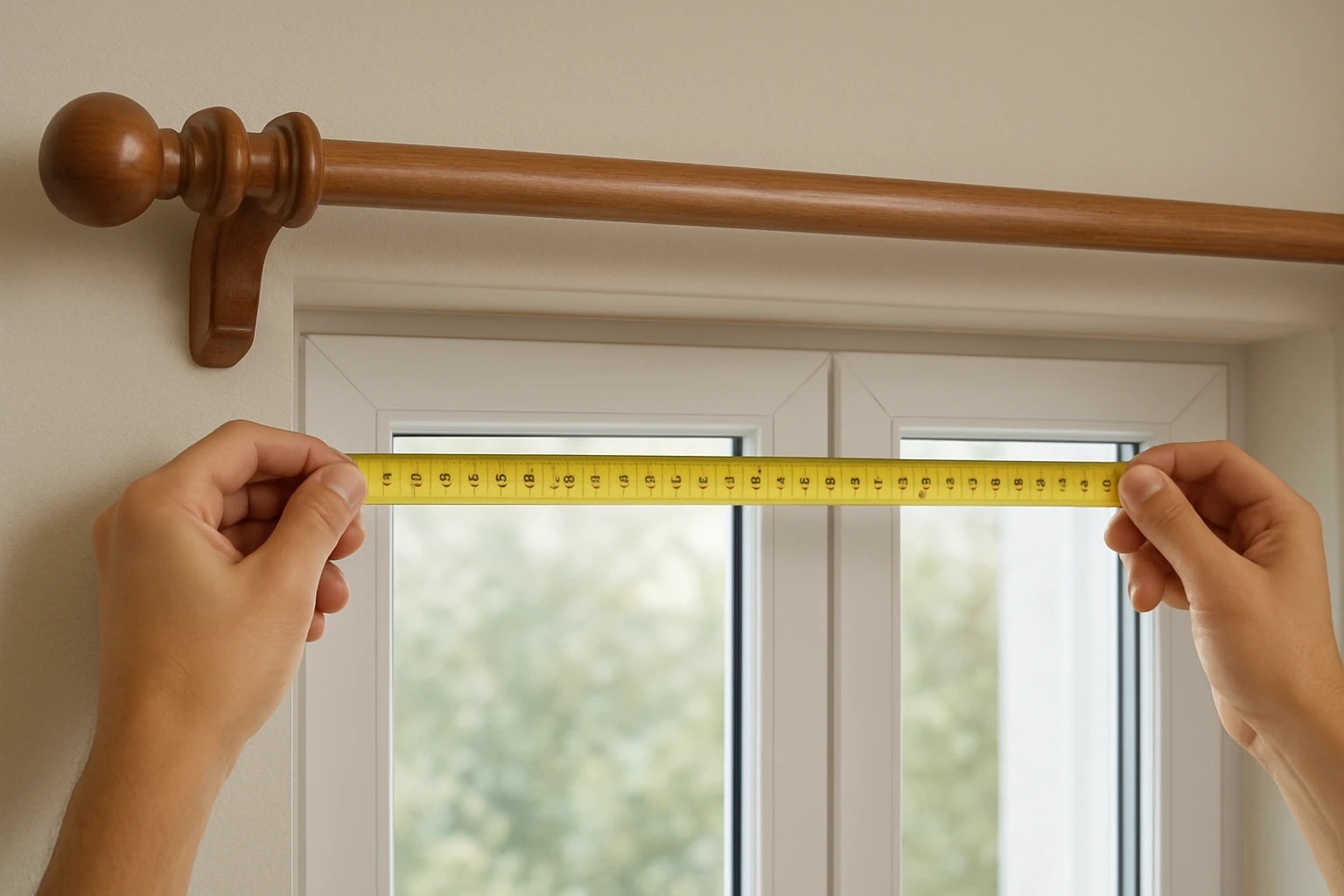
Measure the full width the curtain must cover and then add fabric for fullness and overlap. Be sure you know whether you are measuring to a pole with rings or to a recessed track because the start point is different for each.
Measure Track or Pole Width
- Measure from left to right from the outer end of the pole bracket or the visible edge of the track. For poles measure to the outer face of the finial or bracket if the curtains need to clear it. For tracks measure to the track ends the curtain must cover.
How to Note Pole Versus Track:
Write down whether you measured to a pole or a track and include the finial type if it is large. Some suppliers cut differently for ring-on-pole headings and that detail matters.
Allow for Fullness and Overlap
- Fullness is extra fabric to create folds. Multiply the measured width by the fullness factor you want. Common choices are 1.5x for a fairly flat look, 2x for a standard look, and 2.5x for a heavy, gathered look. Use at least 2x for sheer curtains.
Fullness Examples:
- Measured width 200 cm at 2x fullness becomes 400 cm of fabric.
- Add overlap if you want the curtains to meet in the centre without a gap. Typically add 5 to 10 cm per side depending on fabric weight.
How to Measure Curtain Drop (Length)
Drop is the vertical distance from the top fixing to the finished hem. A common mistake is measuring from the window frame rather than from the face of the pole or track.
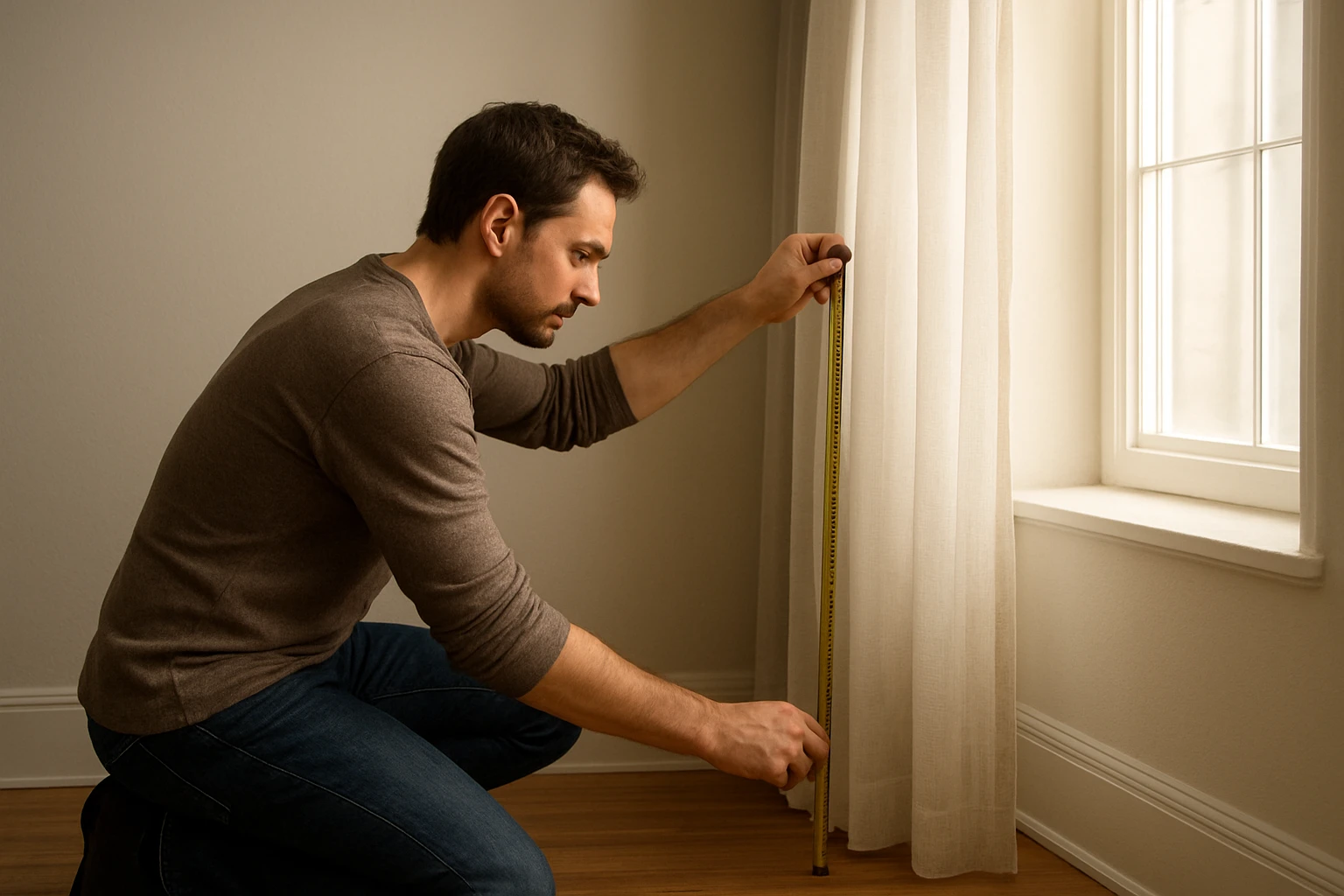
Measure from the Correct Starting Point
- For pole headings measure from the top of the pole or from the underside of the ring depending on how the curtain will hang. For ring-on-pole styles tell the supplier if the ring drop should be included.
- For tracks measure from the top face of the track. If the track is recessed measure from the visible face where the curtain hook will sit.
Finished Drop Options:
- Sill Length: Measure to 1 to 2 cm above the sill.
- Below-Sill: Measure to 10 to 15 cm below the sill if you want coverage without pooling.
- Floor Length: Measure to 1 cm above the floor for slight clearance or to the floor for a neat finish with quality hemming.
Measure Around Obstacles
- If a radiator or sill sits below the window measure to the top of the radiator cover if the curtains will not hang behind it. Measure past the radiator if the curtains will hang behind it. Include the distance from the top of the pole to the intended hem so the fitter cuts the correct length.
Measuring for Different Curtain Headers
Headers change where you measure from and the fabric allowance you need. Below are common styles and what to check when you measure.
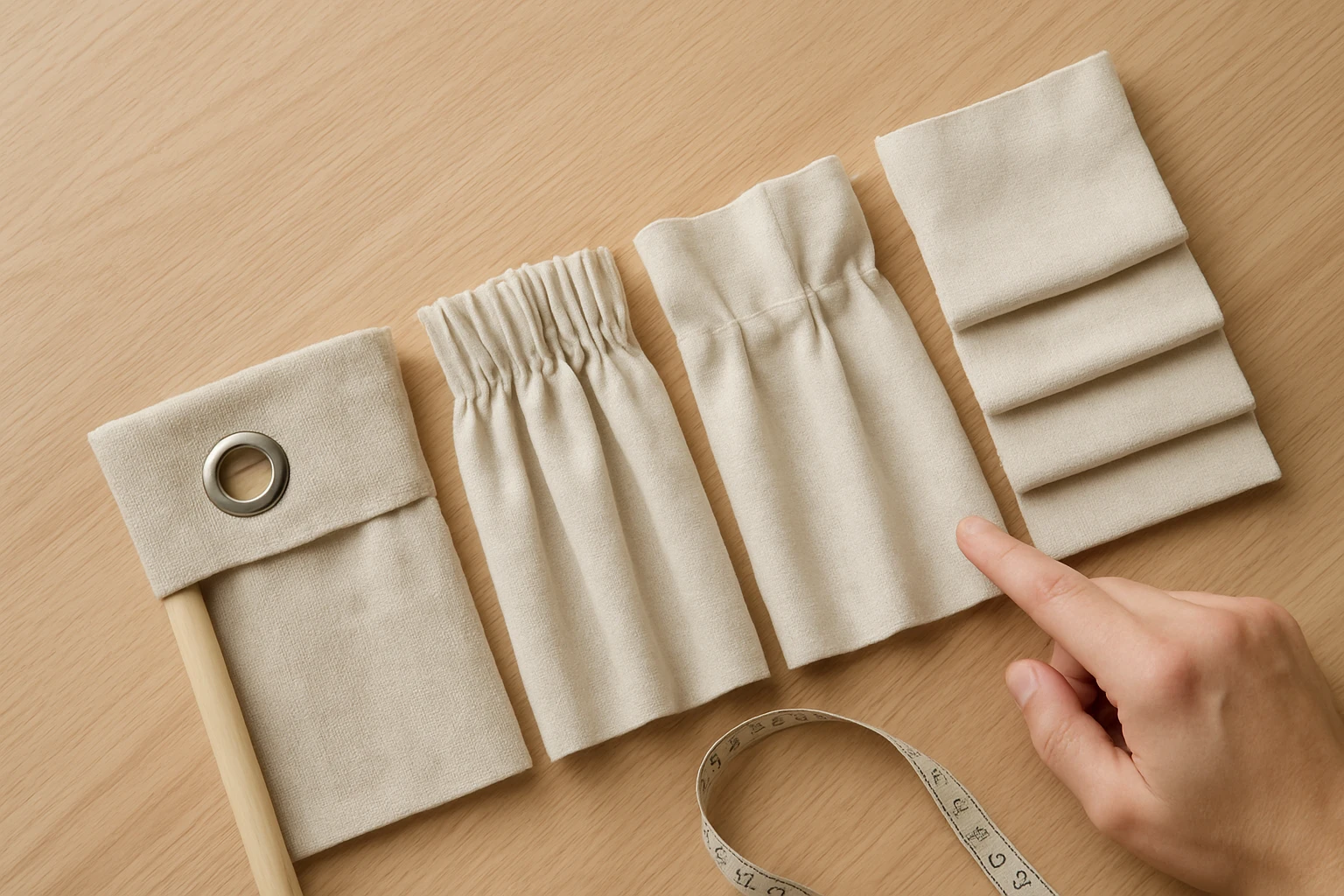
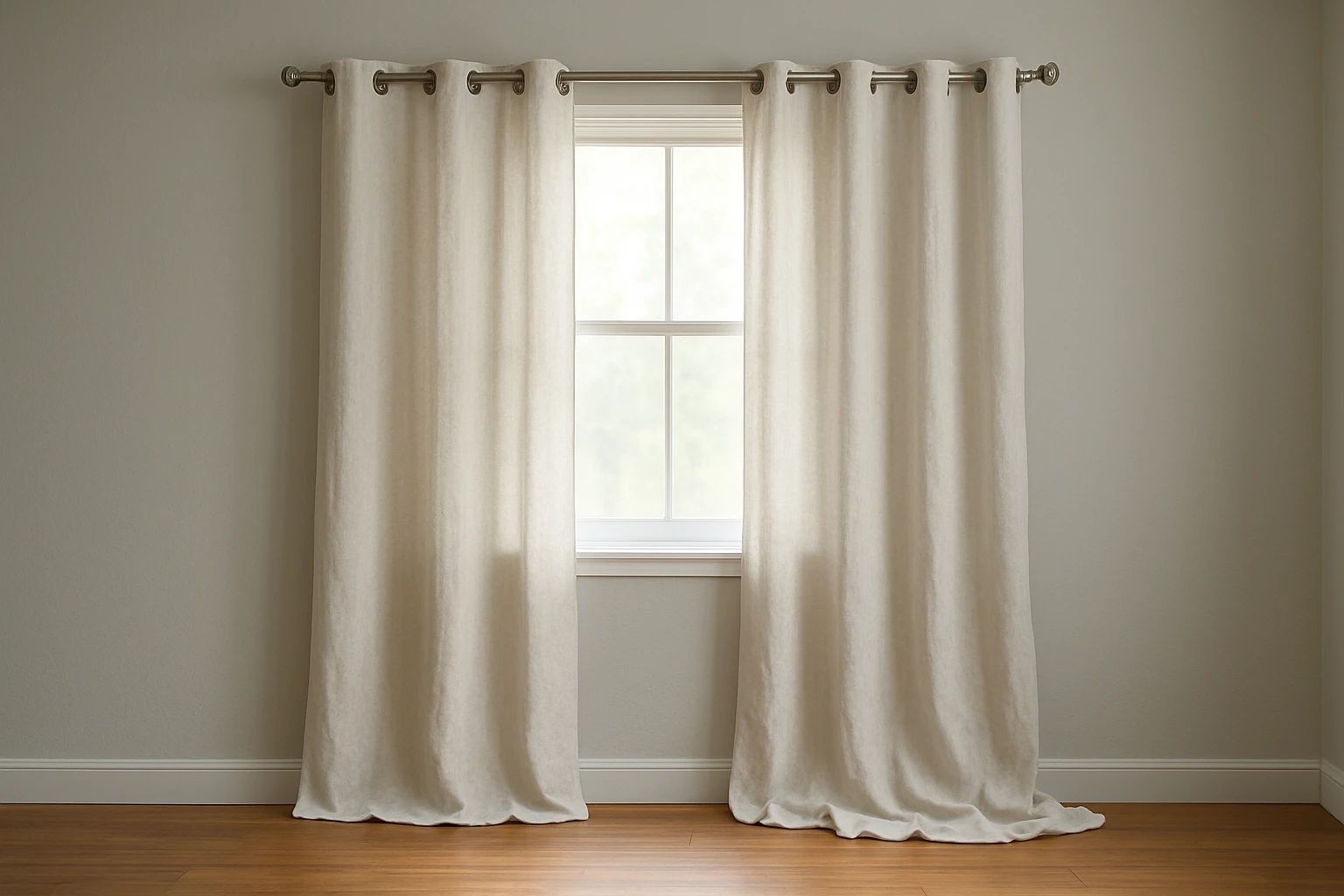
Eyelet Curtains
Eyelet curtains hang on the pole through metal rings in the fabric and sit a little below the top of the pole because the eyelet hole drops onto the pole.
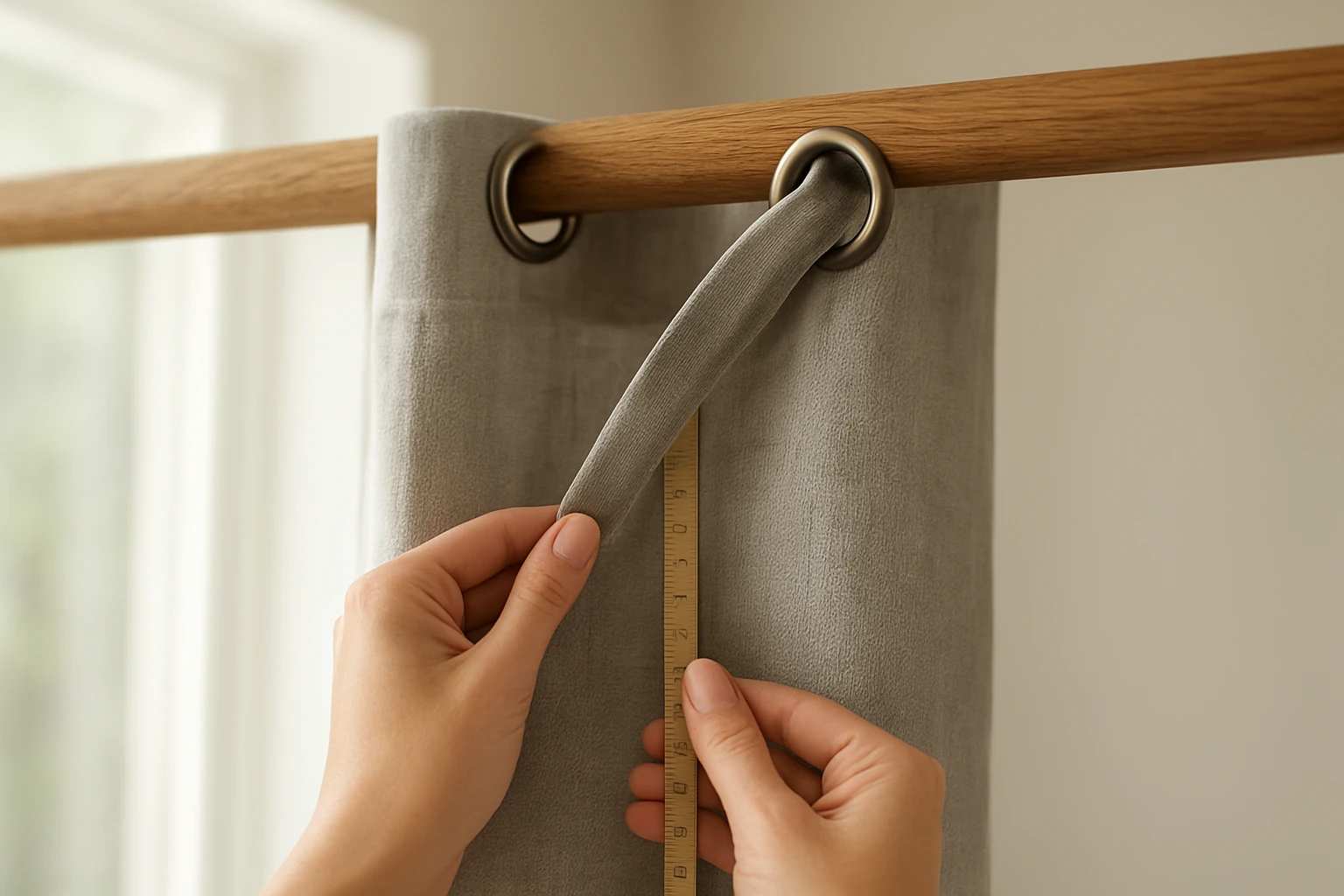
Measure for Eyelets:
Measure from the top of the pole to your chosen finished hem. Tell your supplier you measured for eyelet so they leave the correct headspace.
Pencil Pleat Curtains
Pencil pleat curtains attach to a track or pole with hooks and usually include extra heading tape so the fabric sits higher on the track.
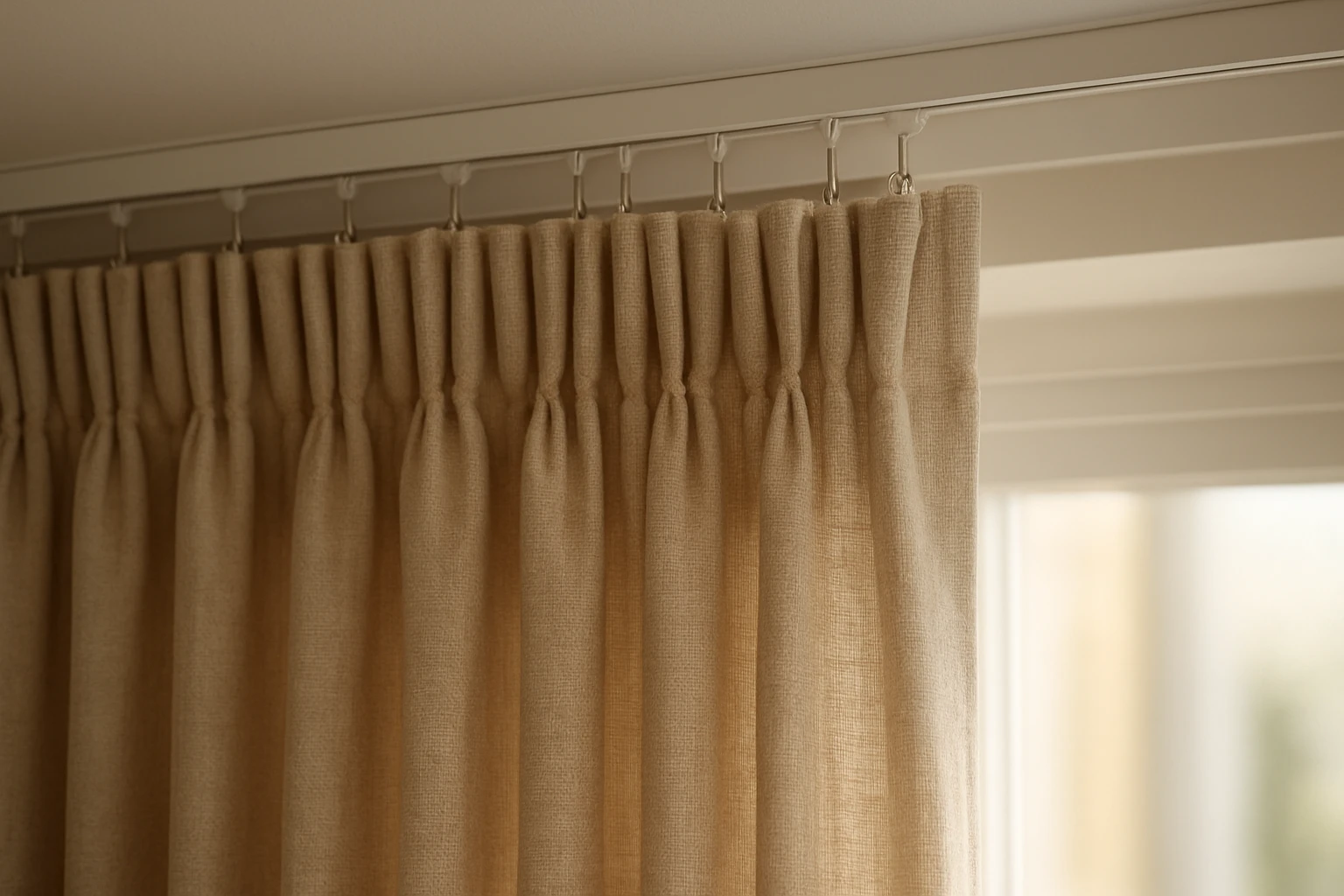
Measure for Pencil Pleat:
Measure from the top of the track or from the underside of the curtain rings if the hooks hang below the track. Note the fixing type so the supplier can include the right allowance.
Pinch Pleat Curtains
Pinch pleat curtains often sit higher than the top of the pole because the pleat base can add height and they use hooks or pins.
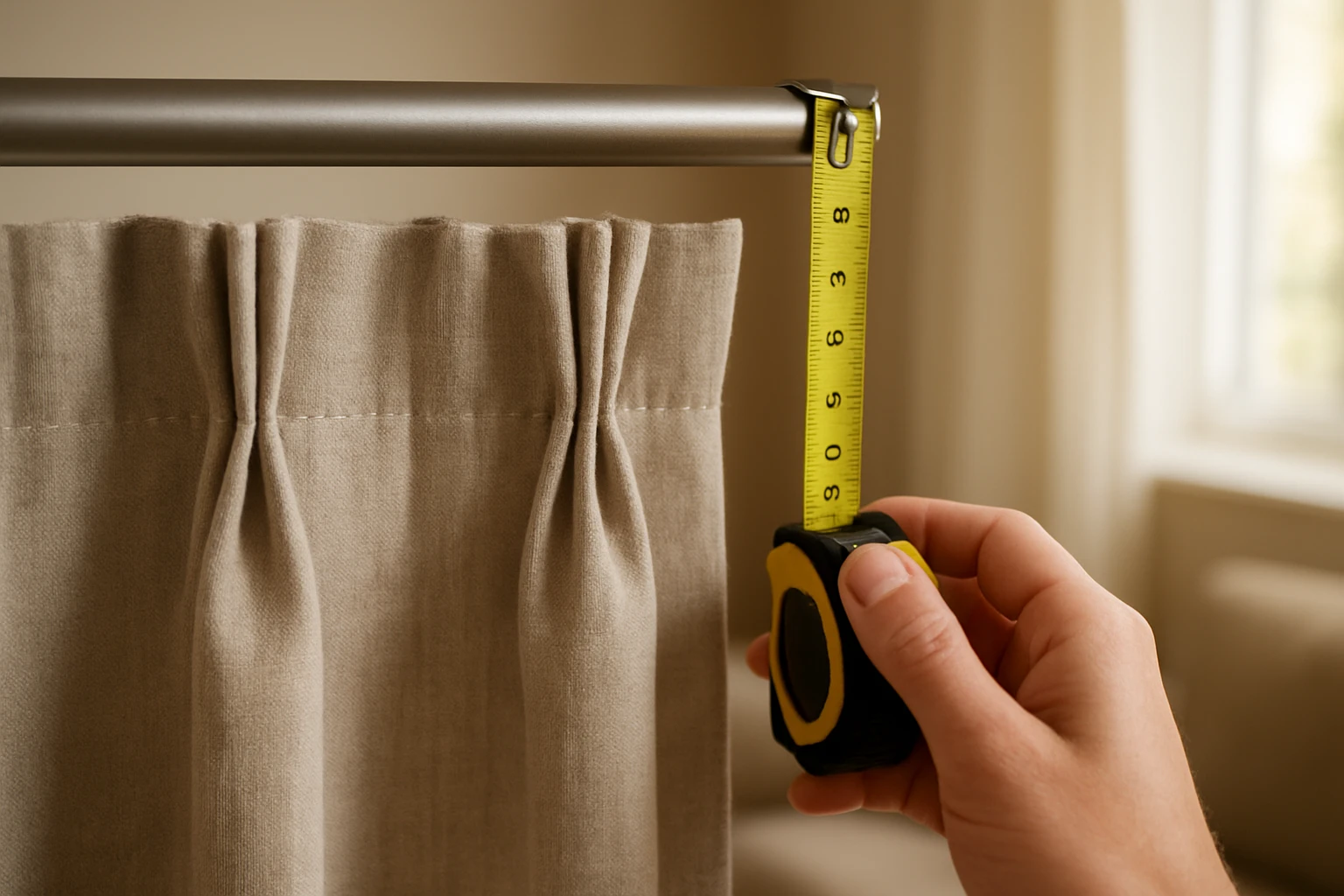
Measure for Pinch Pleat:
Measure from the top of the pole or track and note whether the pleat pins are used below the header. Give that detail to your supplier so the final length is correct.
Wave Curtains
Wave curtains use a special track and brackets and hang in even folds that need set spacing and a specific track position.
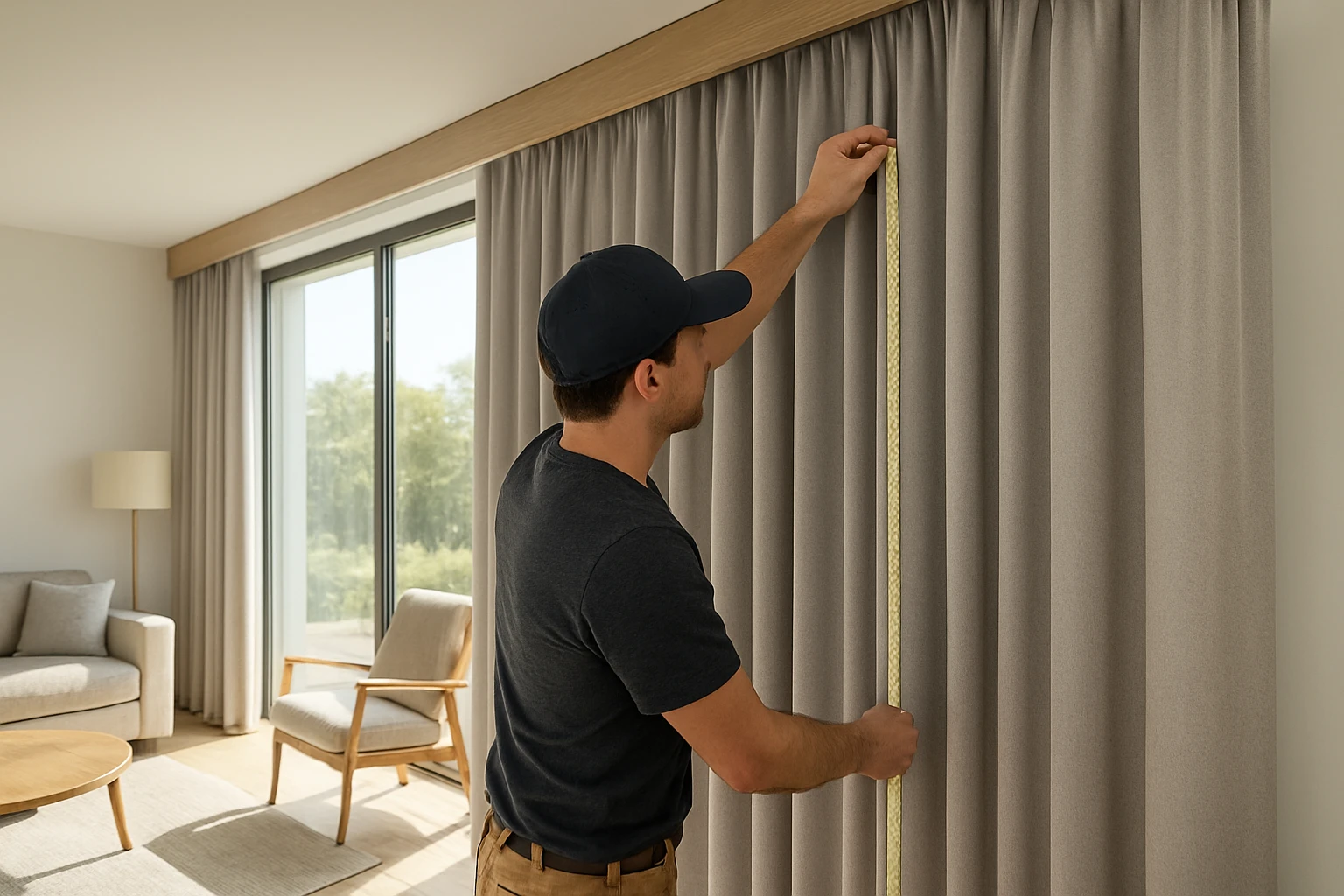
Measure for Wave Curtains:
Measure from the top face of the track to the desired hem and record the track type. If the track is concealed note that it sits behind the pelmet or recess.
Roman Curtains
Roman curtains fold up in neat stacks and often need a little less fabric width but must be measured exactly from the mounting point.
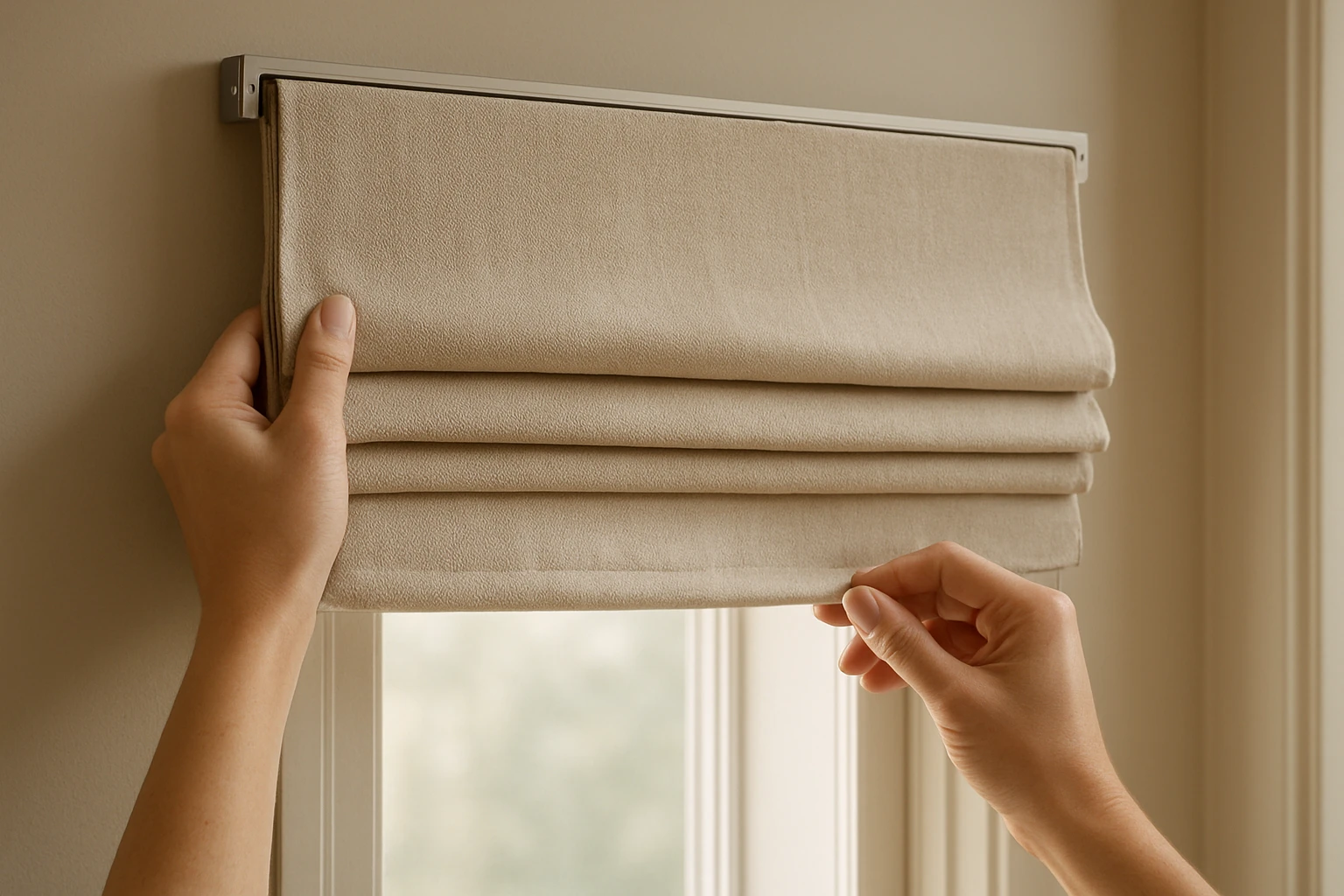
Measure for Roman:
Measure from the top of the mounting bracket or cassette to the desired bottom edge. Roman styles need the exact bracket position because the stack height affects the finished length.
Standard Measurement Table
Use this table as a starting point when you do quick checks at home. Always measure the actual window and note pole versus track.
| Measurement Type | Common Range (cm) | Typical Notes |
|---|---|---|
| Sill Length Drop | 90 to 120 | 1 to 2 cm above sill |
| Below-Sill Drop | 130 to 160 | 10 to 15 cm below sill |
| Floor Length Drop | 200 to 280 | 1 cm above floor or floor length |
| Single Window Width (finished) | 60 to 140 | Add fullness 1.5x to 2.5x |
| Double Window Width (finished) | 140 to 400 | Multiply measured width by fullness |

Common Mistakes and Troubleshooting
Many errors come from not recording where the measurement started or from using a flexible tape that sags on wide spans. A common mistake is measuring the window glass rather than the pole or track which makes the curtains too narrow.
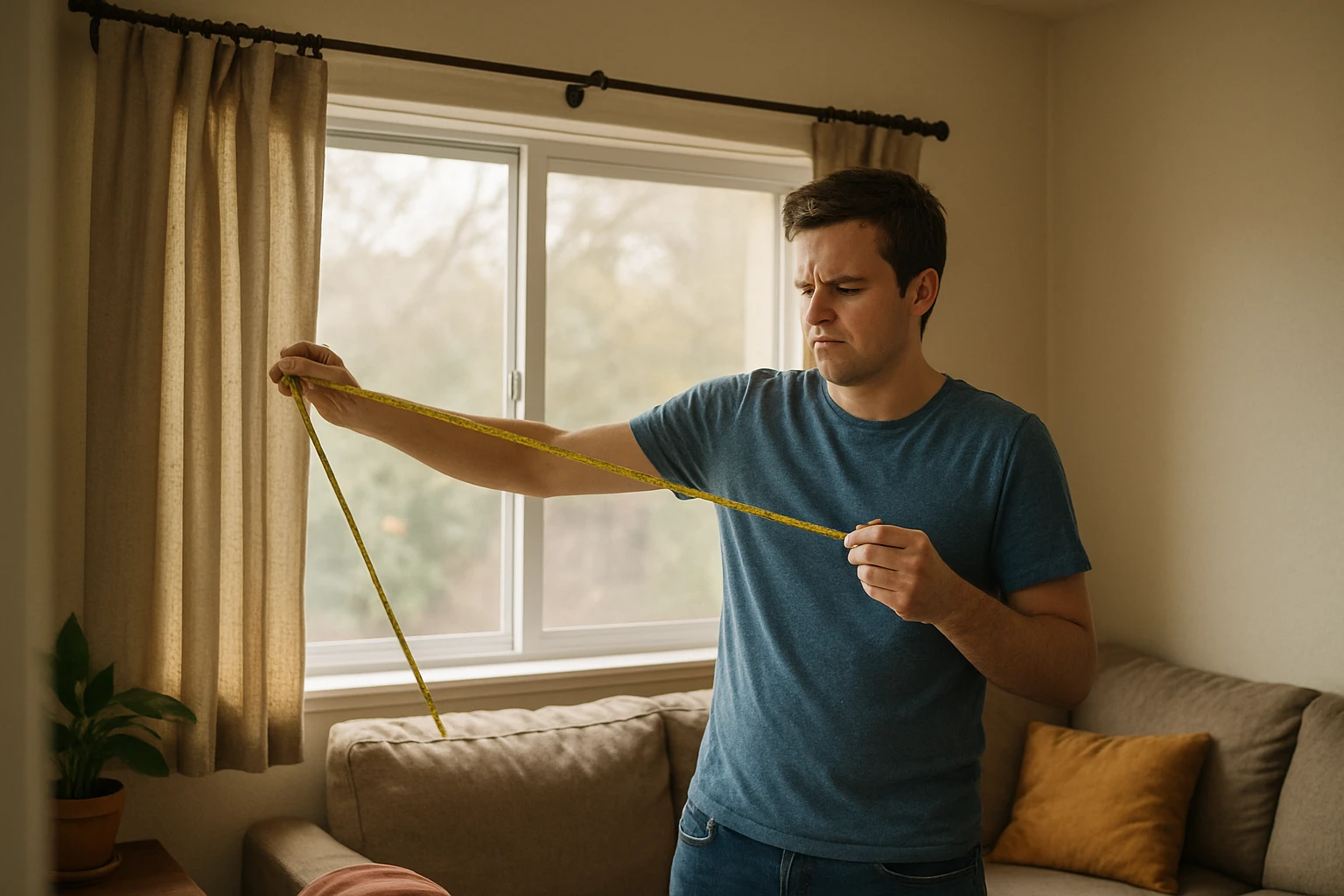
Troubleshooting Tips
- Measure twice and compare numbers before ordering.
- Label each measurement clearly. For example: “Living Room Left Window Width to Pole 220 cm”.
- If a track is recessed take a photo for the supplier or installer so they can see how it sits behind the pelmet.
- For very wide spans use a second person to hold the tape level and straight.
Ordering and Installation Checklist
Before you place an order confirm the header type, the pole or track type, fullness, finished drop and whether you want lined or unlined curtains. This checklist reduces back-and-forth and helps the supplier cut accurately.

Order Checklist Items:
- Final pole or track width and note of finials or brackets.
- Chosen fullness multiplier.
- Exact finished drop and whether to clear skirting or reach the floor.
- Header type and how the curtains will attach (rings, hooks, pins or concealed gliders).
- Fabric choice and lining preference. See fabric options like Velvet Curtains, Silk Curtains, or Chiffon Curtains for how a fabric drape affects fullness.
- If sound control matters consider Sound Proof Curtains.
- For special uses view Theatre Curtains or Motorized Curtains to learn how measurement and mounting differ.
Also check our product pages for header-specific options such as Pinch Pleat Curtains, Pencil Pleat Curtains, Eyelet Curtains, and Roman Curtains to confirm the right measurement approach.
For a general buying primer see the Best Curtains and Blinds in Dubai 2026: Buying Guide which compares fabrics and styles common in our region.
Quick Reference Cheat Sheet
Keep these short rules by your tape measure when you work. Measure to the pole or track, write the starting point, multiply width by the chosen fullness, measure drop from top of pole or track to the desired hem, and always measure twice.

Final Tips for a Clean Result
A few extra minutes spent recording clear notes and photos saves time later and cuts the chance of returns. If your window is an unusual shape or there is an obstruction take a clear photograph and include it with your measurements so the supplier or installer understands the situation. A final check after installation will confirm the hem and fullness are exactly as you wanted.
Frequently Asked Questions
Do I Measure to the Pole or the Track for Width?
Measure to whatever the curtain will hang from. If curtains hang on rings on a pole, measure from end of bracket or finial to the other side. If they hang from a track, measure the track face. Note which one you used so the supplier can cut correctly.
How Much Fullness Should I Use for My Curtains?
For a relaxed look use 1.5 times the measured width, for a standard look use 2 times, and for a fuller, luxurious look use 2.5 times. Sheer curtains usually need at least 2 times fullness.
Where Should I Measure from for Floor-length Curtains?
Measure from the top of the pole or the face of the track down to the point you want the curtain to finish. For a slight clearance measure to 1 cm above the floor, or measure to the floor if you want them to sit directly on it.
What If My Window Has a Radiator or Sill That Gets in the Way?
Decide whether curtains will hang in front of or behind the radiator. If in front, measure to the top of the radiator cover. If behind, measure past it to the desired hem and tell the supplier where the obstruction is.
Can I Use a Laser Measure Instead of a Tape Measure?
Yes, a laser measure works well for wide spans and high windows, but verify the start point and take a second measurement with a tape when possible to confirm accuracy.