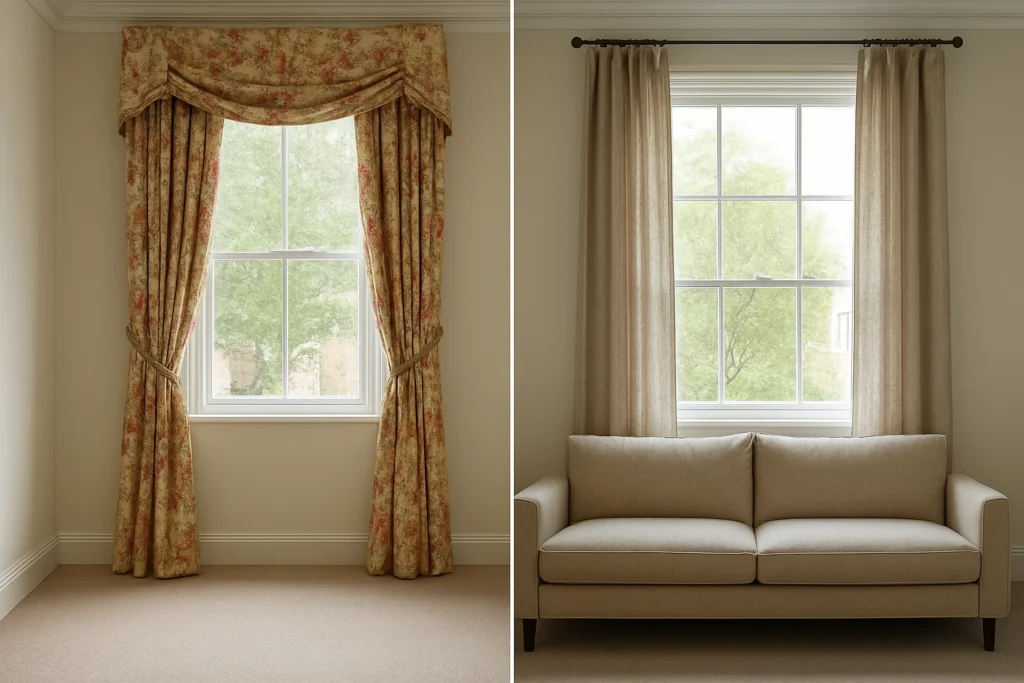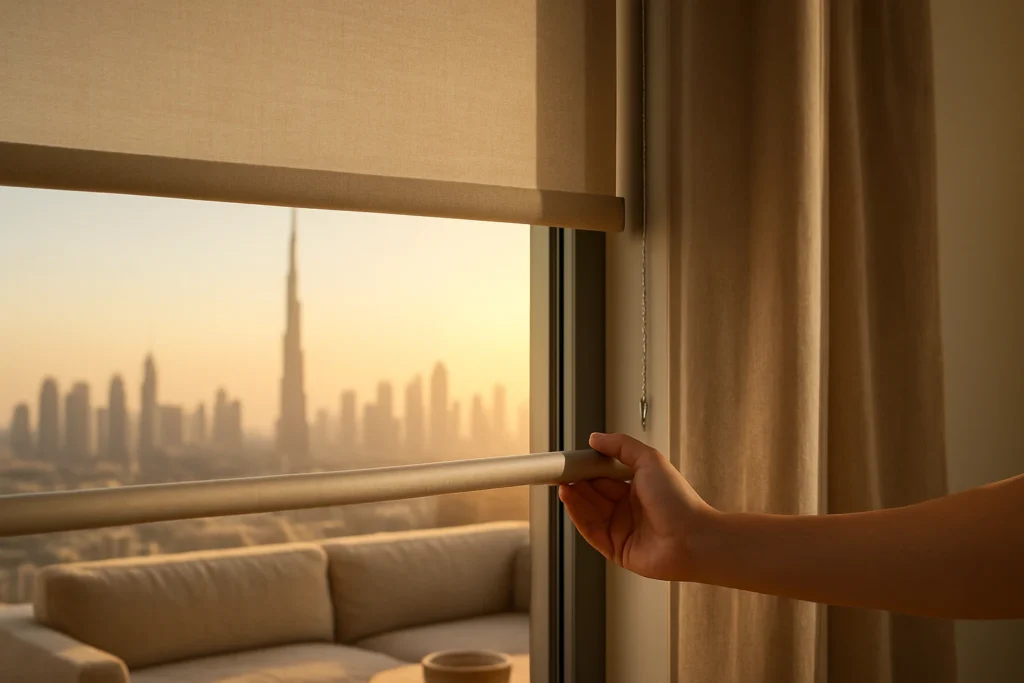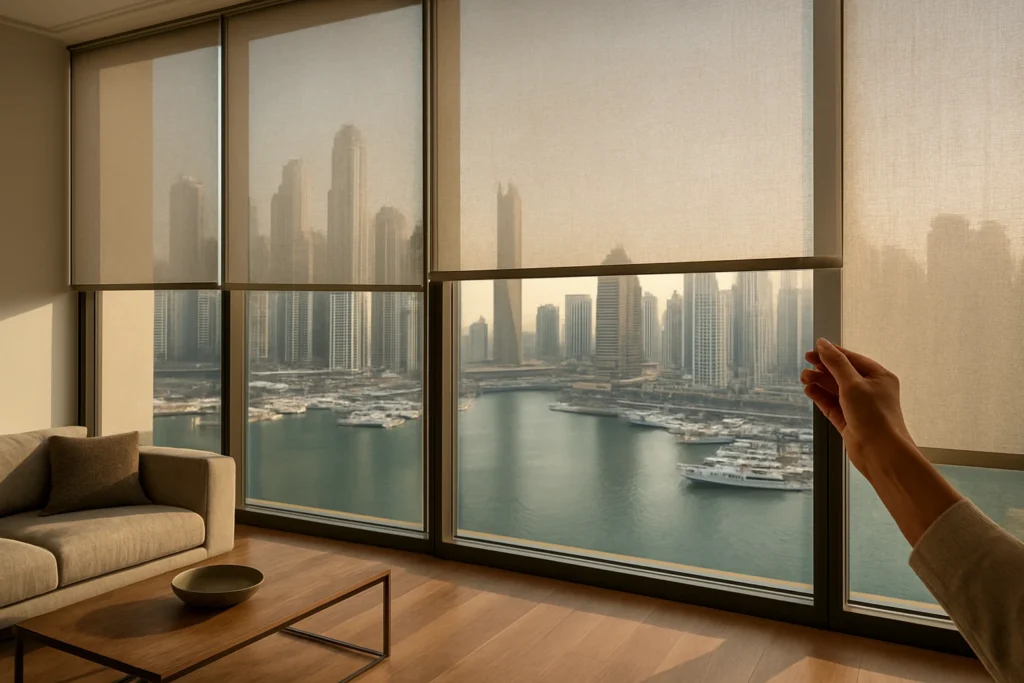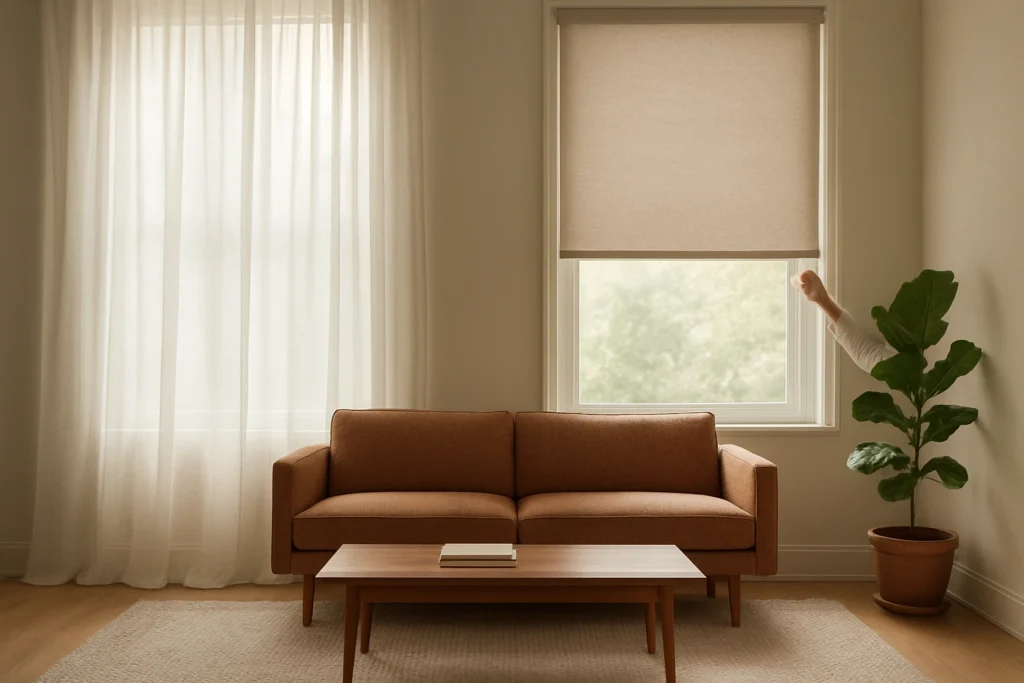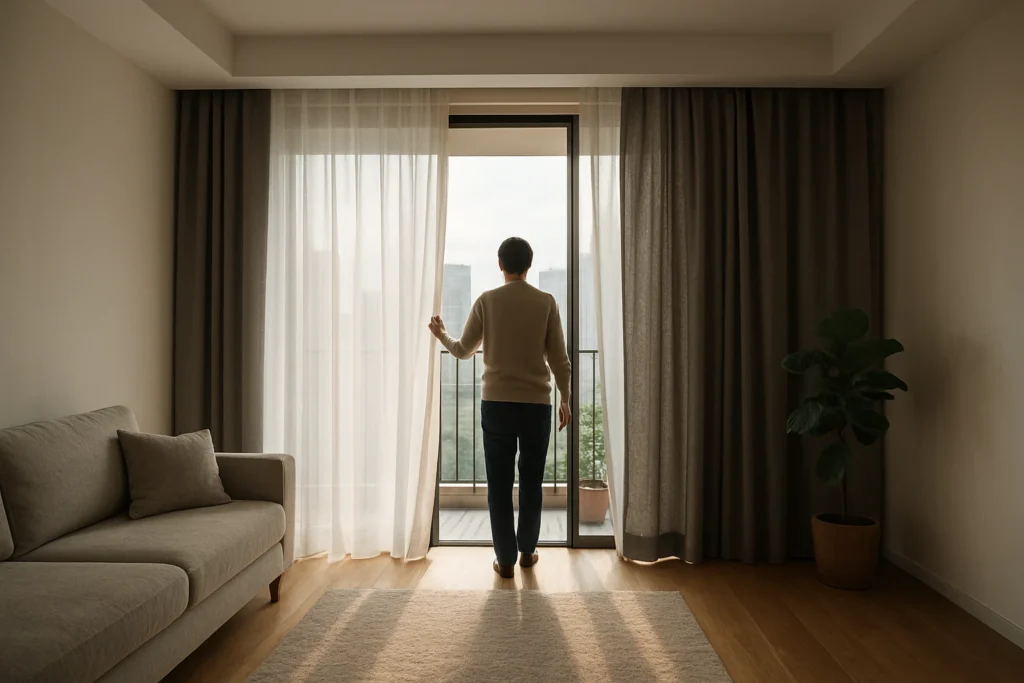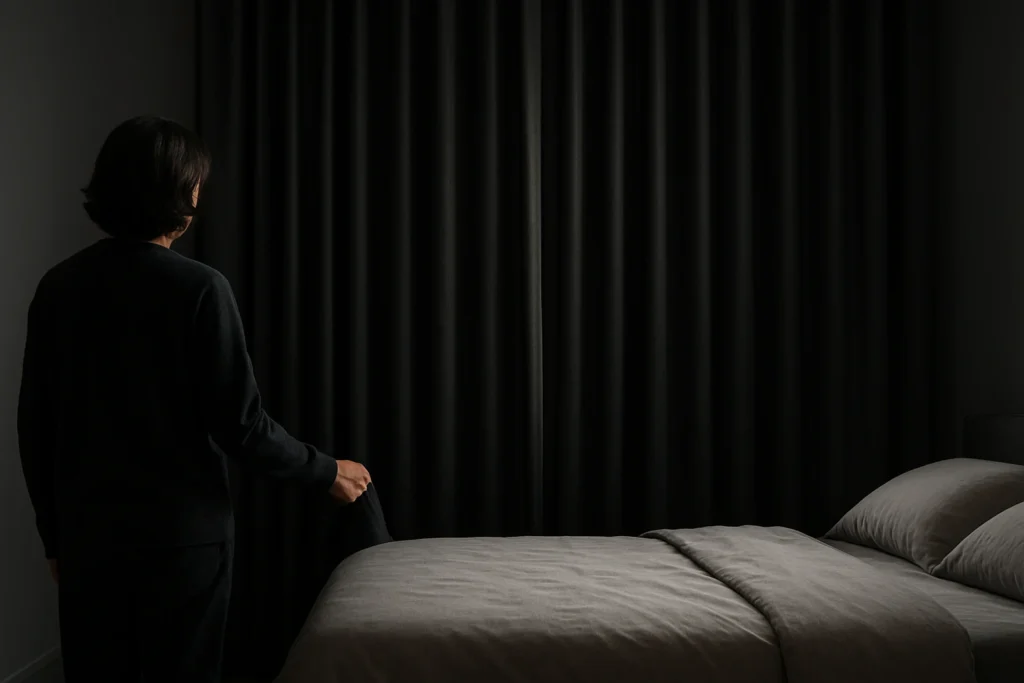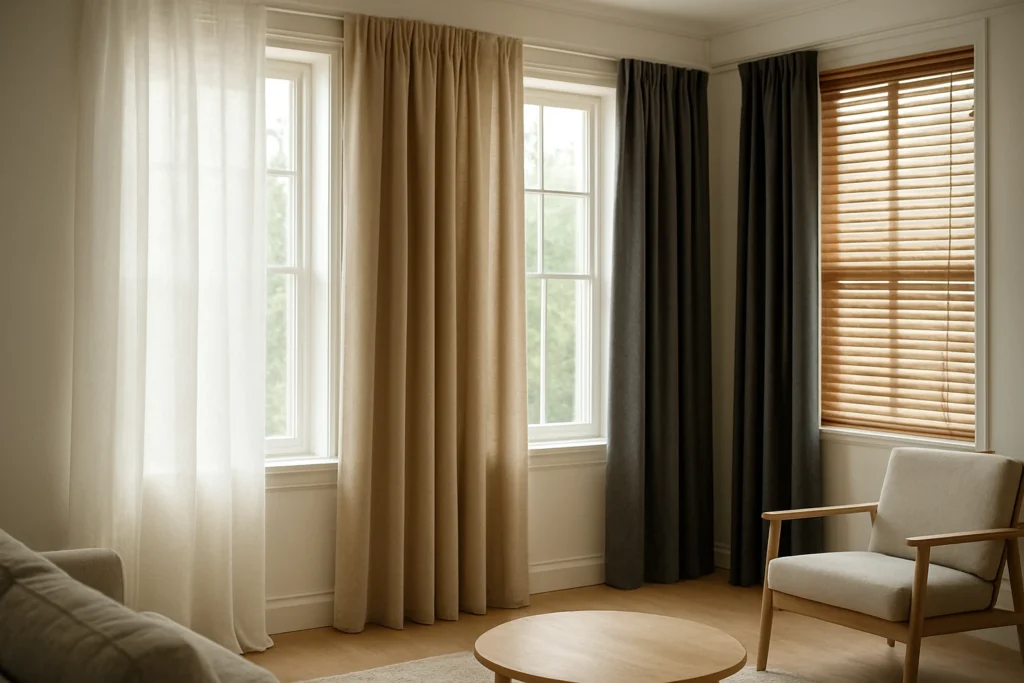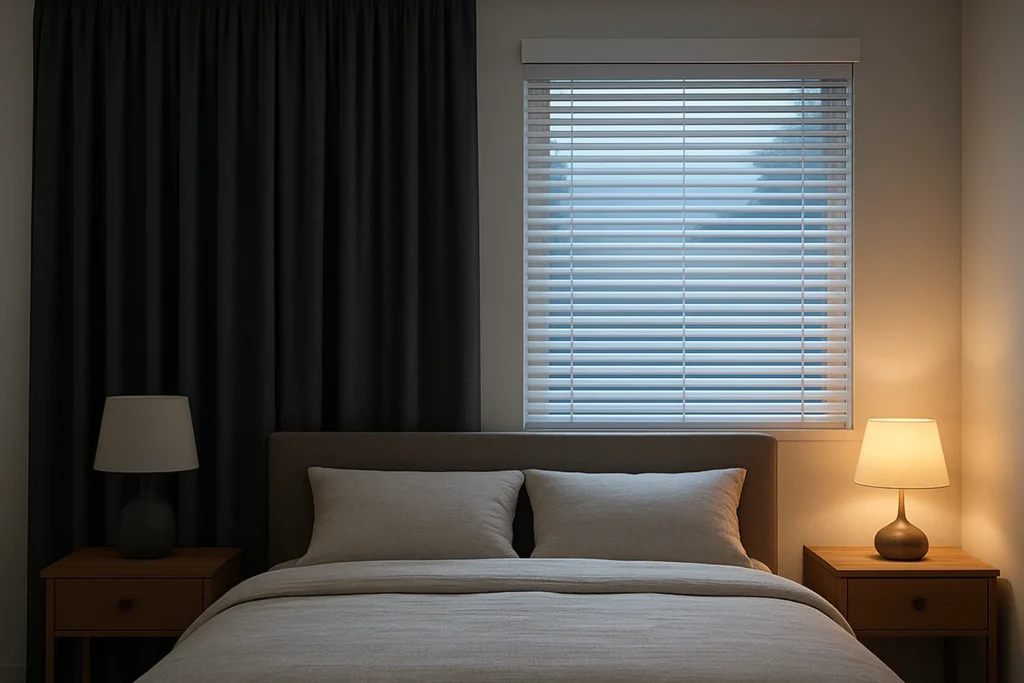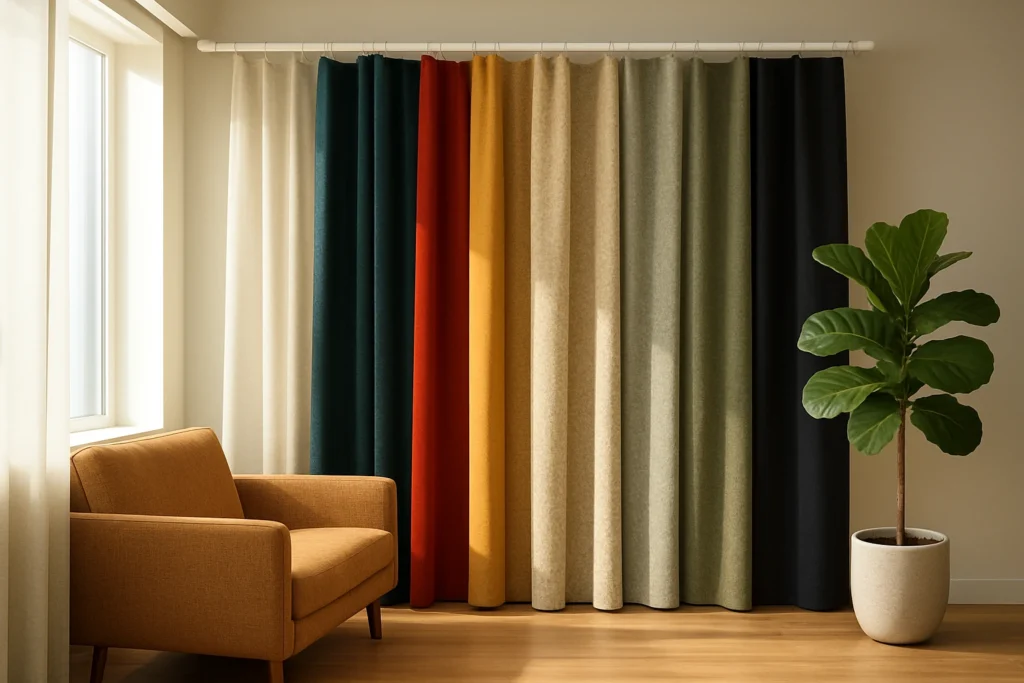
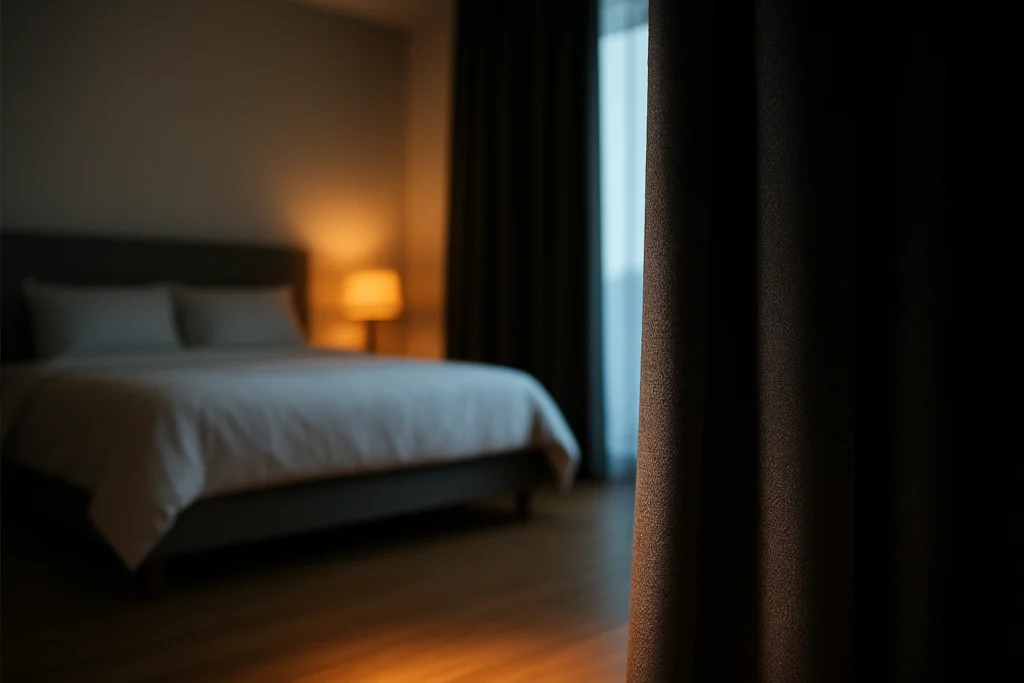
Room darkening curtains are made from heavier, tightly woven fabrics or lined panels that cut most incoming daylight and reduce glare while still letting a little light show around the edges, which is different from true blackout panels that aim to stop nearly all light. Choose based on how dark you need the room, the look you want, and how the curtain will fit the window, and for expert fitting and options Curtains and Blind can help with materials and installation.
Key Statistics
- Typical light reduction: room darkening panels block about 70 to 90 percent of incoming light, while true blackout systems block 98 to 100 percent.
- Energy effect: well fitted heavy curtains can lower heat transfer at windows by roughly 10 to 20 percent, depending on fabric, lining, and fit.
- Common use: bedrooms and media rooms account for most purchases when light control is the primary goal.
What Are Room Darkening Curtains?
Room darkening curtains are window panels that cut a lot of daylight and reduce glare, but do not remove every trace of light. They rely on thicker fabrics, tight weaves, or an added lining to block most sun. People pick them when they want dimmer bedrooms, less screen glare, more privacy, and a bit of energy savings without the total blackness of full blackout curtains.
How Room Darkening Differs from Blackout Curtains
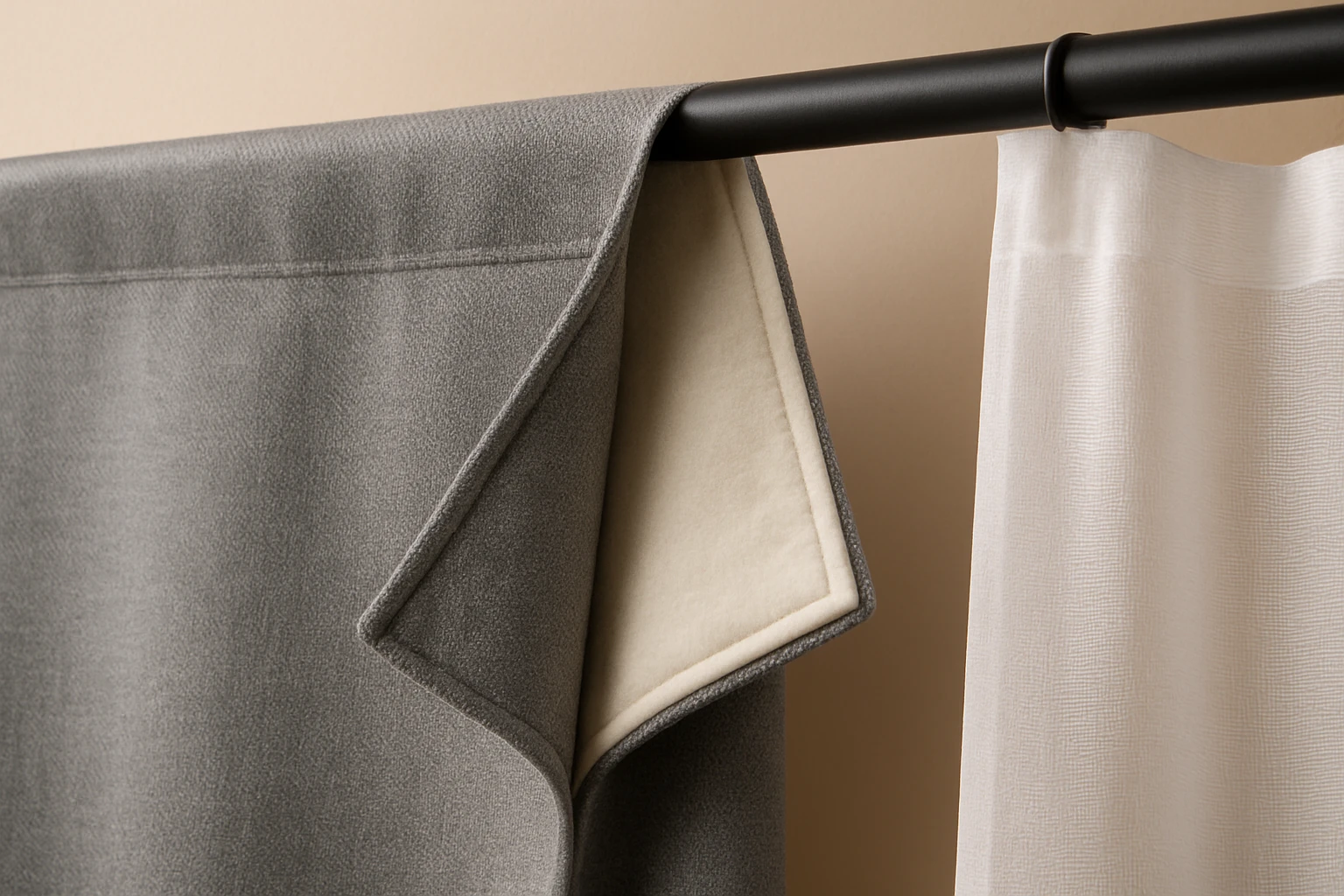
Both room darkening and blackout curtains control light, but they do it in different ways. Room darkening fabrics give a deep dimming effect and leave soft light around the edges. Blackout curtains aim for nearly complete darkness by using a tighter lining or a coated fabric.
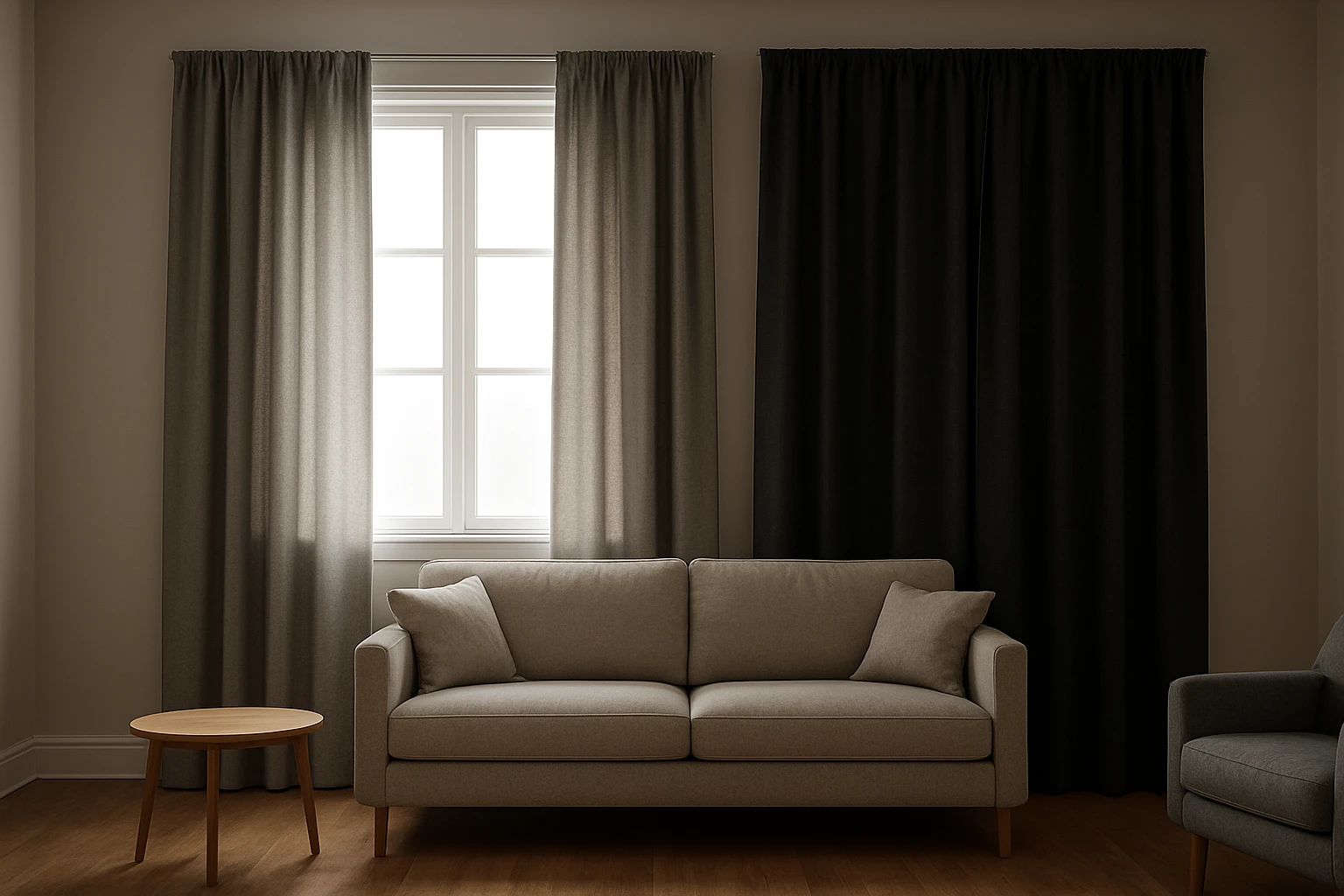
Quick Comparison Table
| Feature | Room Darkening Curtains | Blackout Curtains |
|---|---|---|
| Typical Light Reduction | 70 to 90 percent | 98 to 100 percent |
| Feel | Softer edges and ambient glow | Near total darkness and flat light |
| Typical Uses | Bedrooms, living rooms, offices | Home theaters, shift-worker bedrooms, nurseries |
| Breathability | Better air flow in many fabrics | Lower breathability when fully coated |
| Cost Range | Moderate | Often higher due to specialized lining |
Fabrics and Construction That Work Best
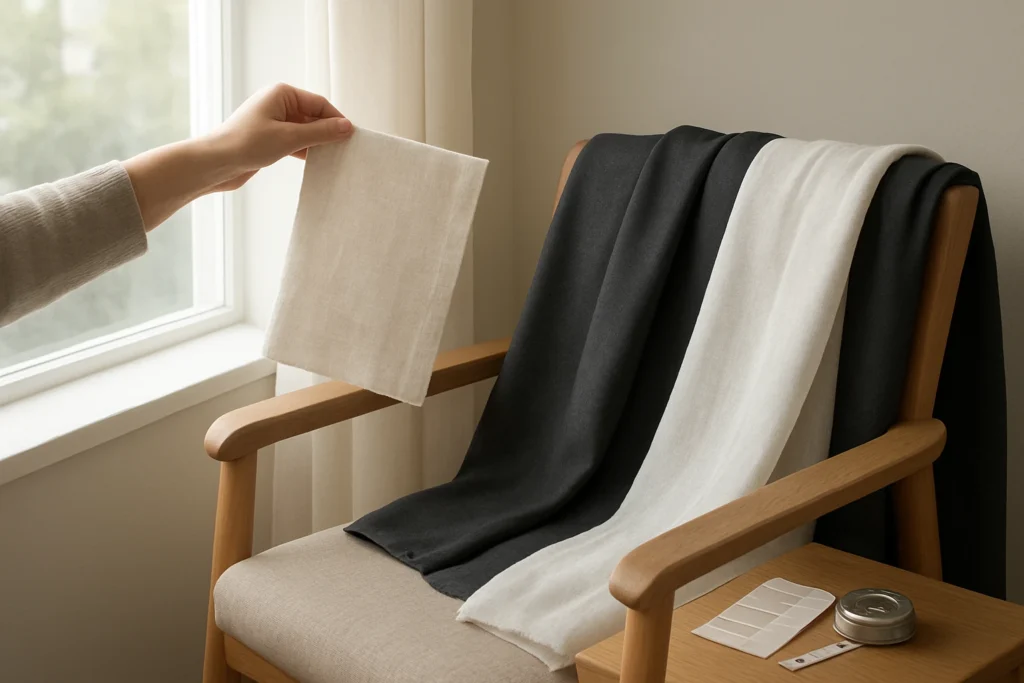
The best room darkening curtains pair a dense fabric with a lining that adds weight and blocks light. Common choices are heavy polyester blends, velvet for a plush finish, and cotton blends that take a thermal liner. Pick a fabric for the look you want and let the lining determine how much light it blocks.

Fabrics at a Glance
| Fabric Type | Light Block | Insulation | Care | Best Use |
|---|---|---|---|---|
| Velvet | High | Good | Dry clean usually | Bedrooms, formal rooms (Velvet Curtains) |
| Polyester/Microfiber | Medium to high | Moderate | Machine wash often | Everyday bedrooms and living rooms |
| Cotton Blend | Medium | Moderate | Machine wash or gentle cycle | Casual rooms and layered looks |
| Thermal/Triple Weave | High | High | Check label | Energy conscious installations |
| Blackout Liner | Very high | High | Spot or dry clean | Rooms needing near total darkness |
Fabric Selection Tips
What to Check First:
Look at fabric weight and whether a separate lining is included. A heavy unlined panel usually blocks less light than a lighter panel with a full blackout lining. A good fabric plus a proper liner gives the most reliable result.
A Common Mistake:
Buy the prettiest fabric and skip the lining. That choice often leaves light coming in at seams and the top attachment. Include fit and lining in your budget.
How to Measure and Fit for Best Darkness
Accurate measuring and a close fit to the window frame are as important as the fabric. Light sneaks in through gaps at the sides, above, and below, and that reduces how dark the room gets.
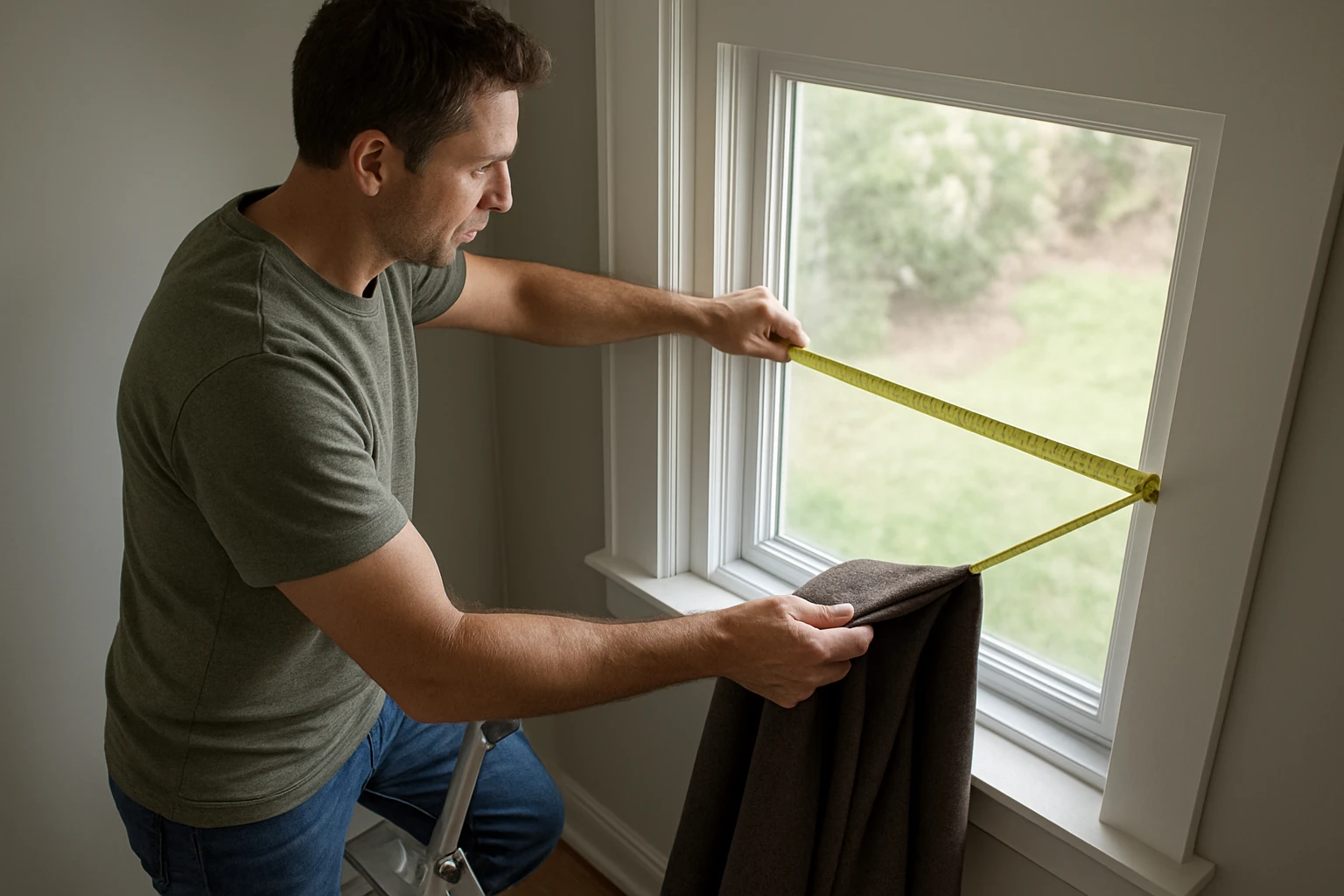
Measuring Steps That Avoid Mistakes
What to Measure:
Measure the full width of the window and frame if you want the curtain to block light at the edges. Measure height from the top of the mount or rod to the finished drop you want, whether that is the sill, below the sill, or the floor.
How Much Width to Allow:
Aim for panels that give 1.5 to 2.5 times the window width when closed for good fullness. If you mount above the window, add extra width to cover the headrail and reduce top light leaks.
How Much Drop to Allow:
Floor-length panels usually finish 1 to 2 centimeters above the floor to avoid dragging. For full coverage, extend the curtain above the frame by 10 to 20 centimeters so the top clears any light gaps.
For step-by-step measuring, see How to Measure for Curtains for Any Window Size.
Installation Options and Hardware
How you mount the curtain and which hardware you pick affect how dark the room becomes. A close fit to the wall and a track that keeps fabric near the window will block more light than a shallow rod with gaps.
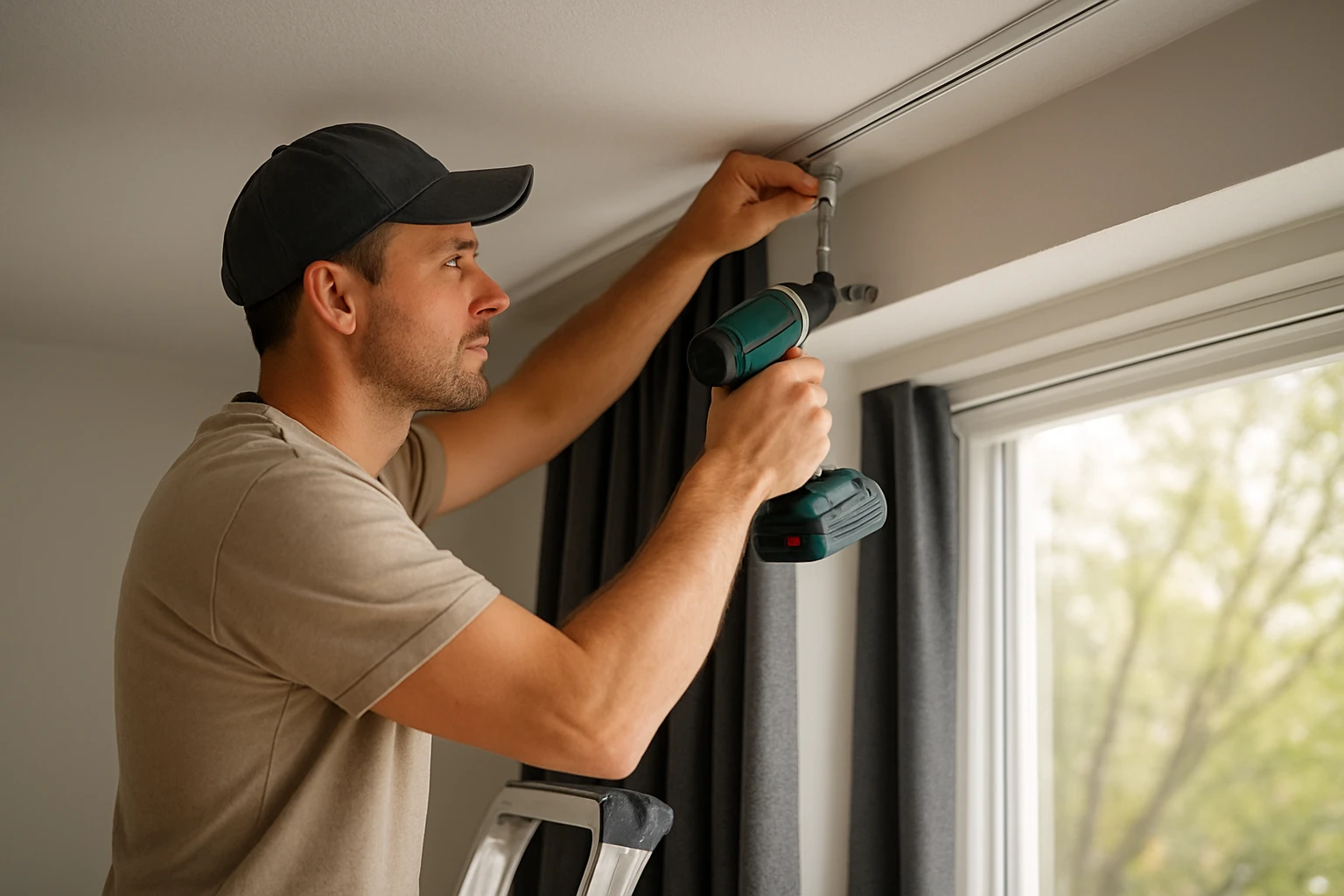
Hardware Styles
- Rods with heavy finials often leave side gaps unless you add return brackets.
- Tracks give a closer fit and a neat stack back when the curtain is open.
- Wave headers sit on a track and create a clean, modern fold.
When you want a specific header look, check options like Pinch Pleat Curtains, Pencil Pleat Curtains, and Wave curtains. For hands-free operation, consider Motorized Curtains.
Layering and Styling for Light Control
Layering a sheer with a room darkening panel gives you flexible light control and a softer look when the darkening curtains are open. Sheers let daylight in while keeping privacy during the day. Closing the darkening panel cuts most daylight.
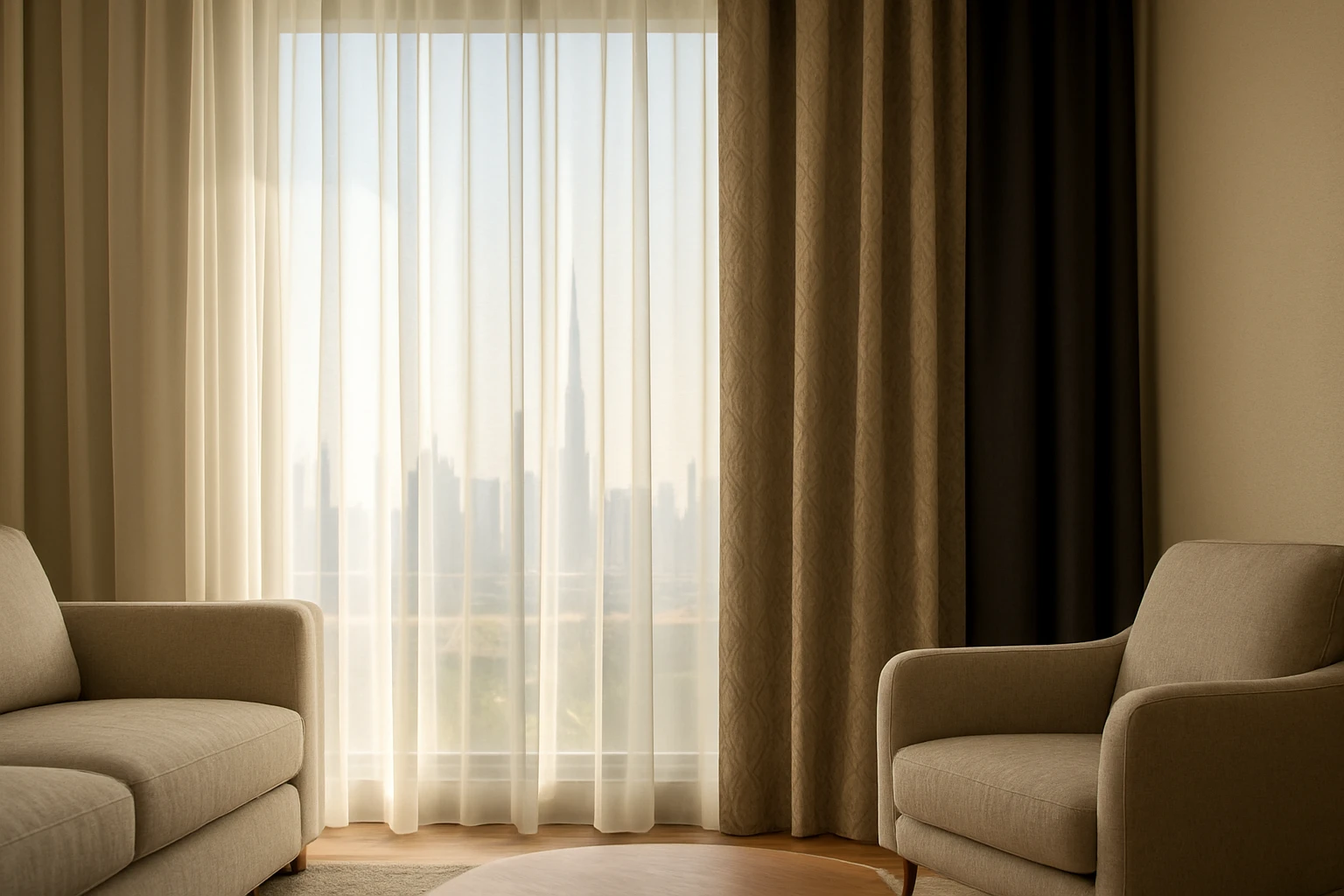
For guidance on layering and combining fabrics, see How to Layer Sheer and Blackout Curtains for Better Light Control.
Best Rooms and Uses
Room darkening curtains fit spots where you want less daylight and more privacy without total darkness. They work well in bedrooms, rooms with east or west windows, living rooms with screen glare, and home offices. For rooms that need total blackout, look at special linings or dedicated blackout systems.
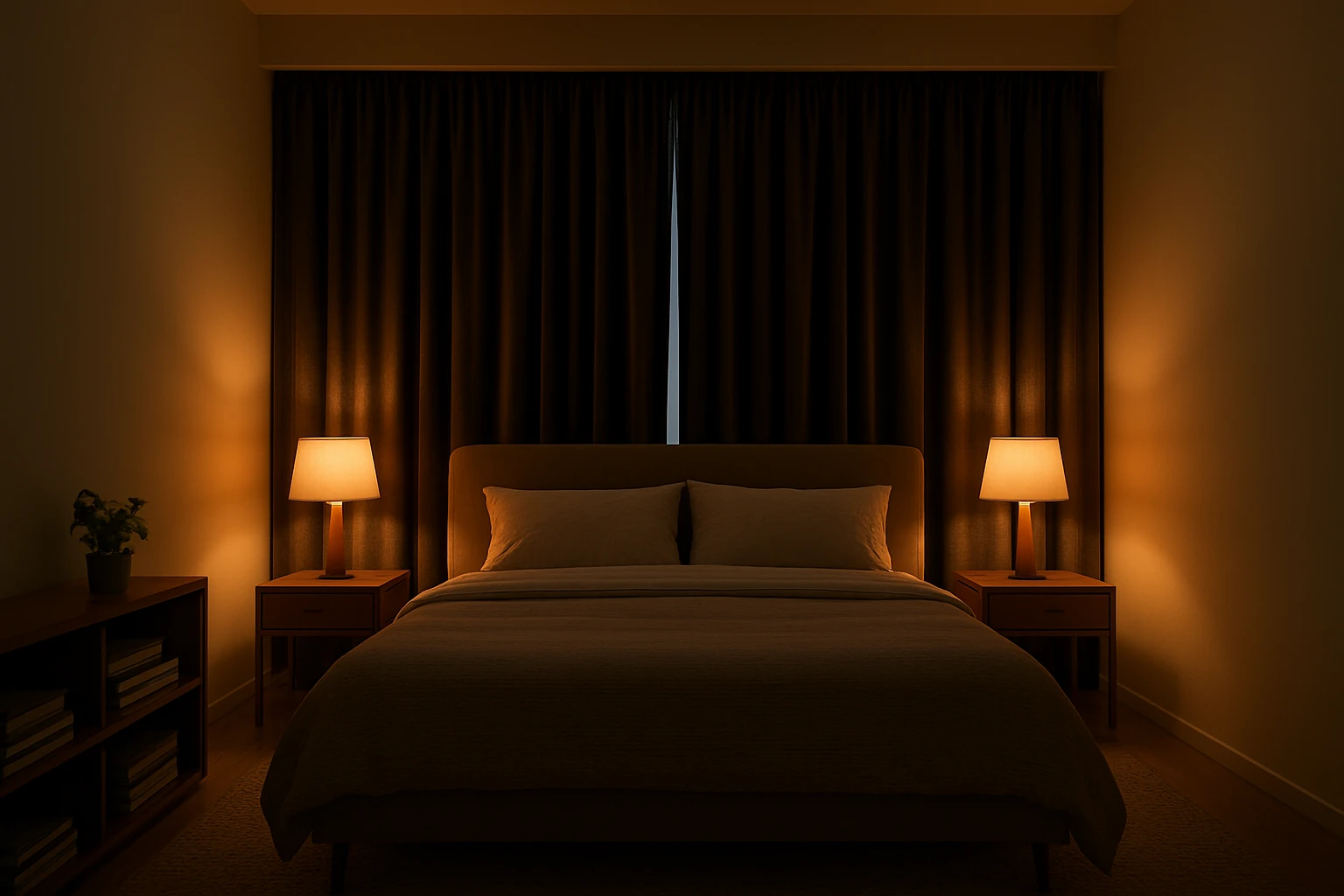
- Bedrooms and nurseries benefit from sleep-friendly dimming.
- Media rooms and TV areas may prefer full blackout panels or a mix of room darkening and blackout liners; see Theatre Curtains for options.
- Offices and daytime rooms use room darkening panels to cut glare while keeping some daylight; see Office Curtains for suitable choices.
Care, Cleaning, and Longevity
Care keeps room darkening curtains looking good and working well. Follow the fabric label and choose machine wash, gentle hand wash, or professional cleaning based on material and lining.

Care Notes
- Read the label before washing, as some linings should not be machine washed.
- Vacuum with a soft brush to remove dust and space out full washes.
- For heavy or lined curtains, dry cleaning often preserves shape best.
A common mistake is washing heavy lined panels at home without checking the label. That can shrink the liner or change the finish.
Energy and Noise Benefits
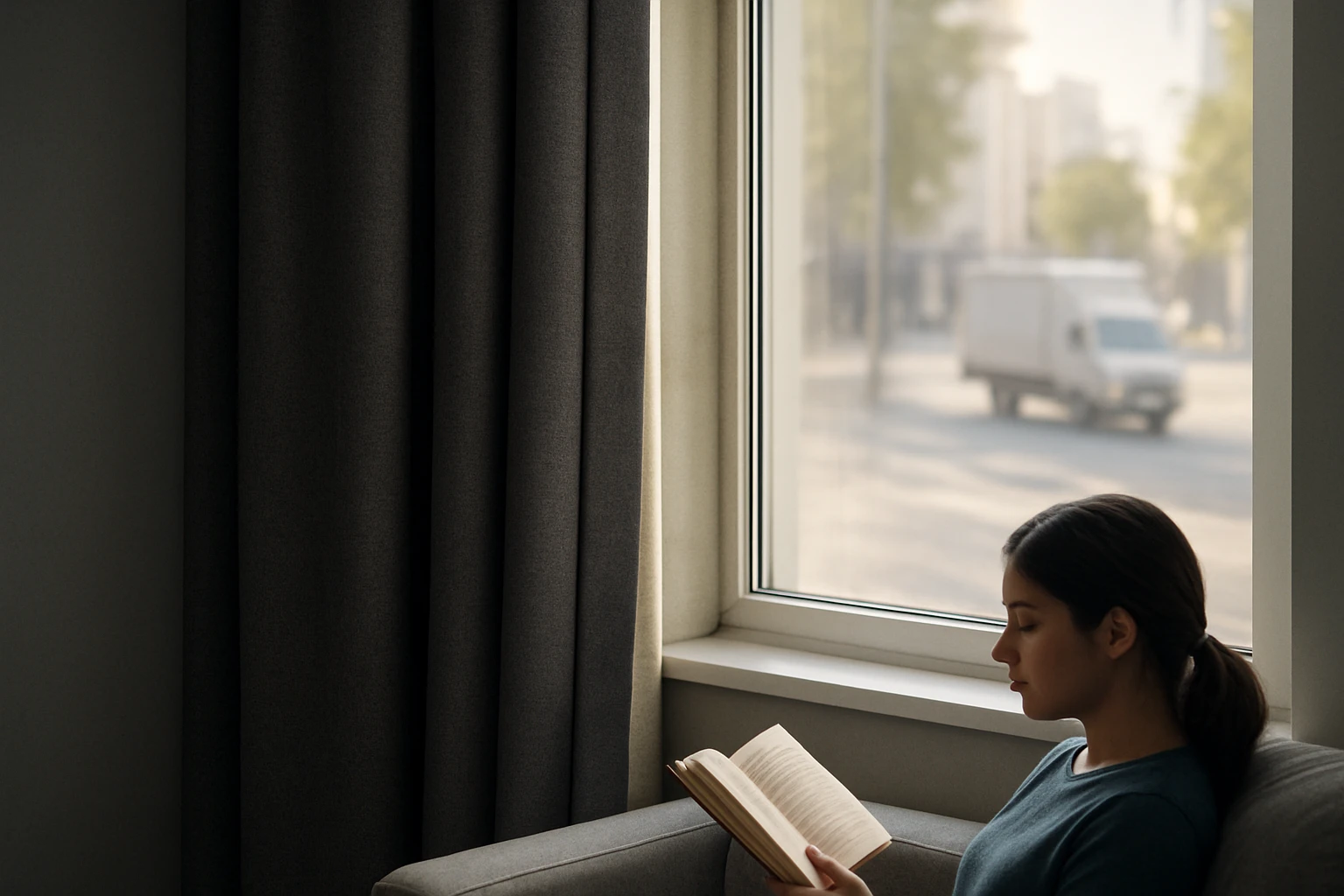
Thicker curtains and a close fit reduce heat transfer through windows and can slightly lower outside noise. They are not a replacement for insulated windows or professional soundproofing, but they do help in many cases.
Energy and Noise Table
| Benefit | Typical Effect | Notes |
|---|---|---|
| Heat gain reduction in summer | 5 to 15 percent | Depends on fabric color and lining |
| Heat loss reduction in winter | 5 to 20 percent | Tight mounting and thermal lining matter most |
| Noise reduction | Small to moderate | Best for high frequency noise, not substitution for acoustic walls; for stronger soundproofing see Sound Proof Curtains |
Cost, Buying Checklist, and Comparison
Prices vary by fabric, size, and hardware. You can choose from budget-ready panels to higher end custom-lined curtains. Focus on fit, lining, and how the panel hangs more than just the label that says room darkening.

Buying Checklist
- Measure windows accurately and note the mounting point.
- Decide if you want a separate liner or a bonded lining.
- Choose a header style that suits your room and the stack back you need.
- Check care instructions and whether the panel can be cleaned at home.
- If noise reduction matters, check mass per square meter and specialized soundproof products.
Price Guide Table (Typical Range for Ready-Made Panels)
| Quality Level | Price Per Panel (approx) | Typical Features |
|---|---|---|
| Budget | AED 50 to 80 | Polyester blends, limited lining options |
| Mid Range | AED 80 to 150 | Better fabric, optional thermal or bonded liner |
| High End | AED 150 to 500+ | Custom sizes, premium fabric, professional lining |
For a local buying overview and recommendations, see Best Curtains and Blinds in Dubai 2026: Buying Guide.
Final Selection Tips
Balance look and performance when you choose room darkening curtains. A well fitted panel with the right lining beats a heavier panel that leaves gaps. If you want hands-free opening, check Motorized Curtains options. For a direct comparison of curtains to blinds, see Blinds Vs Curtains: How to Choose the Right Window Covering.
Pick a fabric that matches the room style and add a liner if you need more darkness or better thermal performance. If fit and finish matter, consider custom options from specialist shops and ask for test samples before you buy.
Frequently Asked Questions
What Exactly Does Room Darkening Mean?
Room darkening means the curtain reduces most daylight and glare but does not aim to remove every bit of light. The material and lining block a high percentage of light while keeping a soft edge rather than absolute blackness.
Are Room Darkening Curtains the Same as Blackout Curtains?
No. Room darkening cuts much of the incoming light and reduces glare, but blackout is designed to stop nearly all light. Choose room darkening for dimmer, softer rooms and blackout where total darkness is required.
Can Room Darkening Curtains Save Energy?
Yes. When fitted closely to the window and combined with a thermal lining they can lower heat transfer by roughly 10 to 20 percent depending on fabric and installation, which helps heat and cooling costs.
How Should I Measure My Window for Room Darkening Curtains?
Measure the full width and height from the mounting point you plan to use. Add extra width so panels can stack back without leaving gaps and raise the mounting point above the frame by 10 to 20 centimeters for better coverage. For full instructions, see the measuring guide linked in the article.
Can I Wash Lined Room Darkening Curtains at Home?
It depends on the fabric and liner. Many polyester blends are machine washable, but heavier or bonded linings often need professional cleaning. Always check the care label before washing.
Will Room Darkening Curtains Reduce Outside Noise?
They can reduce some high frequency noise and make the room feel quieter, but they are not a replacement for dedicated acoustic treatments. For stronger sound reduction, consider specialized soundproof curtains or other soundproofing solutions.
Which Curtain Heading Works Best for Full Closure and Darkness?
Tracks and wave or pleated headers give a close, even closure that reduces side light leaks. Pleat types like pinch pleat or pencil pleat also provide good stack and fit when installed correctly.