
Soundproof curtains are heavy, multilayer window coverings that cut airborne noise by absorbing it and blocking sound at the window and nearby wall. They work best when fitted close to the window and used with sealed gaps. Curtains and Blind recommends matching fabric weight and fit to your room goals.
What Soundproof Curtains Are and How They Work
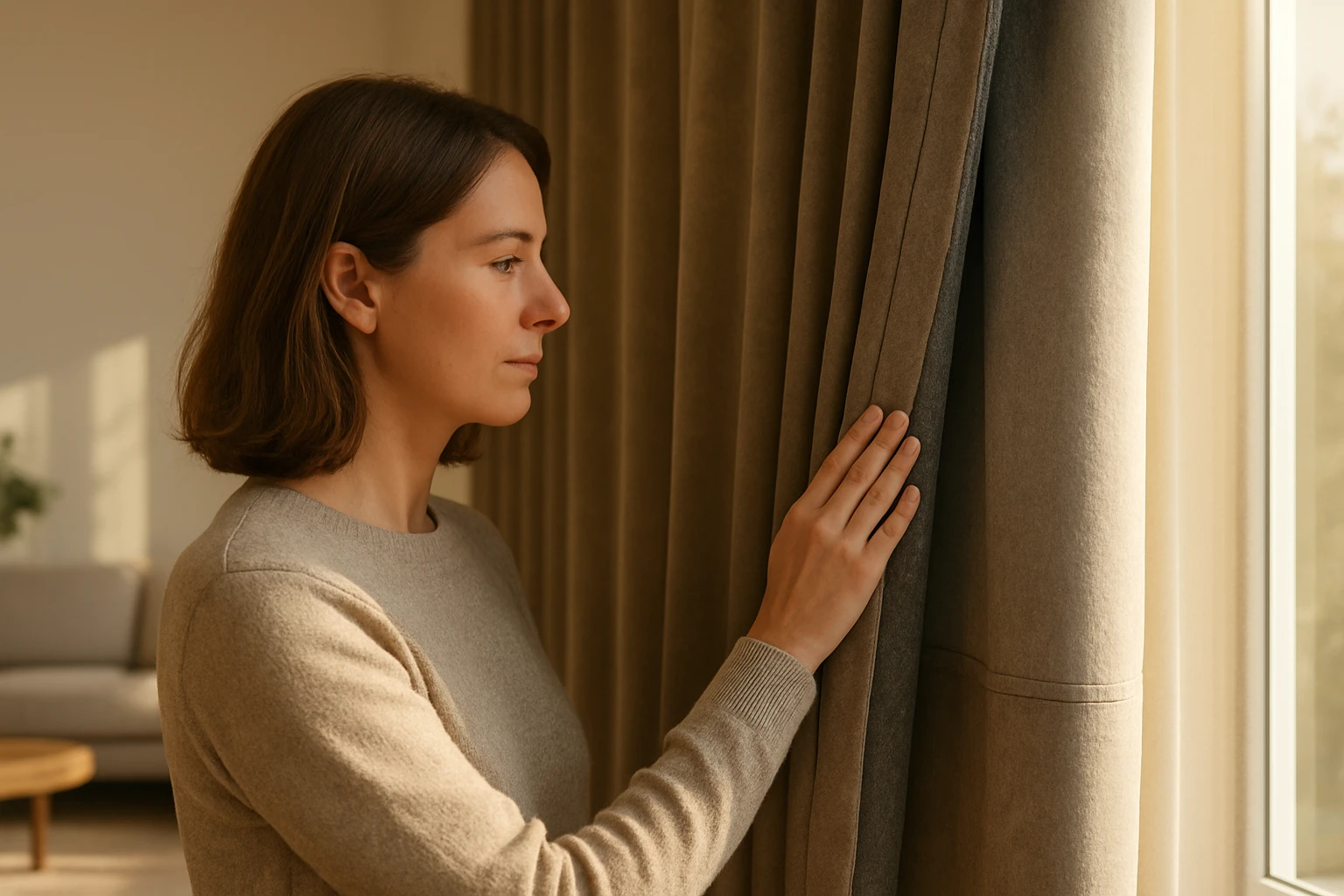
Soundproof curtains are heavy curtains made to reduce noise that comes through windows and thin walls. They use dense fabrics and often add mass or special linings to absorb sound and stop some energy from passing through glass or gaps around the frame.

Why they work: sound travels in waves and loses energy when it meets mass, thickness, and tight coverage. Curtains do not replace structural soundproofing, but they help by cutting echoes inside the room and blocking some sound at the window, which is often the weakest path.
Materials and Construction That Block Sound
Not all heavy curtains perform the same. The best ones combine a dense face fabric, a heavy lining, and tight hems. Look for layered construction and a dense bottom weight.

Materials to consider:
- Dense velvet or tightly woven fabrics, which add mass and soften high frequencies.
- Acoustic or thermal linings that add mass and damp vibrations.
- Foam or mass-loaded vinyl (MLV) inserts for higher performance when the extra weight is acceptable.
Common Fabric Options
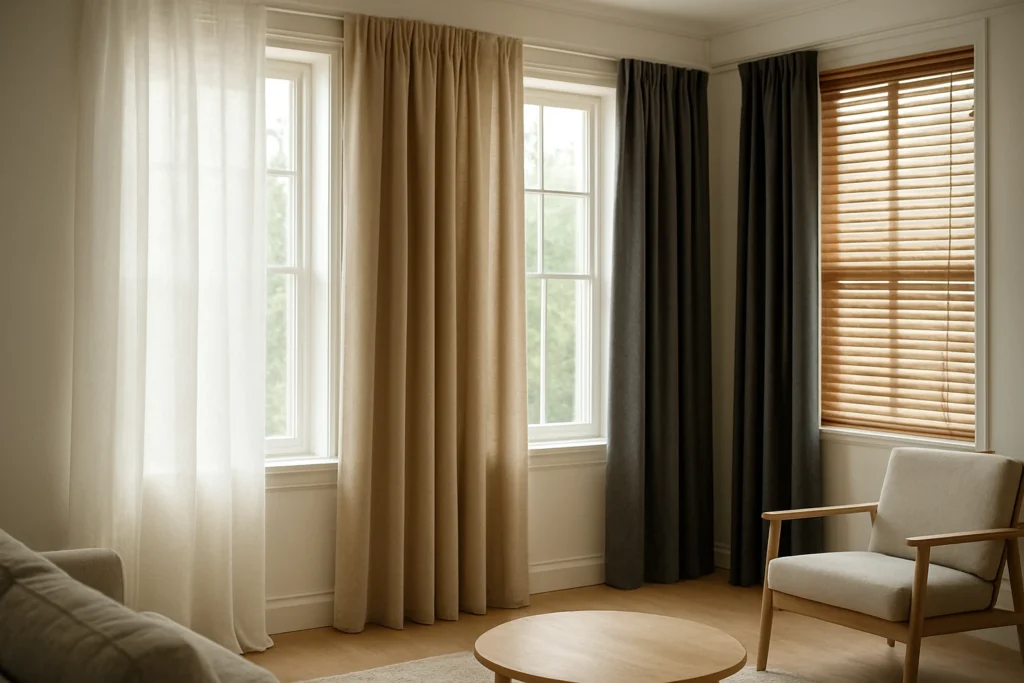
Standard choices vary by look and by how well they stop sound. Velvet absorbs well and looks luxurious. Heavy polyester weaves are usually more affordable and easier to clean.
Fabric Weight and Feel:
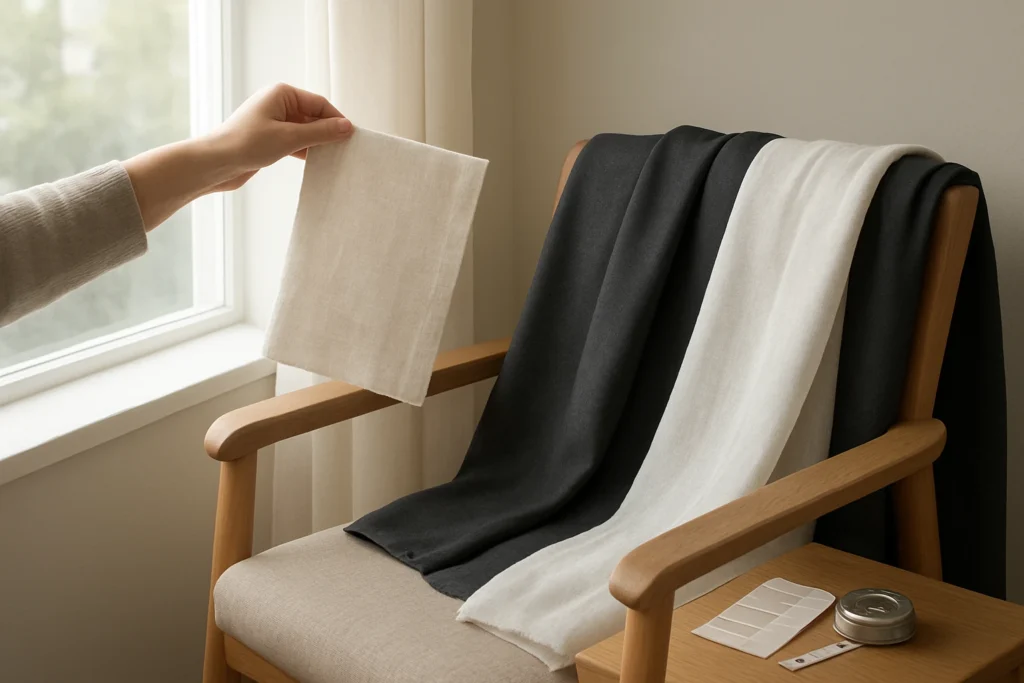
Velvet and heavy woven poly fabrics often feel thick and dense. A common mistake is choosing a fabric only for its color, which reduces performance. Always test the drape and weight before you buy.
Layering Benefits:
Layering a decorative panel over a blackout or acoustic lining improves both sound reduction and light control. You keep the style you like while improving how the curtain performs.
Realistic Noise Reduction You Can Expect
Curtains help, but they do not make a room soundproof. In real rooms you can expect modest but useful drops in everyday noise. Light curtains may cut a few decibels, while heavy multilayer systems give larger gains.
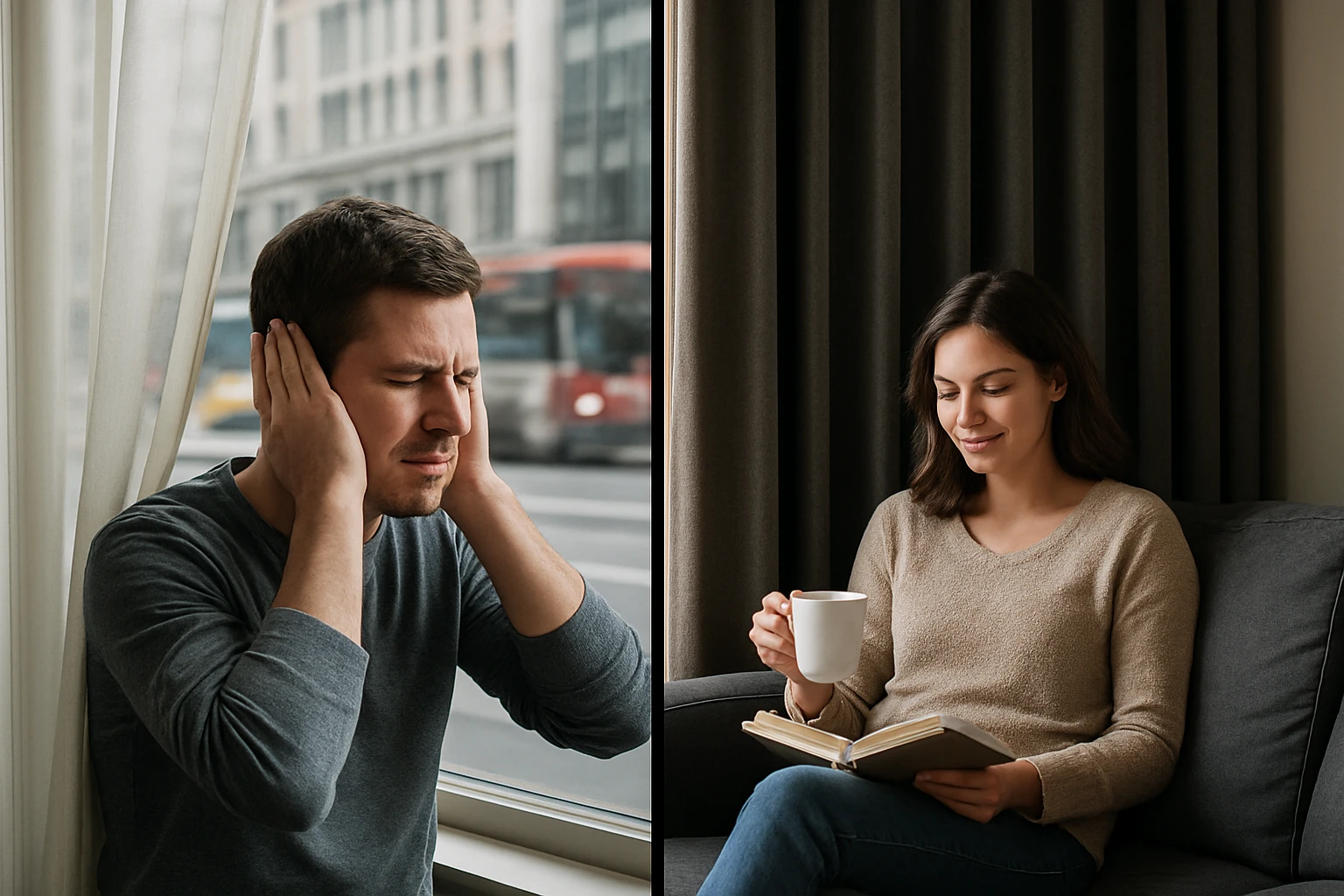
Table 1: Typical Performance Ranges
| Curtain Type | Typical Noise Reduction (Approx) | Typical Weight per Panel | Typical Price (AED) Sqm |
|---|---|---|---|
| Lightweight Sheer or Basic Blackout | 1–3 dB | 300–600 g | 70–150 |
| Thick Blackout With Thermal Lining | 3–8 dB | 700–1200 g | 90–180 |
| Multi Layer Acoustic Curtain With Dense Lining | 8–15 dB | 1200–2500 g | 150–400 |
Notes: These ranges are approximate and depend on mounting, window condition, and room acoustics. A common mistake is assuming a curtain alone will stop traffic or construction noise. Curtains help most with mid and high frequencies and reduce echoes.
How to Measure and Choose the Right Size
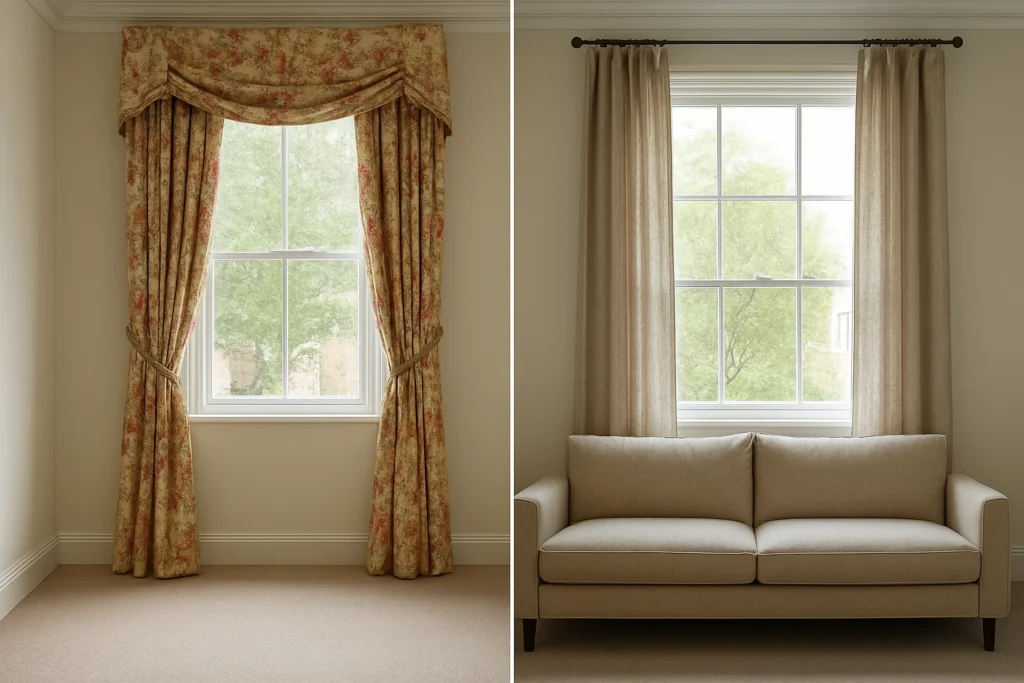
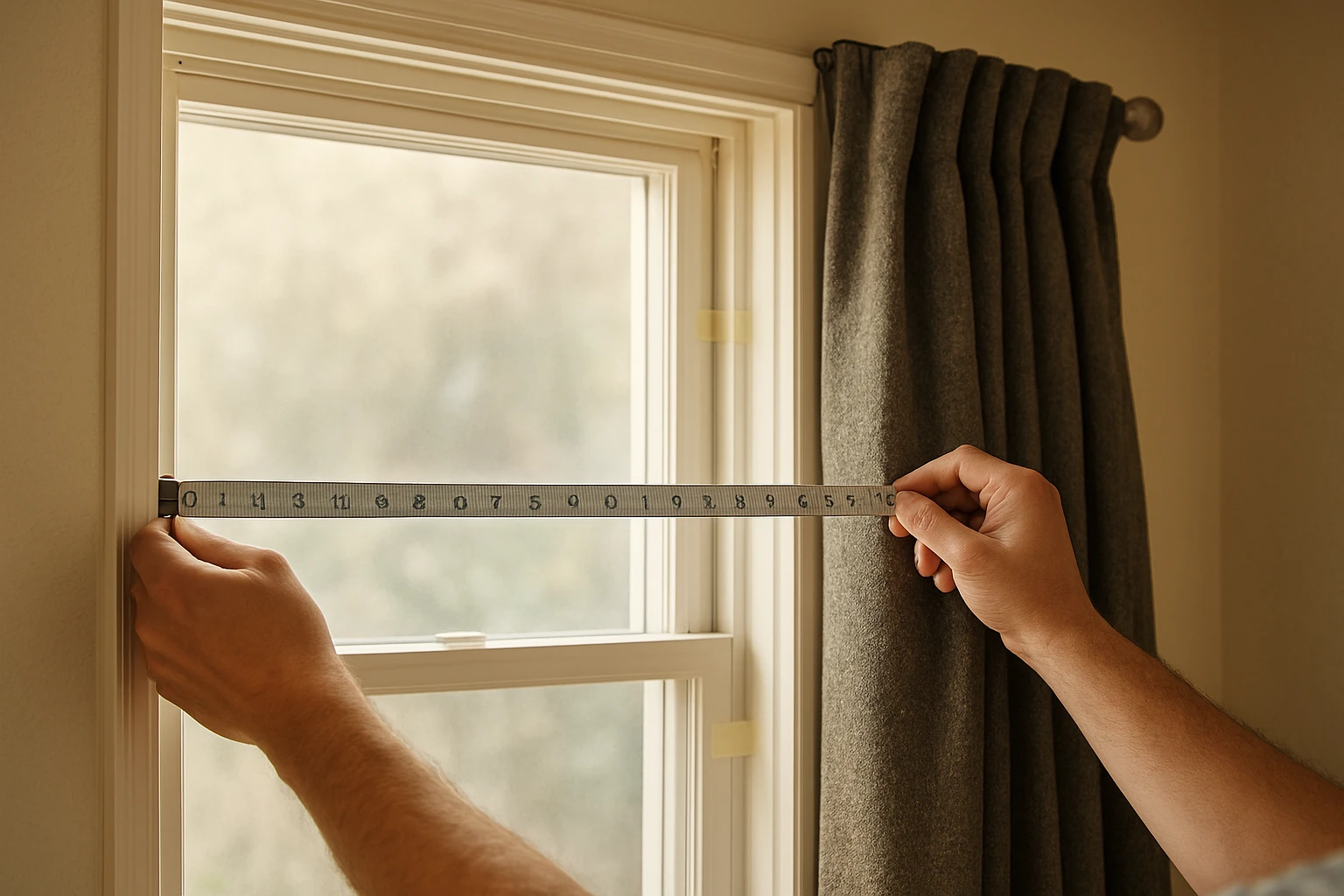
A correct fit is one of the easiest ways to get better results. Curtains must cover the window and overlap the wall to reduce sound leakage at the edges.
Key rules to follow:
- Measure the full window and add extra overlap. Add at least 10 to 20 cm (4 to 8 inches) on each side for side overlap and 15 to 25 cm (6 to 10 inches) above the frame to block sound at the top.
- Aim for fullness. A curtain width 1.5 to 2.5 times the window width gives better acoustic performance because of the extra folds and mass.
- Length matters. Floor-length curtains that graze the floor or puddle slightly make fewer sound leaks than short panels.
See How to Measure for Curtains for Any Window Size for precise measuring steps and diagrams.
Installation and Mounting Tips
Mounting style changes performance more than most people expect. The closer the curtain sits to the window and the fewer gaps at the sides and top, the better it will block sound.
Tools to Prepare:
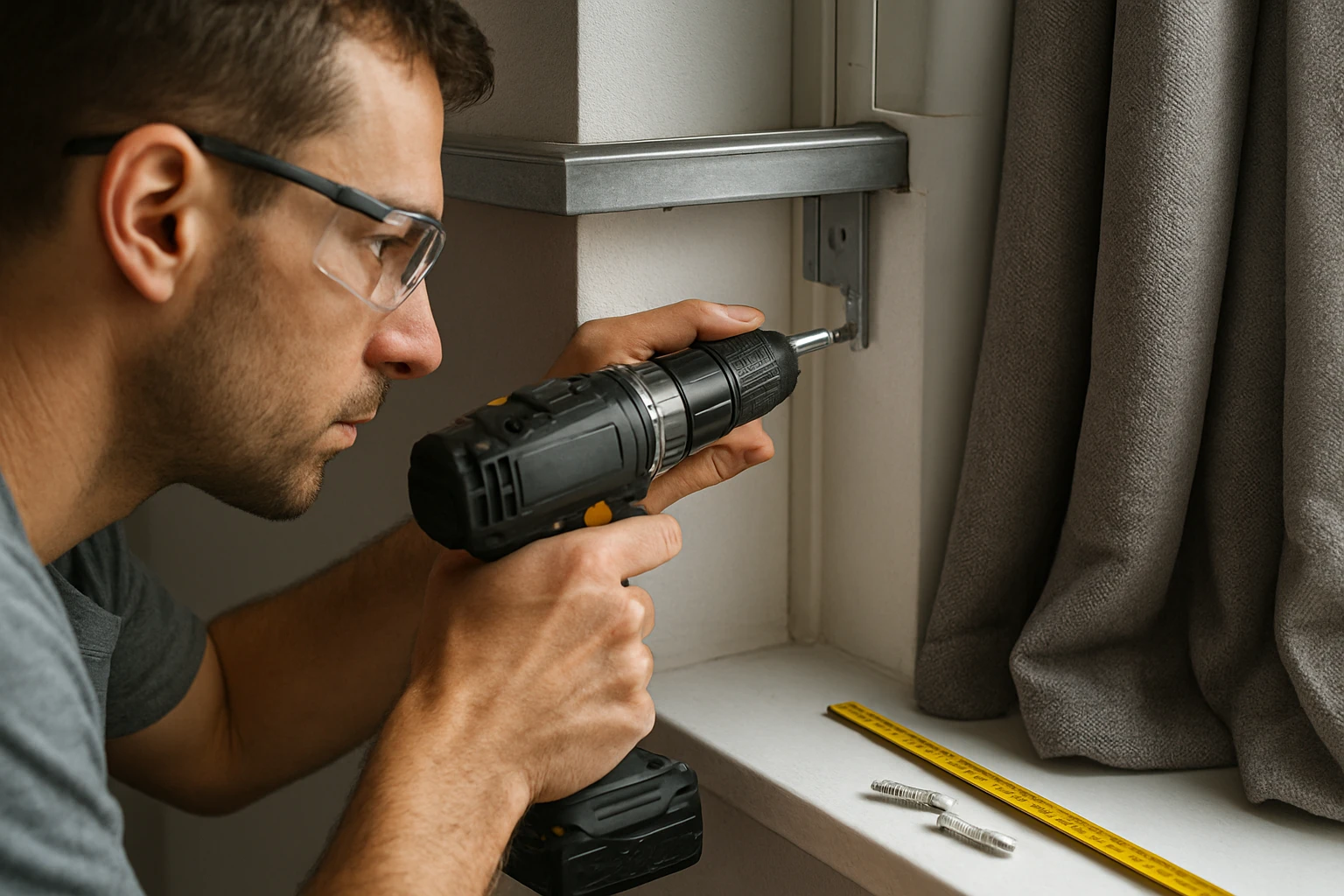
- Tape measure, drill, strong brackets or a ceiling-mounted track, long curtain rods or tracks rated for heavy panels, wall anchors sized for your wall type.
Step Sequence:
- Mount the track high and wide so curtains overlap the wall by the measurements above.
- Use a continuous track rather than separate hooks for a tighter seal across the top.
- Add magnetic or Velcro side seals where possible, or use wraparound returns to reduce side leakage.
See How to Hang Curtains: Measure, Mount, and Perfect the Fit for common hardware choices and step-by-step mounting photos.
Performance Comparison with Other Noise Solutions
Curtains are one tool among several. The right mix depends on the noise source, your budget, and how permanent you want the change to be.
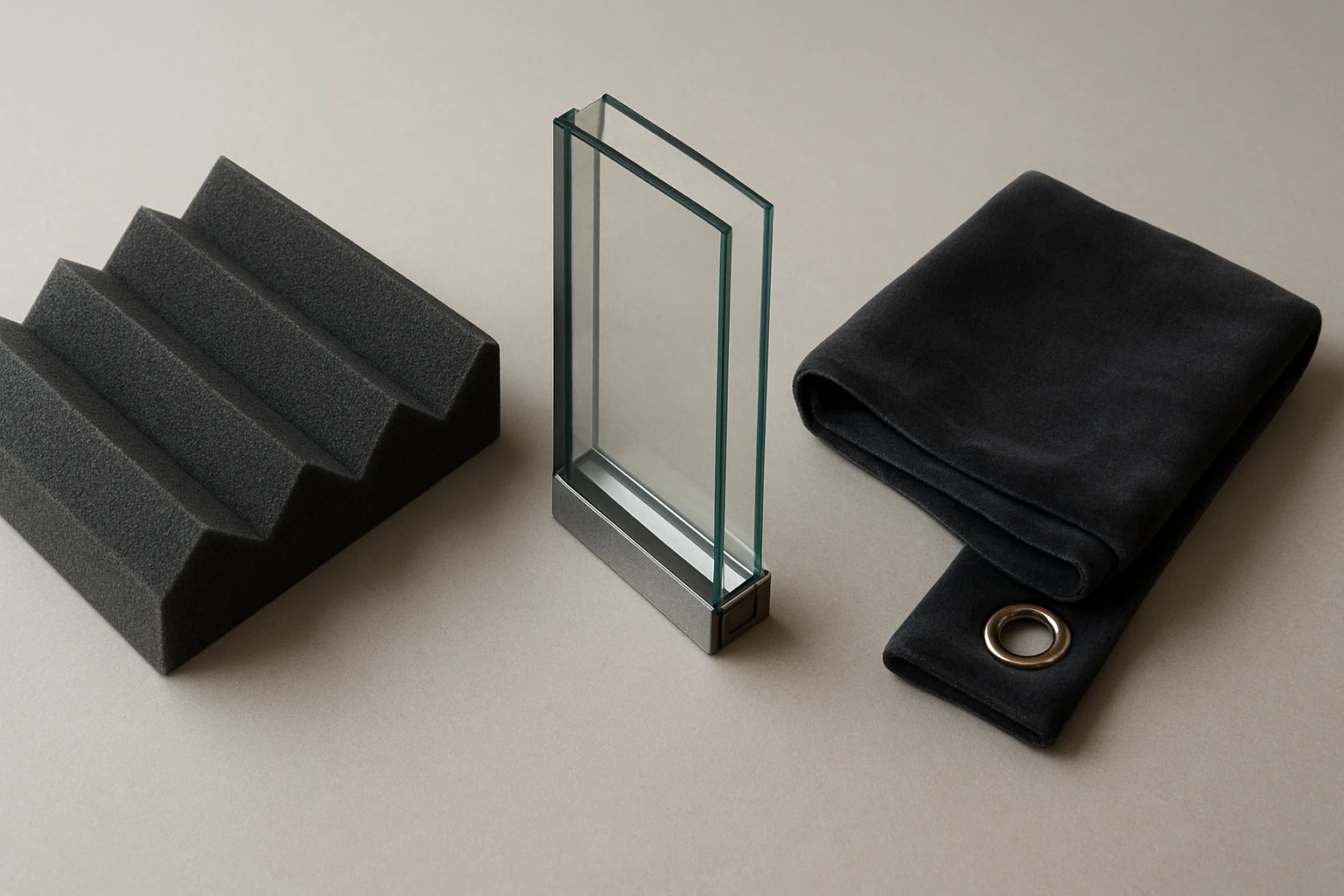
Table 2: Quick Comparison
| Solution | Typical Cost | Typical dB Improvement | Ease Of Installation |
|---|---|---|---|
| Soundproof Curtains | Low to Medium | Small to Moderate | Easy to Moderate |
| Double Glazing | High | Moderate to High | Requires professional installation |
| Acoustic Wall Panels | Medium | Moderate to High | Moderate to High |
| Sealing Gaps And Weatherstripping | Low | Small to Moderate | Easy |
Choose curtains when you want an affordable, no permanent option that also improves room comfort and appearance. For loud, low-frequency noise, structural changes such as double glazing and wall upgrades work better.
Cost, Budgeting, and Value
Costs vary by fabric, size, and added features such as thermal or acoustic lining. Prices rise quickly with panel weight and custom sizing, so set a budget and compare options.
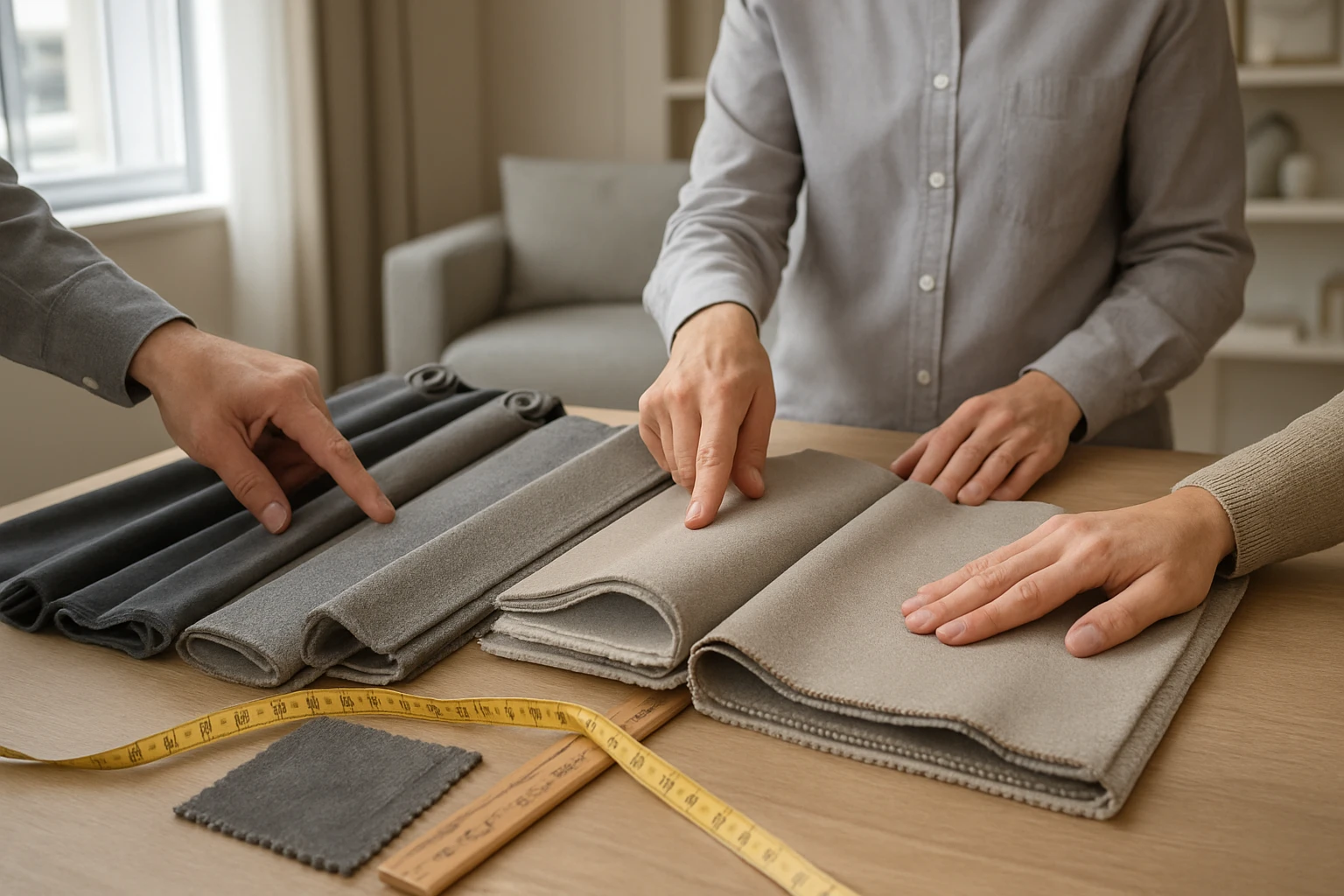
Typical price drivers:
- Custom sizing and heavy linings add cost.
- Professional installation raises the total but improves fit and performance.
- Some fabrics like real velvet cost more but can be worth it for a living room or home theatre.
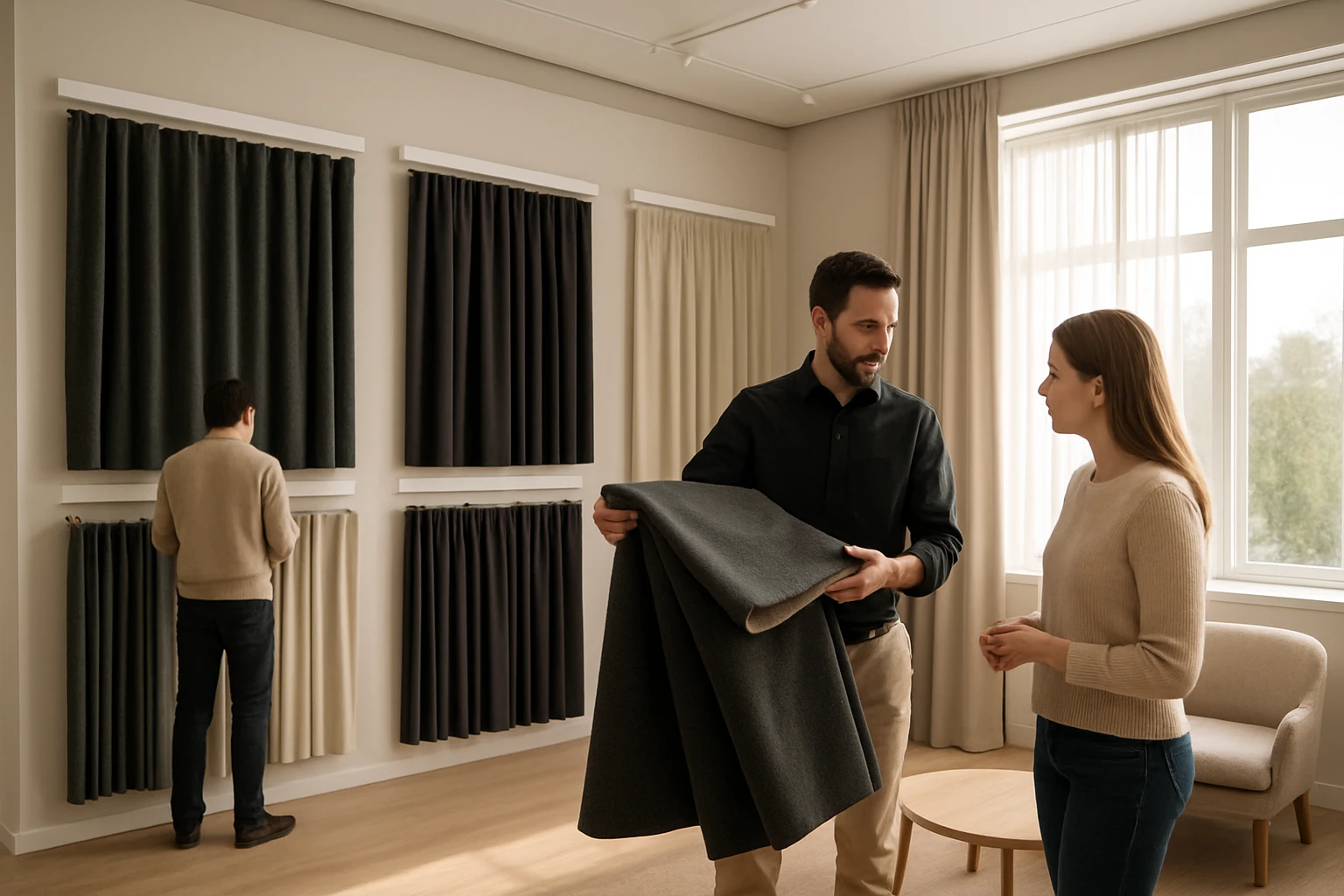
If you want to compare products in person, see the Soundproof Curtains service page for local options and samples.
Care and Maintenance
Caring for heavy curtains keeps them working and looking good for years. Follow the manufacturer care label and check seams and linings once a year.

Practical tips:
- Use a gentle brush or vacuum with a soft attachment to remove dust.
- Spot-clean visible stains quickly and arrange professional cleaning for large or lined panels.
- Inspect tracks and hardware for wear and tighten screws when necessary.
Common Mistakes and Troubleshooting
Many buyers pick the wrong size or ignore gaps, which limits effectiveness. Check fit first, then the wall and window seals when you troubleshoot.

Problems and fixes:
- Problem: Curtain too narrow. Fix: Buy wider panels or overlap multiple panels.
- Problem: Gap at the rod. Fix: Mount a wider track and extend panels beyond the frame.
- Problem: Low-frequency rumble remains. Fix: Consider adding mass-loaded vinyl or upgrading glazing.
Where to Buy and Related Options
You can buy ready-made panels or order custom work that fits your window and performance goals. For local services and examples, check specialized offerings like Velvet Curtains for premium looks, Theatre Curtains for performance spaces, and Bedroom Curtains for sleep-focused solutions.
For simple measuring and hanging tips that help performance, see these helpful articles: How to Hang Curtains: Measure, Mount, and Perfect the Fit and Room Darkening Curtains That Improve Sleep, Privacy, and Comfort.
Final Thoughts on Choosing Soundproof Curtains
Soundproof curtains are an approachable, affordable way to cut noise and make rooms feel calmer. They work best when measured and mounted carefully. Match fabric weight to the noise you want to reduce, check the fit, and expect moderate improvements rather than total silence.

Frequently Asked Questions
Do Soundproof Curtains Make a Room Completely Silent?
No. Soundproof curtains reduce airborne noise and room echo but they do not stop all sound. They work best on mid and high frequencies and help most when there is a tight fit and layered construction.
How Much Noise Can I Expect to Reduce with Soundproof Curtains?
Typical reductions vary. Light blackout curtains may lower noise by a couple of decibels, while heavy multi layer acoustic curtains can reduce more, often in the single to low double digits depending on fit and the noise source.
Are Heavier Curtains Always Better for Sound Control?
Heavier curtains often add mass and absorb more sound, but fit and mounting matter as much as weight. A well mounted midweight curtain can outperform a heavy panel with big gaps at the sides.
Can I Use Soundproof Curtains in a Bedroom to Improve Sleep?
Yes. Curtains that combine blackout and acoustic lining reduce light and soften nighttime noise, which improves sleep for many people when used with proper mounting and overlap.
Should I Add Other Solutions with Curtains for Better Results?
Often yes. Sealing window gaps, adding thicker glazing, or using acoustic panels on parallel walls complements curtains and gives stronger overall noise control.