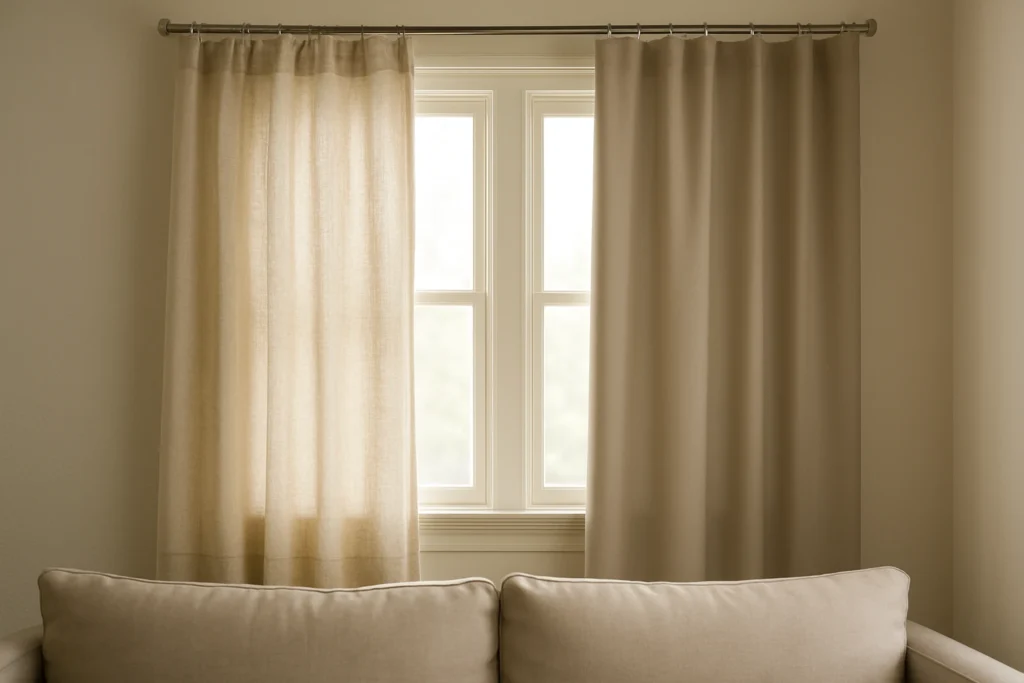
Polyester curtains usually last longer in everyday home use because the synthetic fibers resist wear, moisture, and fading better than cotton. Cotton still works well when you want a natural feel and you care for it carefully, but bright sun, humidity, and heavy handling shorten its life. The weave, lining, and how you clean and hang the curtains often matter as much as the fiber.
This article compares cotton and polyester curtains on strength, fade resistance, maintenance, cost, and environmental impact so you can pick the best option for each room. The team at Curtains and Blind recommends checking weave and lining before you choose fabric.

Why Fabric Choice Matters
The fabric shapes how curtains handle daily life. It affects how they stand up to light, moisture, dust, and washing. A fabric that looks good at first may thin out, fade, or fray faster than another under the same conditions.
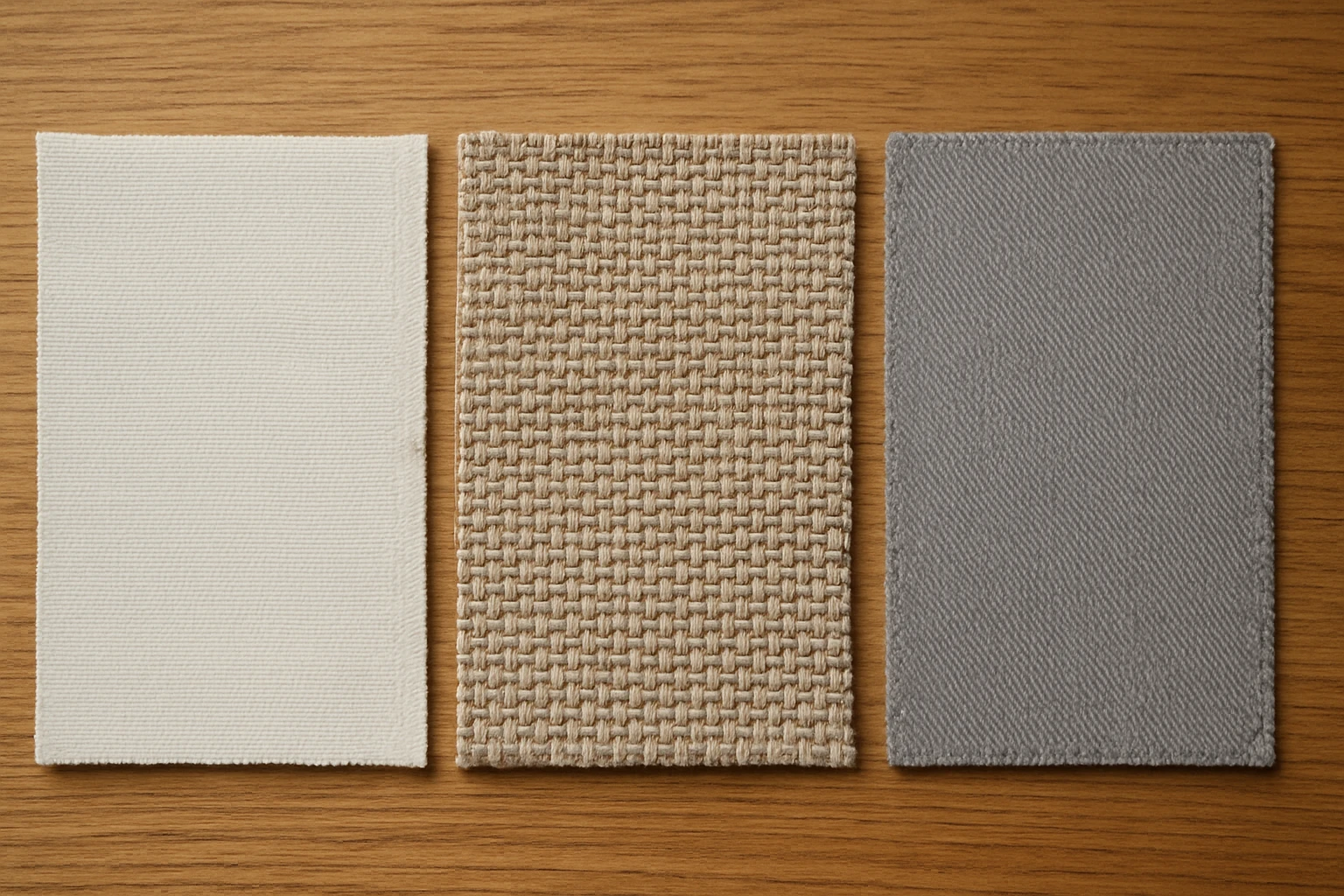
How Cotton Curtains Wear Over Time
Cotton is a natural fiber that feels soft and breathes well, so it is a common choice for living rooms and bedrooms. It dyes nicely and is comfortable, but strong sun and steady moisture will weaken it over time.
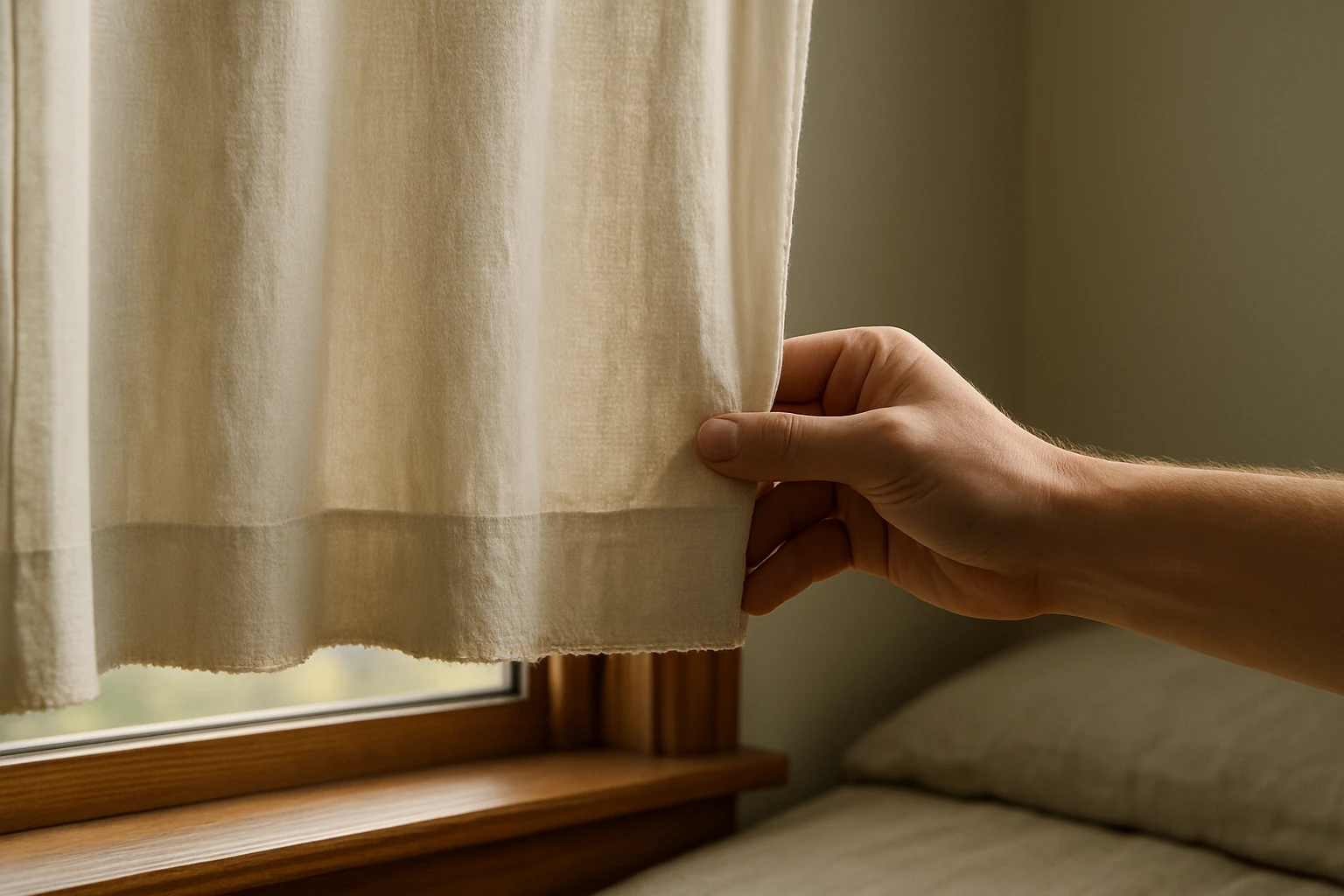
Watch for fading, shrinkage after washing if not pretreated, and mildew in damp rooms. A heavy cotton weave with a lining resists wear better than thin sheer cotton. From experience, trims and hems are where cotton usually shows damage first.
How Polyester Curtains Wear Over Time
Polyester is a synthetic fiber that resists wrinkles, stretching, and many stains, so it keeps its shape and color longer in everyday use. It dries fast and tolerates repeated washing well.
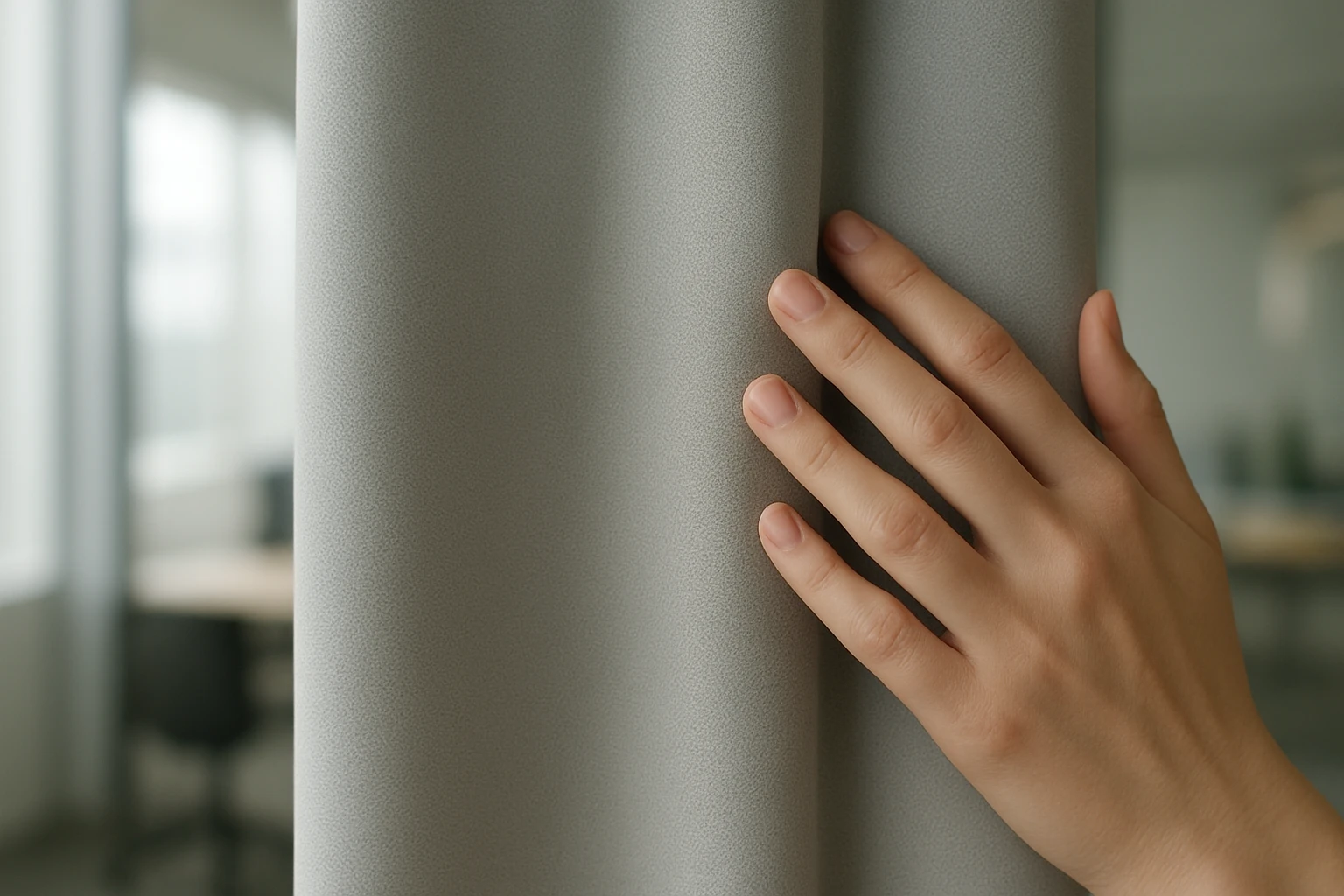
Polyester is less likely to shrink and often outlasts cotton when used a lot. Low-quality polyester can pill or develop a shiny look, though. Blends that mix polyester with natural fibers can balance appearance and durability.
Side-by-Side Durability Comparison
Below is a focused comparison that highlights the practical differences for everyday home use. The lifespan ranges are estimated for typical use rather than strict guarantees. Actual life depends on exposure, care, and construction.
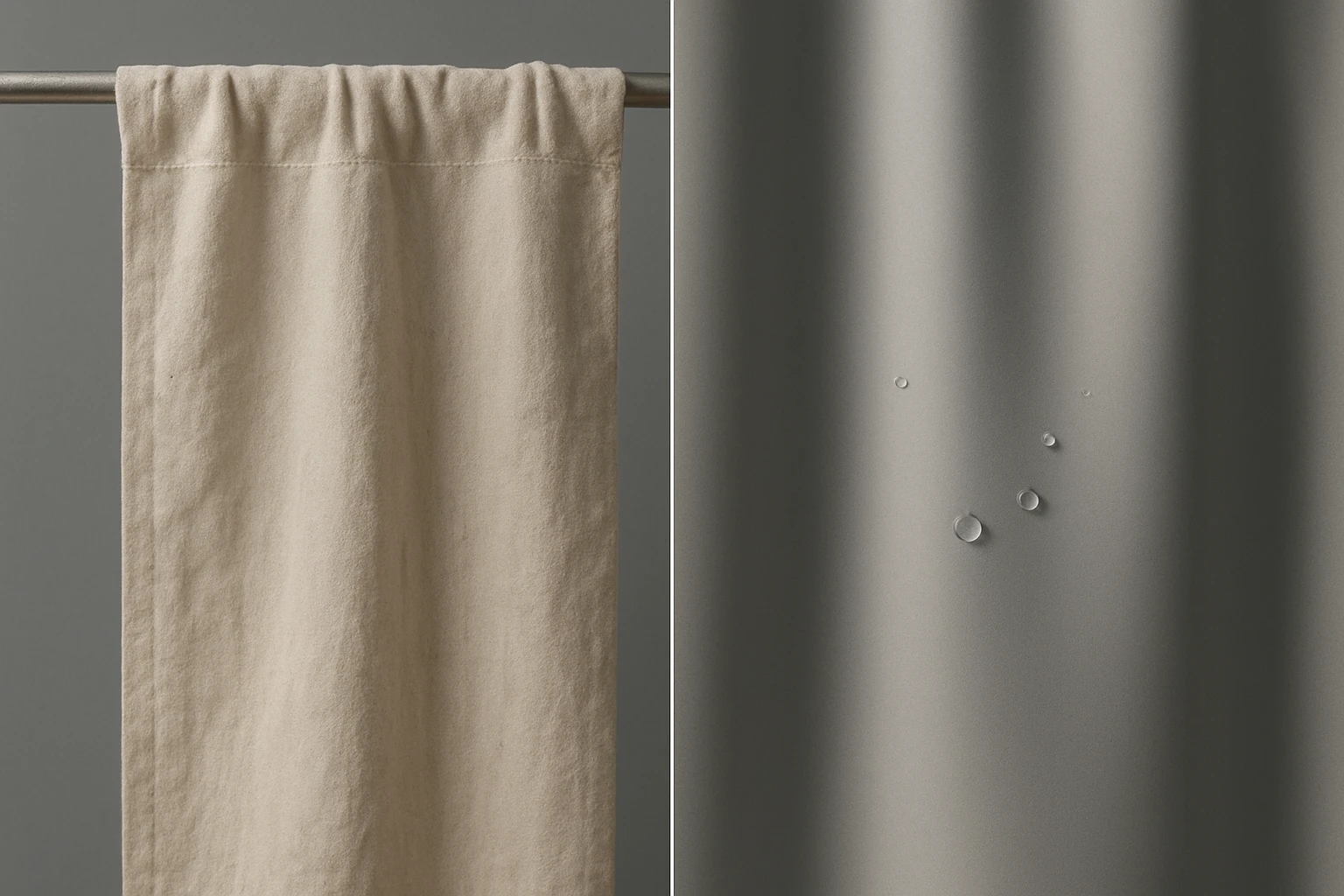
| Feature | Cotton Curtains | Polyester Curtains |
|---|---|---|
| Typical Home Lifespan (estimated) | 5 to 10 years | 7 to 15 years |
| Fade Resistance | Moderate, fades faster in strong sun | Good, holds color longer under UV exposure |
| Moisture Resistance | Poor to moderate, prone to mildew if damp | Good, resists mildew and dries quickly |
| Wrinkle Resistance | Poor, wrinkles easily | Excellent, holds a smooth look |
| Repairability | Easy to patch and alter | More difficult to repair invisibly |
| Feel and Appearance | Natural, soft, matte | Smooth or slightly shiny, modern look |
This table shows general tendencies. A heavy lined cotton curtain in a shaded bedroom can outlast a cheap polyester in a sunroom.
Fade, Sun Damage and Colorfastness
Sun exposure is one of the biggest factors that shorten curtain life. UV light breaks down fibers and dyes, so fabrics near bright windows show change faster. Colorfastness is how well a dye stays on the fiber.
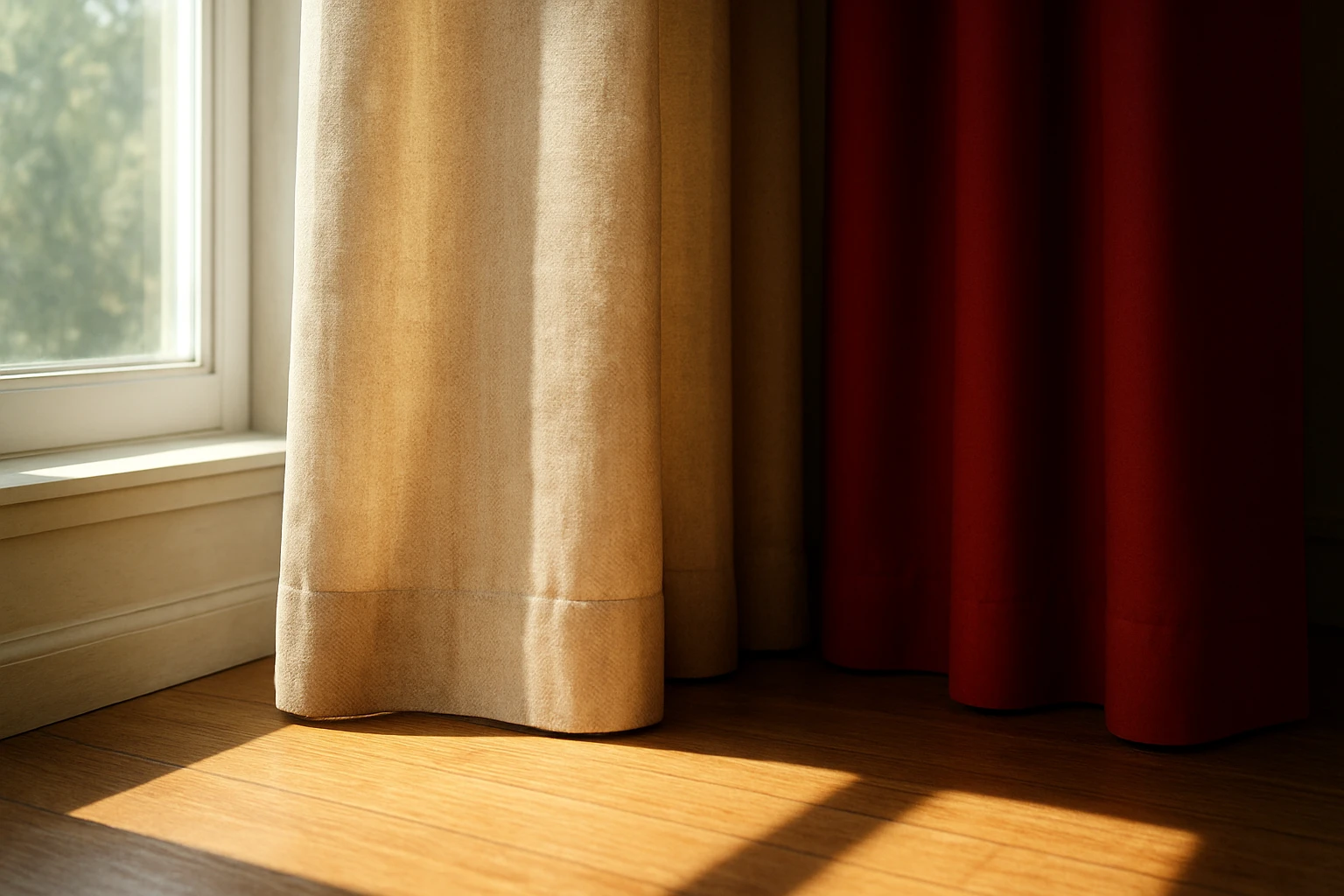
Polyester usually has better colorfastness under UV than cotton. Adding a lining or using room-darkening options is a practical way to protect fabrics from strong sun. For near-complete darkening, see the room darkening guide for choices and materials. Room Darkening Curtains That Improve Sleep, Privacy, and Comfort
Moisture, Mildew and Care
Rooms with high humidity need fabrics that resist mold and mildew. Cotton holds moisture and can grow mildew if it stays wet, while polyester sheds moisture and dries faster.
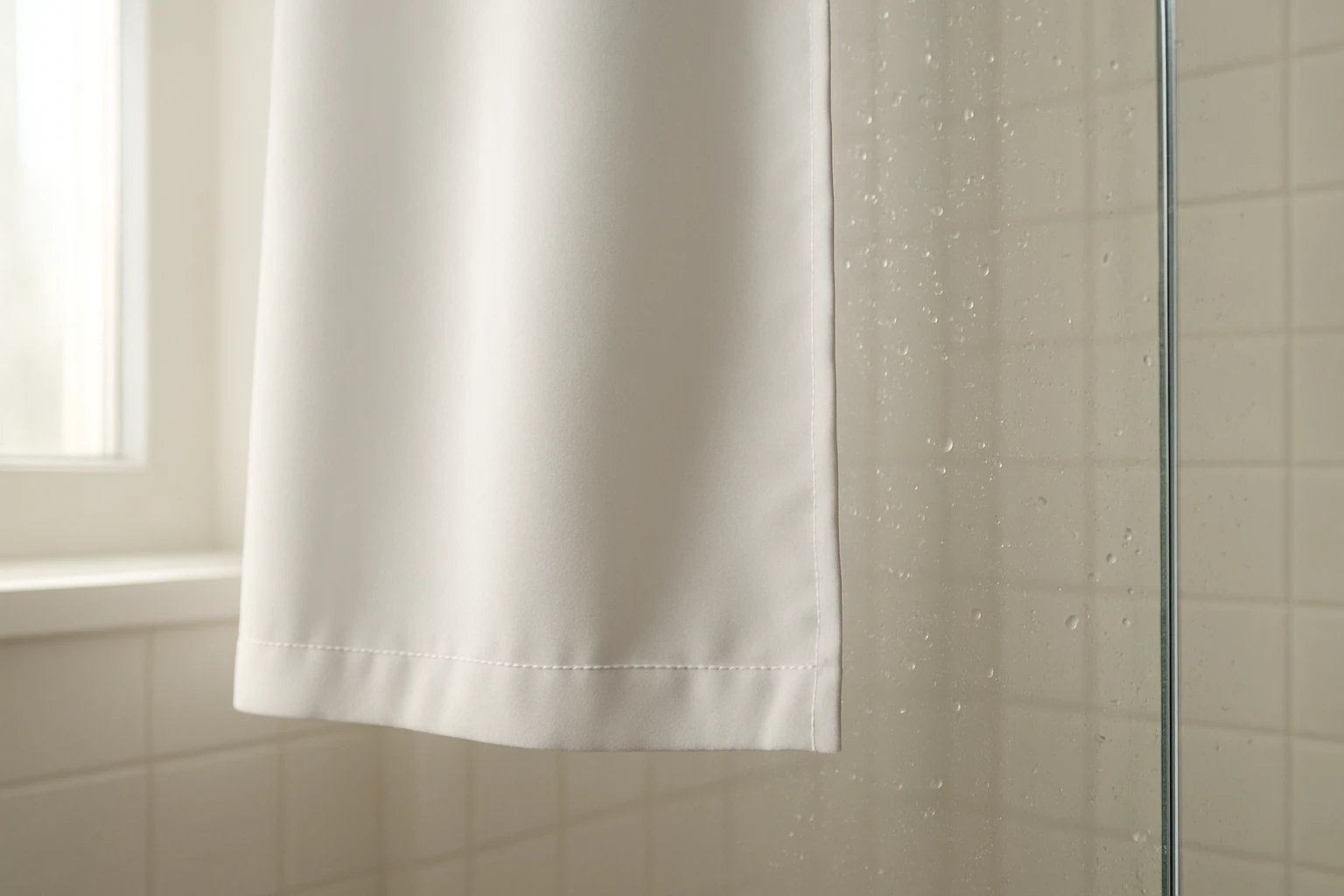
For kitchens, bathrooms, or basements, polyester or polyester blends are usually the better choice. A common mistake is using untreated cotton in a humid room and then wondering why the fabric smells or stains quickly.
Cost, Value and Lifespan
Price varies by weight, weave, and brand. Cotton can be cheap in light weights but gets expensive for heavy or decorative weaves. Polyester often gives longer life for the money, so cost per year may favor polyester.
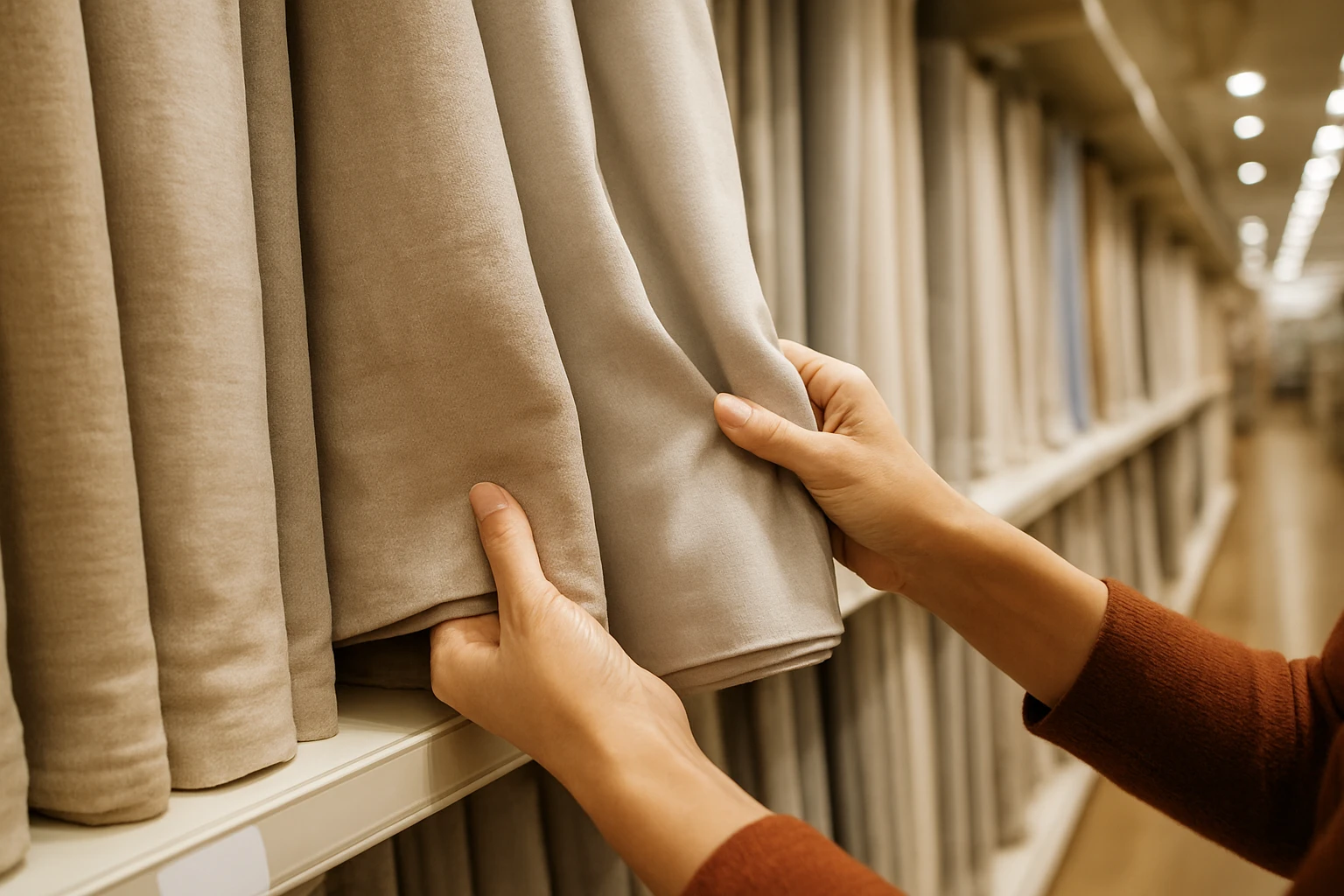
When you measure true value, include expected life, maintenance cost, the need for lining or interlining, and how often you replace curtains. Blends can give a middle ground of cost and longevity.
Environmental Impact and Recycling
Cotton is natural and biodegradable when untreated, but conventional cotton farming uses a lot of water and pesticides. Polyester is a plastic fiber made from petroleum and has a higher manufacturing footprint, though recycled polyester lowers that problem.
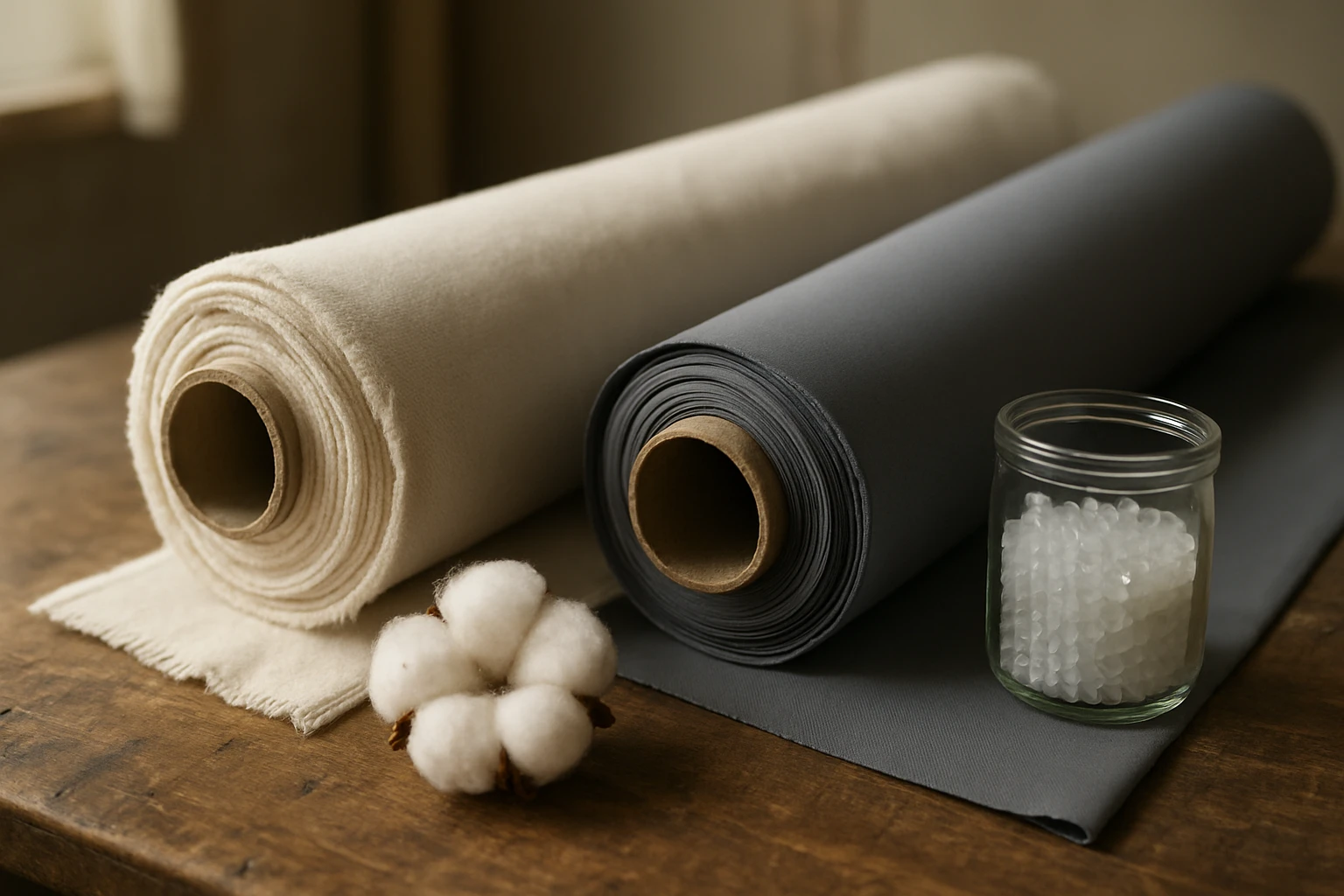
If environmental impact matters, look for organic cotton grown with fewer pesticides or choose recycled polyester. Also plan for reuse, donation, or recycling at the end of life instead of sending curtains to a landfill.
Choosing Curtains for Each Room
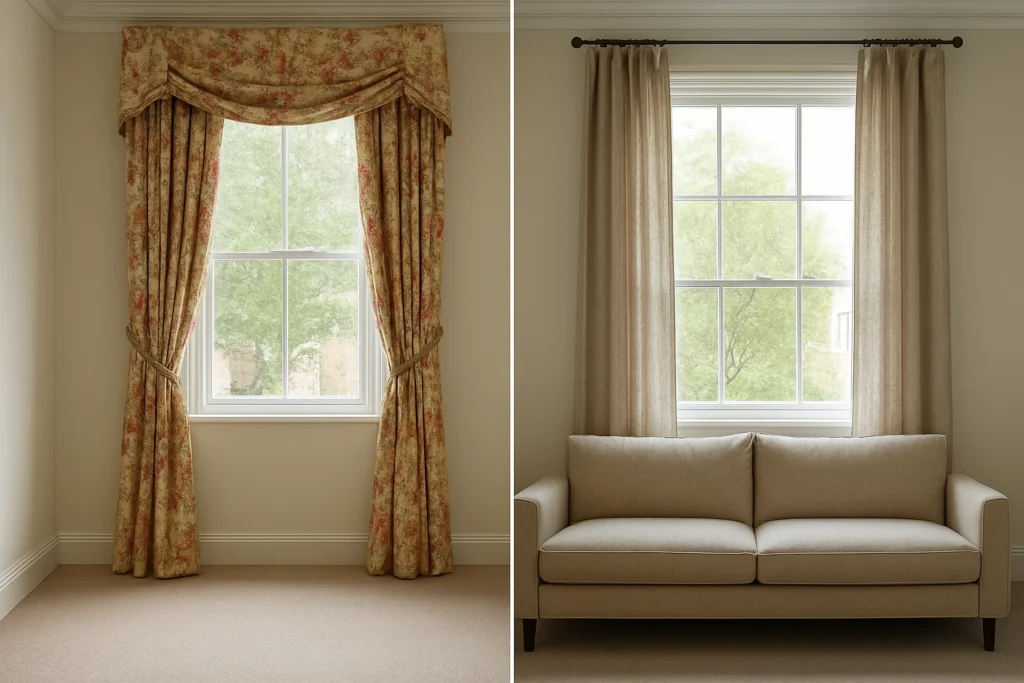
Match the fabric to how you use the room. Bedrooms and living spaces often suit cotton for a soft, natural feel. High-traffic or sunny rooms usually do better with polyester or a blend.
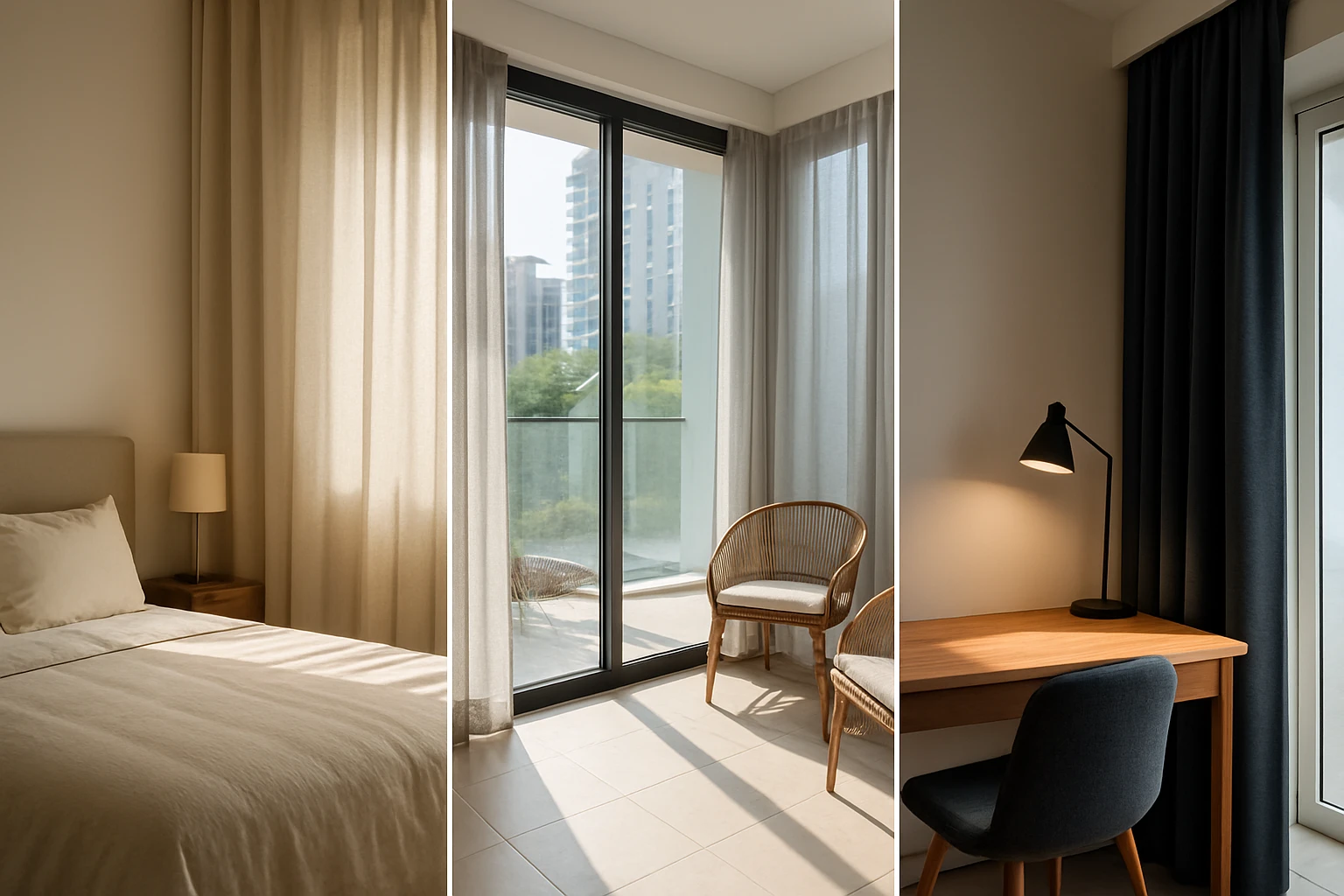
- For sleep and privacy, choose thicker or lined options and see the Bedroom Curtains page for styles and fabrics.
- For sound dampening, polyester with dense weaves or specialist materials helps; check the Soundproof Curtains page to compare options.
- For a formal or luxurious look, natural silk or heavy velvet may be preferred despite higher care needs; see Silk Curtains and Velvet Curtains for details.
- For airy light filtering, chiffon panels give a sheer, elegant look; learn more at Chiffon Curtains.
When you need a professional fit for a workspace, consider the options at Office Curtains to match function and durability.
How to Extend Curtain Life
Small choices in hanging, cleaning, and handling can add years to any curtain. Good hardware, correct mounting, and sensible cleaning all matter.

Washing and Stain Removal
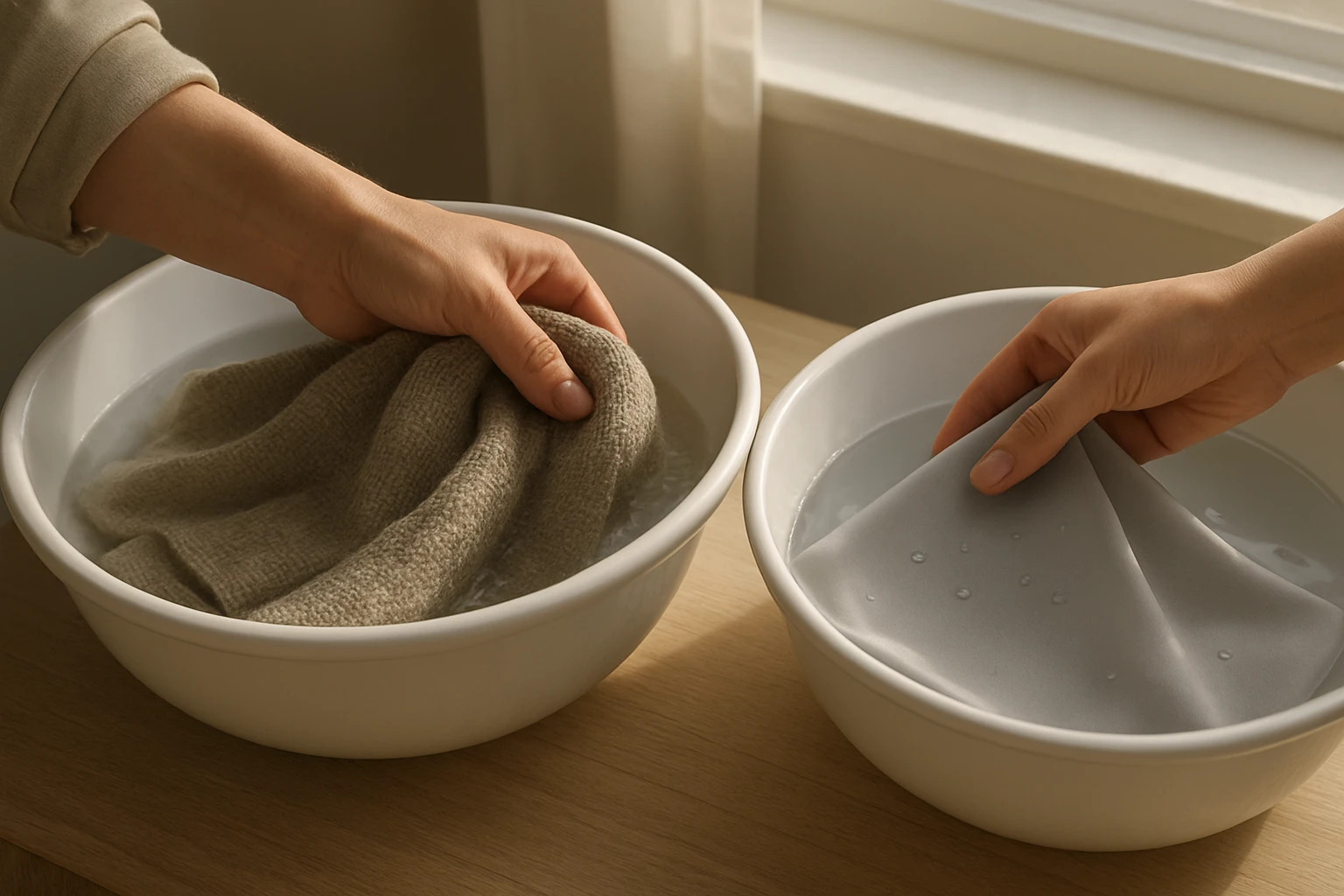
Daily Habits:
Keep dust down by vacuuming with a soft brush attachment. Avoid handling curtains with dirty hands. Open and close curtains gently rather than yanking them, which wears seams and hems.
Washing Checklist:
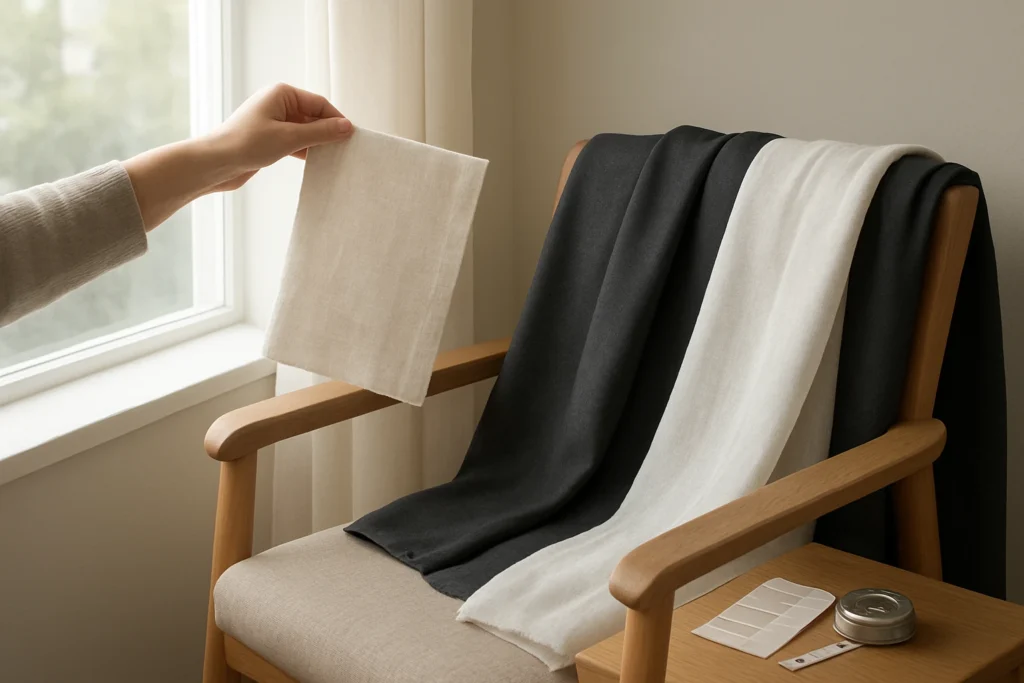
Use the fabric label as your guide. Cotton often tolerates a warm wash and ironing, but prewash to reduce shrinkage. Polyester prefers cool wash and low heat drying to avoid damage. Line dry when you can and reshape the fabric while it is damp.
Repair and Patching
Minor repairs like securing a seam, reattaching a hem, or replacing hooks will add years. Polyester repairs can be more visible, so keep edges in good shape and avoid excessive washing.
Buying Checklist and Quick Comparison
Before you buy, check weave weight, lining, track or rod hardware, and the return policy. A lined curtain usually lasts longer because the lining protects the face fabric from sun and wear.
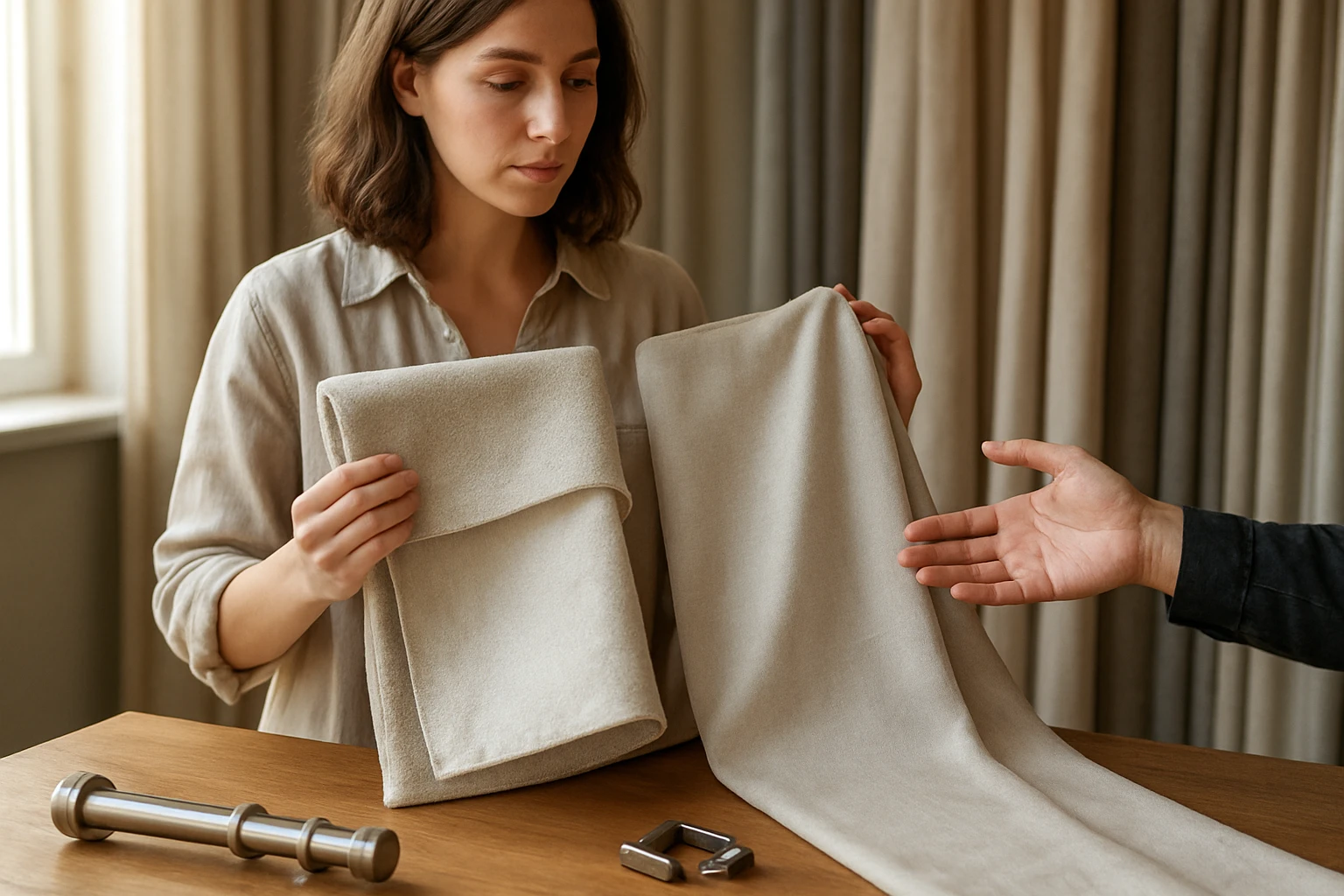
Quick buyer checklist:
- Look for heavier weaves for high-use rooms.
- Choose lining for sun-facing windows.
- Prefer polyester blends for humid or high-traffic spots.
- Keep care instructions and test a small, hidden area after cleaning.
Final Recommendation
For most homes, polyester or a polyester blend will last longer with less care, especially in sunny or humid rooms. Choose cotton when you want natural texture and are ready to care for the fabric, and add lining where sun or moisture is present. If you want help choosing the right fabric and style, the Best Material for Curtains for Every Room post gives clear room-by-room advice, and the practical mounting steps are in How to Hang Curtains: Measure, Mount, and Perfect the Fit.
If you need a tailored suggestion for a specific window or room, start with the room use and exposure, then pick weave and lining to match. That approach improves real-world lifespan more than picking a fabric name alone.
Frequently Asked Questions
Do Polyester Curtains Fade Less Than Cotton?
Yes, polyester generally holds dye better and resists fading from sunlight more than cotton. Still, heavy sun exposure will eventually fade most fabrics, so use lining or sun-blocking layers where the sun is strong.
Can I Machine Wash Both Cotton and Polyester Curtains?
Often yes, but always check the label. Cotton tolerates warmer water but can shrink if not pretreated. Polyester prefers cool water and low heat drying. When in doubt, use gentle cycles and line dry.
Are Polyester Curtains More Environmentally Harmful Than Cotton?
Polyester is made from petroleum and has a higher manufacturing footprint, while conventional cotton can use a lot of water and pesticides. Look for recycled polyester or organic cotton to reduce impact.
Should I Line Cotton Curtains for Longer Life?
Yes. Lining blocks UV light and reduces wear on the face fabric, so lined cotton curtains last longer than unlined ones, especially in sunny windows.
Which Fabric Is Better for Bathrooms and Kitchens?
Polyester or polyester blends are generally better because they resist mildew and dry quickly. If you prefer cotton, choose quick-drying placement and remove curtains frequently to air them out.