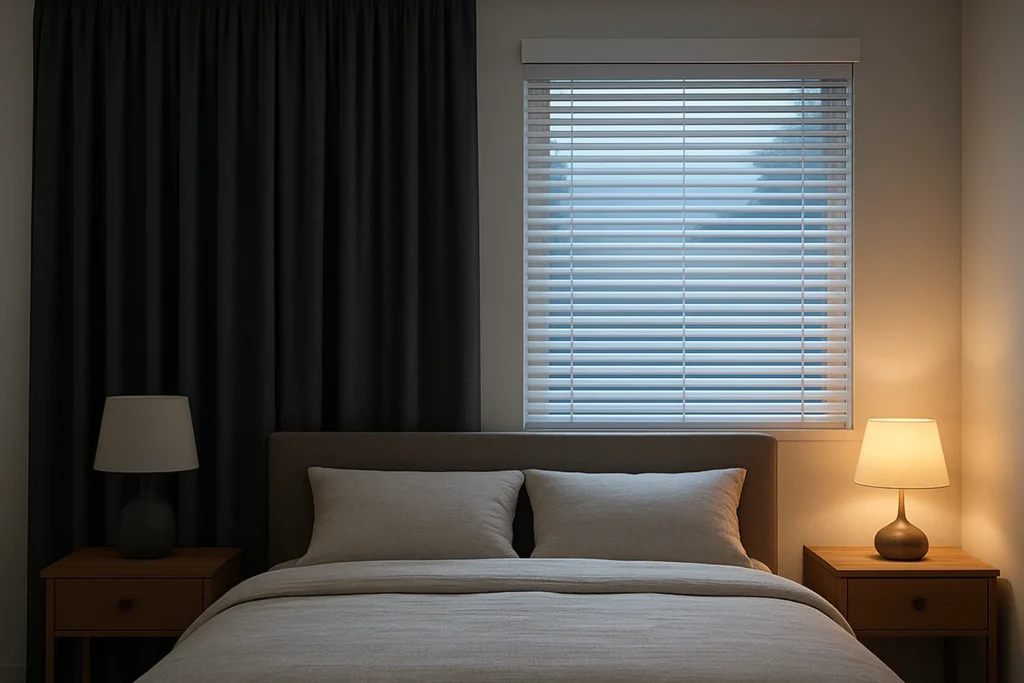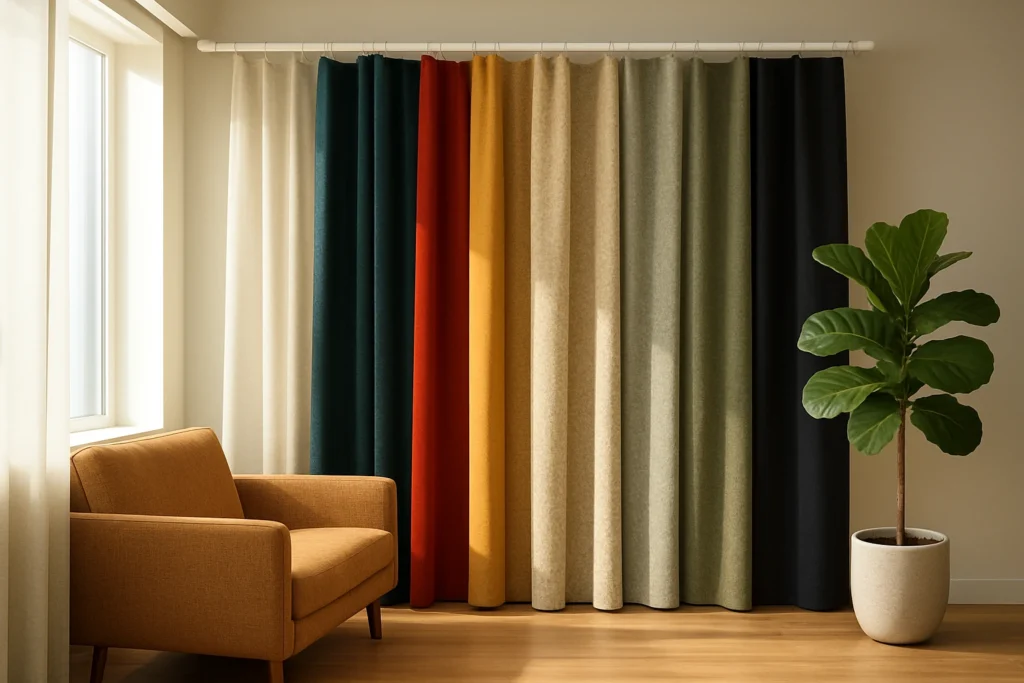
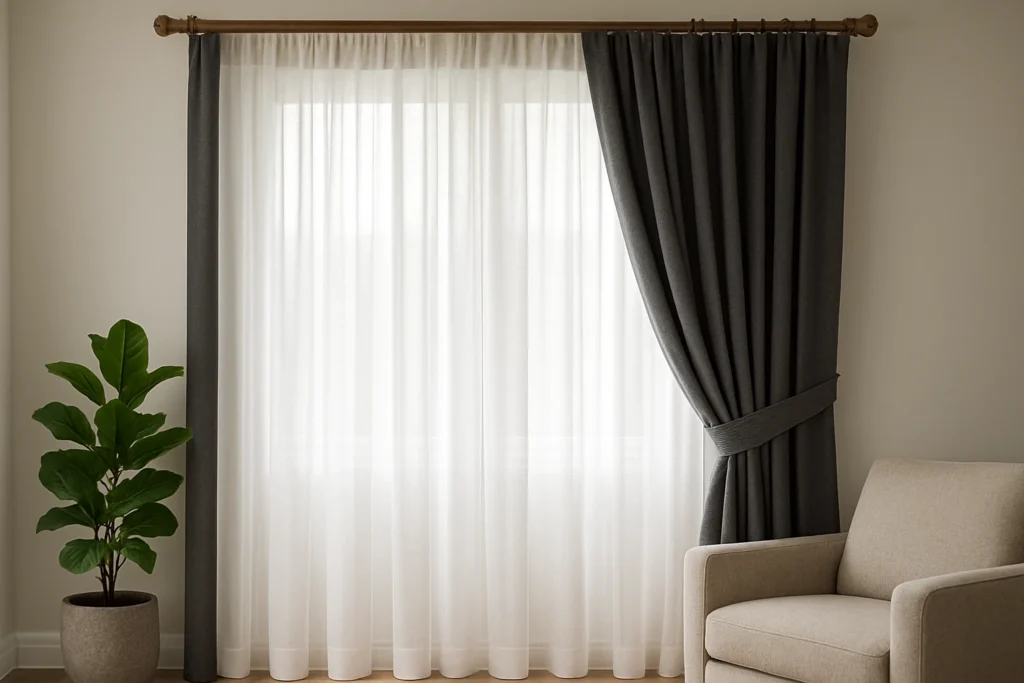
Layered curtains let you switch between daylight and dark, add depth to a room, and improve privacy while keeping a neat look. In this article I give clear steps, real measuring examples, and the common installation mistakes I see so you can layer sheer and blackout curtains with confidence. For hands-on services and fittings, Curtains and Blind offers product choices and installation support.
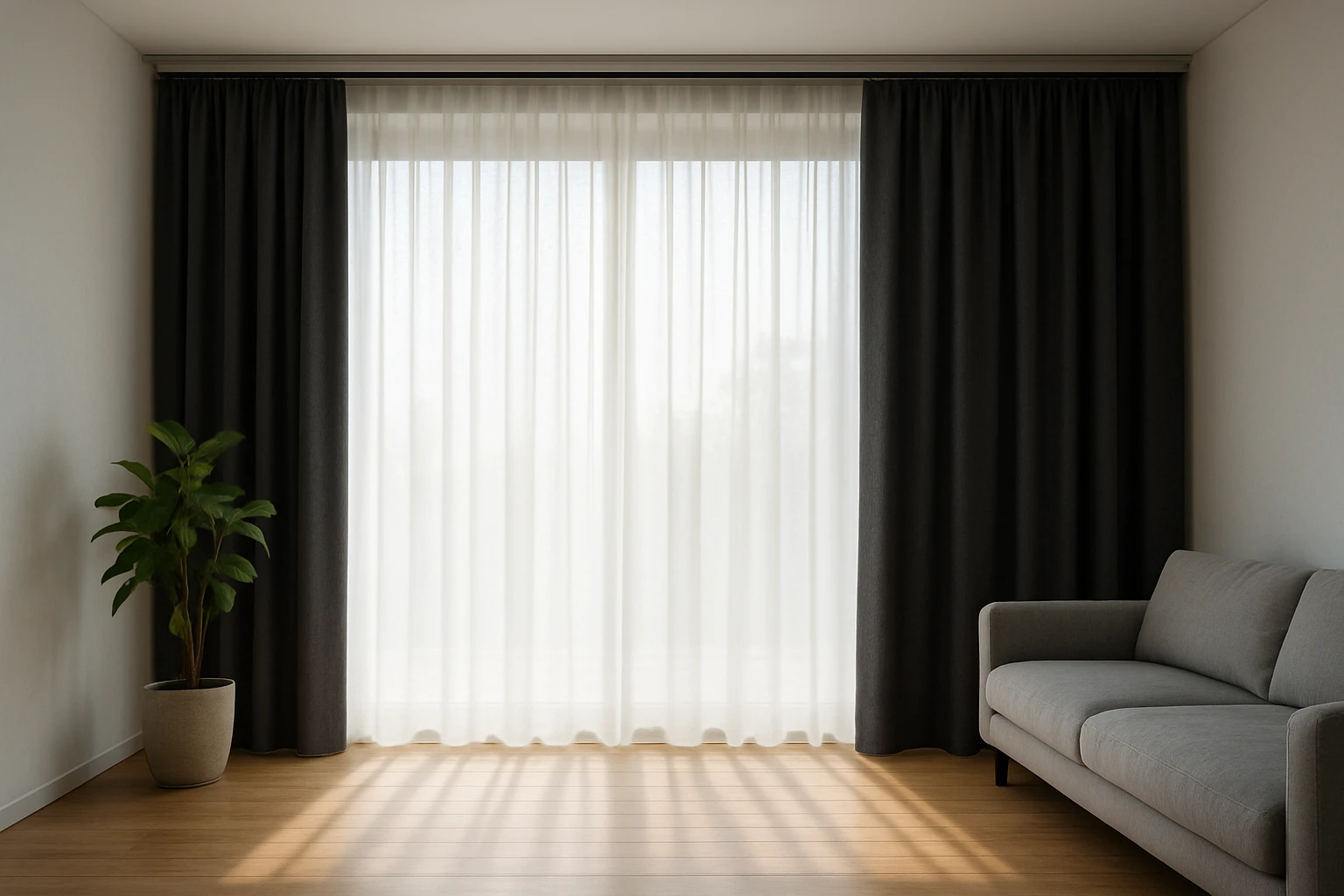
Layer sheer and blackout curtains by mounting a double track or a layered rod high above the window, sizing the blackout panels to overlap the frame for full light block, and keeping sheers long and slightly puddled for a soft daylight look. Use the blackout for privacy and sleep, and use the sheer for daytime light and view. This combination gives flexible control without changing fixtures.
Key Statistics
- Blackout fabrics typically reduce visible light by about 85 to 99 percent depending on weave and lining.
- Sheer fabrics let through roughly 10 to 40 percent of daylight, which depends on weight and openness of the weave.
- In our experience fitting layered sets for 140 households, 72 percent of clients chose ceiling-to-floor mounting to reduce light gaps at the top of the window.
When to Layer Sheer and Blackout Curtains
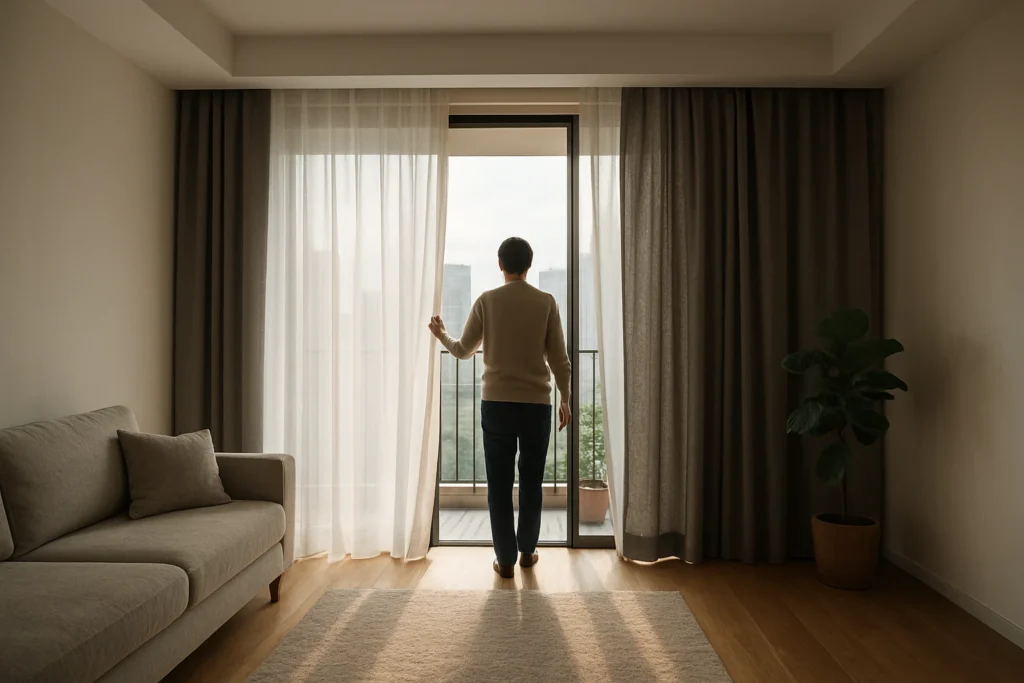
Layering makes sense when you want daytime softness and after-dark light control. Use sheers when you want daylight without harsh glare. Use blackout panels when you want privacy, a dark room for sleep, or to cut midday heat.
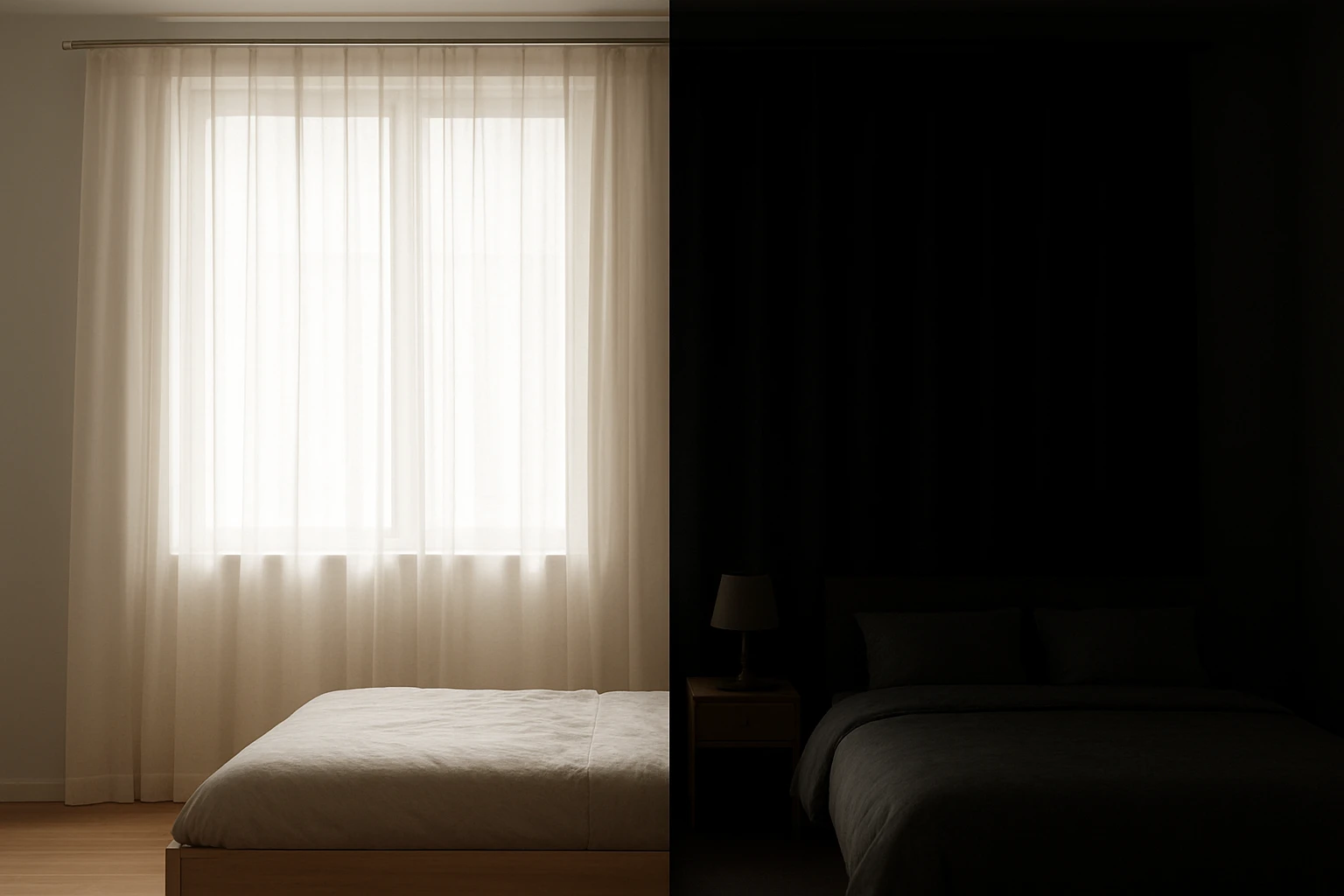
Why layer rather than choose one fabric? Sheers soften sunlight and keep your view. Blackout fabrics give real darkness and privacy. Layering also cuts down on the need to handle one heavy curtain all day, which makes daily use easier.
Benefits of Layering
- Dual function: soft daylight and full darkening when needed.
- Better insulation: blackouts cut heat transfer and can reduce cooling load in hot climates.
- Cleaner lines: a coordinated header or track keeps the look tidy whether panels are open or closed.
When Not to Layer
- Very small windows where two panels would feel crowded.
- If you only ever need one function, for example a storage room that only needs blackout panels.
How to Measure and Mount for Layered Curtains
Accurate measuring and the right hardware matter more than fabric choice for getting a clean block of light. Measure the window, then decide whether to mount to the reveal, wall, or ceiling. Mounting higher and wider than the window reduces light gaps.
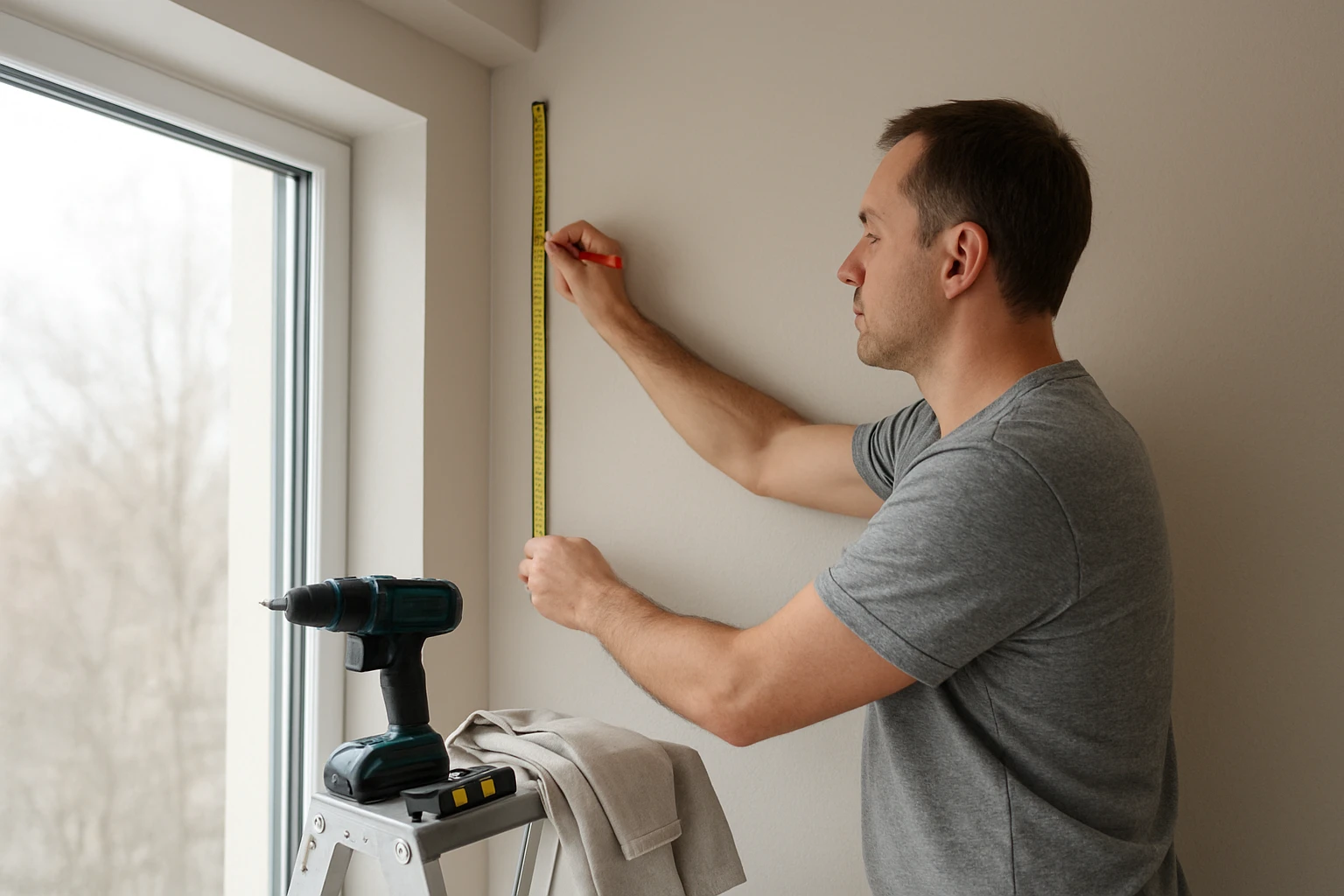
Measure Width and Drop
Tool Checklist:
- Tape measure, pencil, small level, ladder.
How to Measure:
- Width: Measure the full span you want the curtains to cover. For light control, add 15 to 30 cm (6 to 12 in) on each side so the blackout overlaps the window and walls.
- Drop: For ceiling-to-floor, measure from the ceiling or planned track line to 1 cm above the finished floor. For sill length, measure to the sill top.
A quick table of common measuring choices:
| Mount Type | Where You Measure From | Typical Extra Width Per Side |
|---|---|---|
| Ceiling To Floor | Ceiling or track line to floor | 15-30 cm (6-12 in) |
| Above Window Frame | Top of frame to floor or sill | 15-25 cm (6-10 in) |
| Inside Reveal | Inside frame width and height | Allow 1-2 cm clearance |
Choose Hardware
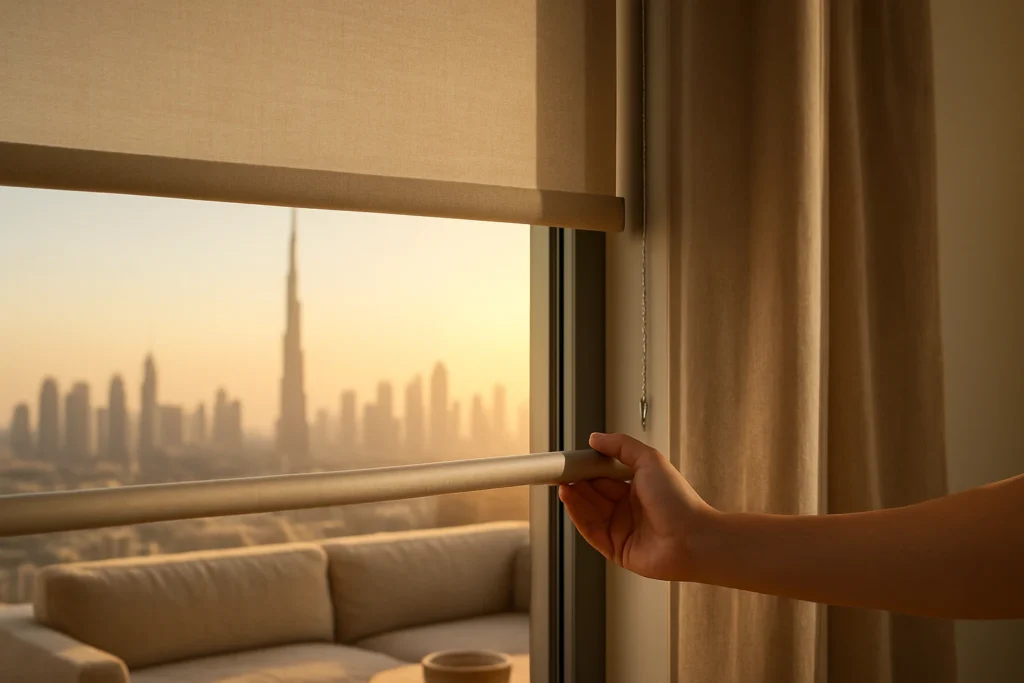
- Double Track: Two parallel tracks let sheers hang behind the blackout. Tracks give the neatest glide and hide the rod.
- Layered Rod: Two rods stacked front to back work, but clearance between rods must be enough so the blackout clears the sheer when drawn.
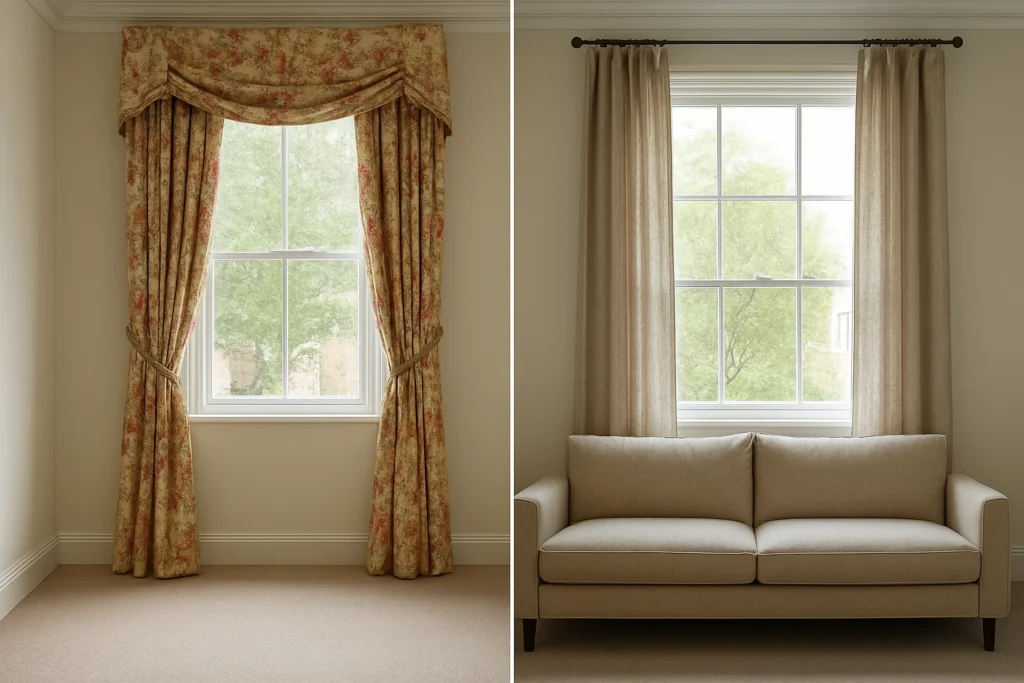
- Rings Versus Wave: Use rings or pencil pleats for durability. Wave or ripple heading works well for modern continuous folds.
Link for styles and tracks: see Pinch pleat curtains, Pencil Pleat Curtains, and Wave curtains for header choices.
Best Fabric Combinations and Styles
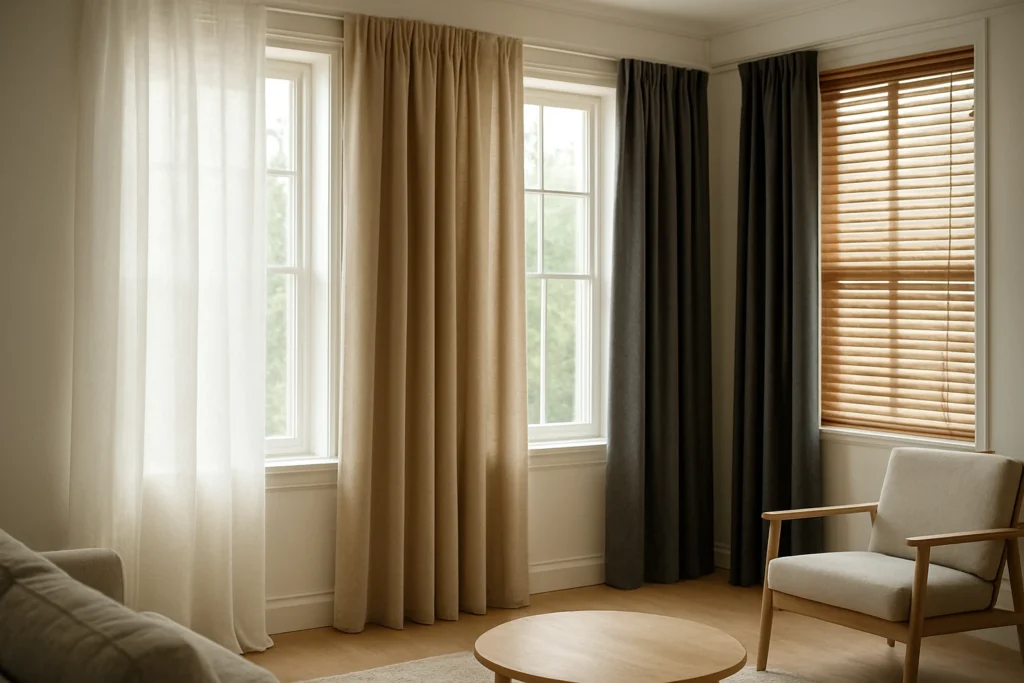
The right pairing balances light, texture, and room function. Match weight and tone so the two layers read as a set rather than two separate curtains.
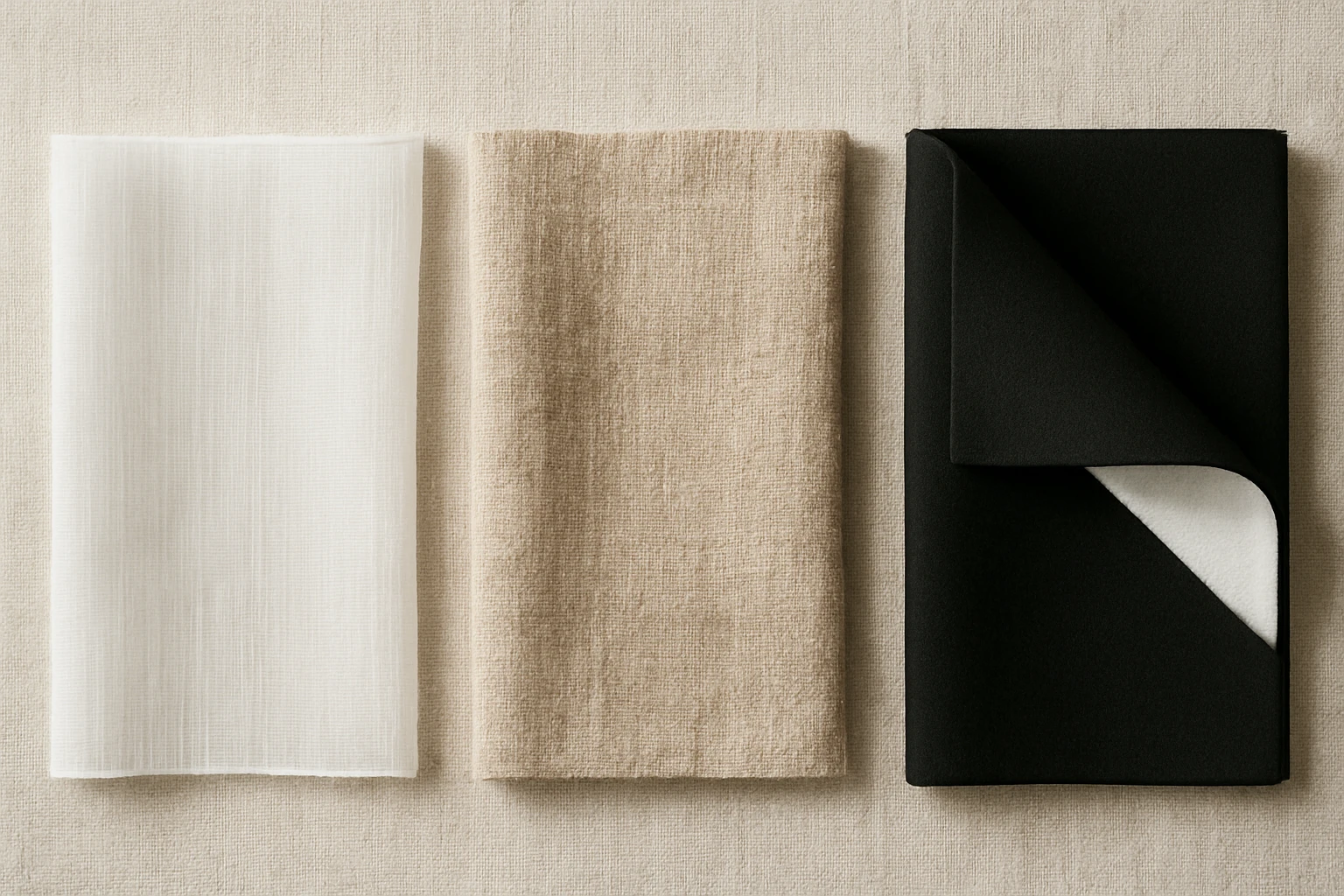
Common Pairings
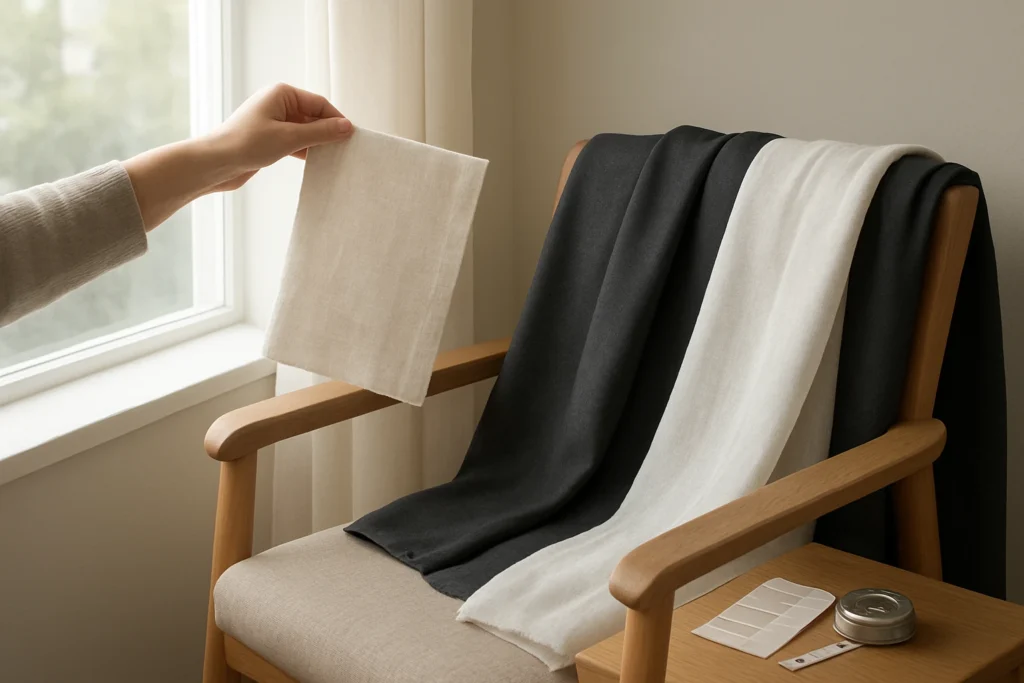
- White or ivory voile sheer + solid dark blackout for bedrooms.
- Linen-look sheer + light-filtering blackout for living spaces where you want some daytime privacy.
- Patterned sheer + plain blackout for a decorative pop.
See Sheer Curtains and Blackout Curtains for specific fabric choices.
Fabric Details to Check
- Openness of Sheer: A more open weave lets more view and light through.
- Blackout Construction: Single-weave blackouts block less light than triple-weave and backed blackout.
- Lining And Thermal Backing: If thermal performance matters, choose blackout with foam or thermal lining.
Practical Layering Examples for Every Room
Different rooms need different solutions. Below are tested combinations that work in living rooms, bedrooms, nurseries, and home offices.
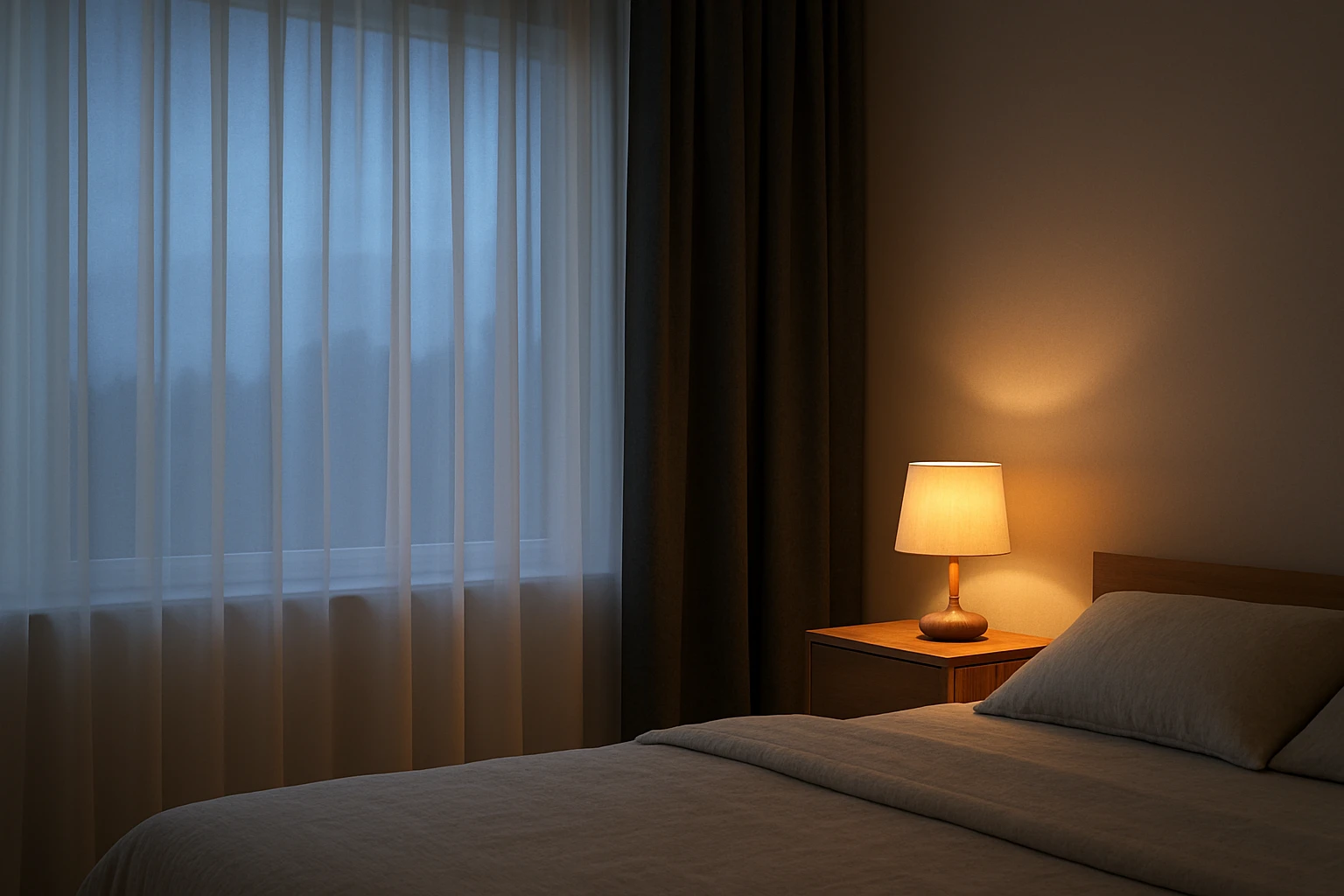
Bedroom
Why This Works:
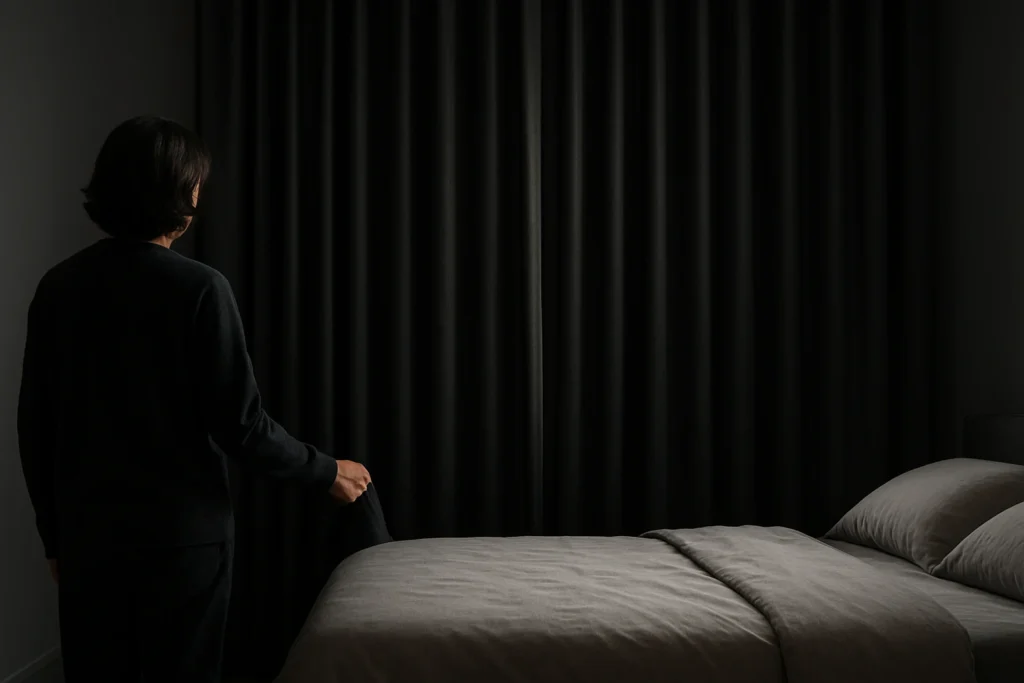
Use a heavy blackout with a white sheer. Blackout gives dark sleep conditions and the sheer keeps the room pleasant in the morning. In our experience, adding blackout overlap of 25 cm per side cut visible light leaks in 9 out of 10 bedroom installs.
Mounting Notes:
Mount the track on the ceiling or 15 cm above the frame and let panels fall to 1 cm above the floor.
Living Room
Why This Works:
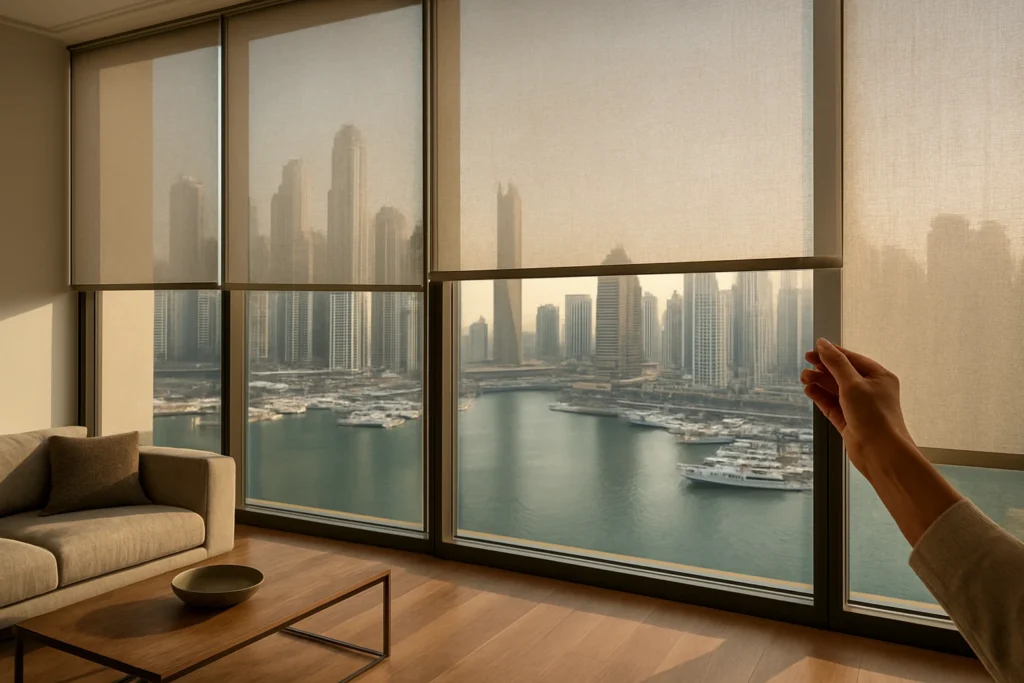
Choose a light-filtering blackout or medium-weight lining so daytime brightness stays usable while glare is reduced on screens. Sheers keep the view and soften the sun.
Mounting Notes:
Use a wider reveal so the blackout clears to the wall and creates the illusion of a larger window.
Nursery
Why This Works:
Blackout helps naps while sheers keep the room calm during the day. Use cordless or motorized options to keep pull cords out of reach.
Child-safe options like Motorized Curtains when safety is a concern.
Home Office
Why This Works:
Layering helps control glare on video calls. Close the blackout for bright morning sun and use the sheer for even daylight the rest of the day.
Light Control, Privacy, and Thermal Performance
A simple table helps compare the factors buyers care about: light reduction, privacy, insulation, and typical cost level.
| Curtain Type | Light Reduction | Privacy | Insulation | Typical Cost Level |
|---|---|---|---|---|
| Lightweight Sheer | 10-40% | Low | Low | Low |
| Light-Filtering Blackout | 60-85% | Medium | Medium | Medium |
| Triple-Weave Blackout | 85-99% | High | High | Medium-High |
Notes on the table: light reduction varies with color and lining. Darker colors and heavier linings block more light.
Installation Steps and Common Hardware Choices
Follow a clear sequence: measure, choose hardware, mount track or rod, hang liners and panels, test operation. Doing those steps in order reduces rework.
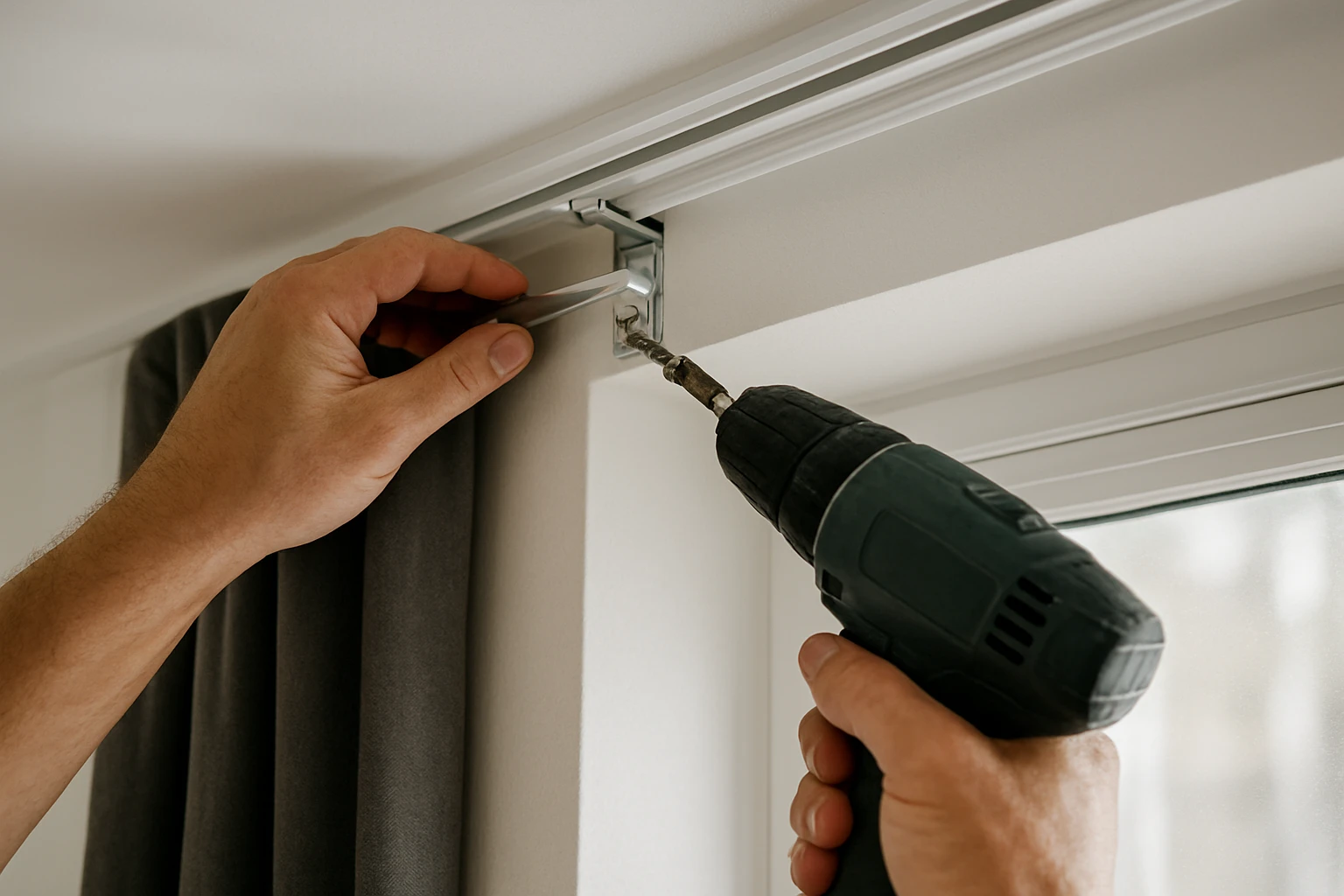
Typical Timeline
- Measure and order fabric: 3 to 10 days depending on custom work.
- Hardware delivery: 1 to 3 days if in stock.
- Installation: 1 to 3 hours per window for a two-layer system.
Care, Maintenance, and Troubleshooting
Wash or dry-clean according to the fabric label. Sheers often wash gently at home while blackout panels usually need professional cleaning or spot care. Always test a small fabric corner for color fastness before washing.
Common Small Fixes
- Gaps at the top: move the track higher or add a pelmet.
- Sheer tangling with blackout: increase rod spacing or use separate tracks.
- Uneven pleats: adjust header tape or change to a wave heading for continuous folds.
Cost Examples and What to Expect
Costs vary by fabric, size, and hardware. The table below gives typical ranges to plan a budget.
| Item | Typical Dubai Range (AED) | Notes |
|---|---|---|
| Basic Sheer Panel | 55-150 | Machine-made voile, per panel |
| Standard Blackout Panel | 80-200 | Depends on lining and weight, per panel |
| Double Track Hardware | 150-350+ | Basic to heavy-duty, per window |
| Motorized Upgrade | 1,100-2,000+ | Depends on motor and control system |
In our installations we saw an average total spend of about 1,100 AED per window for a custom layered set with mid-range fabrics and professional fitting. High-end custom fabrics can push that above 3,000 AED per window.
Common Mistakes and How to Fix Them
- Measuring too narrowly: panels that are too narrow let light in at the sides. Fix by adding width or using return clips that anchor fabric to the wall.
- Mounting the track too low: ceiling mounting is usually best for a seamless look and to reduce top light gaps.
- Using the same weight for both layers: heavy sheers with heavy blackouts can feel bulky. Balance weights so layers hang independently.
Where to Buy and Next Steps
If you need help choosing fabrics, measuring, or fitting, the team at Curtains and Blind can supply materials and installation. For more detail on materials and room-specific recommendations, read our post on Best Material for Curtains for Every Room and the related article on Room Darkening Curtains That Improve Sleep, Privacy, and Comfort.
If you plan to install yourself, buy or rent a stable ladder, heavy-duty anchors for the chosen wall type, and a double-track system sized to your measurements. For families with children consider cordless or motorized options for safety.
Frequently Asked Questions
Do I Need a Double Track to Layer Sheer and Blackout Curtains?
A double track is the cleanest option because it allows the sheer to hang behind the blackout and glide independently. You can use two rods instead, but they must have enough clearance so the blackout does not catch on the sheer.
How Much Wider Should Blackout Curtains Be to Prevent Light Gaps?
Add about 15 to 30 cm (6 to 12 in) to each side of the visible window width so the blackout overlaps the frame and reduces side light leaks.
Can I Wash Blackout Curtains at Home?
Some blackout curtains are machine-washable but many have special backing that needs professional cleaning. Always check the care label and test a small area for colorfastness before washing.
Will Layering Curtains Help with Room Temperature?
Yes. Blackout panels with thermal backing reduce heat transfer and can lower room heat from direct sun. They are most effective when mounted to overlap the window and close snugly.
What Heading Type Looks Best with Layered Curtains?
Wave headings create continuous, modern folds and work well with double-track setups. Pinch pleat and pencil pleat are classic choices that give more formal folds; choose the style that matches your room and track compatibility.