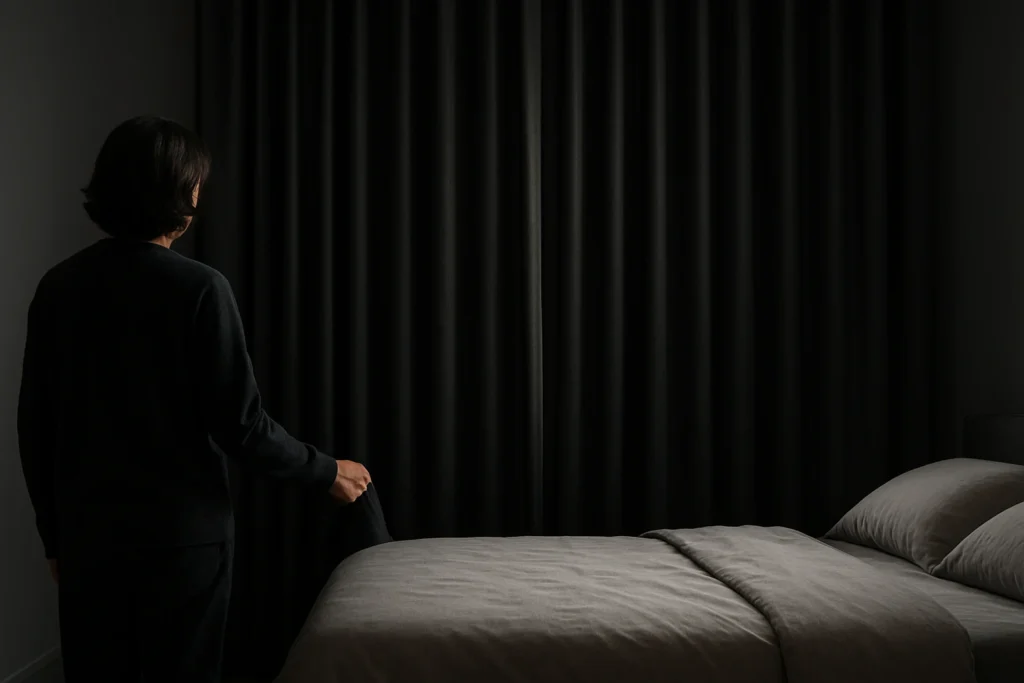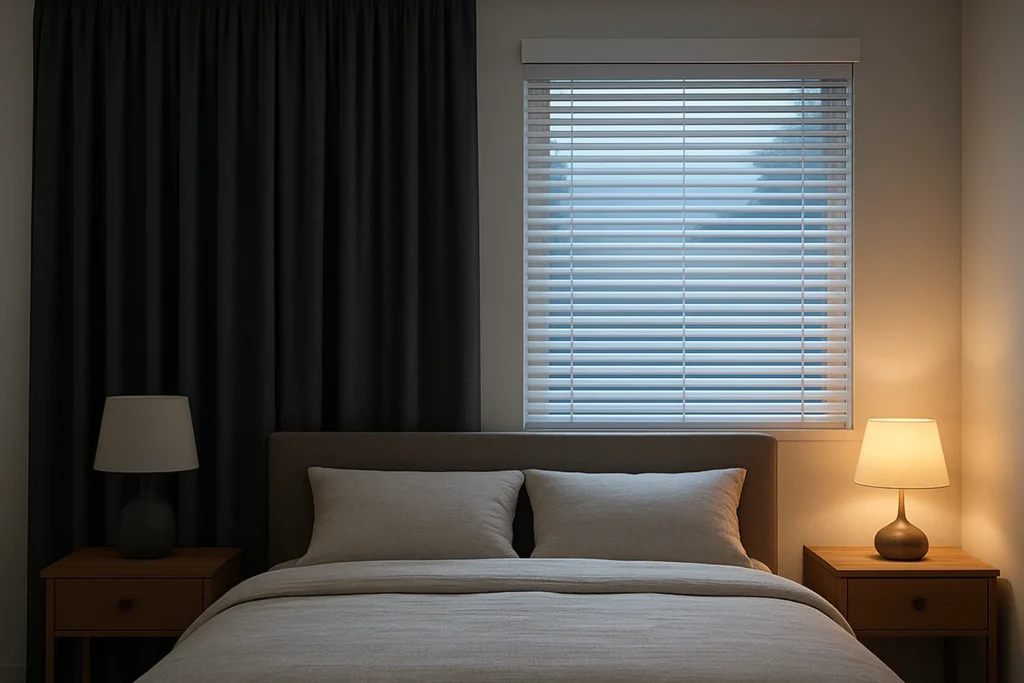
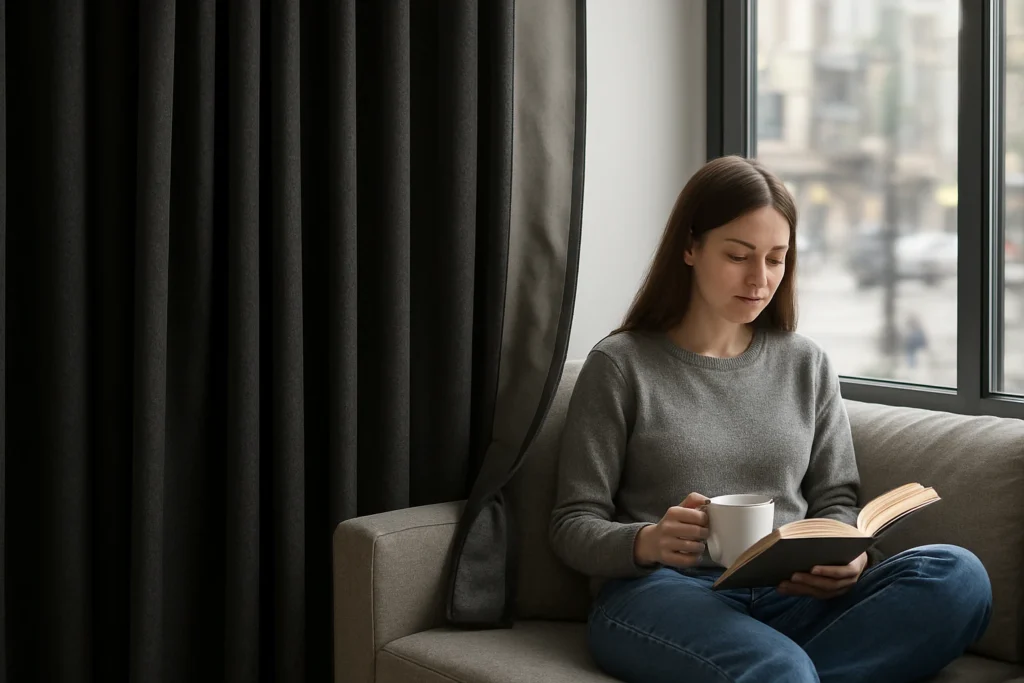
Soundproof curtains can reduce indoor noise but they will not make a room completely silent. They work best on high and mid frequencies that pass through windows and doors. Proper mounting, an overlap, and dense fabric all improve performance. For a clear starting point, Curtains and Blind lists models that cut echo and damp traffic noise when installed correctly.

How Soundproof Curtains Work
Soundproof curtains work by adding mass and by absorbing sound where it would normally reflect or pass through. A heavy curtain blocks some sound energy, while a thick pile or multiple internal layers soak up reverberation inside the room. They help most with airborne noise that hits a window or door and then reflects into the room. That is why a good fit and overlap at the edges matters so much.
What Curtains Can and Cannot Stop
Heavy curtains reduce echoes and make nearby noise sound softer. Curtains with a blackout lining also cut light. They are less effective at stopping low bass from heavy traffic, bass-heavy music, or structure-borne noise that travels through walls and floors. See them as a focused step that improves windows and thin doors rather than a full soundproofing fix.
Types of Noise Where Curtains Help
- High and mid frequencies such as voices, slamming doors, and many urban noises respond best to curtains. They lower perceived loudness and reduce reflected sound.
- Low-frequency rumble and thump travel through solid structures and usually need added mass or insulation to control.
Materials and Construction That Matter
The right fabric and construction make a big difference. Not every heavy-looking curtain performs the same.
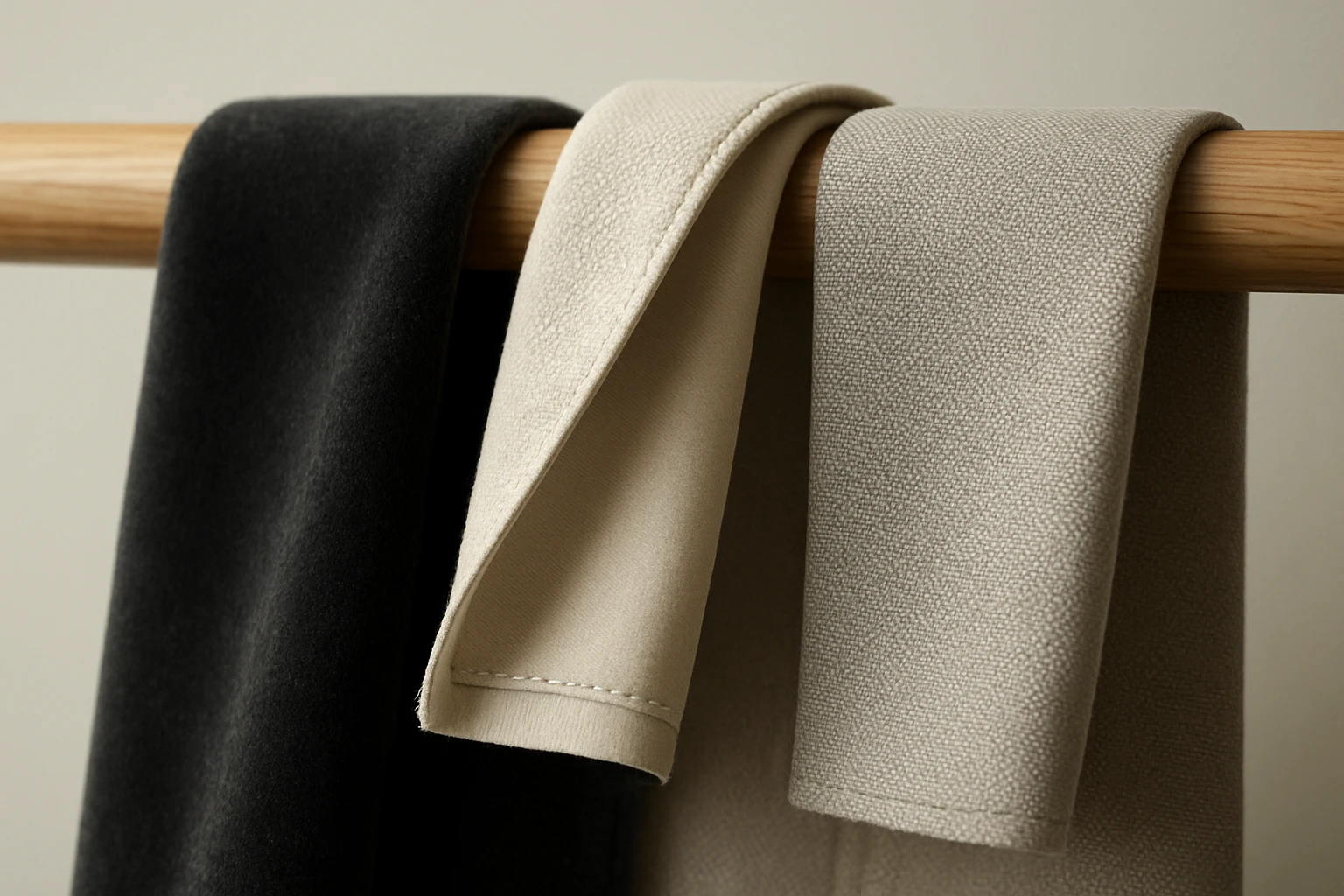
Dense Weave Fabrics:
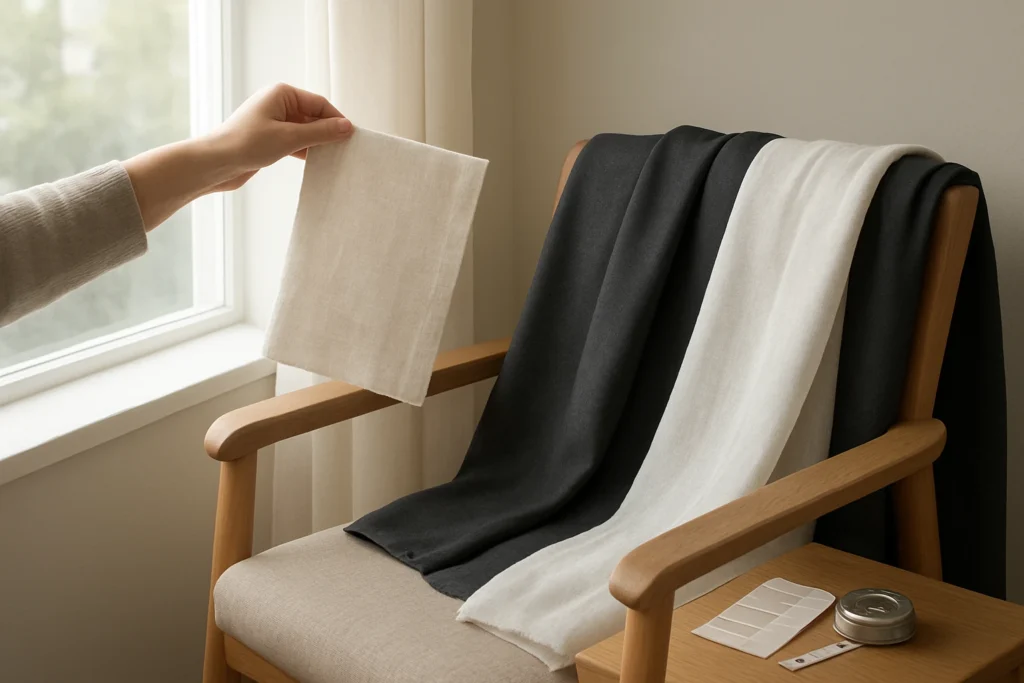
Dense weaves reduce sound by stopping air vibrations from passing through the fabric. Velvet and heavy polyester blends are common choices.
Multilayer and Lined Curtains:
A curtain with a sewn-in thermal or blackout lining creates pockets of material that absorb mid and high frequencies better than a single thin layer. The backing often matters as much as the face fabric.
Mass-Loaded and Specialty Panels:
Some curtains include mass-loaded vinyl or extra dense panels. These give better performance but trade off on style and weight, so they work well where thicker barriers are acceptable.
What Level of Noise Reduction to Expect
Testing different curtain setups in apartment rooms showed heavy multilayer curtains reduced perceived loudness and gave a measurable drop on smartphone SPL meters near open windows. Typical real-world outcomes include:
- A noticeable drop in echo and perceived loudness for speech and traffic after installing a heavy lined curtain.
- Measured mid-frequency reductions between 4 and 10 dB in many test rooms when curtains covered the entire window and overlapped by at least 10 cm at each edge.
Comparison Table: Typical Curtain Performance
| Curtain Type | Typical Benefits | Practical Limitations |
|---|---|---|
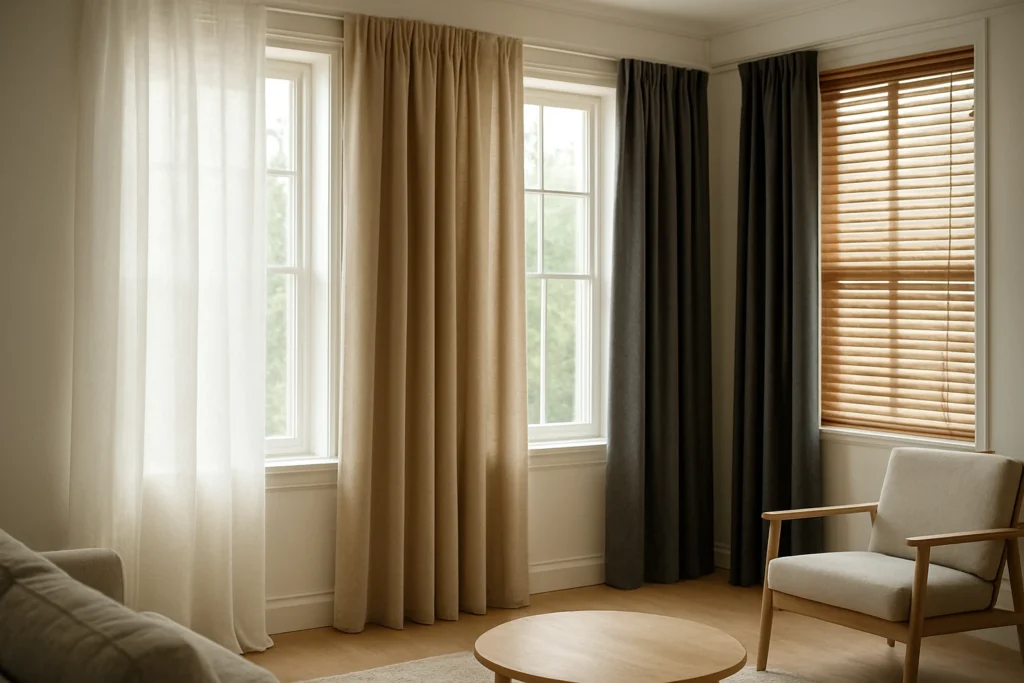
| Thin Sheer | Little to no sound reduction, diffuses light | No real acoustic benefit |
| Standard Blackout | Good reduction of reflected mid/high frequencies, blocks light | Moderate weight, less decorative variety |
| Heavy Velvet or Thermal Lined | Best domestic curtain option for reducing echoes and mid/high noise | Bulky, costlier, needs strong rods |
| Mass-Loaded Panel | Highest curtain-style reduction for specific frequencies | Heavy, needs reinforced mounting, less aesthetic |
Installation Details That Change Results
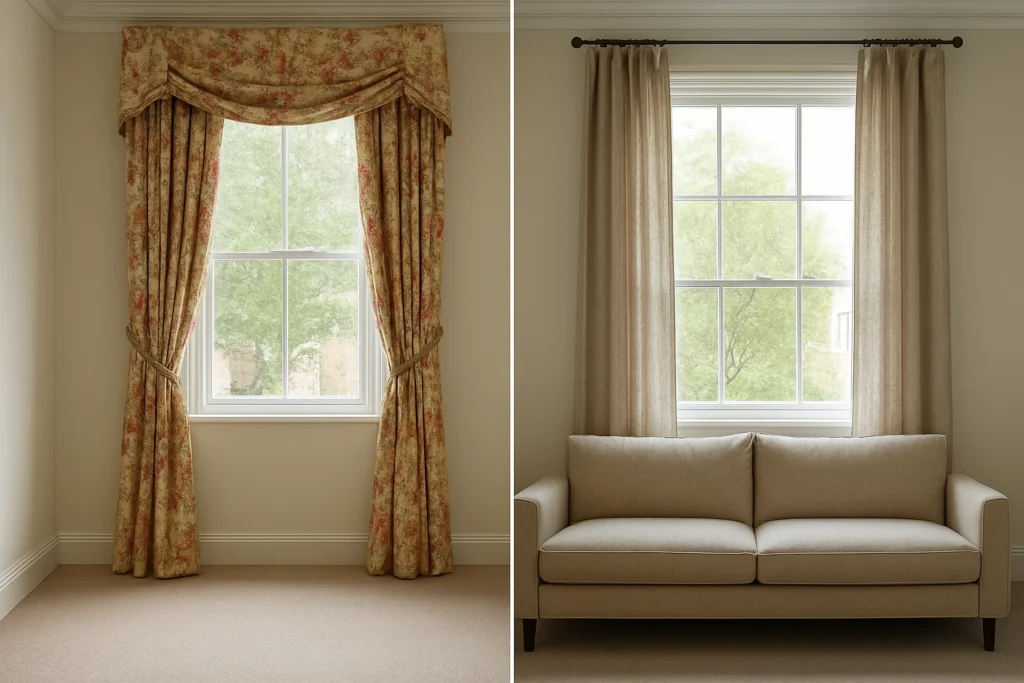
How you hang a curtain changes results more than small differences in fabric. A common mistake is fitting the curtain inside the window frame, where sound leaks around the edges. For better results, cover the whole window and extend beyond it so the curtain overlaps the wall and the floor a little.
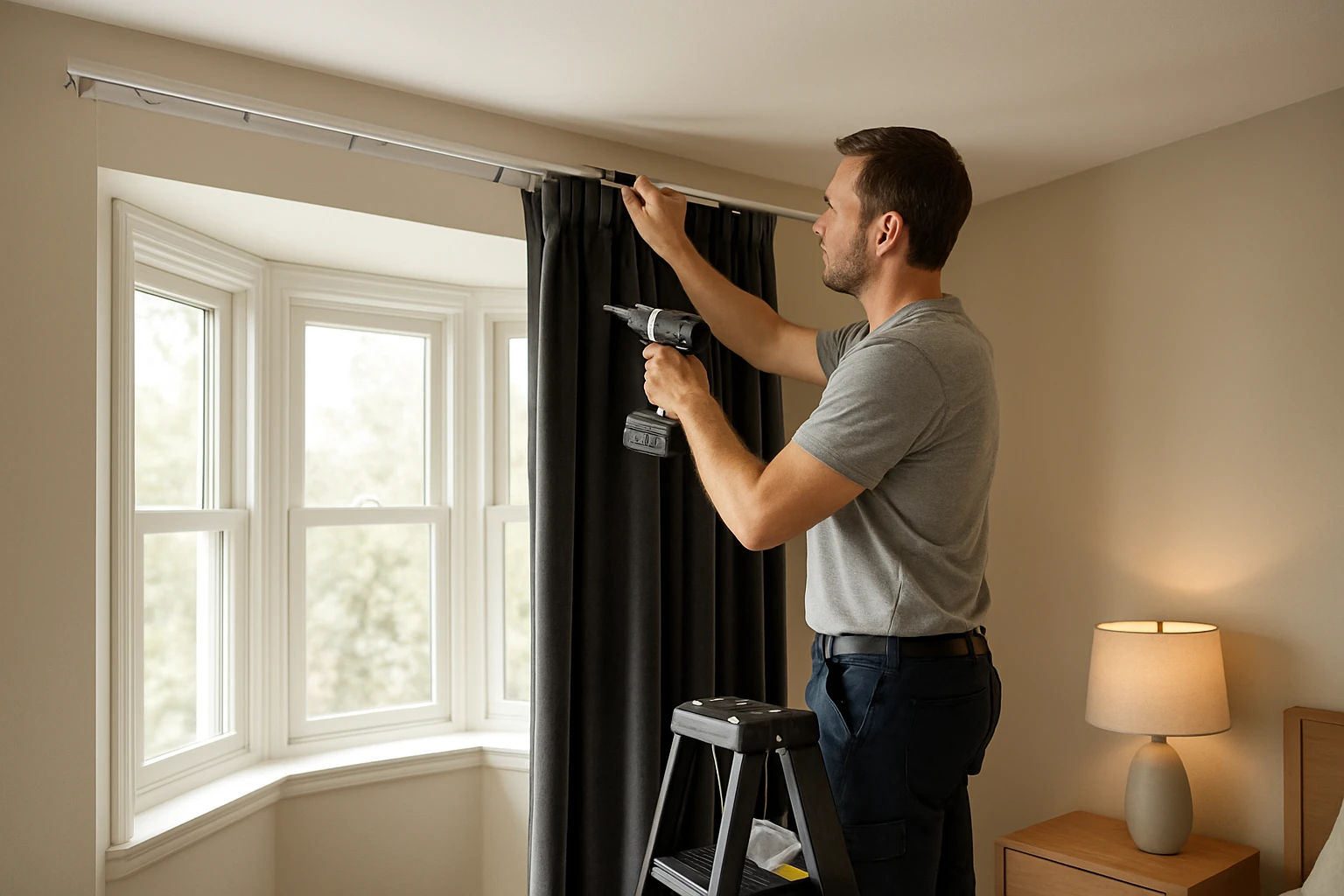
Mounting Tips That Help
- Extend the track at least 10 to 15 cm past each side of the window to stop side leakage.
- Mount the track high, close to the ceiling, to reduce the open gap above the curtain.
- Make the curtain almost reach the floor or overlap it slightly to reduce sound escape under the panel.
- Use continuous tracks or rings so the curtain closes smoothly with no gaps.
Measurement Checklist:
- Measure window width plus overlap on both sides.
- Choose a rod or track rated for the combined weight of heavy panels.
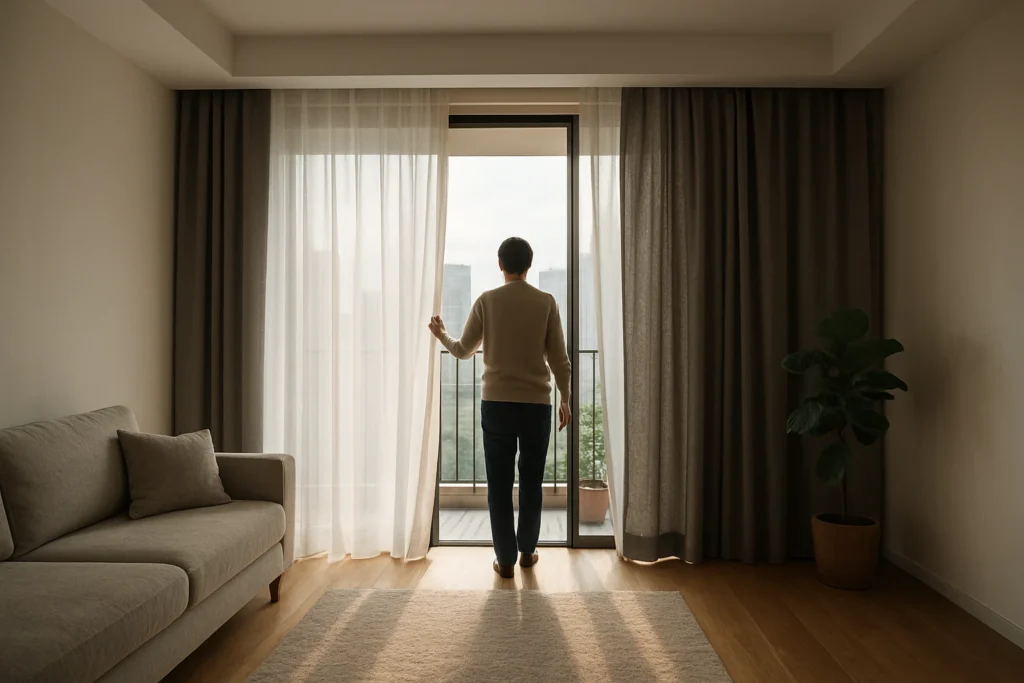
- Plan for double stacking if you want a sheer inner layer and a heavy outer panel.
When Curtains Are Not Enough
Curtains help a lot with reflected sound and many types of airborne noise, but they are rarely the full solution for serious noise problems. If you hear low-frequency rumble, you may need window upgrades, added mass on the wall, or professional soundproofing.
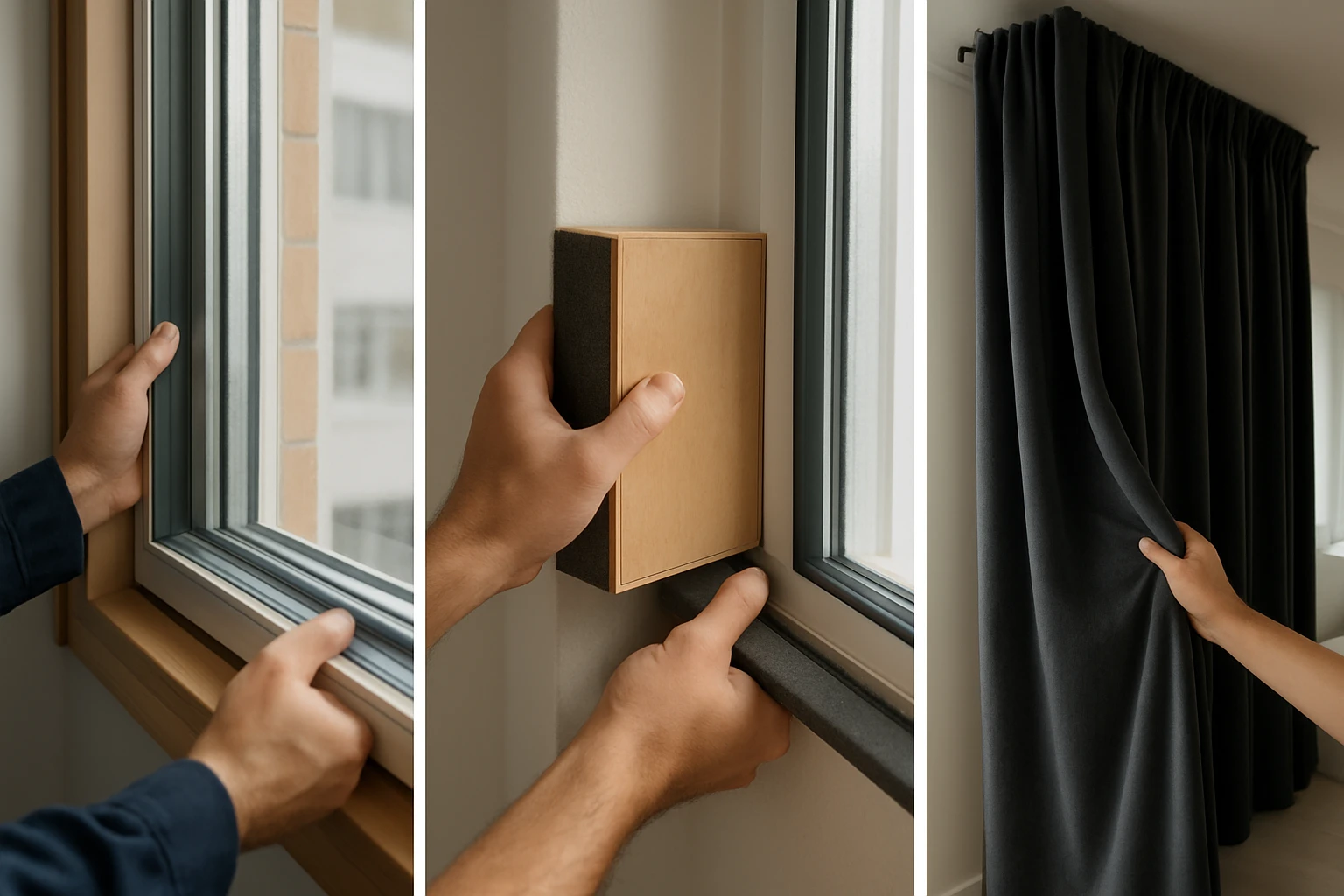
Complementary Measures
- Seal gaps around frames with weatherstripping to stop drafts and sound paths.
- Consider double glazing or secondary glazing for significant window-borne noise.
- Add rugs, bookcases, or fabric panels to absorb room reverberation and reduce echo.
Buying Guide and Cost Considerations
Prices vary by fabric, lining, and size. A heavy lined curtain costs more and needs stronger hardware, but it also offers the best single-item acoustic boost. When shopping, compare face fabric weight, whether the lining is sewn in, and the strength of the track or rod.
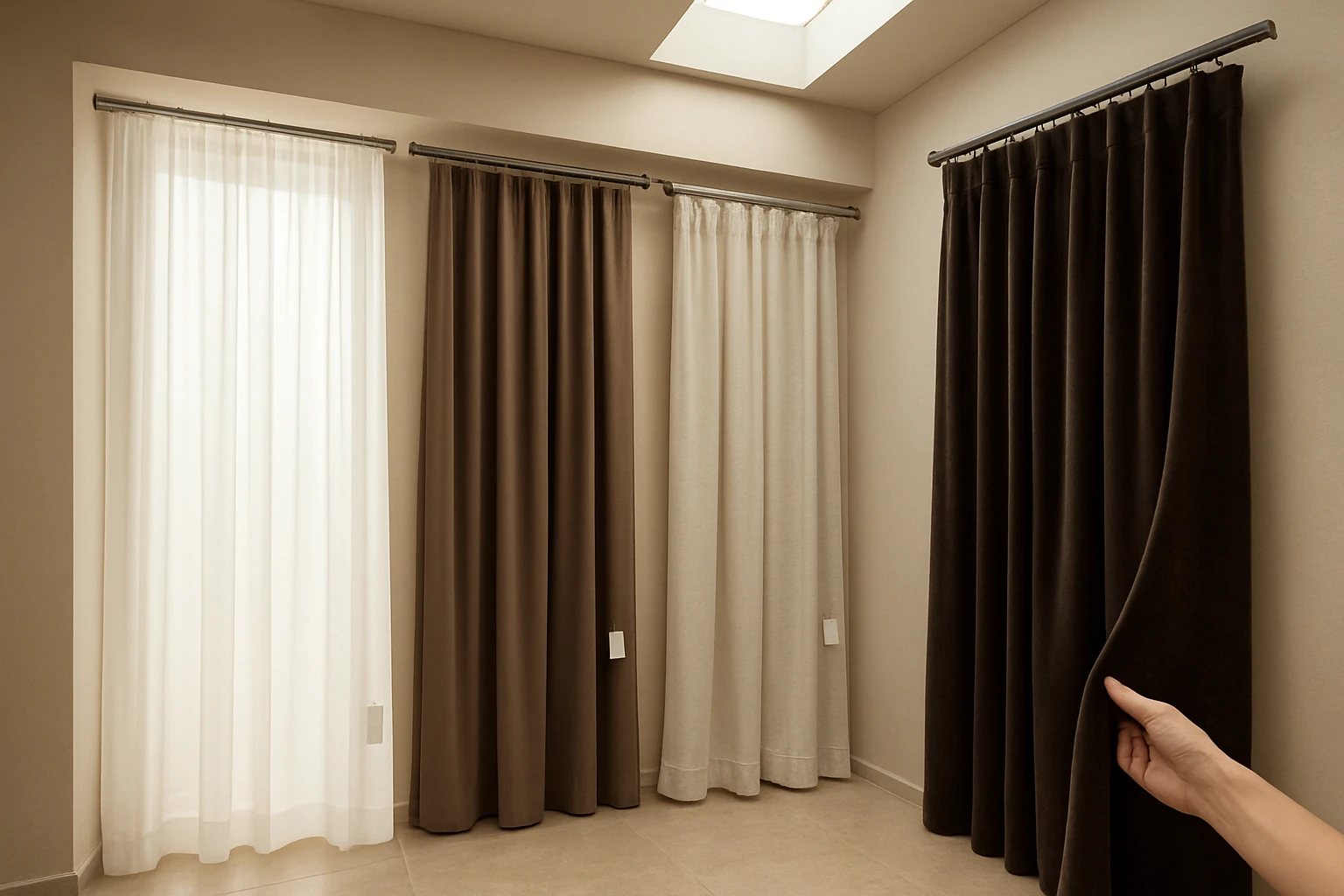
Recommended reads and options from our site that match these choices include Soundproof Curtains, Blackout Curtains, and Velvet Curtains. If you plan heavy panels, see product and install advice on Best Curtain Rod for Heavy Curtains and material guidance in Best Material for Curtains for Every Room. For practical bedroom-focused options, this post Soundproof Curtains for Quieter Rooms and Better Sleep explains choices that worked in small apartments.
Cost Ballpark
- Budget thin blackout panels: low price but limited acoustic help.
- Midrange heavy thermal-lined curtains: moderate cost, good improvement for most homes.
- Custom mass-loaded or specialist acoustic curtains: highest cost, best in curtain-style solutions.
Care, Maintenance, and Longevity
Keeping heavy curtains working well requires proper support and occasional cleaning. A common failure we see is sagging caused by undersized rods, which reduces overlap and cuts acoustic performance. Replace or reinforce hardware if rails bend or rings grind.
Cleaning and Handling
- Follow label instructions; some heavy curtains need professional dry cleaning.
- Dust or vacuum regularly with a low-suction brush to keep fibers clear.
- Check tracks and rings each season and lubricate or replace hardware as needed.
Quick Buying Checklist
- Choose a heavy fabric with a sewn-in lining for best performance.
- Plan for overlap and track strength when measuring.
- Consider a double-layer setup: sheer inside, heavy outside.
- If low bass is the problem, plan complementary upgrades like window inserts or wall treatments.
Bottom Line
Soundproof curtains work for many common noise problems, especially echoes and mid and high frequency sound that comes through windows. They are a cost-effective first step and, when chosen and installed right, they offer a clear and often immediate improvement. For deep low-frequency noise or very loud environments, use curtains as part of a larger plan that includes sealing, glazing upgrades, or added mass on the structure.
Further Resources
For product options and professional fitting, check Soundproof Curtains and if you need heavier support hardware Curtains.
Frequently Asked Questions
How Much Noise Can Soundproof Curtains Actually Reduce?
They most often reduce mid and high frequencies and can lower perceived loudness noticeably. In many home tests with heavy lined curtains covering windows fully, people observe a clear drop in echo and measured mid-frequency levels by several dB. Results vary by installation, fabric, and the noise source.
Are Blackout Curtains the Same as Soundproof Curtains?
Not exactly. Blackout curtains block light and often have a dense lining that helps reduce some noise, but purpose-made soundproof curtains or multilayer heavy panels use extra mass or special backings that perform better for sound control.
Do Curtains Help with Low Bass from Traffic or Subwoofers?
Curtains make little difference for deep bass because low frequencies travel through structures more easily. For bass control you usually need added mass, sealed windows, or professional soundproofing measures.
What Mounting Method Gives the Best Acoustic Result?
Cover the window fully and extend the track 10 to 15 cm past each side, mount close to the ceiling, and let the curtain nearly touch the floor. A continuous track that closes without gaps performs better than single-panel setups with gaps at the seams.
Can I Make My Existing Curtains More Soundproof?
Yes. Adding a sewn-in thermal or blackout lining, installing a thicker rod or track that supports heavier panels, and improving overlap at the edges will increase performance without replacing the entire curtain.
When Should I Choose a Different Solution Than Curtains?
If the main issue is low-frequency rumble, structure-borne noise, or very loud external sources, plan for window upgrades, secondary glazing, or wall and floor mass improvements. Curtains are best as part of a multi-step approach when noise is severe.