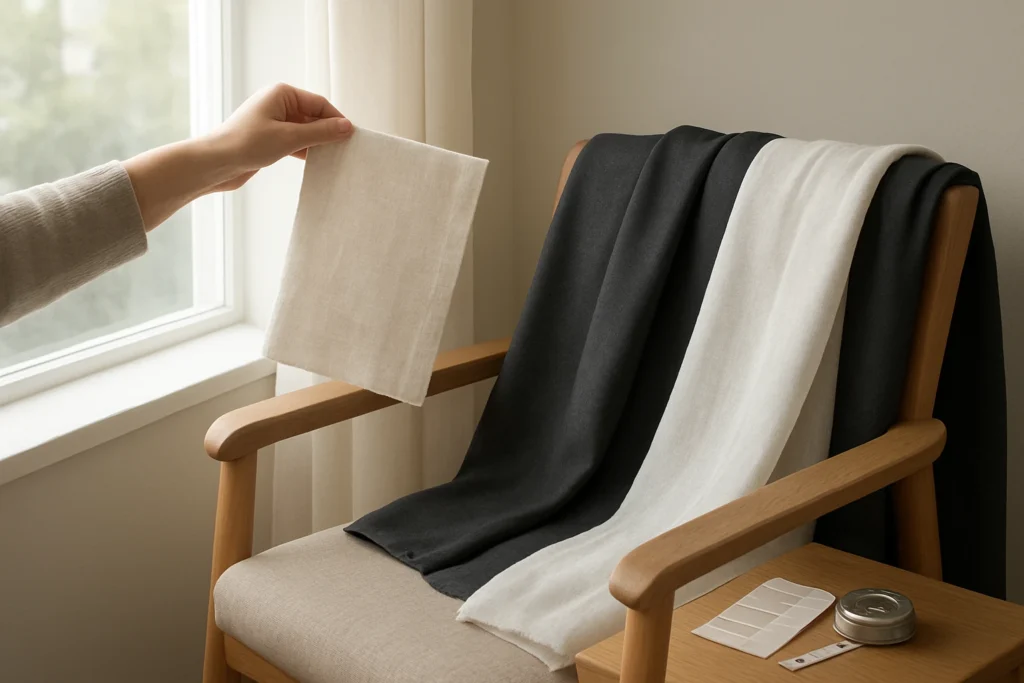
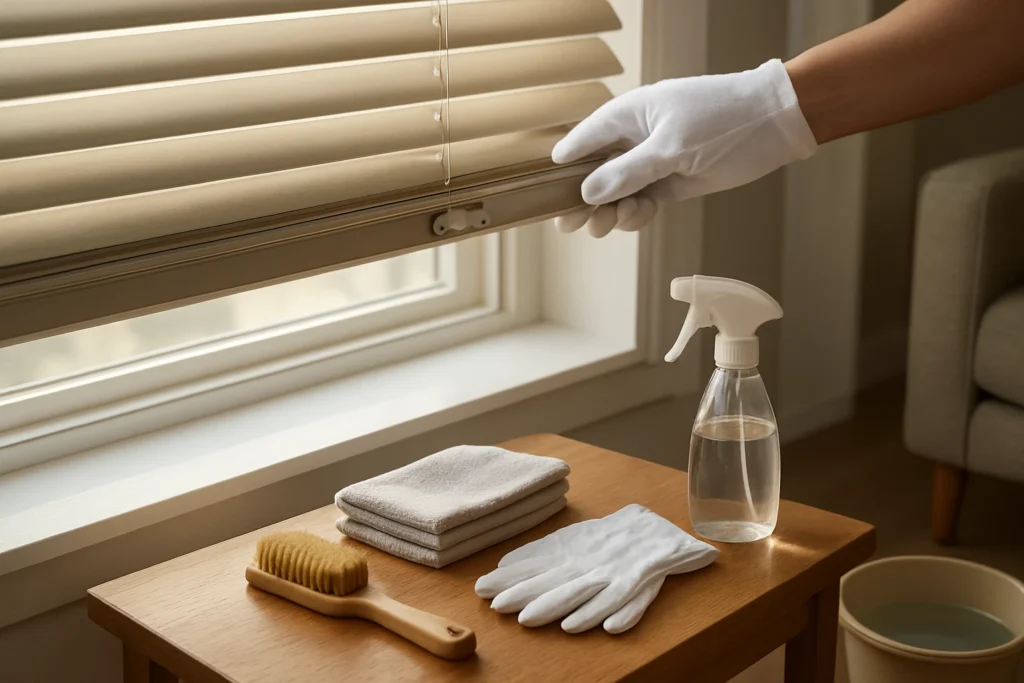
Regular cleaning helps blinds look and work their best. For dust and light dirt, dust weekly and wipe the slats with a damp cloth. For heavier grime, remove blinds when it is safe and wash or soak them according to the material. Use the right method for wood, fabric, metal, and outdoor blinds to avoid warping or color loss.
Key Statistics
- Weekly dusting cuts visible dust on blinds by about 60 percent in the first month.
- Deep clean frequency: typical homes 3 to 6 months, high-dust or pet homes monthly.
- Average time to clean a single window blind: 5 to 25 minutes depending on type and level of soil.
Cleaning blinds starts with the right approach and a short checklist. In this article we show step-by-step methods for every major blind type and explain which cleaners and tools to use. For trusted products and bespoke fittings, the team at Curtains and Blind can advise on materials and safe care.
What You Need to Know First
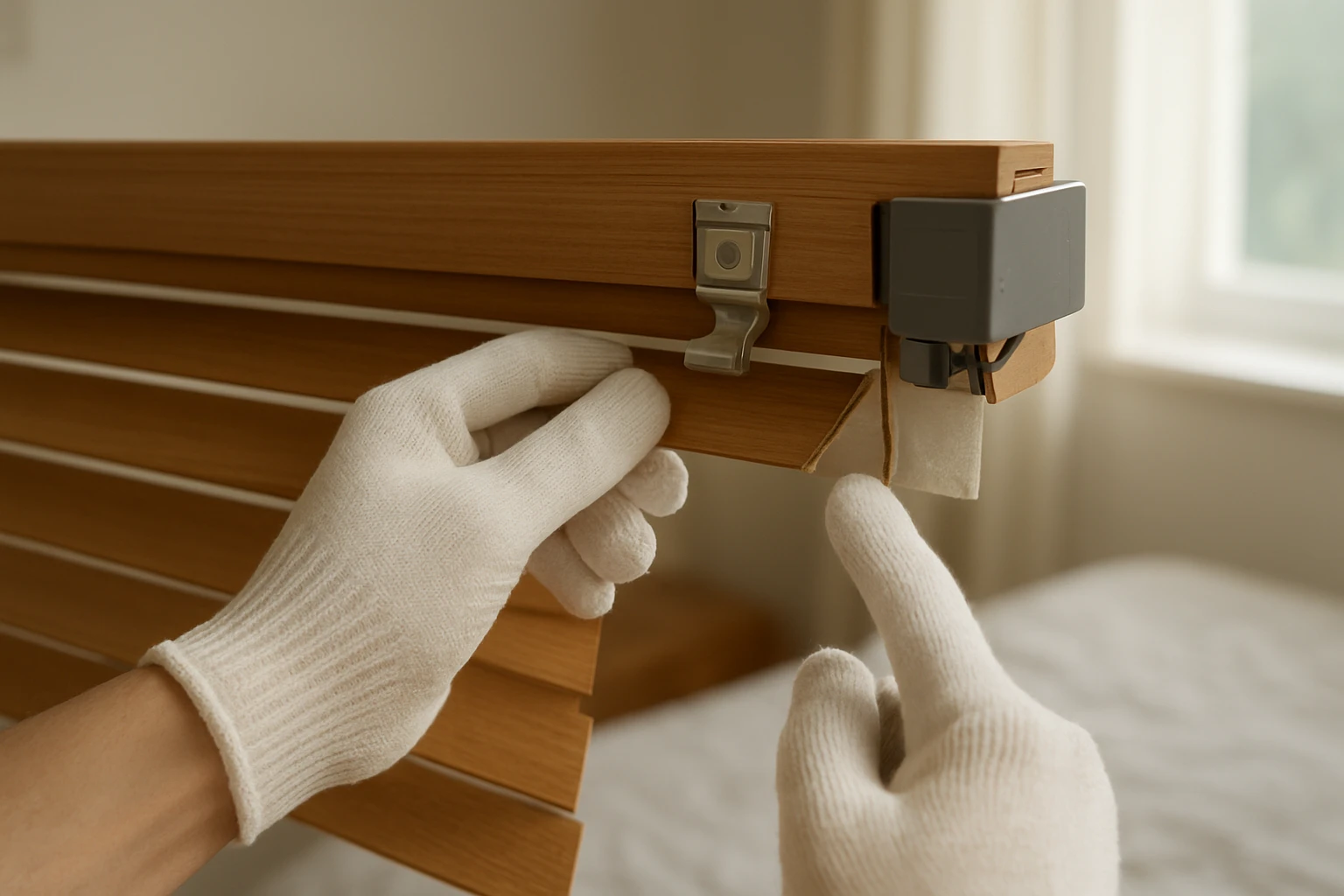
Before you start, find out the blind material, the mounting style, and whether it is motorized. Those details tell you if you can wipe, soak, or need a pro. Check for glued seams on fabric or wood and for electrical parts on motorized blinds because water or strong cleaners will damage them.
Tools and Supplies for Any Blind Type
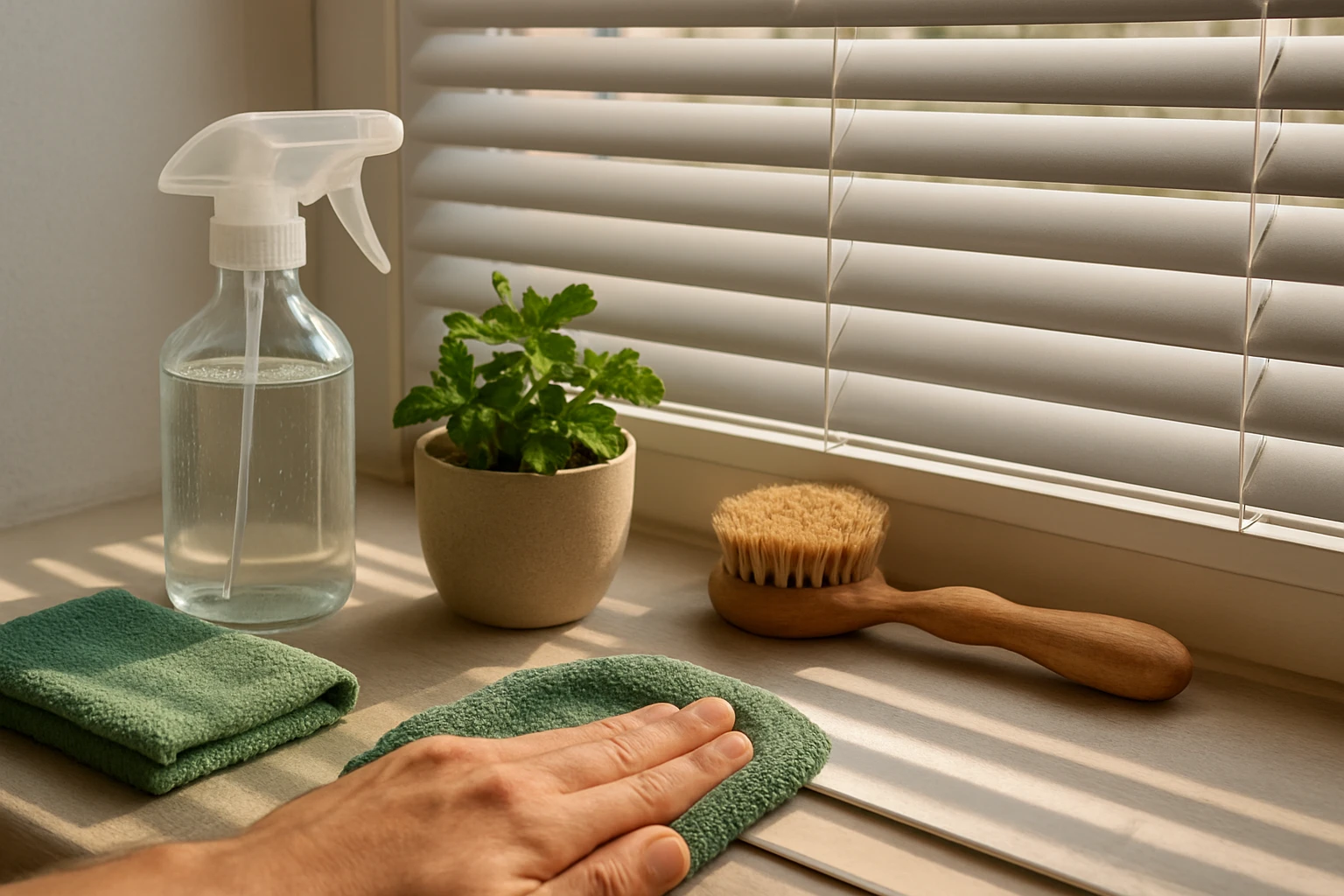
A small set of good tools saves time and protects your blinds. You do not need specialized machines for most jobs. Basic supplies work for many materials and help you avoid damage.
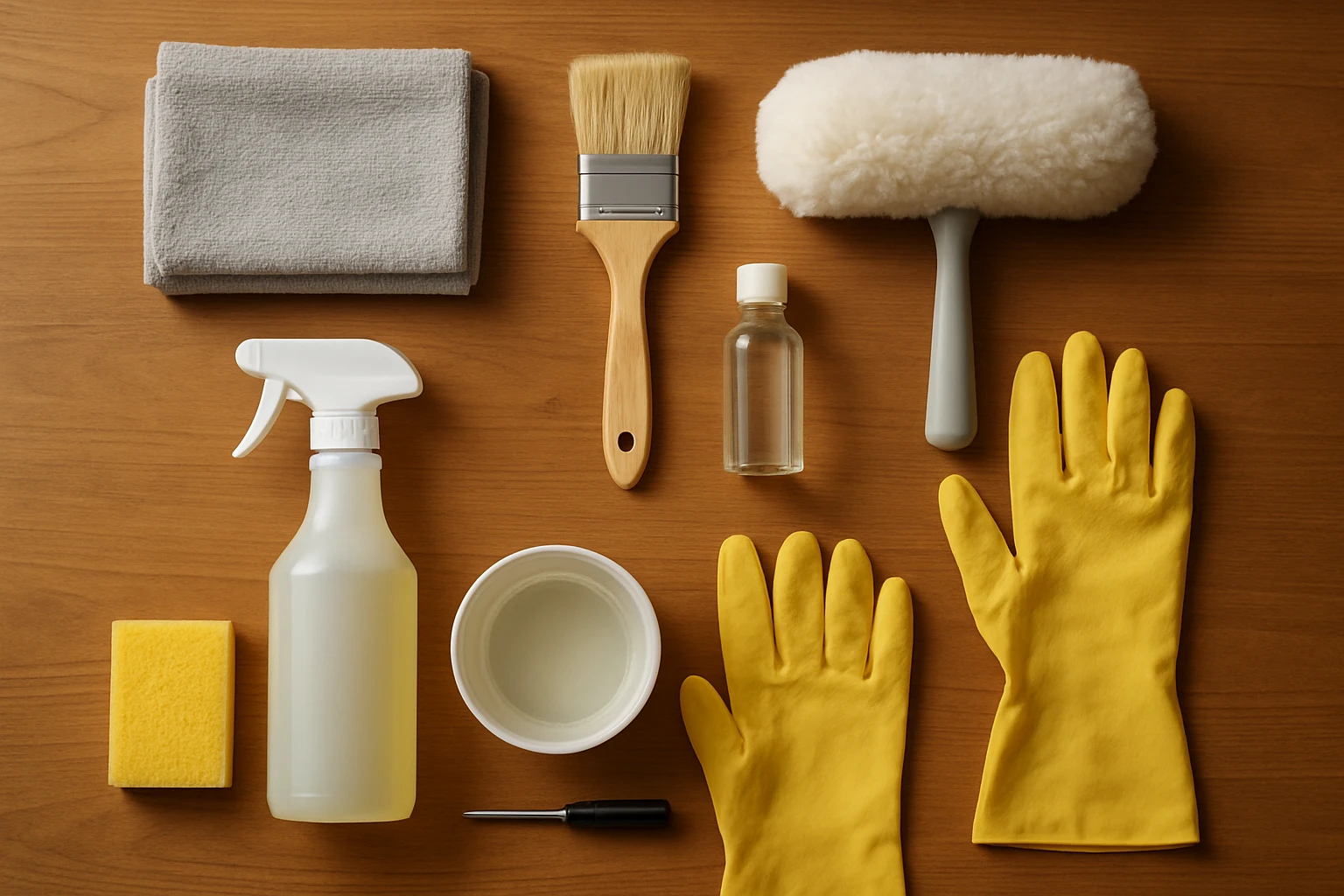
Tool Checklist:
- Microfiber cloths
- Soft-bristle brush or paintbrush
- Dusting wand or lambswool duster
- Mild liquid dish soap or fabric cleaner for washable fabrics
- White vinegar for light disinfecting (dilute)
- Sponge and bucket for rinsing
- Old towels to protect floor and window sill
- Small screwdriver for removing blinds when needed
Cleaning Methods by Blind Type
Different materials need different methods. Below are practical steps and short guides for common blind types, with links to matching product pages where you can read more about each design and material.
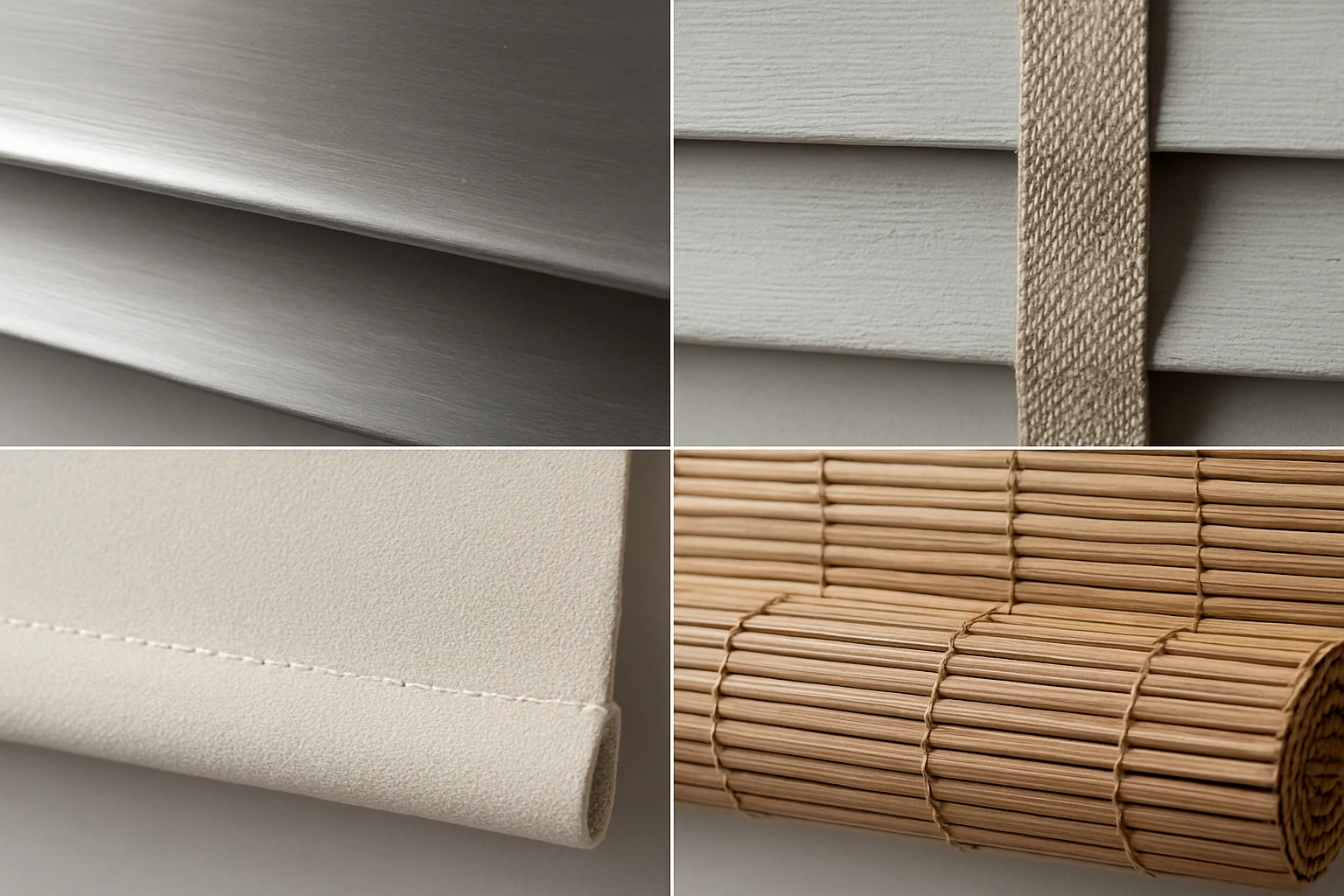
Venetian Blinds
Venetian blinds are common and clean well with light dusting and occasional wet wiping. Avoid soaking painted metal slats to prevent water spots.
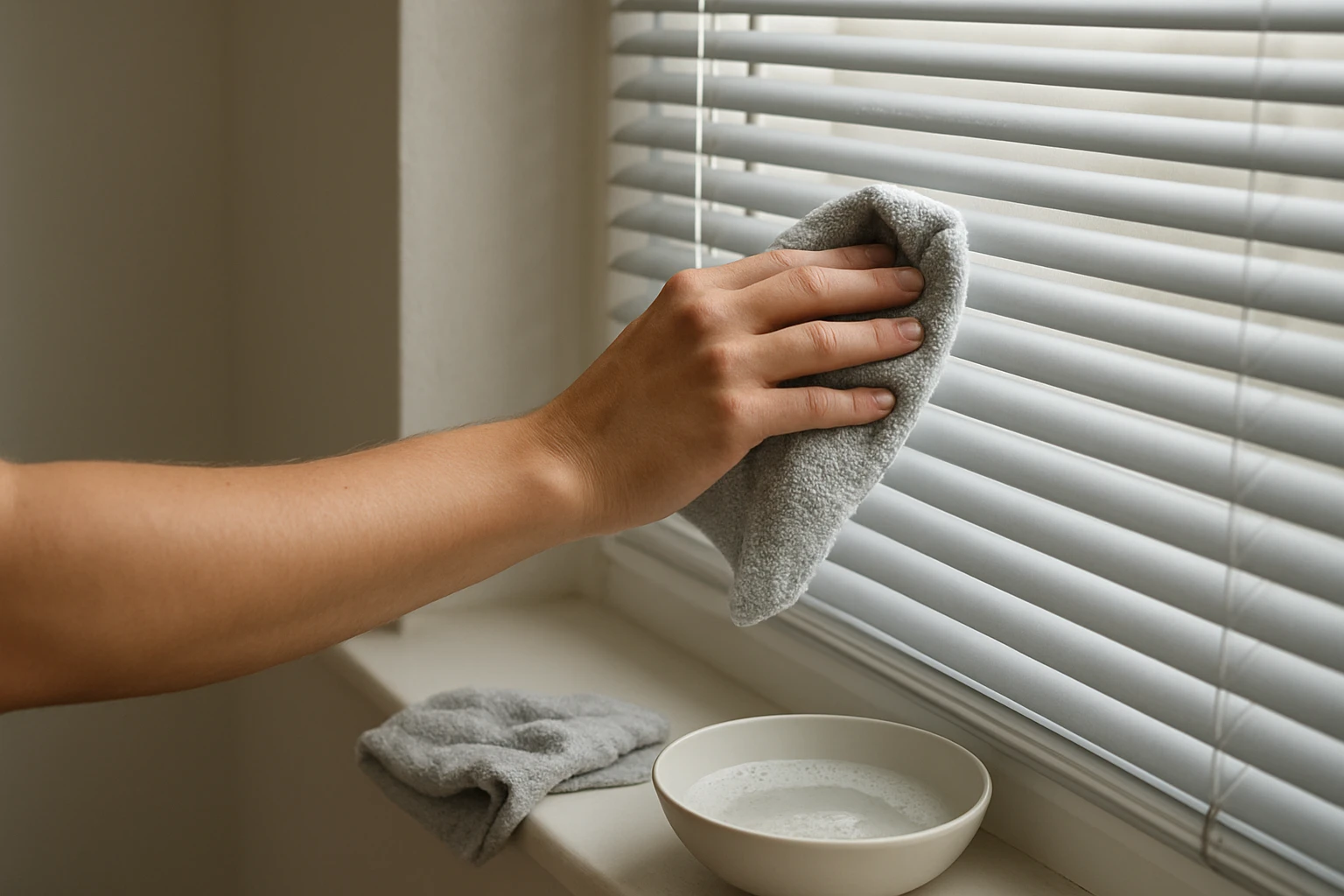
Quick Steps for Venetian Blinds:
- Close slats downward and dust with a duster.
- Flip slats and dust the other side.
- For sticky marks, wipe with a damp microfiber cloth and mild soap, then dry immediately.
Read more about material and styles on the Venetian Blinds page.
Wooden Blinds
Wood is sensitive to water and harsh cleaners. Dust or use a barely damp cloth, and use oil-based care products when the finish calls for it.
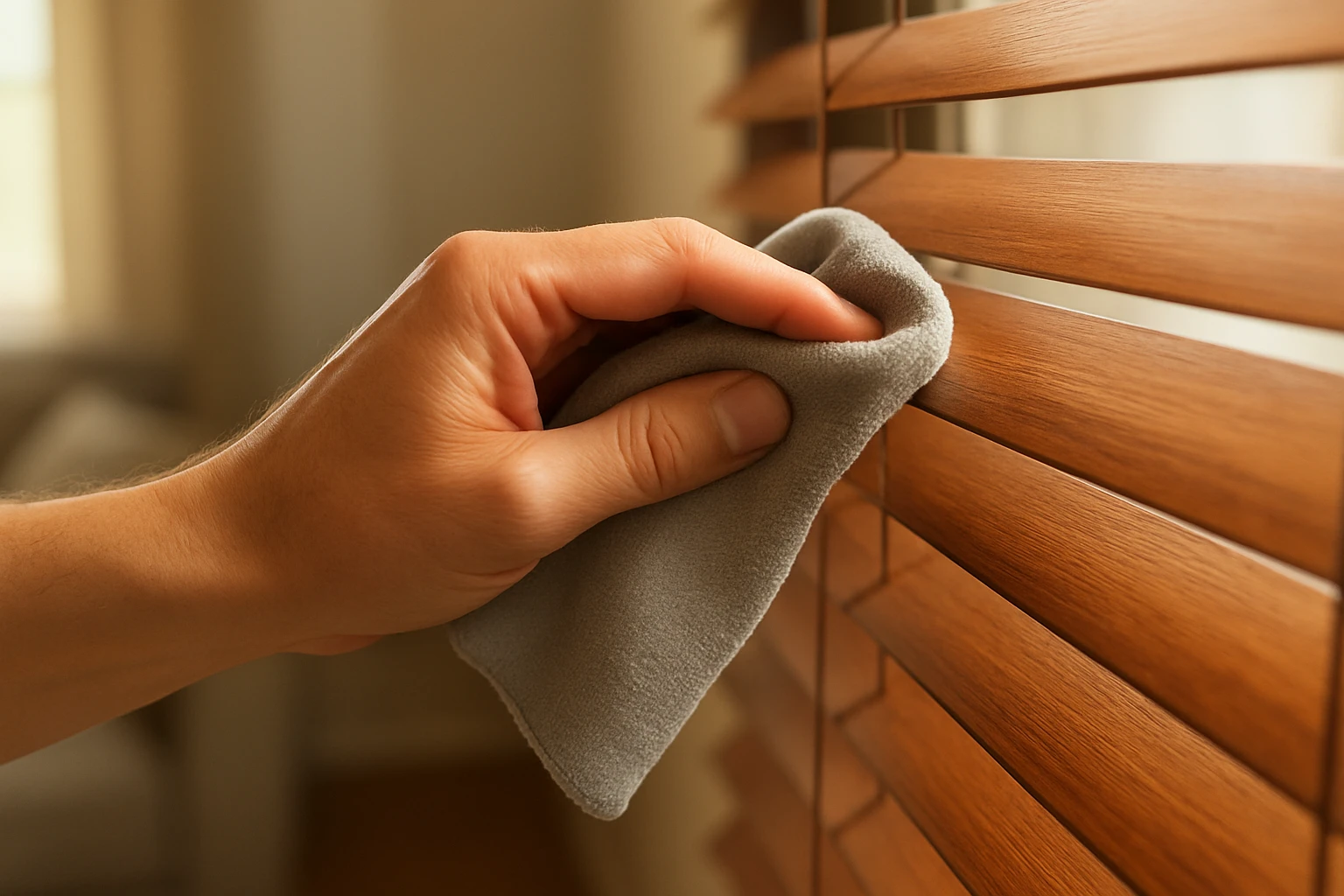
Care for Wooden Blinds:
- Dust weekly with a dry cloth.
- For soiling, use a cloth wrung nearly dry with water and a drop of dish soap, wipe and dry each slat quickly.
- Do not soak or use steam cleaners to avoid warping.
See product details and finishes at Wooden Blinds.
Roller Blinds
Roller fabrics often take spot cleaning or a gentle wash depending on the fabric. Remove the roller cassette only when the manufacturer allows it.
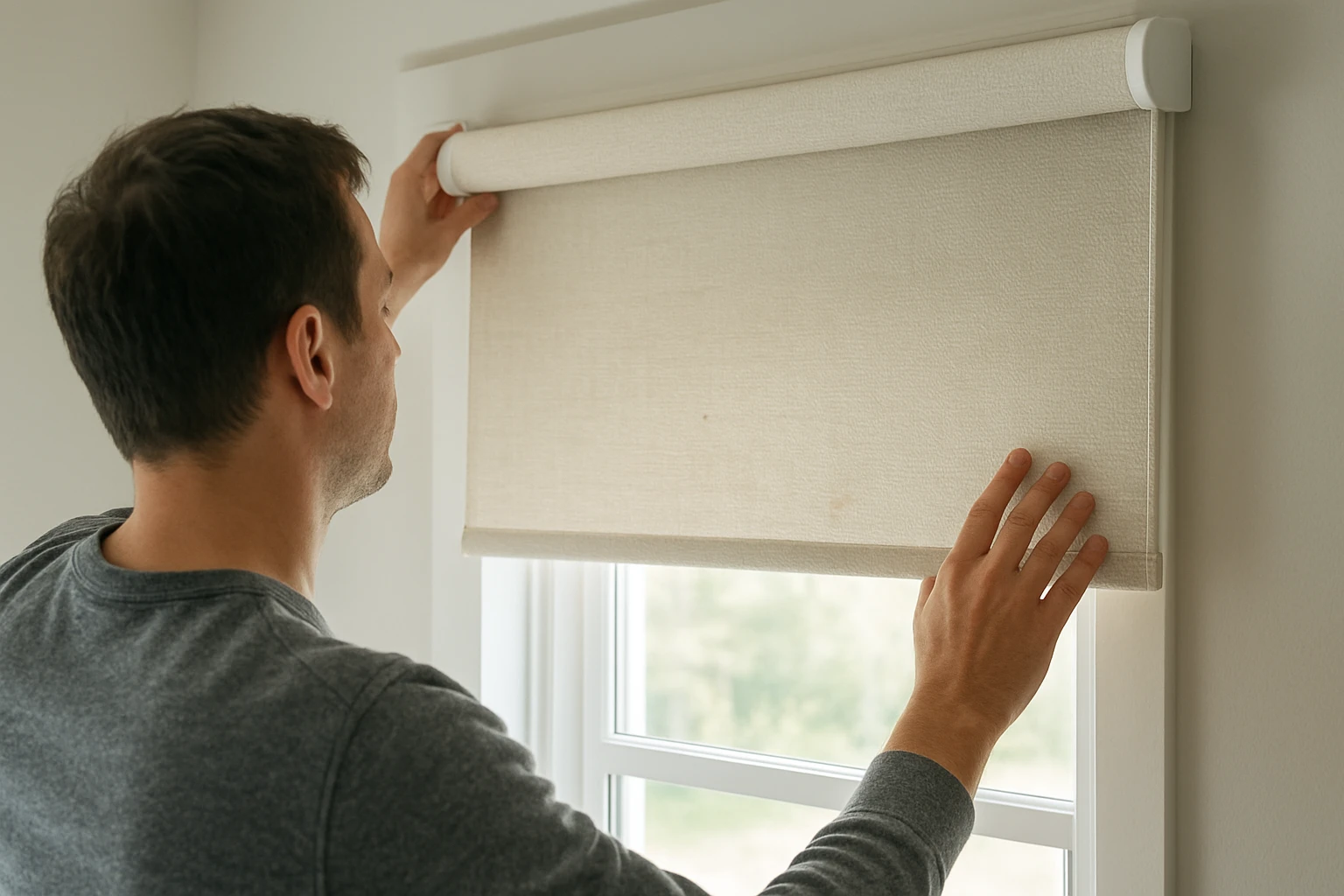
Roller Blind Tips:
- Dust with a microfiber cloth while rolled down.
- Blot stains with a mild soap solution, rinse by blotting with clean water, then let air dry fully.
Refer to Roller Blinds for fabric guidance.
Roman Blinds
Roman blinds are fabric-based and often lined. Spot clean and think about professional cleaning for heavy stains or delicate linings.
Roman Blind Care:
- Vacuum on low with an upholstery brush weekly.
- Spot clean with a gentle fabric cleaner, testing in an unseen area first.
- For full cleaning, follow manufacturer advice or use a specialist.
Read general options at Roman Blinds.
Vertical Blinds
Vertical blinds are easy to dust and wash. Fabric vanes may come off for home washing while PVC vanes can be soaked.
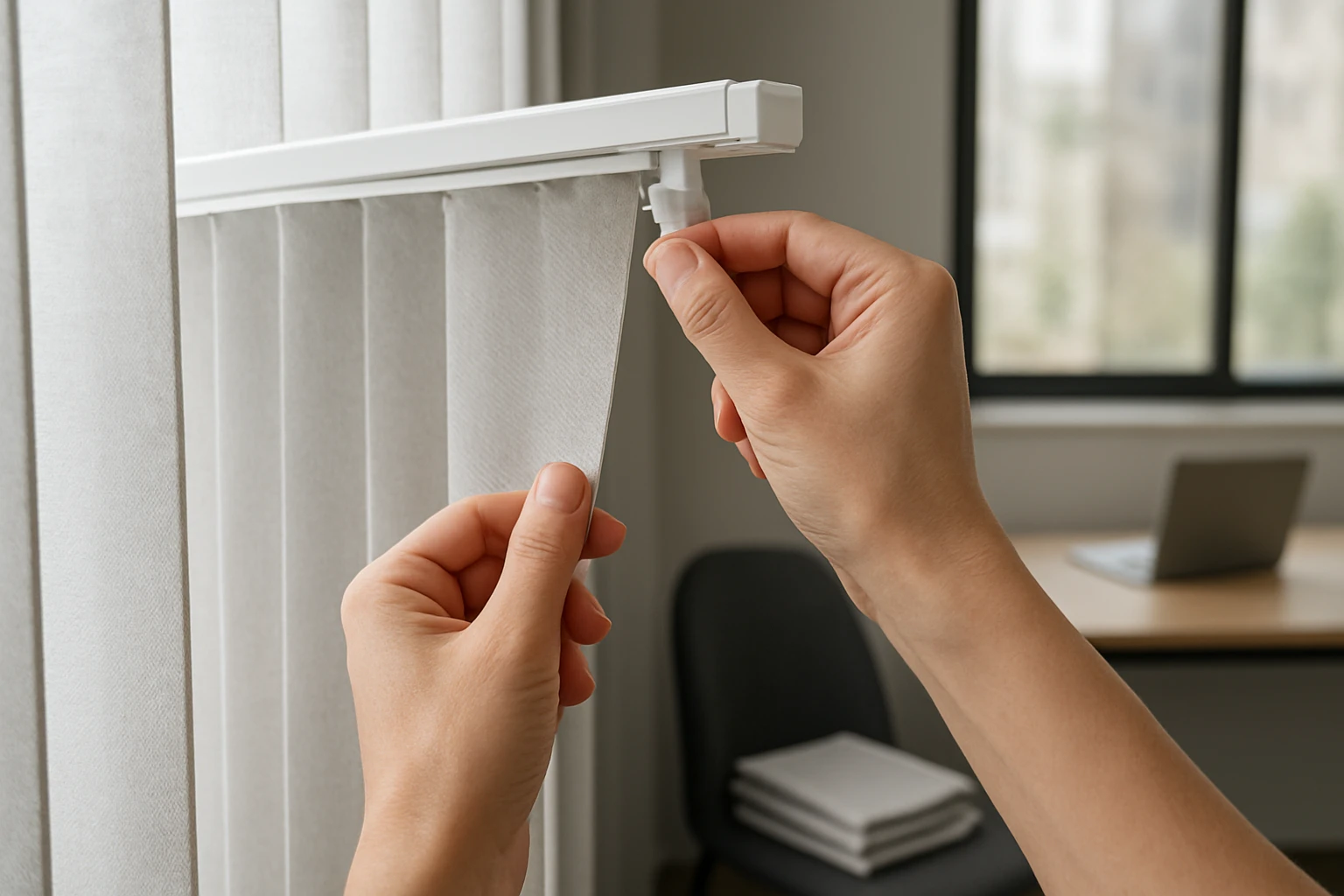
Vertical Blind Notes:
- Dust or vacuum vertical vanes.
- Remove and hand wash fabric vanes on a gentle cycle if the label allows.
See fitting and options at Vertical Blinds.
Zebra Blinds
Zebra or day-night blinds have alternating sheer and solid stripes. Use mild solutions to avoid streaking and always test on a small hidden area first.
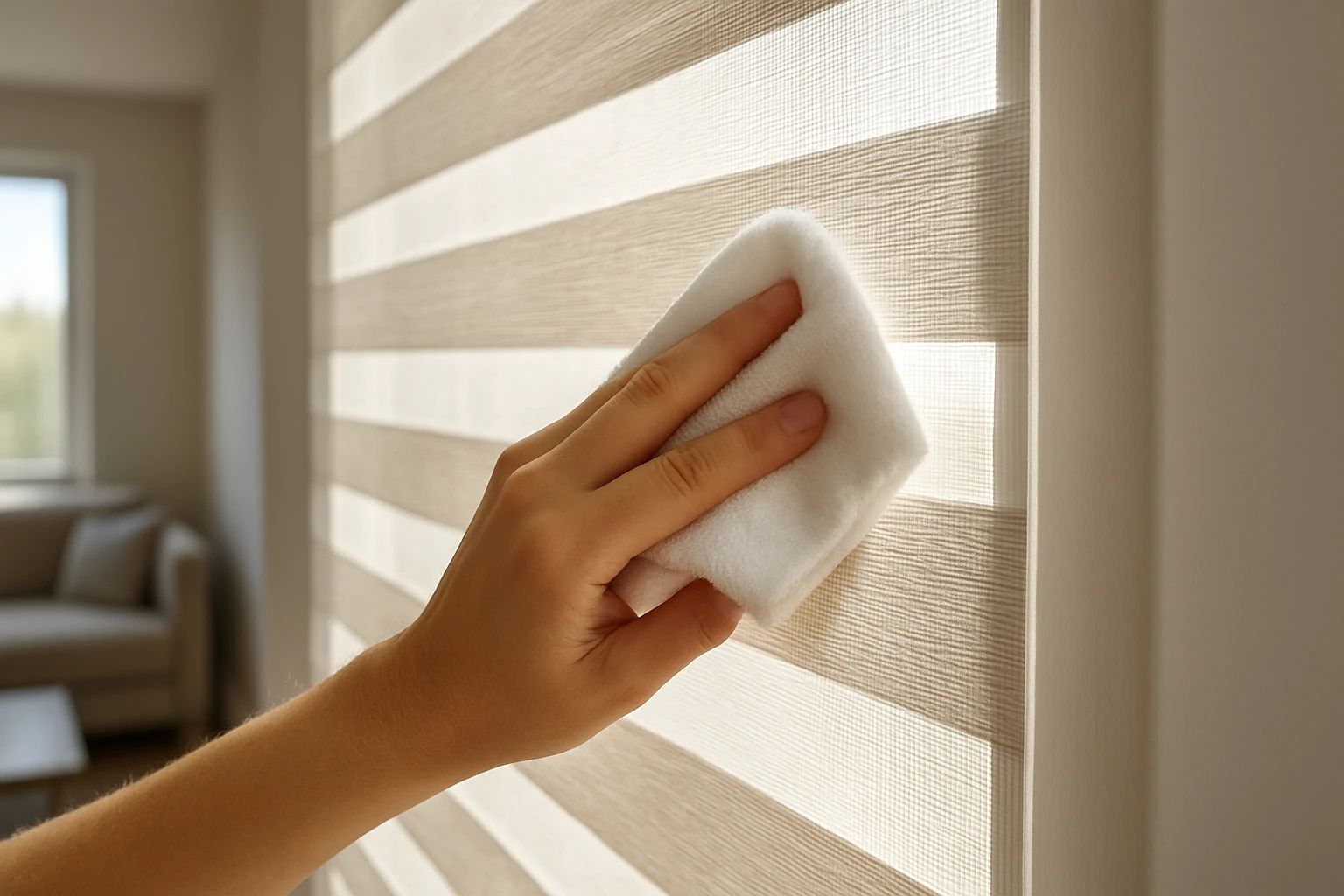
Zebra Blind Care:
- Dust lightly and spot clean with mild detergent.
- Do not twist slats or scrub hard to keep the layers aligned.
More on options at Zebra Blinds.
Bamboo and Woven Wood Blinds
Natural woven materials are porous and can stain if soaked. Dust often and, when possible, take them outdoors for gentle shaking and spot cleaning.
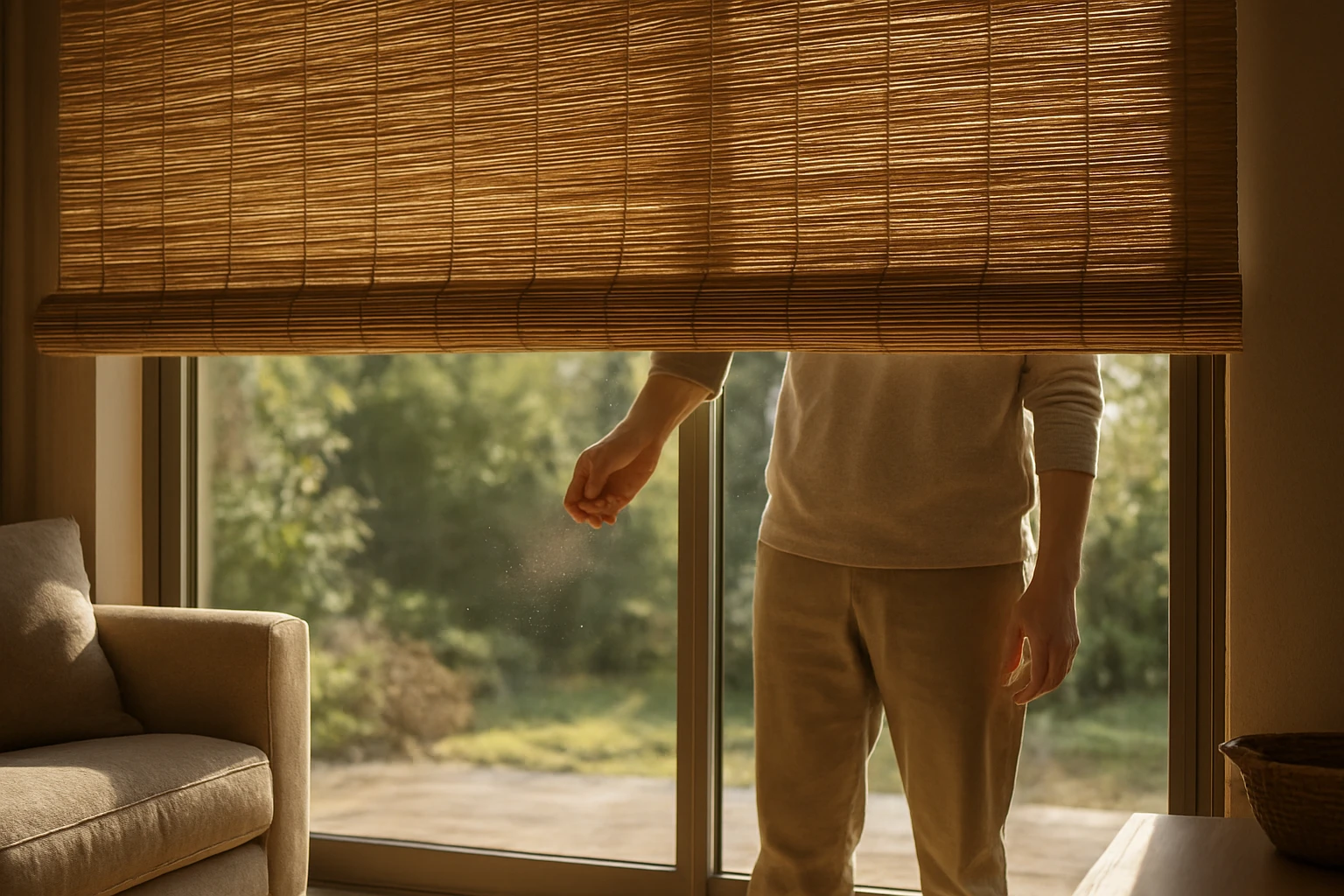
Care for Bamboo Blinds:
- Dust with a soft brush.
- Spot clean with a damp cloth and mild soap, and avoid soaking.
Product examples are at Bamboo Blinds.
Outdoor Blinds
Outdoor blinds face sun, rain, and dust. Clean with low-pressure water and mild detergent, and let them dry fully to prevent mildew.
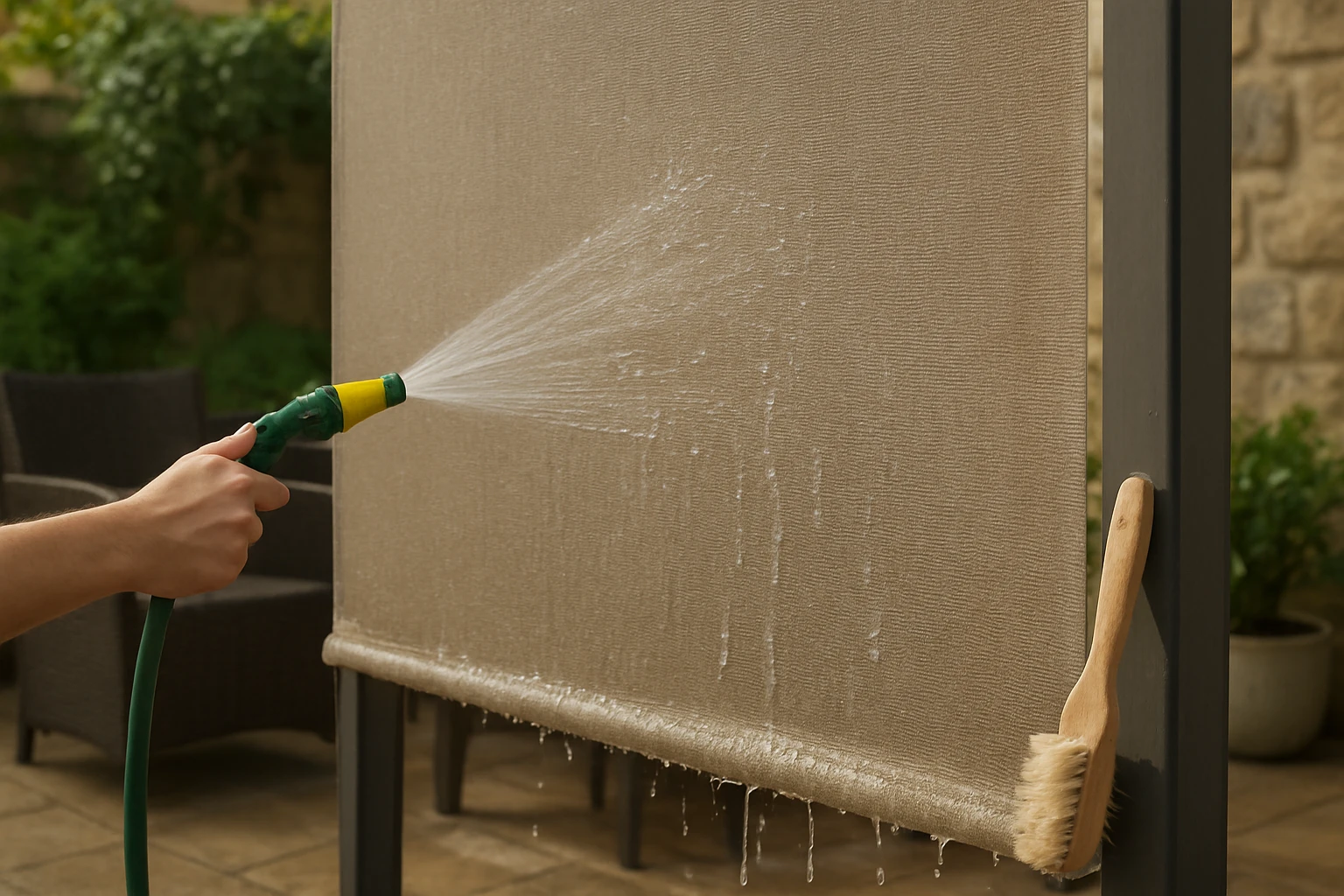
Outdoor Blind Advice:
- Rinse with clean water regularly.
- For stubborn dirt, use a soft brush with diluted soap, rinse thoroughly, and air dry.
See options at Outdoor Blinds.
Motorized Blinds
Motorized systems need care around the mechanism and power parts. Do not wet motors or electronic elements. Clean the blinds and dust the headrail carefully.
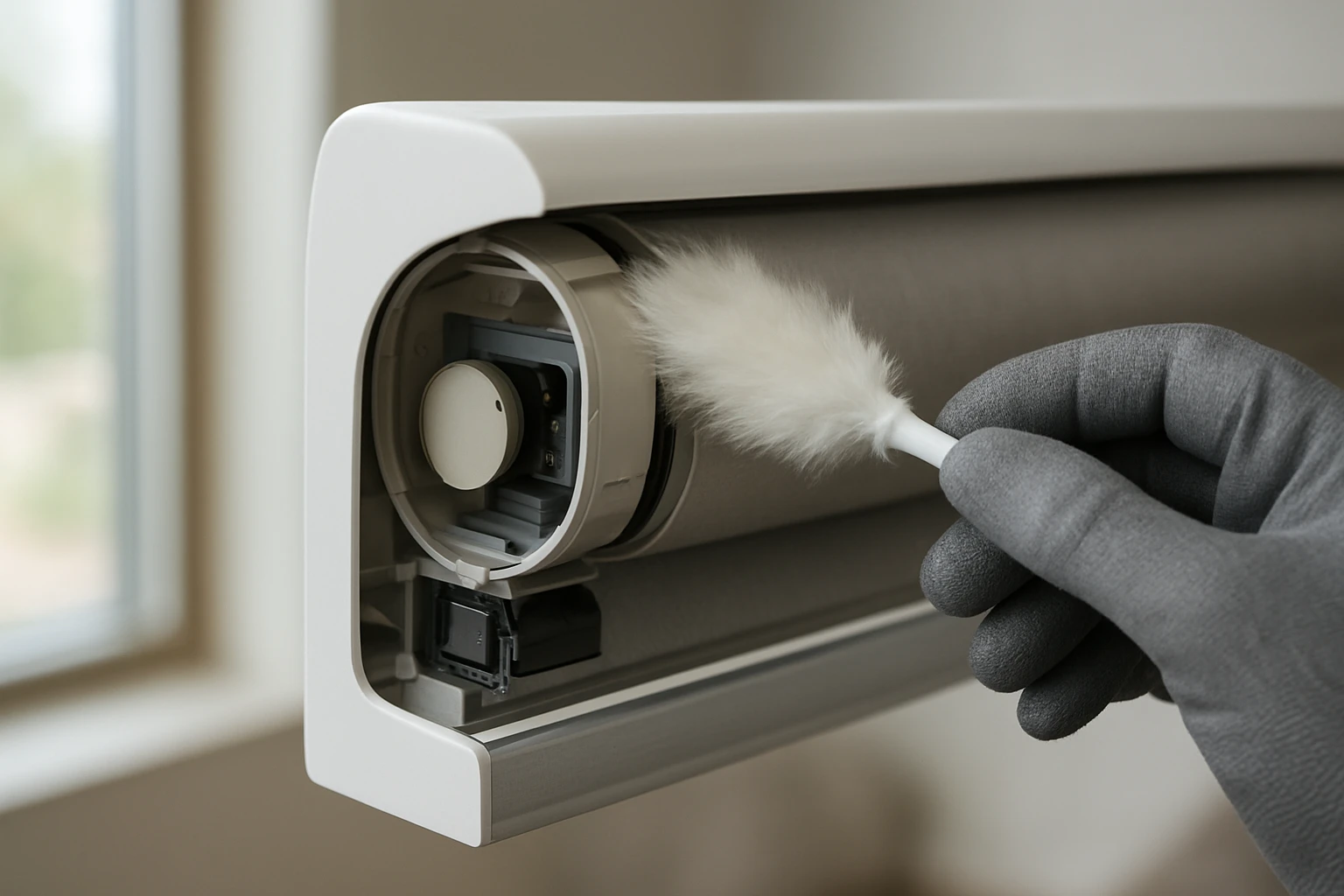
Motorized Blind Steps:
- Turn off power or remove the battery before cleaning the headrail.
- Dust slats and wipe with a slightly damp cloth, keeping clear of the motor area.
Product and control options at Motorized Blinds.
Blackout and Office Blinds
Blackout fabrics and commercial office blinds often have backing layers or PVC parts. Clean gently and test a small area to check colorfastness.
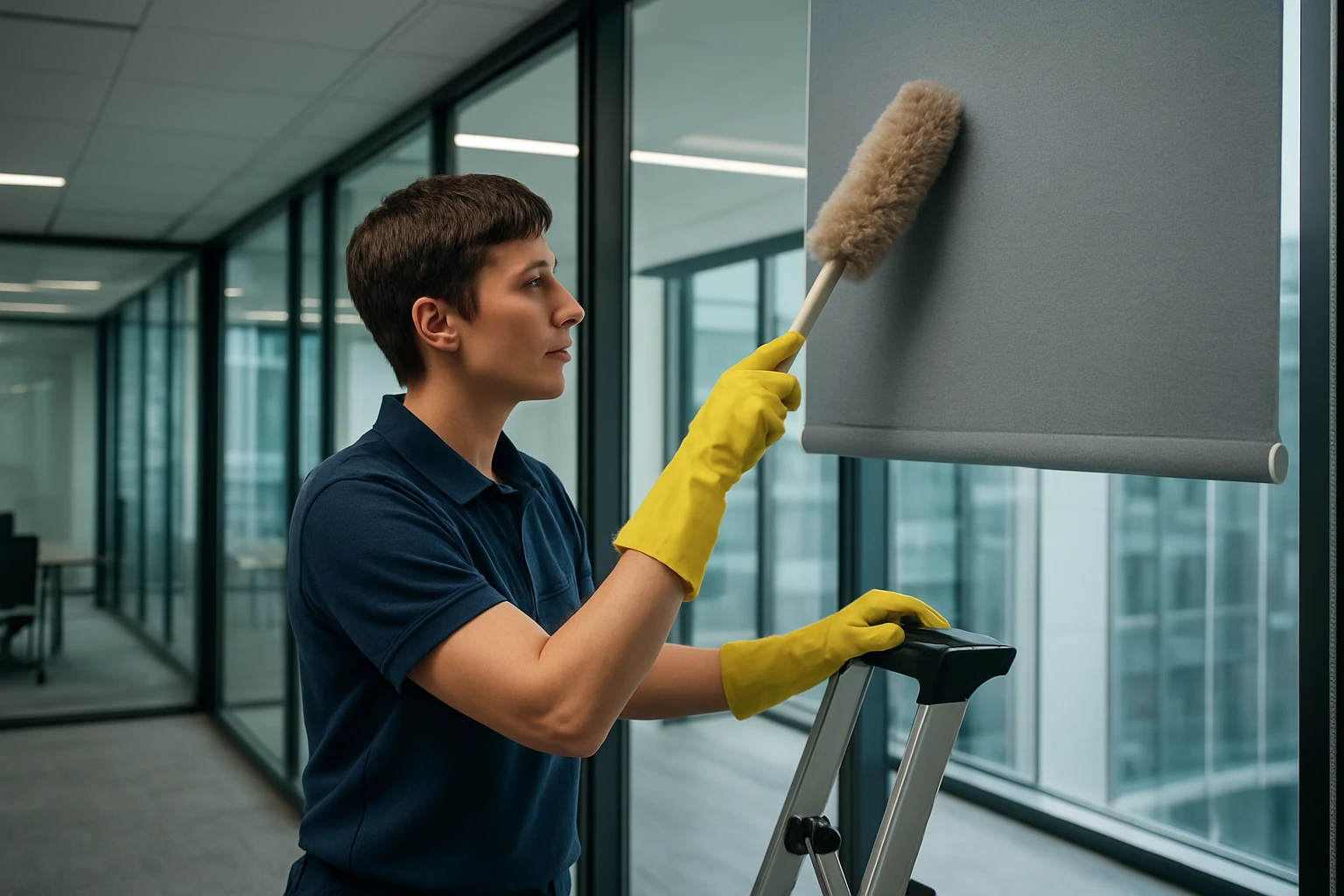
Office and Blackout Care:
- Dust and vacuum with an upholstery brush.
- Spot clean carefully; heavy-duty cleaning should follow manufacturer guidance or a specialist.
See commercial options at Office Blinds and Blackout Blinds.
Comparison Table: Fast Guide by Type
| Blind Type | Best Quick Method | Deep Clean Allowed | Typical Time Per Window |
|---|---|---|---|
| Venetian (metal) | Dust & damp wipe | Yes, wipe only | 5–15 min |
| Wooden | Dry dust, dry wipe | No soaking | 10–20 min |
| Roller fabric | Dust, spot clean | Depends on fabric | 10–25 min |
| Roman | Vacuum, spot clean | Often professional | 15–30 min |
| Vertical | Dust, removable wash | Fabric removable | 10–30 min |
| Zebra | Dust, spot clean | Limited | 10–20 min |
| Bamboo | Dust, spot clean | No soaking | 10–25 min |
| Outdoor | Rinse, soap wash | Yes | 15–45 min |
| Motorized | Dust, avoid motor | No water on motor | 10–20 min |
Quick Daily and Weekly Care
A short routine keeps dirt from building up and cuts the need for full washes. Small regular tasks protect finishes and save time.
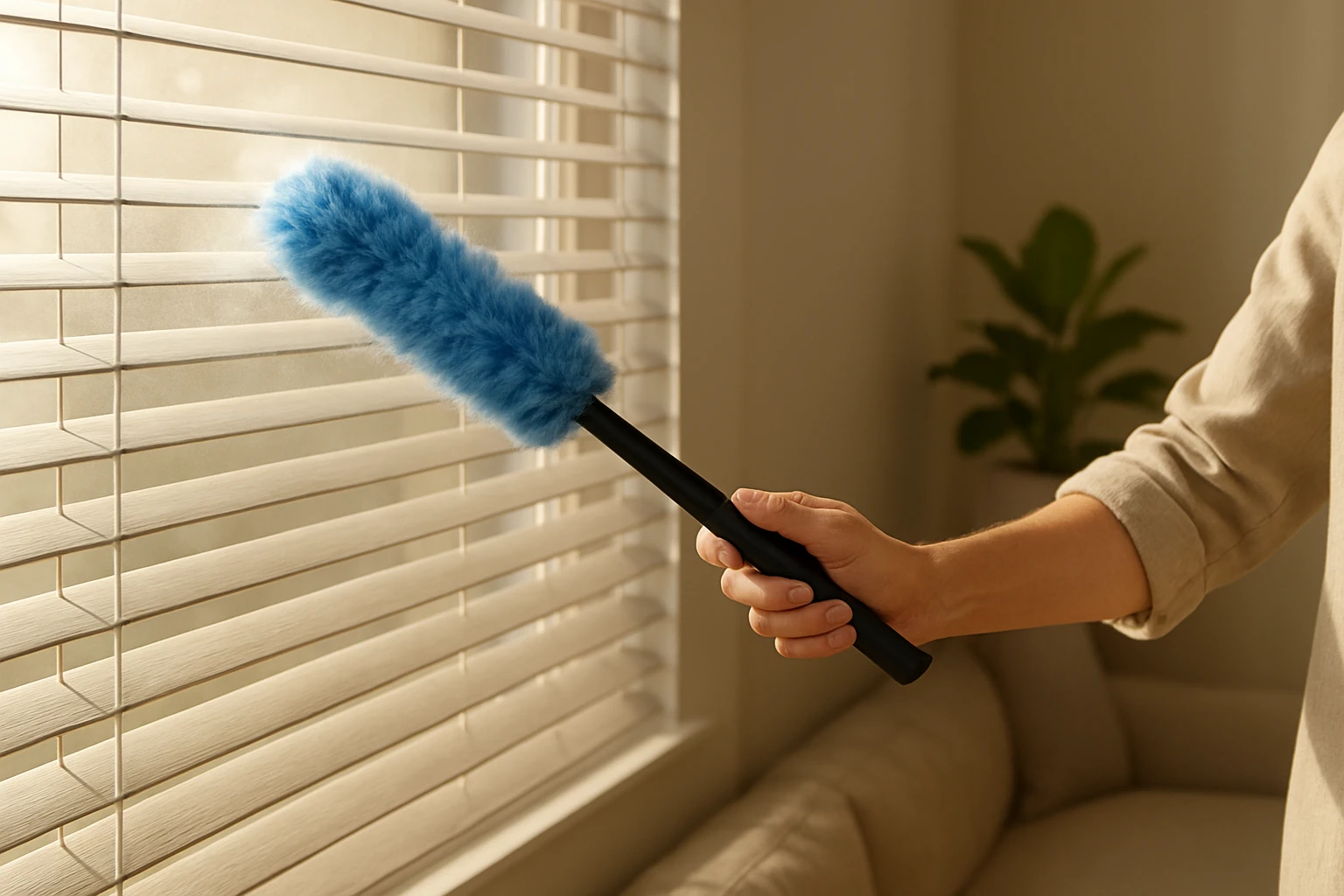
Quick Habits:
- Dust weekly with a microfiber wand.
- For fabric blinds, vacuum on low with an upholstery brush attachment.
- Blot spills right away. Do not rub hard, which can spread stains.
Deep Clean Steps for Heavy Soiling
If blinds are greasy or heavily stained you will need a deeper clean. Always test any method on a small hidden area first.
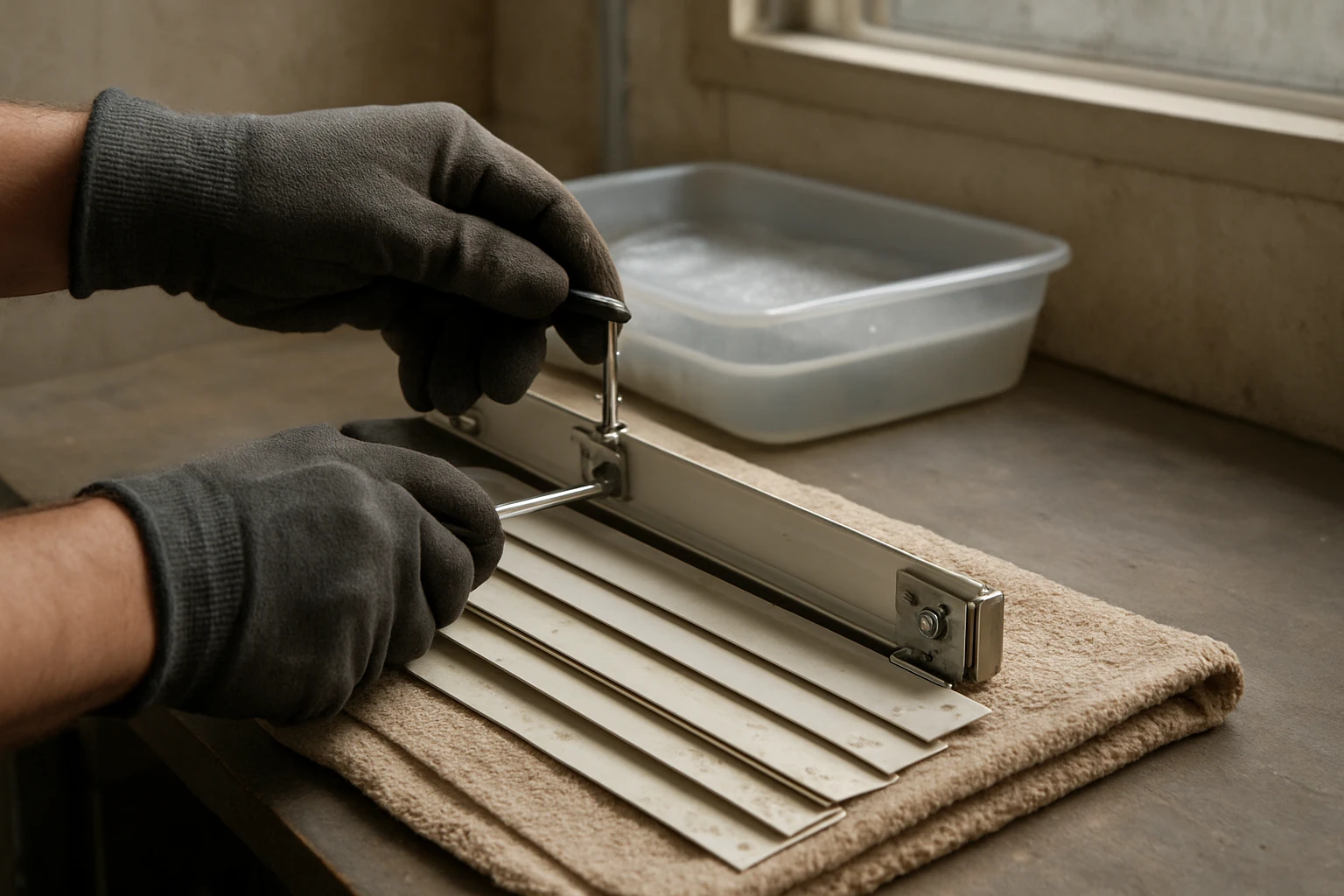
What to Do First
- Close blinds and dust both sides.
- Remove blinds if safe and feasible, and label brackets for reinstallation.
- Lay towels on the floor and prepare a gentle soap solution in a wide tub if the material allows.
Deep Soak Steps:
- For aluminum and PVC: soak slats in warm soapy water for 10 to 30 minutes, rinse and dry flat.
- For washable fabric: follow manufacturer instructions; gentle hand wash or a very short machine cycle may work.
- For wood or glued fabric: do not soak; use spot cleaning only.
Drying, Reassembly and Maintenance
Proper drying stops mildew and prevents hardware corrosion. Reinstall blinds only when they are fully dry and check that they work before using them again.
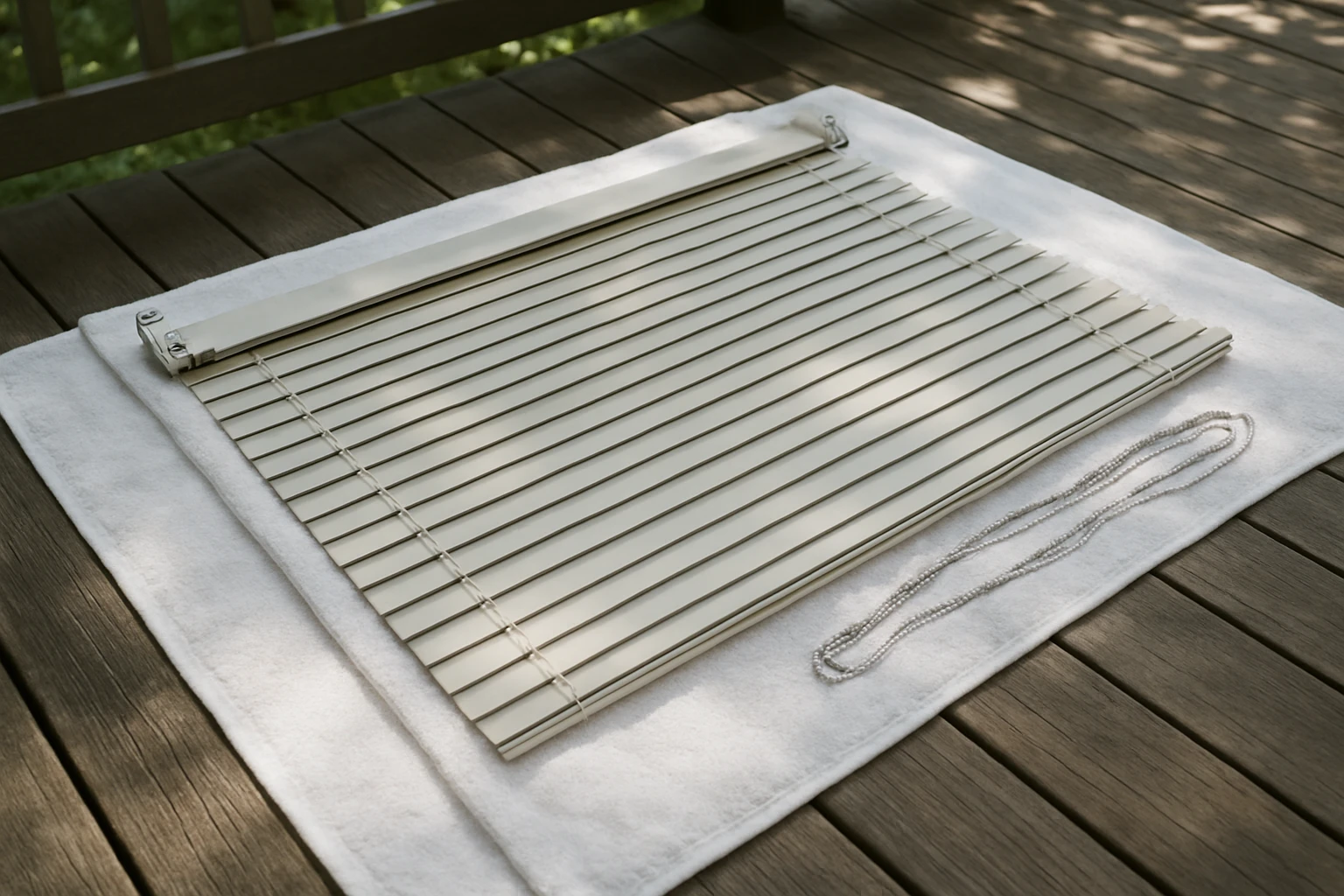
Reassembly Checklist:
- Confirm all parts are dry.
- Reattach brackets and test the lift and tilt.
- Check cords and chains for wear and replace any frayed parts.
Stain and Spot Removal Tips
Different stains call for different approaches. Always blot stains, work from the outside toward the center, and test cleaners on a hidden area first.
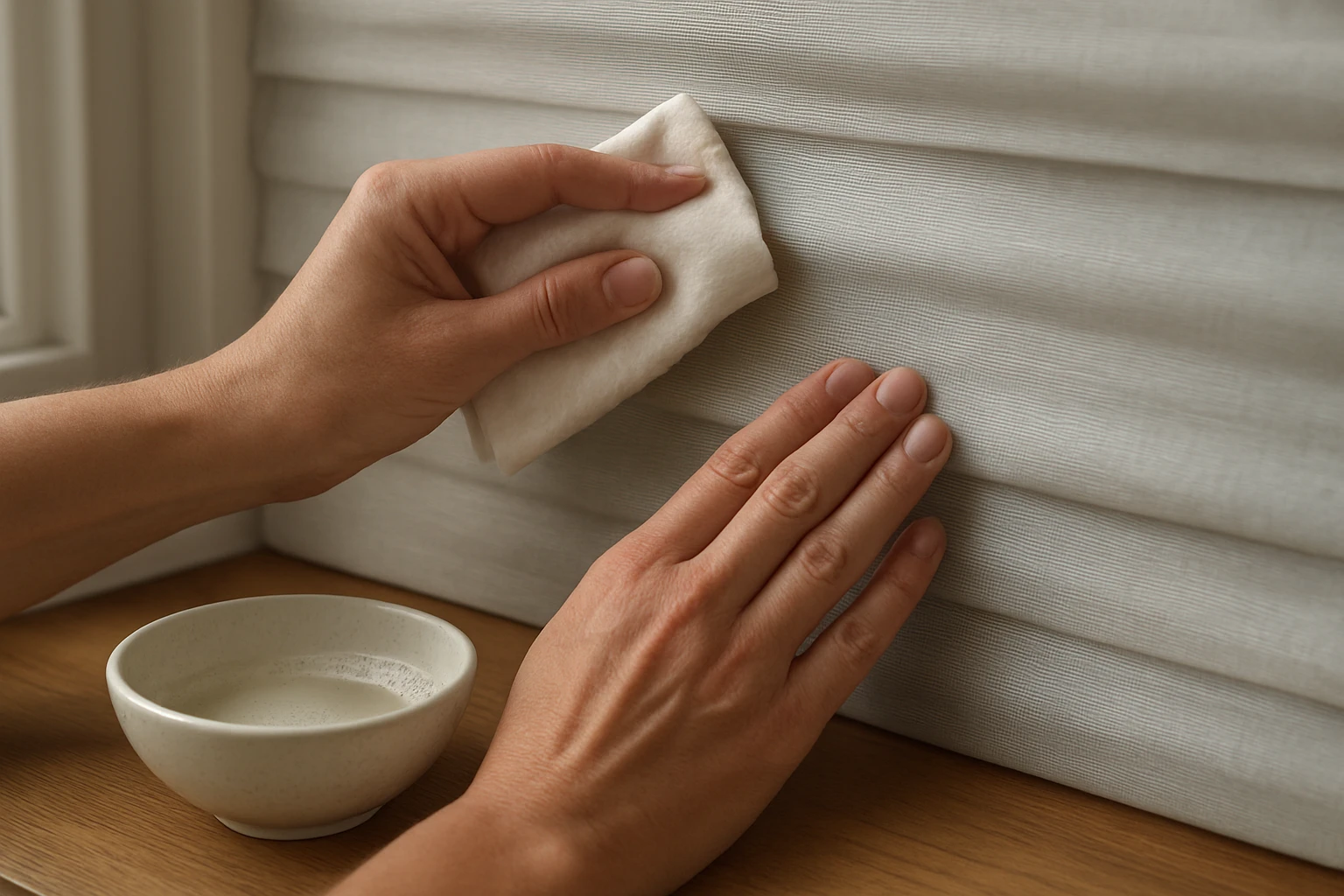
Common Stains:
- Grease: apply a small amount of dish soap solution, blot, then rinse with a damp cloth.
- Ink: dab with isopropyl alcohol on a white cloth, then neutralize with water.
- Mildew: use diluted white vinegar, blot and air dry in sunlight if safe for the material.
Safety and Special Care
Use ladders carefully when reaching high windows and secure blinds before cleaning. For motorized units, disconnect power or remove batteries before working on the headrail. A common mistake is using too much water on wood or glued fabrics, which can cause permanent warping.

Cleaning Schedule and Time Estimates
Set a simple schedule that matches your home. Busy households with pets and children need more frequent care than low-use rooms.

| Task | Frequency | Typical Time Per Window |
|---|---|---|
| Quick dust | Weekly | 3–7 minutes |
| Spot clean | As needed | 5–15 minutes |
| Deep clean (home) | 3–6 months | 15–45 minutes |
| Full replacement or professional clean | As needed | Varies |
Cost, Environmental and Health Notes
Cleaning at home with mild soap and reusable cloths keeps costs low and avoids strong chemicals. Reusable microfiber cloths and gentle cleaners cut waste and limit exposure to fumes. If allergies are a concern, regular dusting and occasional professional cleaning help lower airborne particles indoors.
When to Replace Blinds
Replace blinds when slats crack, mechanisms fail repeatedly, or fabrics have permanent stains or fading. If you are shopping for replacements, see the buying guide for materials that match your cleaning habits and local climate at Best Curtains and Blinds in Dubai 2026: Buying Guide.

Final Practical Tips
- Test cleaners in an unseen area before using them on the whole blind.
- Keep a small caddy of cleaning supplies near a utility area to make quick tasks easier.
- Stick to a short schedule: regular dusting avoids long deep cleans and extends blind life.
If you need bespoke advice about materials or fitting, the team at Curtains and Blind can recommend blinds that match how you live and clean.
Frequently Asked Questions
How Often Should I Clean My Blinds?
Dust weekly for most blinds. Do a light wipe or vacuum monthly for homes with pets or heavy use, and a deeper clean every three to six months depending on material and soil level.
Can I Wash My Blinds in the Washing Machine?
Only some fabric blinds are machine washable and only if the manufacturer allows it. Remove hardware and check the care label. Never machine wash wooden, bamboo, or motorized blinds.
What Is the Safest Cleaner for Blinds?
A mixture of warm water and a drop of mild dish soap is safe for most materials. For fabric or delicate finishes, test a small hidden area first and use a gentler product if needed.
How Do I Remove Grease or Sticky Residue from Blinds?
Blot with a microfiber cloth moistened with diluted dish soap, working from the outside of the stain inward. Rinse by blotting with clean water and dry quickly to avoid water marks.
Are Steam Cleaners Safe for Blinds?
Steam cleaners can damage glued joints, wooden slats, and some fabrics, so avoid steam unless the manufacturer explicitly states it is safe.