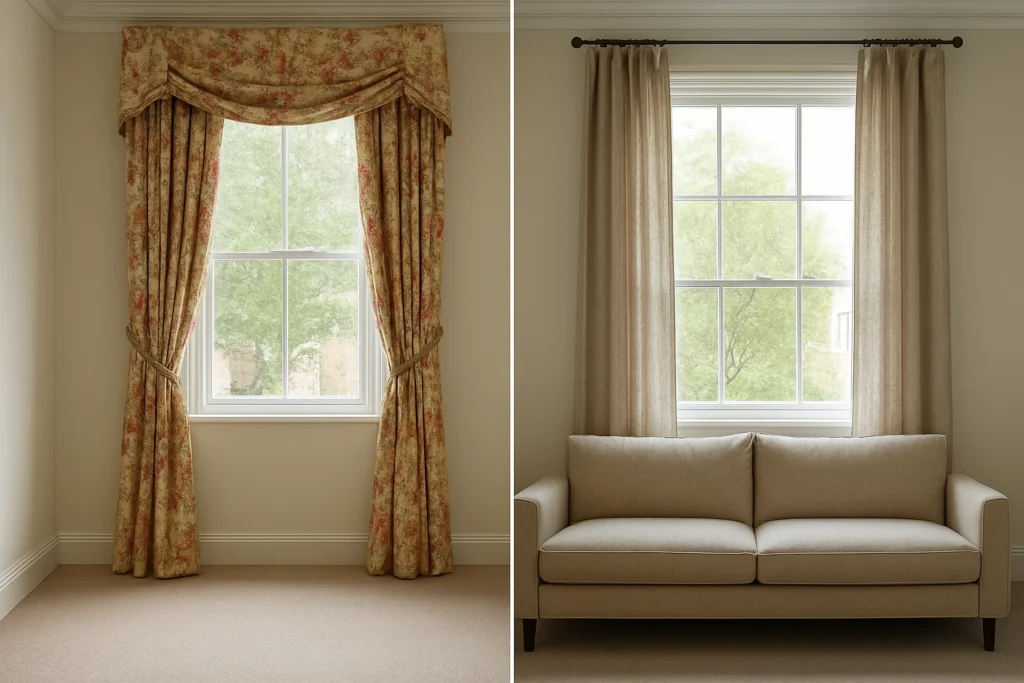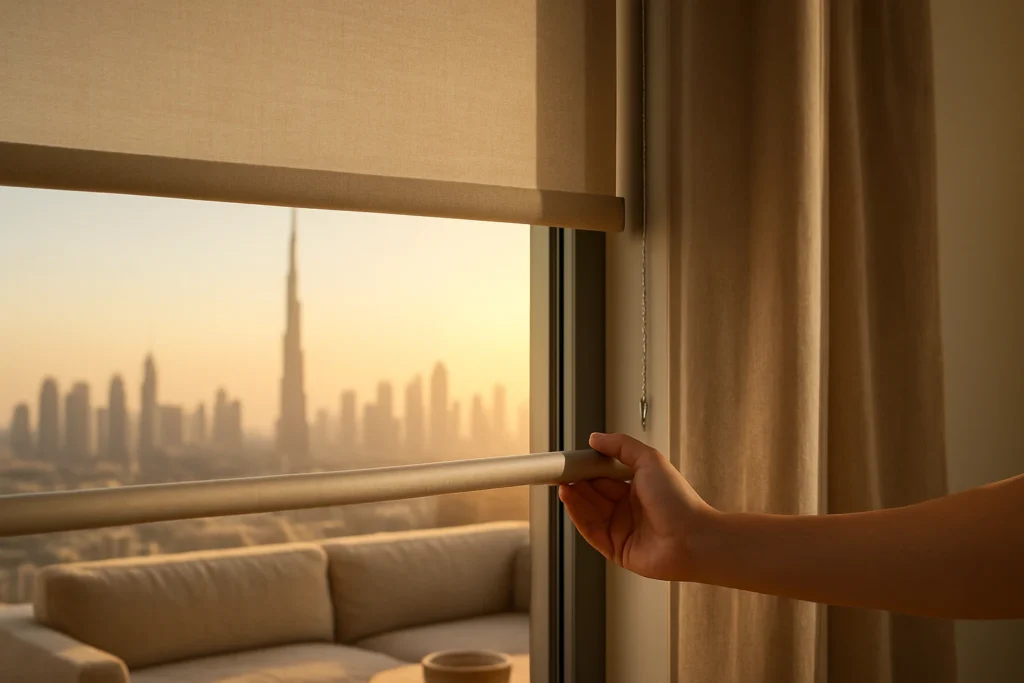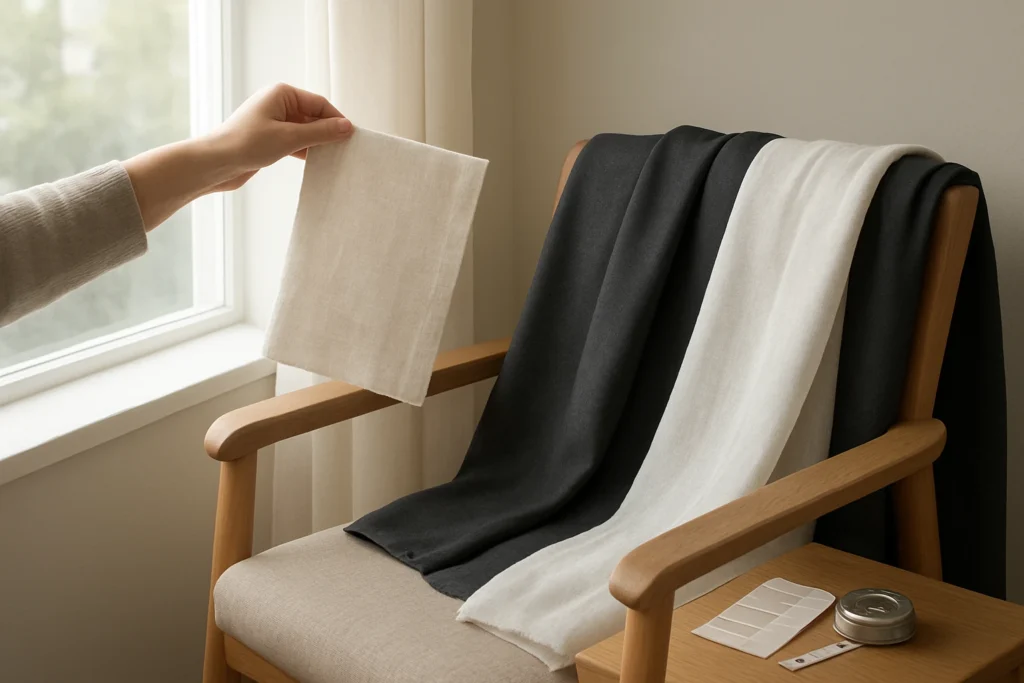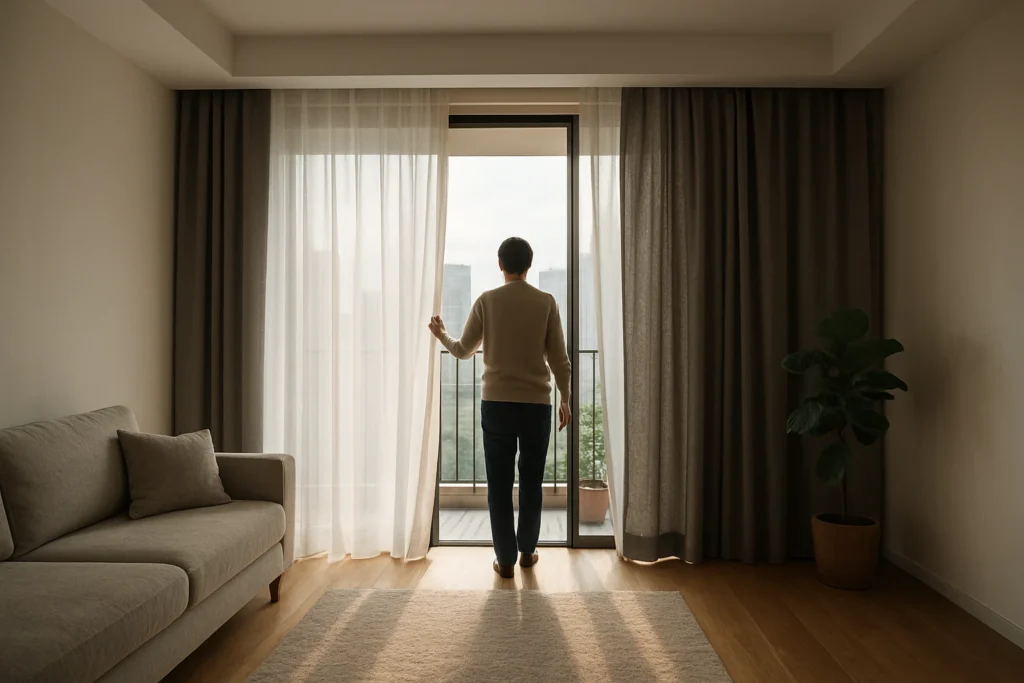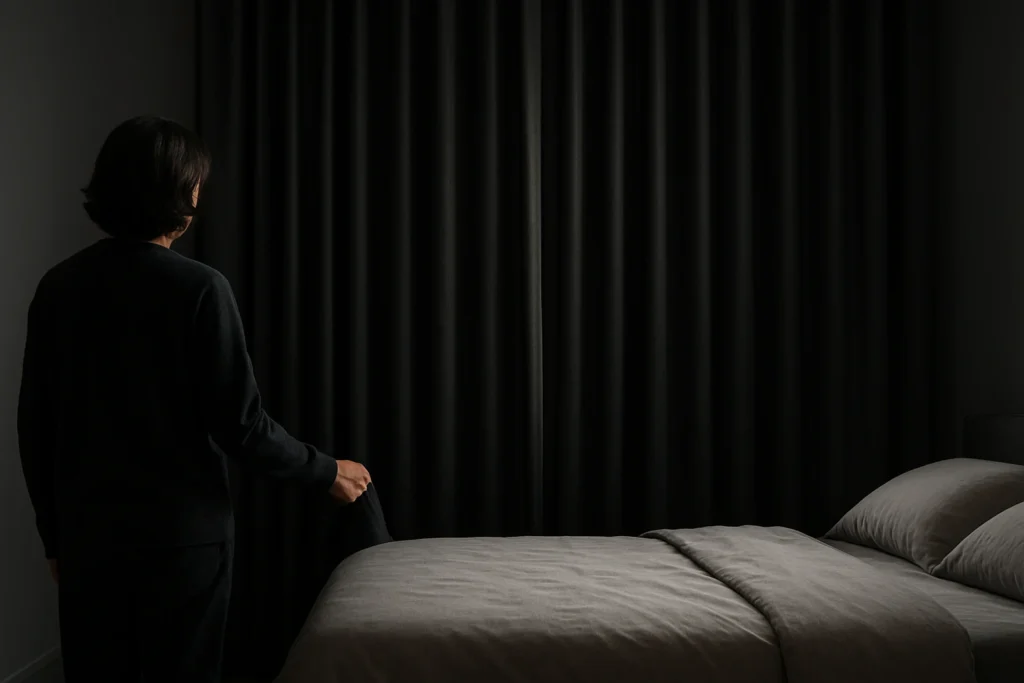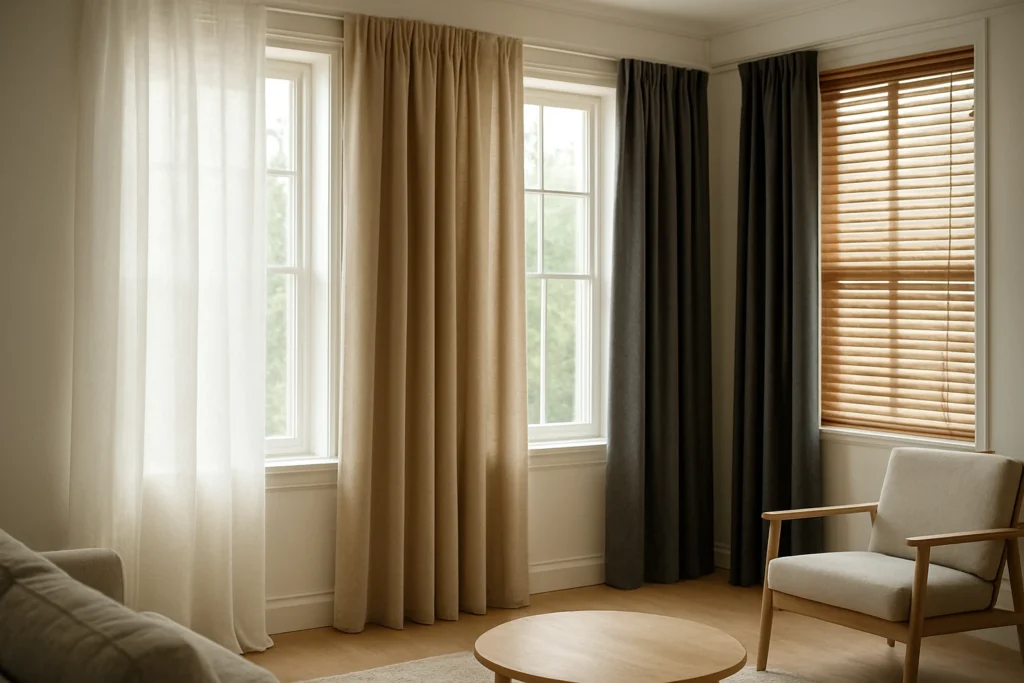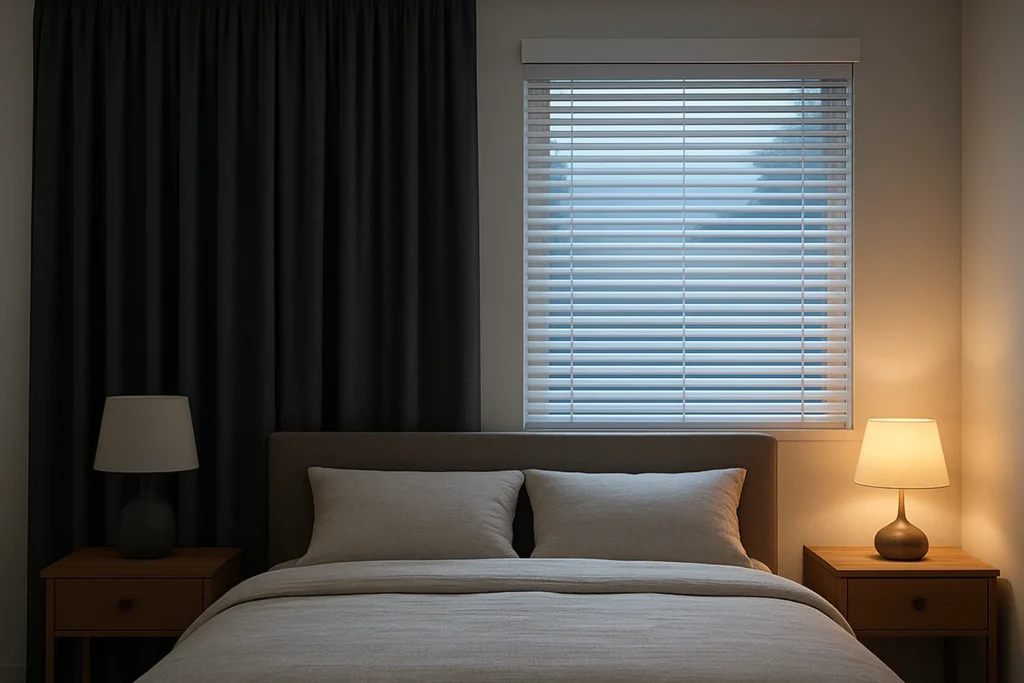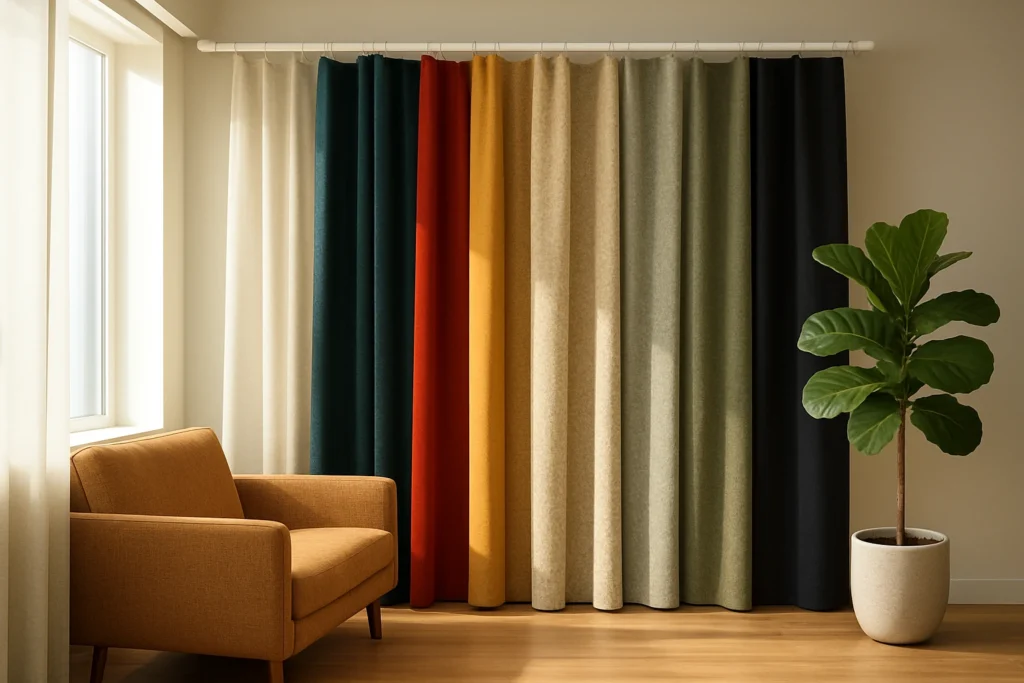
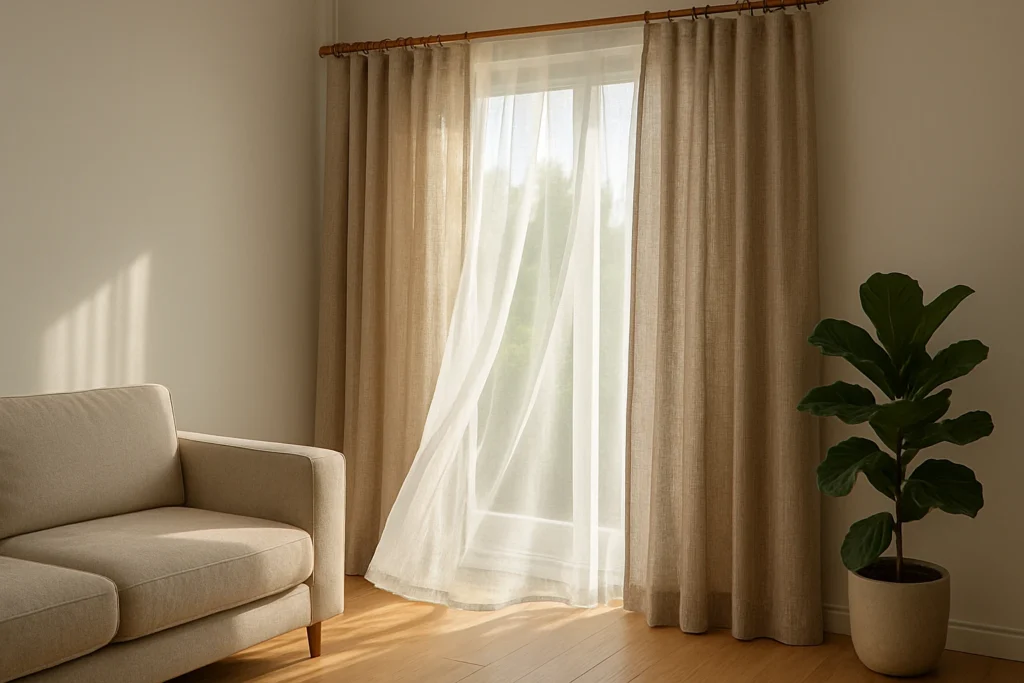
Window curtains for home should fit your windows and your daily routine, control light and privacy, and match the room’s scale and color. Choose fabric and style by how the room is used. Pick thicker, lined fabrics for bedrooms to darken the room and add insulation, and lighter sheers where you want daylight. Measure carefully and plan rod placement so curtains hang well and slide easily.
Key Statistics
- Blackout and heavy-lined curtains block about 90 to 99 percent of daylight when installed correctly.
- Recommended curtain fullness is 2 to 2.5 times the window width for a gathered look and 1.5 times for a light, modern drape.
- Typical ready-made curtain panel costs range widely, from budget options to premium custom work; expect a practical home range between affordable panels and custom panels depending on fabric and fittings.
In this introduction we cover what matters when you choose window curtains for home, how to measure, how fabrics behave, and how to plan for light, privacy and upkeep. The team at Curtains and Blind offers many of the styles mentioned here and can advise on fitting and motorized options.
Choosing Window Curtains for Home
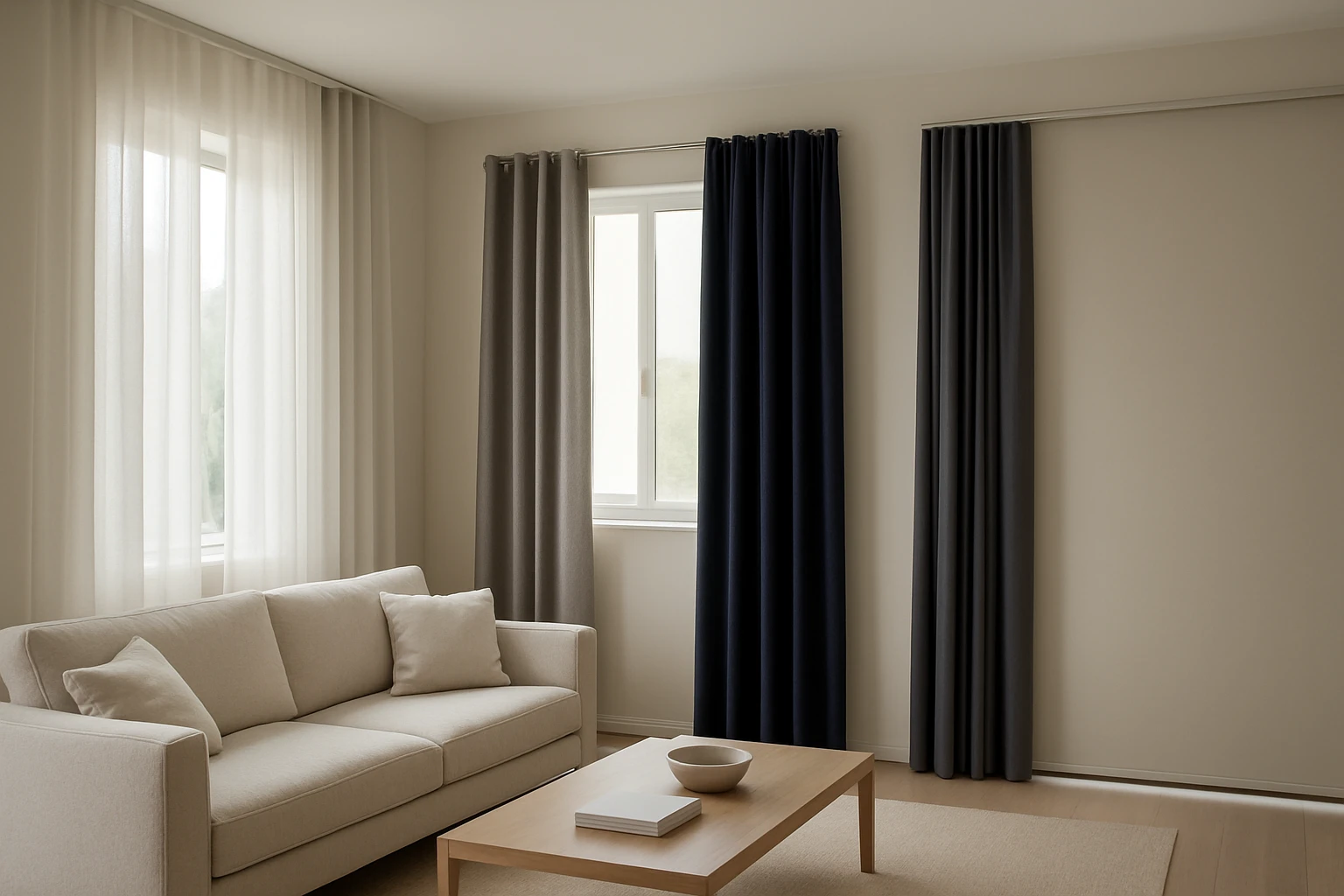
Start by thinking about what curtains need to do in each room. A bedroom needs darkness and some insulation. A living room often needs a softer look and flexible light control. A kitchen benefits from easy-clean fabrics that resist stains. Pick a style that fits the window shape and the room’s scale so the curtains look intentional and balanced.
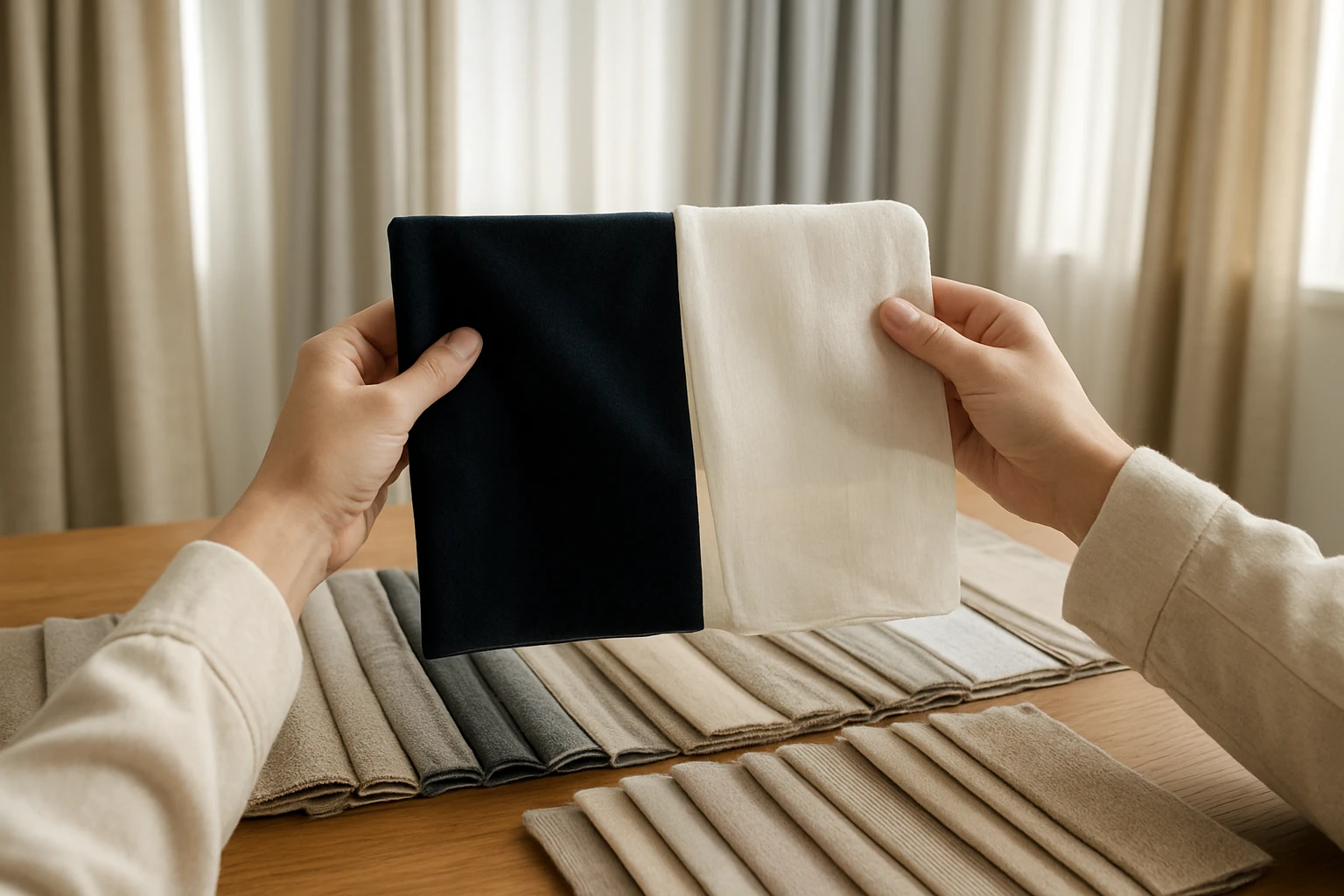
How to Match Curtains to Room Use
Bedroom Needs:
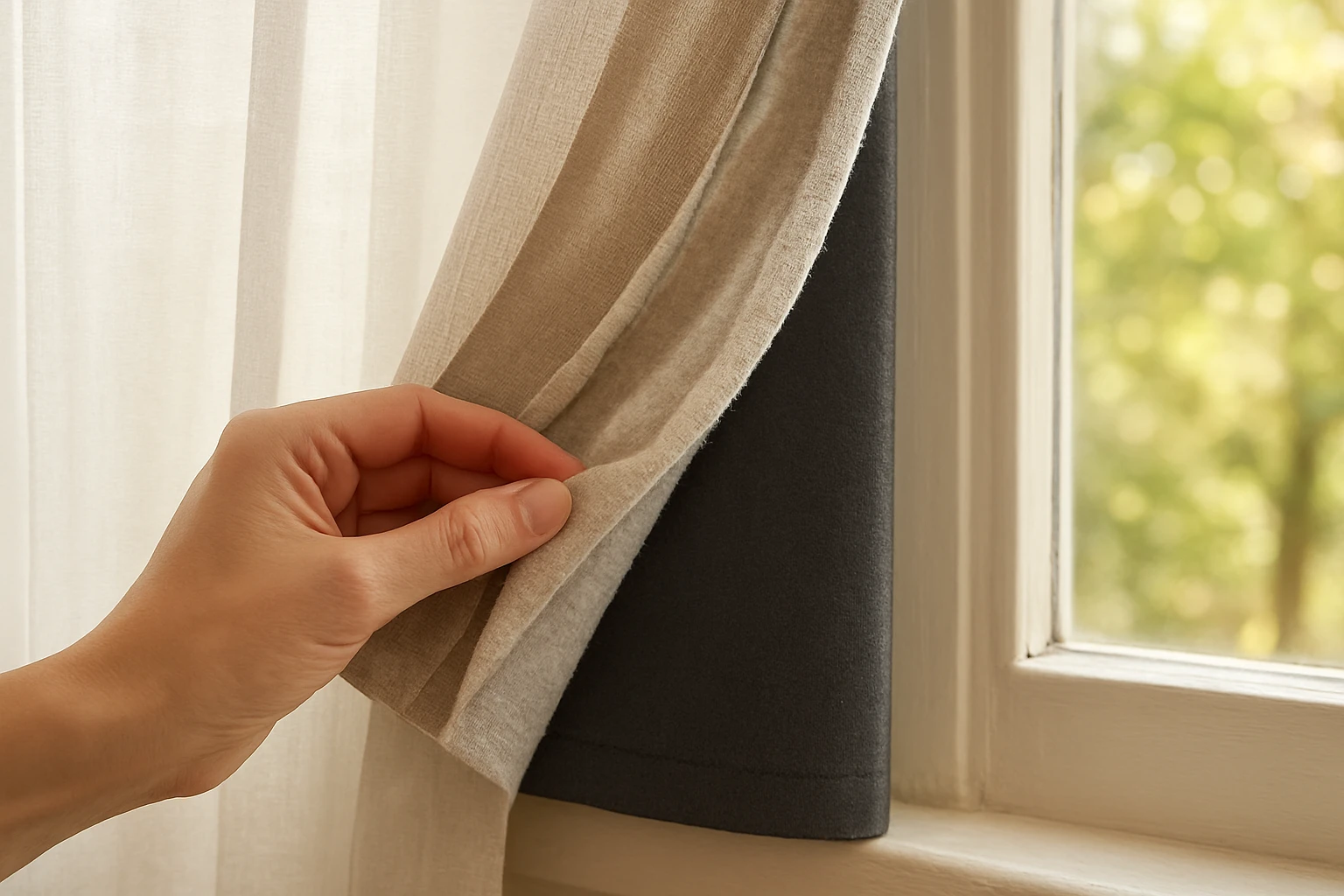
For bedrooms pick heavier fabrics or lined panels and consider blackout liners. That reduces light and helps with sleep and privacy.
Living Room Needs:
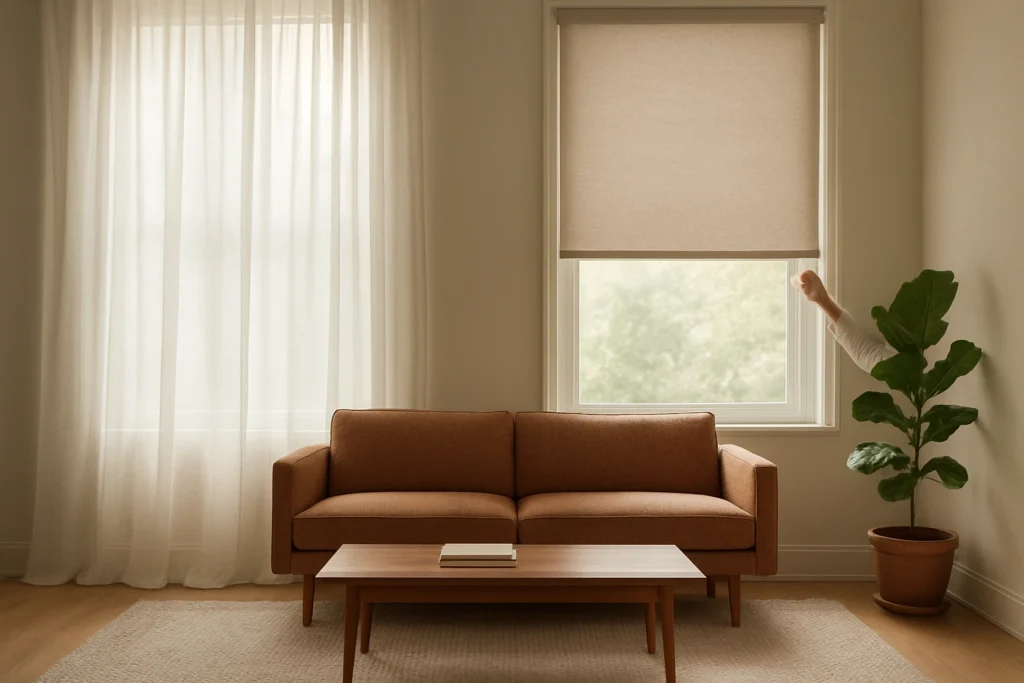
In living rooms use layers: a sheer for daylight and a heavier decorative panel for evenings. Layering gives flexible light control and a finished look.
Kitchen and Utility Needs:
Choose fabrics that are easy to wash and resist stains. Shorter lengths and rod pockets make cleaning easier and reduce fabric wear.
Curtain Fabrics and How They Perform
Different fabrics give different looks and functions. Below is a simple table to compare common home fabrics and their strengths.
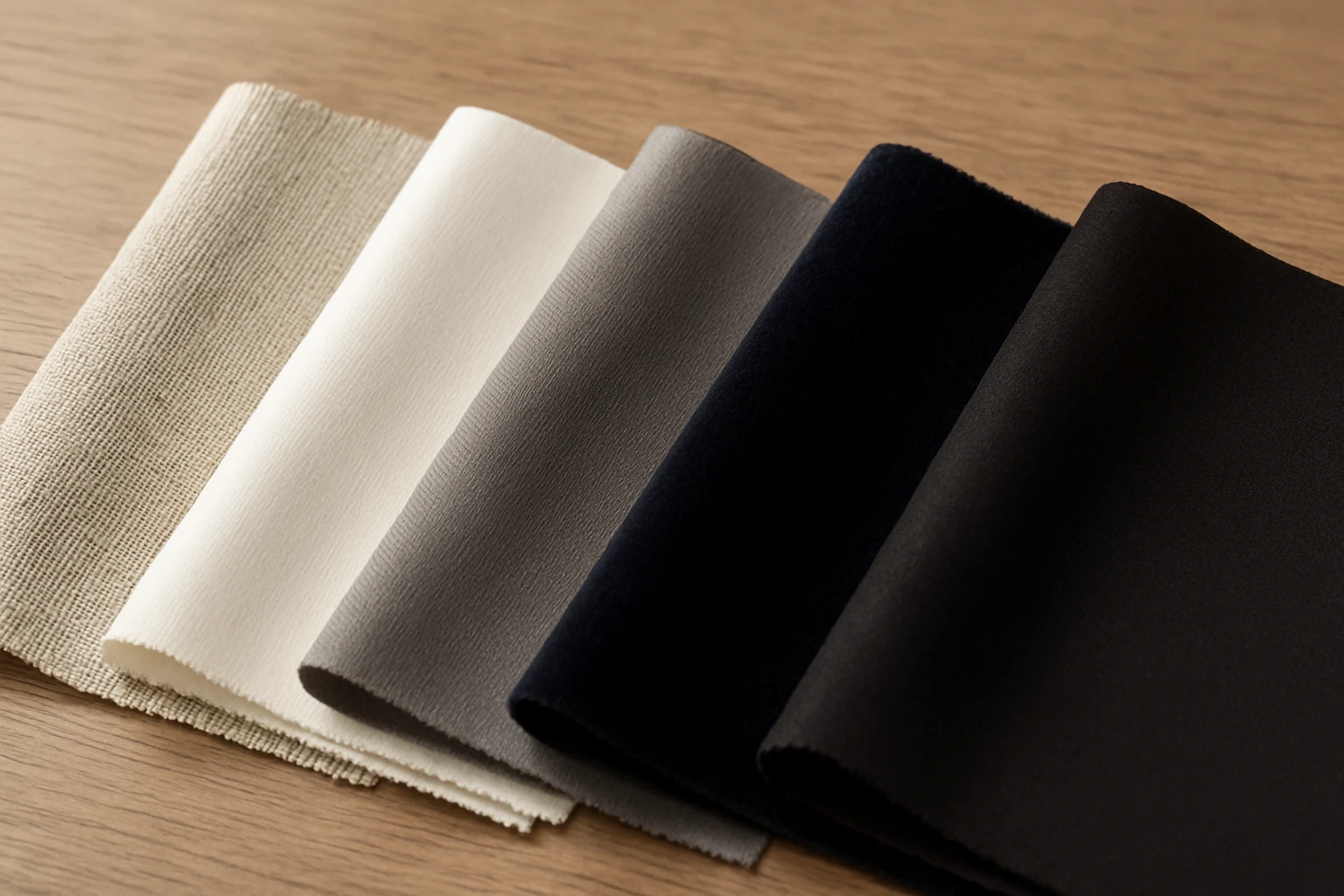
| Fabric | Look And Feel | Light Control | Care | Best Use |
|---|---|---|---|---|
| Linen or Linen Blend | Casual, textured, breathable | Low to medium | Gentle wash or dry clean | Living rooms, layered looks |
| Cotton or Cotton Blend | Crisp, versatile | Medium | Machine wash on gentle | Kitchens, casual spaces |
| Polyester / Synthetic | Durable, wrinkle resistant | Medium to high | Machine wash, fast drying | Budget-friendly homes |
| Velvet | Rich, heavy drape | High (with lining) | Dry clean recommended | Bedrooms, formal living rooms |
| Blackout Liner (attached or separate) | Thick backing, blocks light | 90 to 99% light reduction | Wipe or dry clean depending on fabric | Bedrooms, media rooms |
Fabric Notes
- Blackout fabrics block most visible light and improve privacy. They also add thermal resistance and reduce drafts near windows.
- Natural fabrics like linen breathe better and soften the room, but they may wrinkle more and need gentler cleaning.
- Homeowners often choose thicker fabrics for rooms used at night and lighter fabrics for rooms used during the day.
Styles and Heading Types
Style affects how curtains hang and how you operate them. Popular headings include eyelet, pencil pleat, pinch pleat, wave, and Roman curtains. Below we explain each and link to pages where you can see examples.
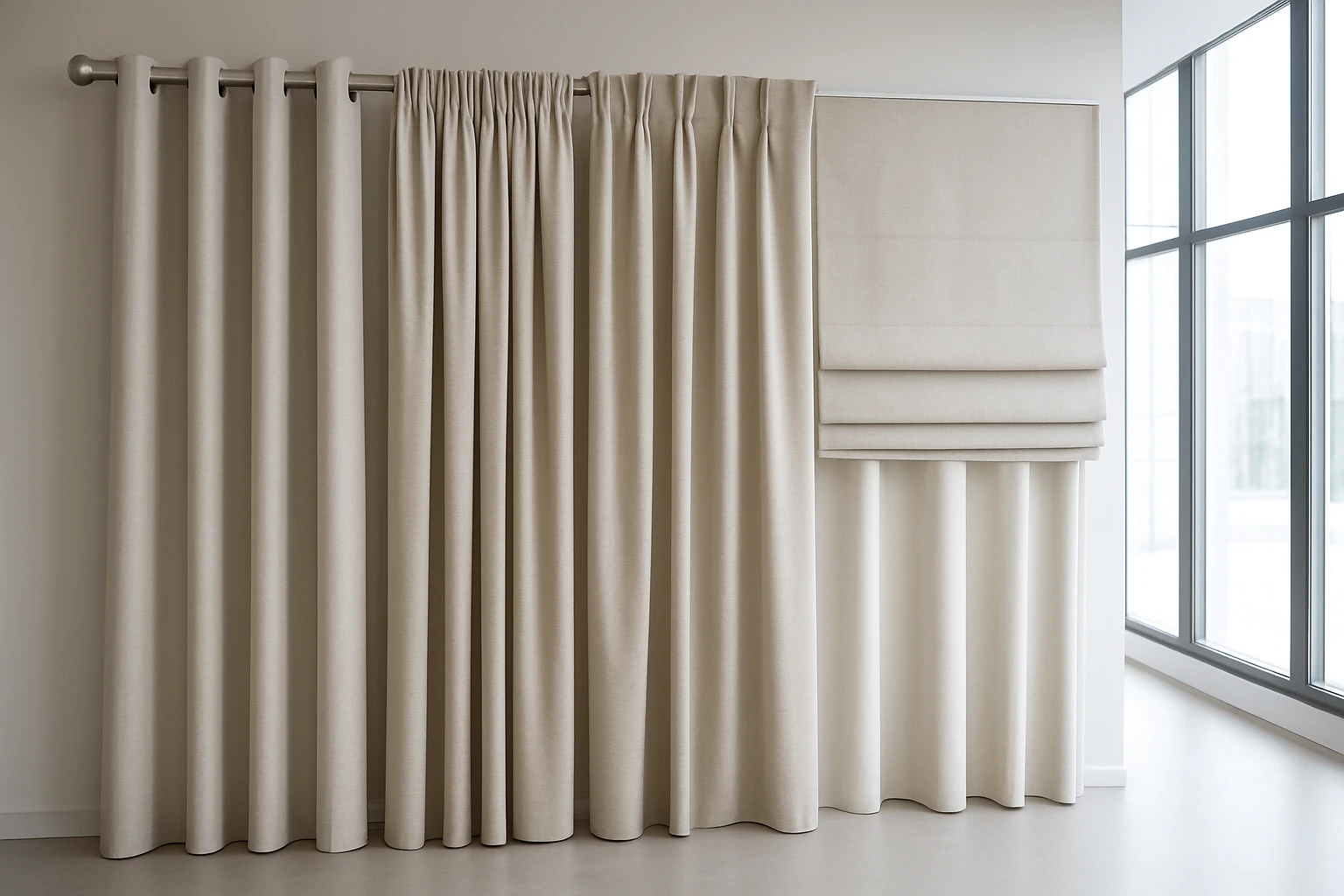
Common Heading Types and When to Use Them
Eyelet Curtains:
Eyelet curtains slide easily on a pole and form clean, modern folds. They suit contemporary rooms and medium-weight fabrics. See examples at Eyelet Curtains.
Pencil Pleat Curtains:
Pencil pleats give a gathered look and fit a wide range of rods. They are flexible and easy to install. More on those at Pencil Pleat Curtains.
Pinch Pleat Curtains:
Pinch pleats feel traditional and tailored. They work well with lined fabrics and heavier materials. See Pinch Pleat Curtains.
Wave Curtains:
Wave curtains give smooth, regular folds and work best on tracks. They have a modern, hotel-like look. Explore Wave Curtains.
Roman Curtains:
Roman curtains fold into neat horizontal pleats and are great for a tidy, fitted look on smaller windows. See Roman Curtains.
Speciality and Luxury Fabrics:
Velvet adds depth and helps dampen sound, while silk adds sheen and softness. For these looks see Velvet Curtains and Silk Curtains.
How to Measure for Perfect Fit
Measure carefully because small errors change the final look. Use a metal tape, write down every number, and double-check before ordering. This section gives a practical step-by-step and links to a detailed measuring guide.
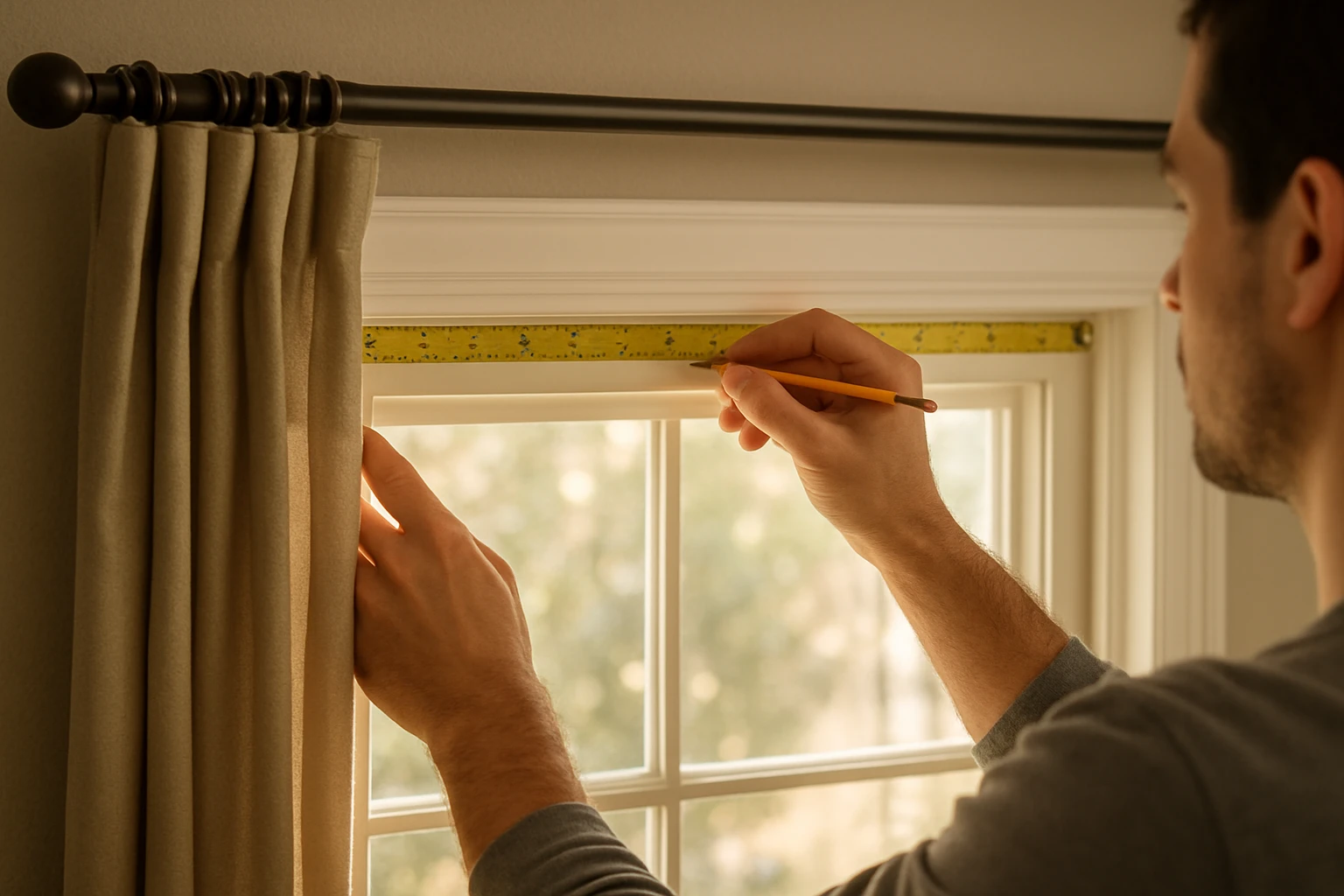
Measuring Steps
Take Width Measurements:
Measure the glass width and add for the frame and desired overlap. For a full look allow 10 to 20 cm extra on each side so curtains clear the window when open.
Take Drop Measurements:
Decide if the curtain will hover above the floor, touch it, or puddle. Standard choices are: 1 cm above the floor for a neat fit, or 2 to 5 cm puddling for a more luxurious look.
Decide Fullness:
Multiply the final width by 2 to 2.5 for gathered curtains. For a modern straight drape use 1.5 times fullness.
For a visual step guide see How to Measure for Curtains for Any Window Size.
Installation and Rods
Choosing the right rod or track matters as much as the fabric. A rod that projects correctly keeps curtains clear of radiators and handles.
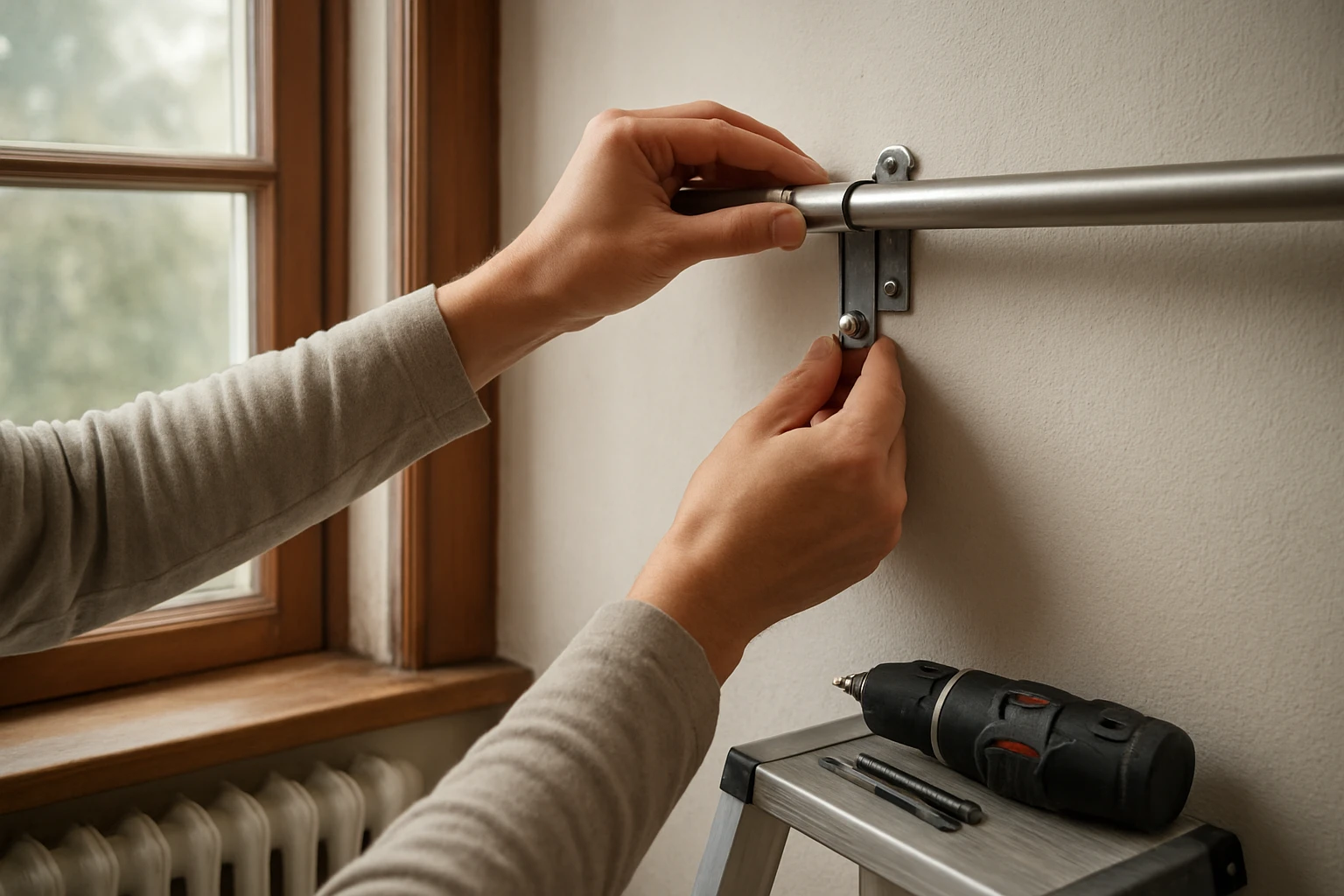
Rods, Tracks and Mounting Tips
Wall or Ceiling Mount:
Ceiling mounts work well for full-height curtains and help make ceilings feel taller. Wall mounts are common and suit most windows.
Rod Projection:
Keep rod projection 5 to 12 cm from the wall so curtains clear handles or radiators. In tight spaces use slim tracks.
Motorized Options:
For large or hard-to-reach windows, motorized curtains are practical and modern. They can link to smart home systems and help fabrics open and close evenly. View Motorized Curtains for options.
Light Control, Privacy and Insulation
Curtains affect daylight, privacy and thermal comfort. Lining, interlining, and a good fit all change performance.
How to Plan for Each Need
Daylight and View:
Use sheers to keep daylight and a view while cutting glare. Pair them with heavier panels for evening privacy.
Privacy:
If windows face a busy street, pick thicker fabric or a lined treatment to avoid silhouettes at night.
Insulation and Energy:
Heavy, lined curtains trap air and cut drafts. In many homes this cuts heat loss near windows and can lower energy use by a few percent depending on window quality.
Cleaning and Care
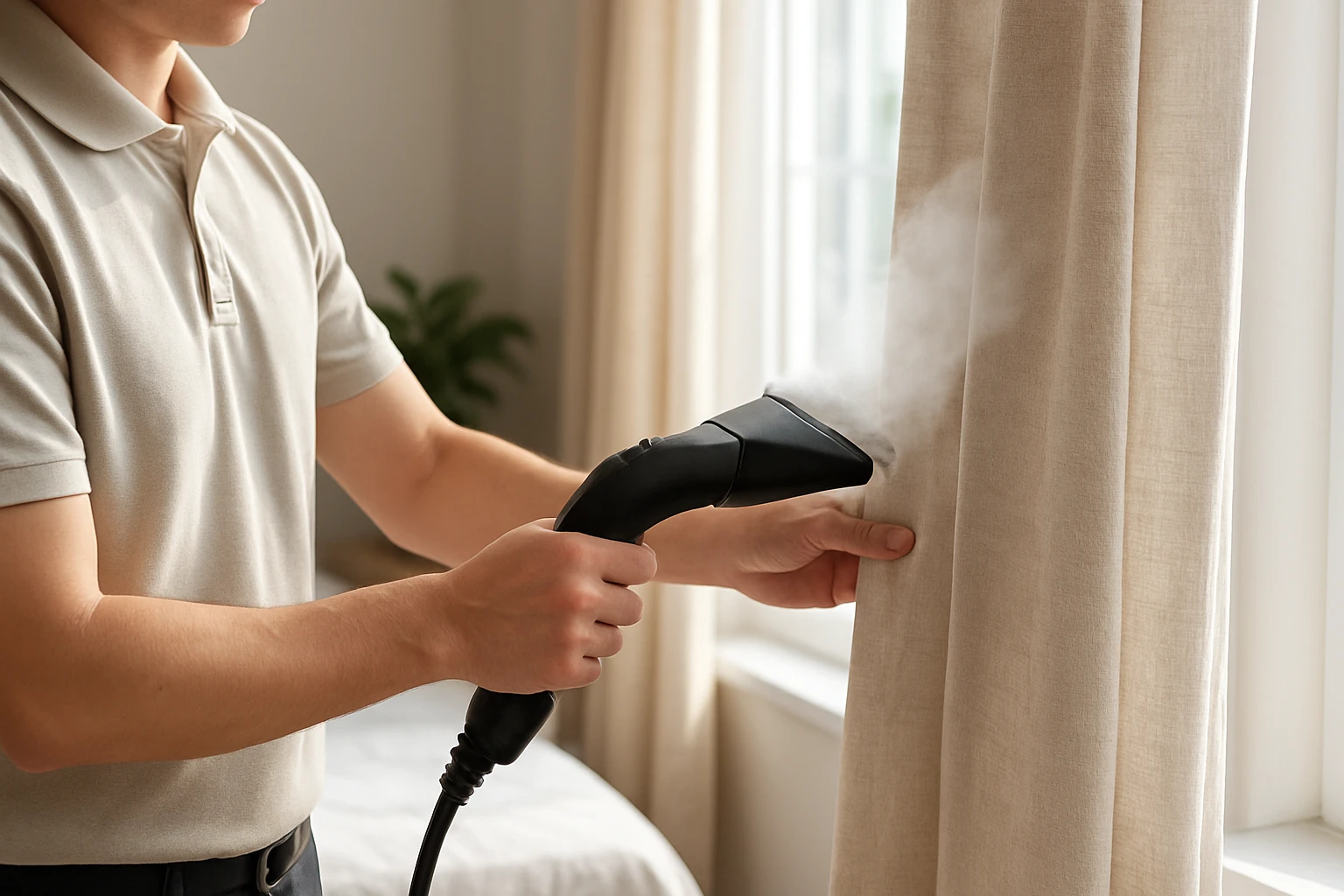
Different fabrics need different care. Follow labels and plan routine cleaning to keep curtains fresh and extend fabric life.
Care Tips
Regular Dusting:
Vacuum with a soft brush attachment or shake out lighter fabrics monthly. This prevents dust build-up and keeps colors fresher.
Washing and Dry Cleaning:
Check the fabric label. Many heavy or lined fabrics need dry cleaning while cotton and synthetics may be machine washable on gentle cycles.
Repair and Rehang:
Inspect headings and hems each year. A small stitch repair stops a larger tear later. Early fixes save on replacement costs.
Budgeting and Cost Guide
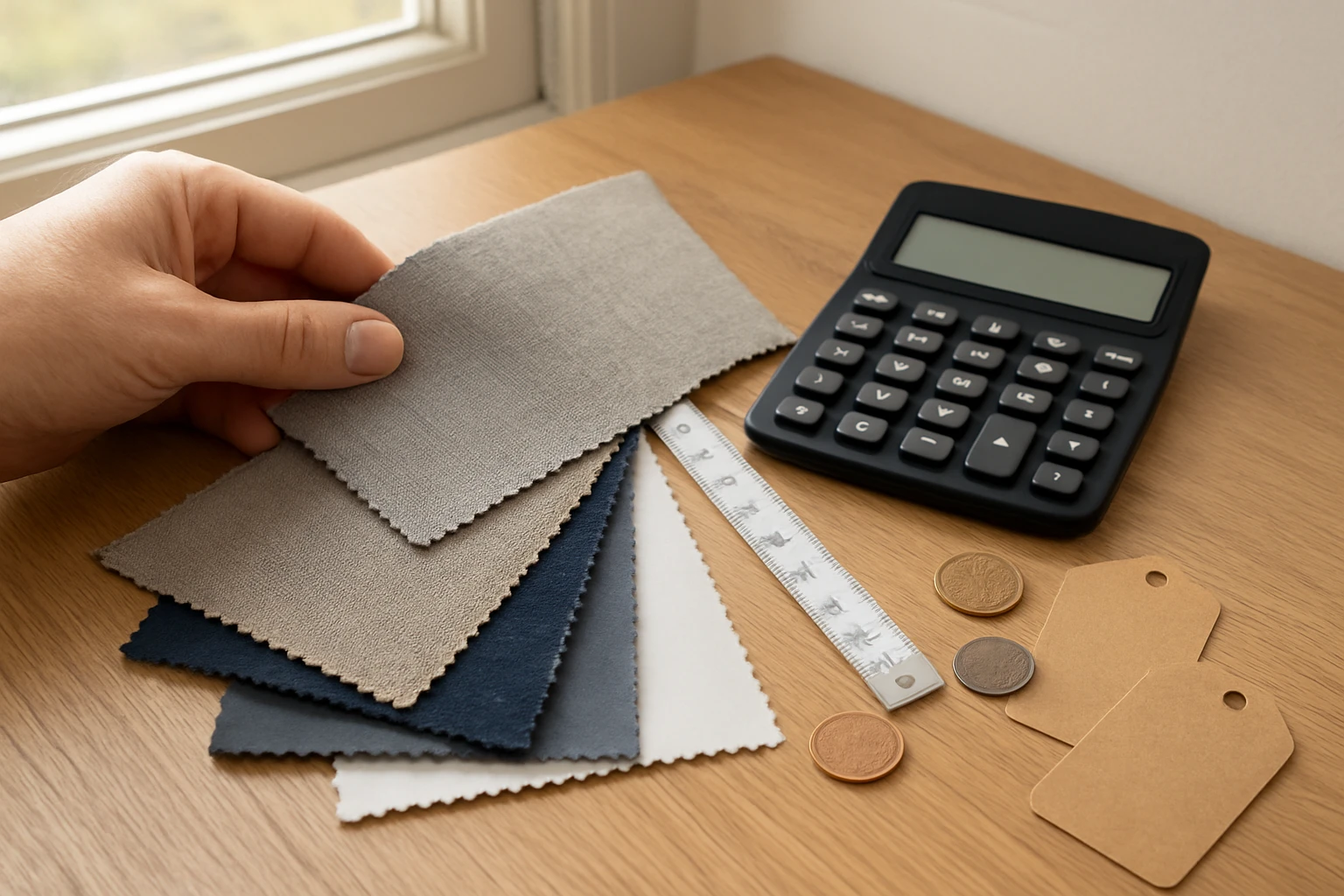
Curtain cost depends on fabric, lining, heading type, custom work, and fittings. Below is a simple cost guideline to help plan a budget.
| Item | Budget Range (Approx) | Notes |
|---|---|---|
| Ready-made panels | Low to moderate | Good for standard windows and quick installs |
| Custom panels by fabric | Moderate to high | Allows exact fit and premium fabrics |
| Lining and interlining | Extra cost | Adds light control and insulation |
| Motorized systems | Moderate to high | Adds convenience and higher cost |
Many homeowners find a practical mix of fabric quality and correct fit gives the best value. If budget is tight, start with sturdy rods and mid-weight fabrics, then add lining later.
Popular Looks and Trends for Home Curtains
Neutral colors and textured fabrics remain popular because they work with many styles. An accent color or a bold curtain panel can create a focal point without committing to wallpaper.

For ideas on matching curtains to wall finishes see How to Choose Wallpaper for Your Living Room. If you want layered light control, read How to Layer Sheer and Blackout Curtains for Better Light Control.
When to Hire a Professional
Hire a professional when windows are large, oddly shaped, or when you want a tailored finish such as full-length pinch pleats or motorized tracks. Professionals can advise on fabric weight, lining options, and correct rod projection.

If you want to compare local choices and installers, our region guide can help. The Best Curtains and Blinds in Dubai 2026: Buying Guide collects local options and makers.
Quick Comparison: Common Home Curtain Types
| Style | Look | Ease Of Use | Best For |
|---|---|---|---|
| Sheer + Panel Layer | Soft, flexible | Easy to operate | Living rooms, dining rooms |
| Blackout Panels | Dark, private | Medium | Bedrooms, home theatres |
| Roman Shades | Tailored, neat | Manual lift | Smaller windows, kitchens |
| Motorized Curtains | Sleek, convenient | Very easy | Hard-to-reach or large windows |
Final Buying Checklist
- Measure twice and decide fullness and drop.
- Match fabric to room use and cleaning needs.
- Choose a heading that suits the rod or track you plan to use.
- Decide on lining for light control and insulation.
- Compare custom cost versus ready-made options and pick a trusted fitter.
If you want step-by-step help measuring or comparing options, see our detailed measurement guide and layering guide linked above.
Frequently Asked Questions
How Do I Choose the Right Curtain Fabric for Each Room?
Pick thicker, lined fabrics like velvet or blackout for bedrooms to block light and add warmth, and pick lighter fabrics like linen or sheers for living rooms to keep daylight. For kitchens choose washable, stain-resistant blends.
How Wide Should My Curtains Be Compared to the Window?
Aim for curtain fullness of about 2 to 2.5 times the window width for a gathered look, and about 1.5 times for a modern straight drape. Include extra width so curtains clear the window when open.
Can Curtains Save on Heating or Cooling Bills?
Yes. Heavy, lined curtains reduce drafts near windows and add insulation. They do not replace double glazing but they help cut heat loss and can improve comfort near windows.
How Do I Measure the Drop for Floor-length Curtains?
Measure from the rod or track position down to 1 cm above the floor for a neat fit, or allow 2 to 5 cm extra if you prefer a small puddle. Always measure both sides and the middle and use the longest measurement.
Are Motorized Curtains Worth the Cost?
Motorized curtains are worth it for very large windows, high ceilings, or hard-to-reach locations. They add convenience and even fabric movement, which can extend fabric life in busy homes.
How Often Should Curtains Be Cleaned?
Dust or vacuum lighter curtains monthly and wash or dry clean according to the fabric label. For busy homes or kitchens a more frequent clean may be needed to remove stains and odors.