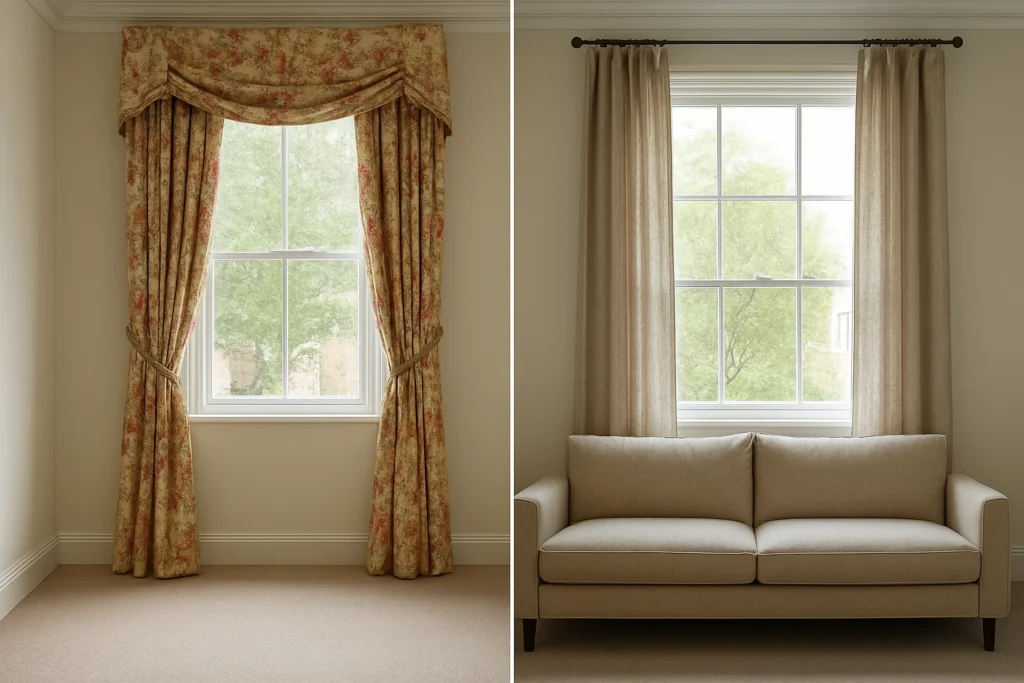
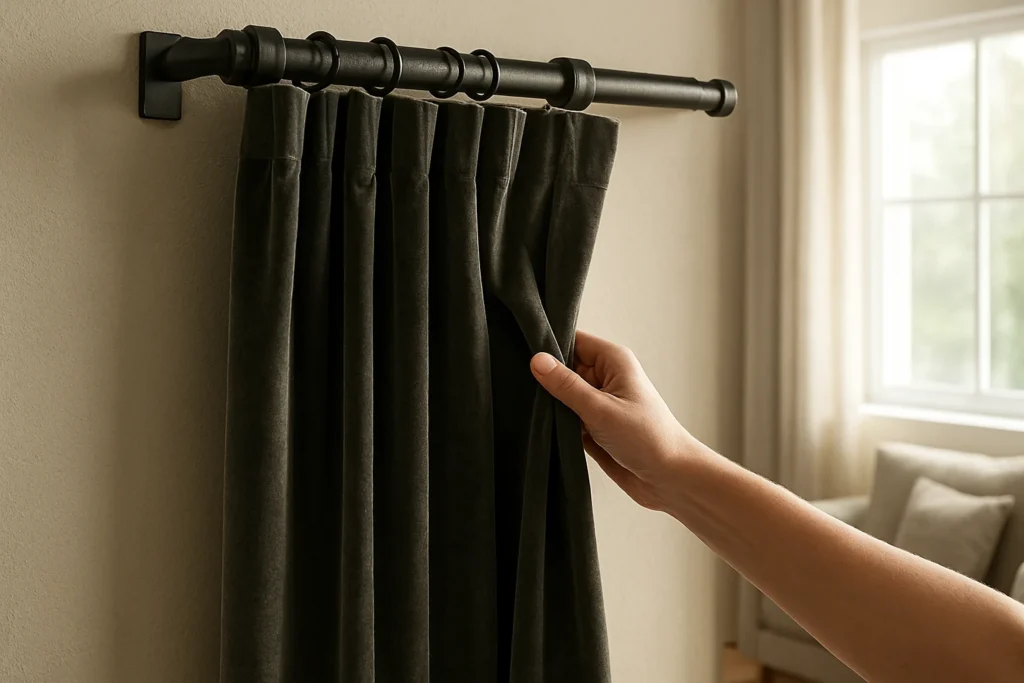
For heavy curtains choose a heavy duty metal rod or a tracked system with solid brackets and a center support. Mount brackets into studs or use high quality wall anchors. If you want the best curtain rod for heavy curtains, pick one rated for the total load including hardware. A properly sized rod rated for the curtain weight plus hardware and supports prevents sag and reduces wear on fabric and fittings.
Key Statistics
- Typical curtain panel weights seen in product specs: lightweight 1 to 3 kg (2 to 7 lb), medium 3 to 6 kg (7 to 13 lb), heavy 6 to 12 kg (13 to 26 lb). These reflect common fabric types such as cotton blends, blackout linings, and velvet.
- Common rod capacity ranges from product labels: standard decorative rods 9 to 18 kg (20 to 40 lb), heavy duty steel rods 36 to 68 kg (80 to 150 lb). Check the manufacturer rating and add a 20 to 30 percent safety margin.
- Recommend center support spacing for heavy curtains: every 90 to 120 cm (35 to 47 inches) for long spans over 2 m (78 inches).
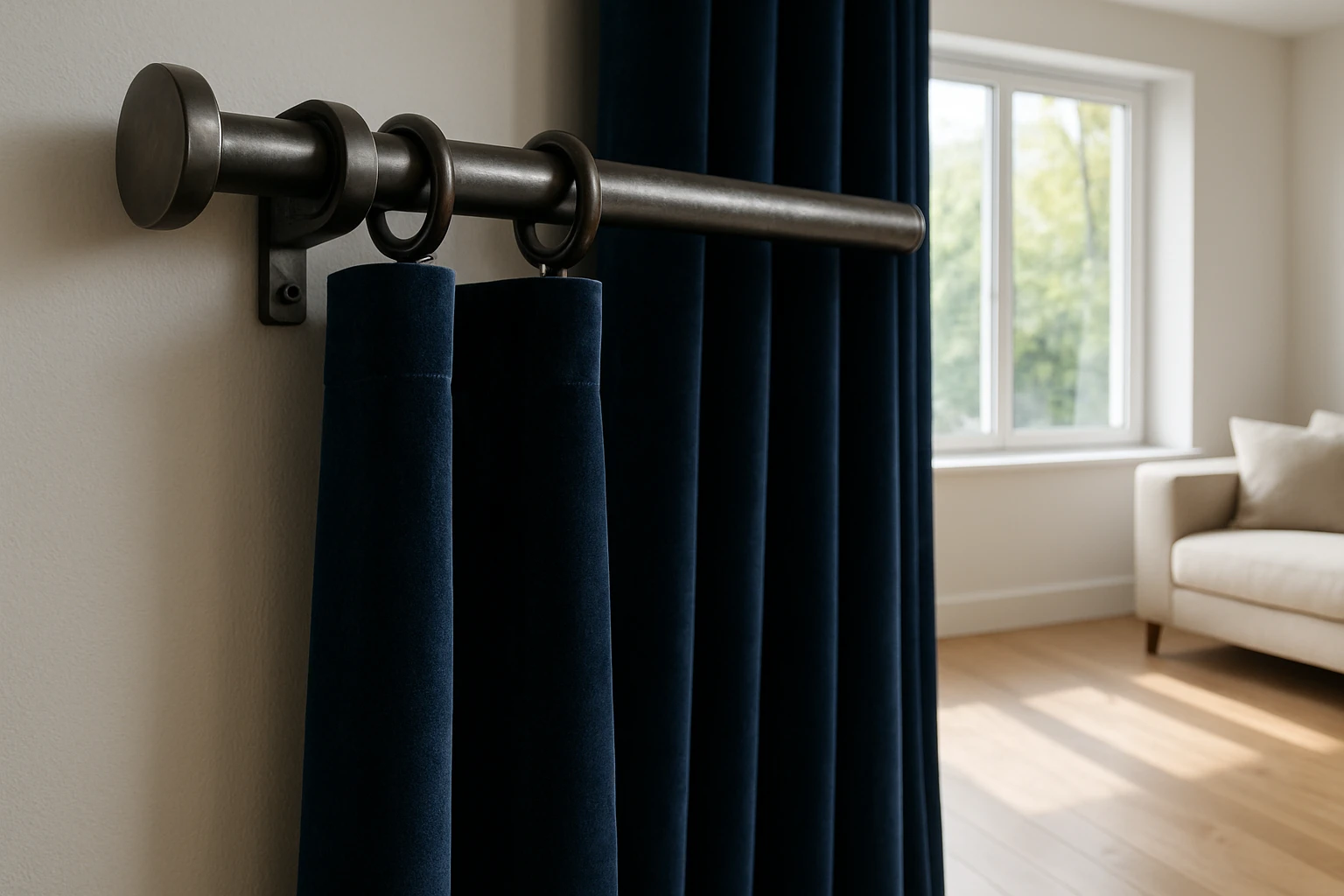
Heavy curtains need more than a pretty rod. A good rod holds the fabric weight, opens and closes smoothly, and keeps the line straight so panels do not drag. The most common mistake is buying a decorative rod that cannot support the curtain once lining and rings are added. The rest of this article shows how to choose the right rod, how much load to plan for, and how to install and maintain the system so it lasts.
Why Heavy Curtains Need a Strong Rod
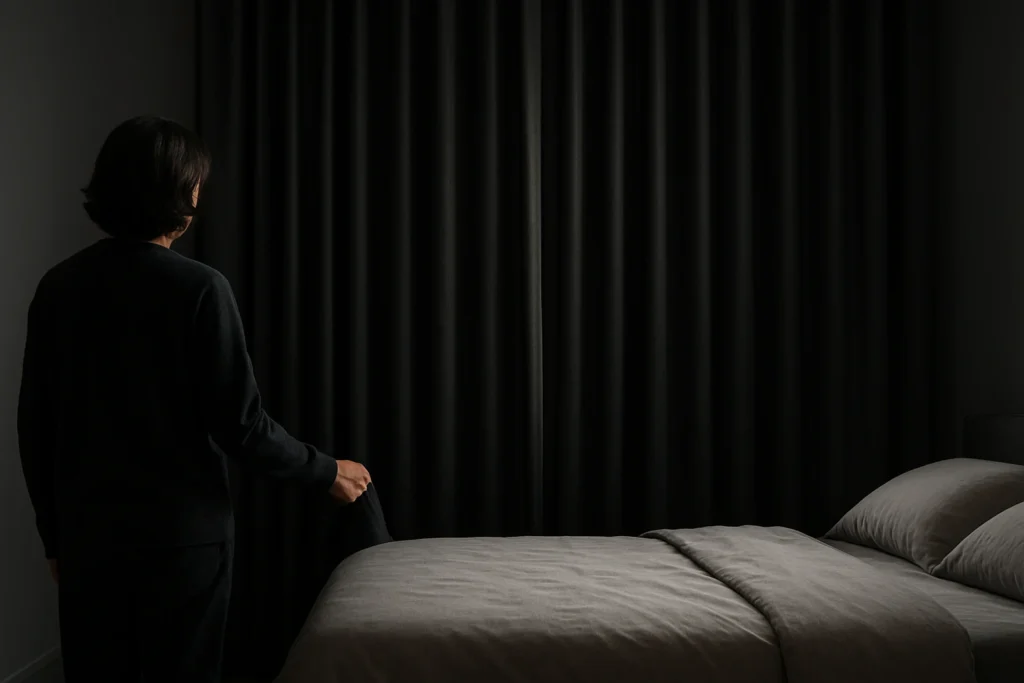
Heavy curtains add insulation, block light, and look luxurious. That weight puts constant downward and sideways force on the rod and brackets. If the rod or fixings are not strong enough you will see sag, noisy operation, and stress on the fabric where it meets the heading. Choose a rod rated for the total loaded weight plus hardware and plan support points where the rod meets load-bearing anchors.
What Counts Toward Total Weight
- Fabric weight per panel, including lining and interlining.
- Rings, hooks, and heading tape or pleats.
- Any decorative weights sewn into the hem.
- The rod and finials themselves add a small fixed load.
A simple approach is to read the curtain label or weigh a finished panel, add the hardware weight, then choose a rod with a rated capacity at least 20 to 30 percent higher than that total.
Types of Curtain Rods for Heavy Curtains
Different rod systems suit different needs. Choose based on load, window width, style, and whether you need a motor or a track.
Pole Rods
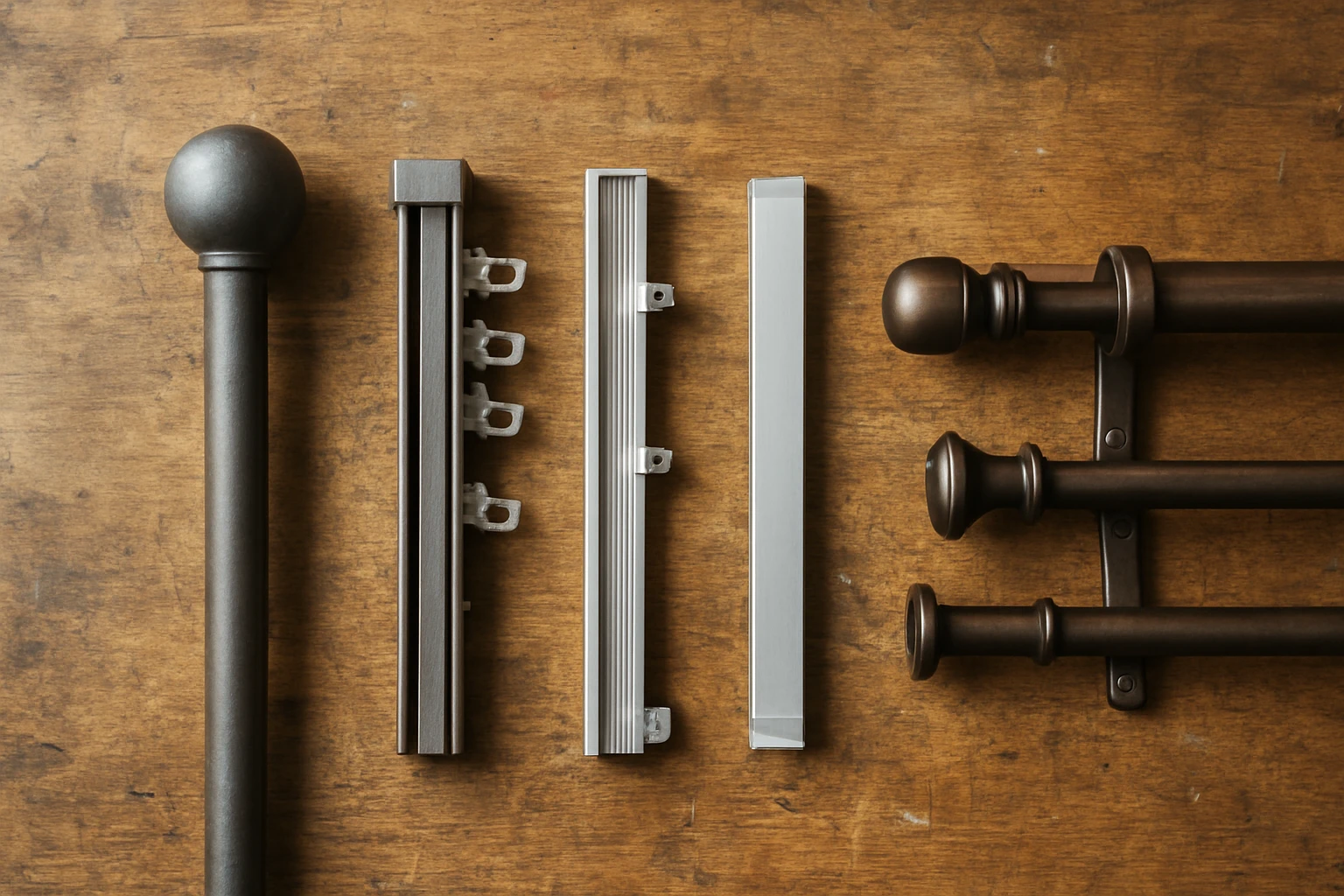
Pole rods are solid tubes in steel, aluminium, or timber with end brackets and center supports. For heavy curtains pick thick-walled steel or tubular iron rods with matching center supports. They are easy to style with finials and work well for pleated headings.
Traverse Tracks
Traverse or glider tracks use carriers and pulley operation. They spread the load along the track. Heavy-duty tracks made from extruded aluminium or steel are ideal for wide spans and motorized systems.
Ceiling Tracks
Ceiling-mounted tracks fix to the soffit and can handle large loads when attached to joists. They work well where wall space is limited or in commercial settings such as theaters.
Tension Rods
Tension rods are not recommended for heavy curtains. Their typical capacity is low and they can slip or damage the window frame under sustained load.
Curtain Rings and Heading Types
Choose heading styles that spread the load. Wide tape headings, pinch pleats, and pencil pleats concentrate load at the top. Adding extra hooks per panel helps distribute weight. For heavy fabric, a sewn-in carrying tape with multiple hooks is safer than a single-tab heading.
- For pinch pleat curtains see Pinch Pleat Curtains.
- For eyelet styles see Eyelet Curtains.
Materials and Weight Capacity
Rod material and diameter determine stiffness and strength. Compare common materials when planning for heavy curtains.
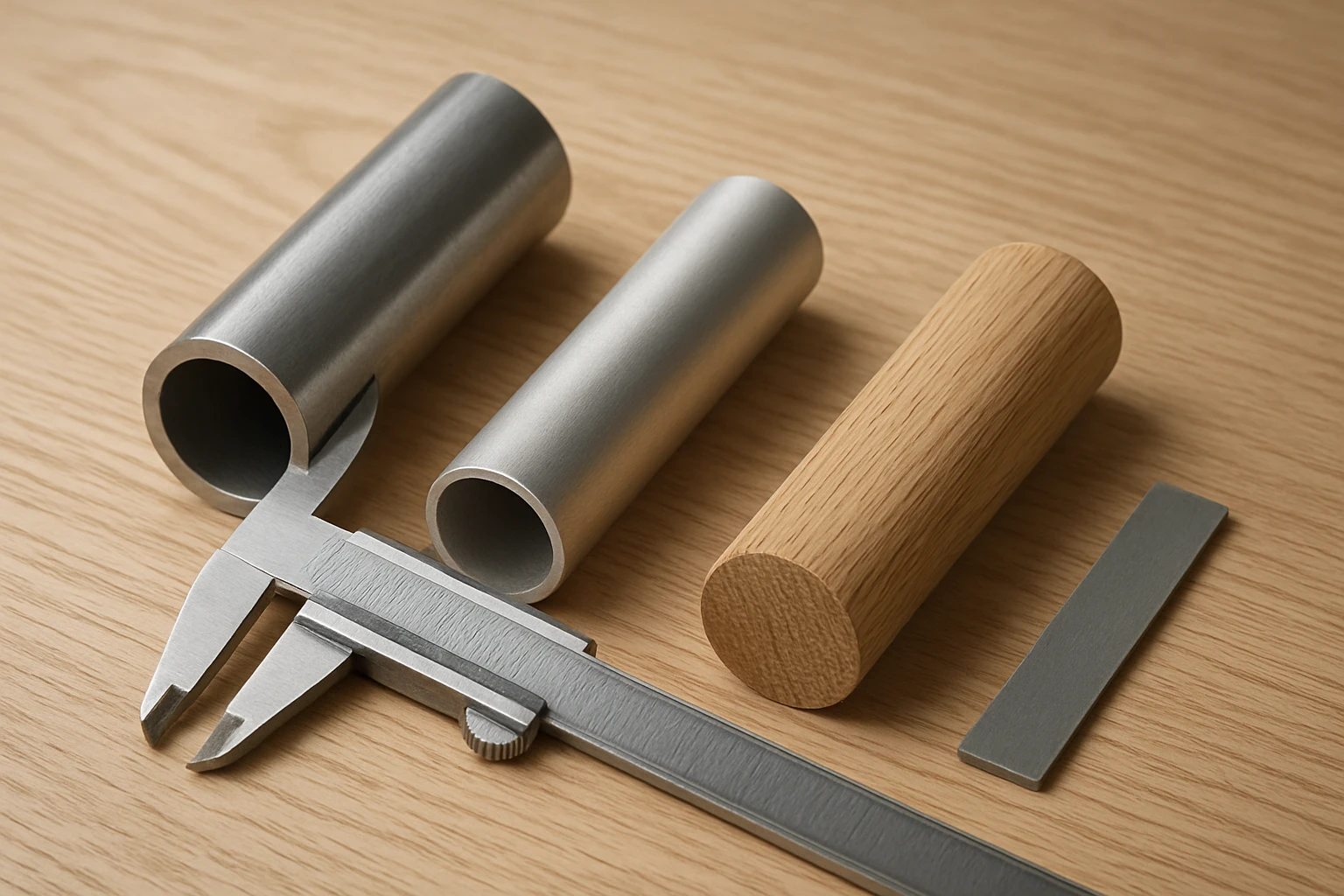
Common Materials and Typical Use
- Steel: Best for maximum strength and long spans, minimal flex, good for very heavy velvet or layered blackout.
- Aluminium: Lighter than steel and resistant to corrosion, suitable for medium to heavy curtains when tube wall thickness is adequate.
- Timber: Attractive finish but needs larger diameter and careful support for heavy loads.
- Extruded aluminium track: Good when you want carriers and gliders or motorized options.
Capacity Reference Table
| Rod Type | Typical Diameter | Typical Rated Capacity per Meter | Best For |
|---|---|---|---|
| Steel Tube Pole | 25–35 mm | 18–68 kg (40–150 lb) | Very heavy velvet, layered thermal curtains |
| Thick-Walled Aluminium Pole | 20–30 mm | 9–36 kg (20–80 lb) | Heavy cotton, blackout panels |
| Extruded Aluminium Track | n/a (profile) | 20–68 kg (45–150 lb) per linear meter with good fixings | Wide spans, motorized systems |
| Timber Pole | 28–40 mm | 9–36 kg (20–80 lb) with frequent supports | Medium to heavy curtains with decorative finish |
These ranges are typical and appear on manufacturer specification sheets. Always check the exact rated capacity before buying.
How to Measure for Heavy Curtains
Accurate measurement is essential so the rod has the right length and support spacing.
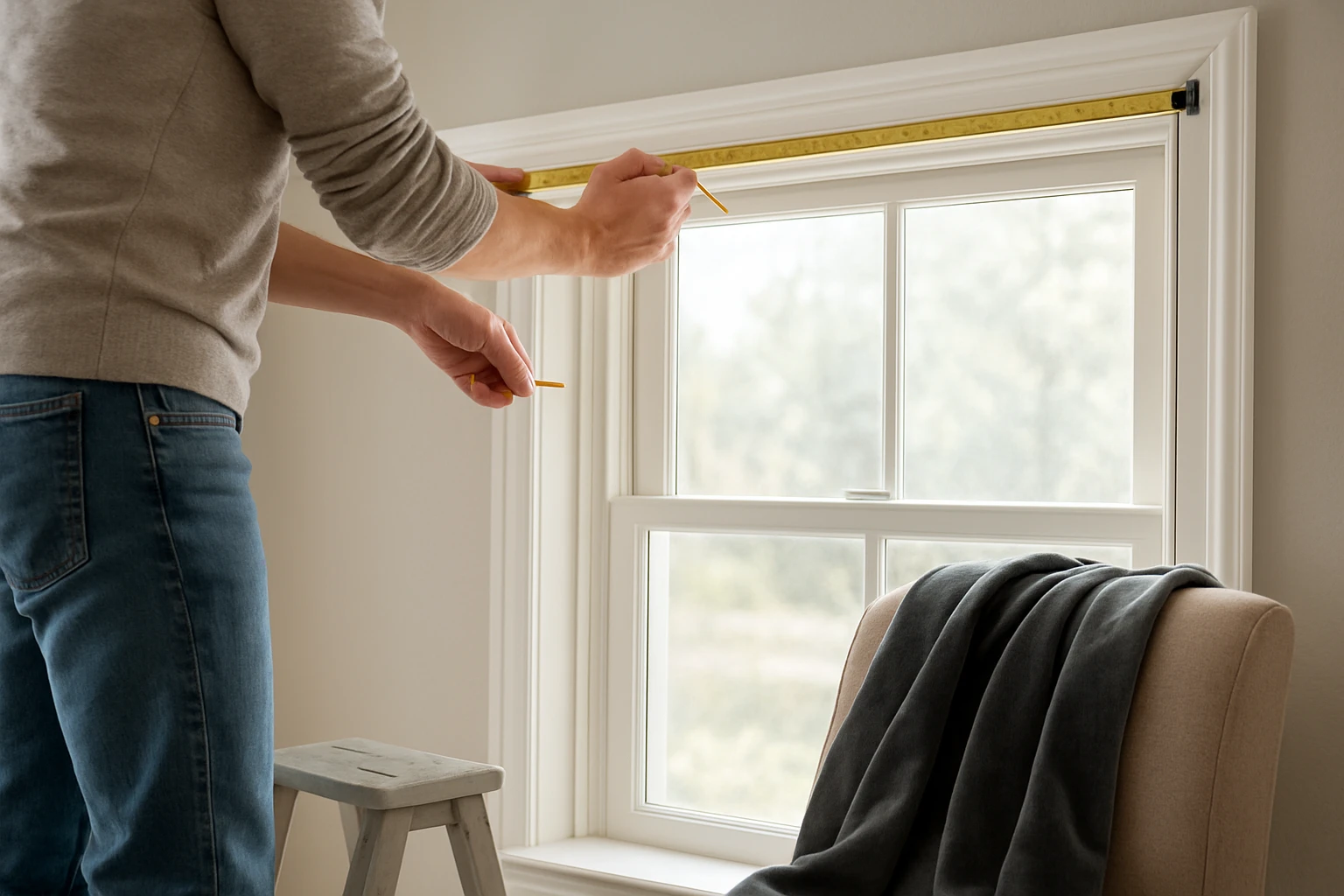
Measure the Curtain Weight:
- Measure one finished panel and weigh it on a kitchen scale if possible.
- Multiply by the number of panels.
- Add estimated hardware weight: rings 0.02 to 0.1 kg each, hooks 0.01 to 0.05 kg each.
For help with measurements and fit, see How to Measure for Curtains for Any Window Size.
Width and Support Planning
- Rod length should extend 10 to 15 cm (4 to 6 inches) beyond each side of the window for stackback.
- For spans over 2 m place center supports every 90 to 120 cm.
- For very wide tracks use multiple fixed brackets or a center bearing bracket at the midpoint.
Step by Step Installation for Heavy Rods
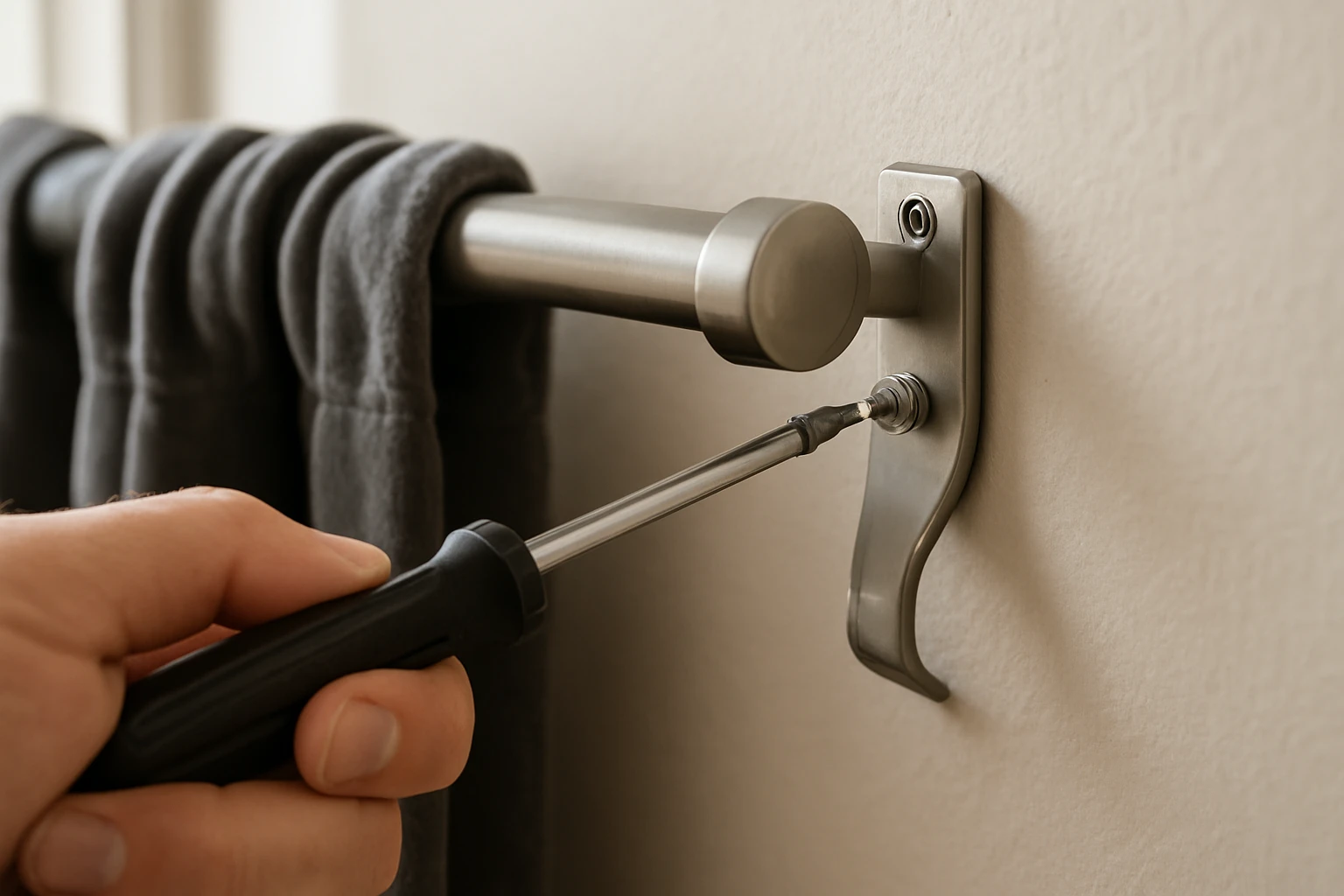
Install with good fixings and check wall structure. This section includes a photo of the actual installation action.
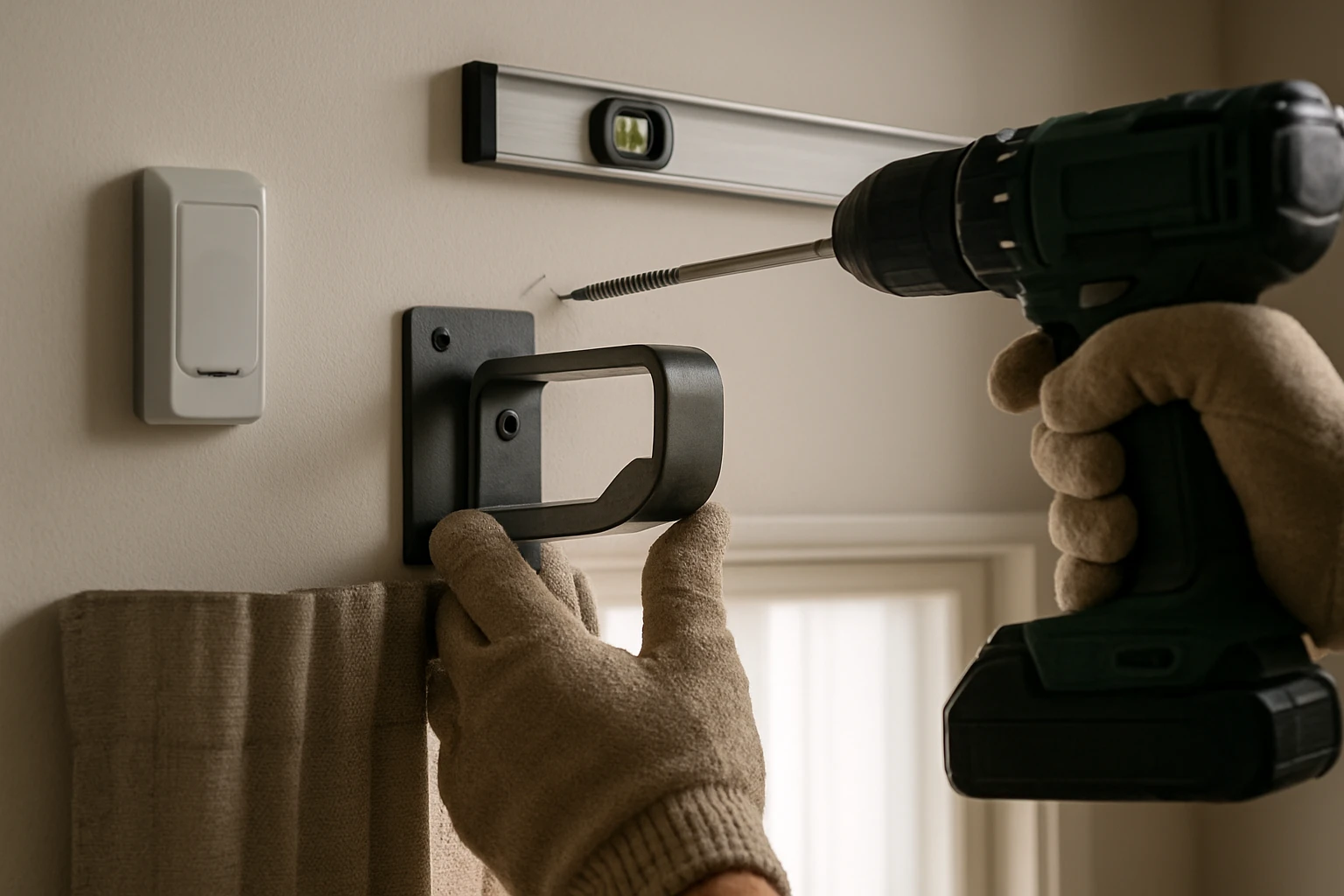
Tools and Materials
Tool Checklist:
- Cordless drill with masonry and wood bits.
- Stud finder and spirit level.
- Appropriate wall anchors or wood screws.
- Tape measure and pencil.
- Screwdriver and wrench for bracket hardware.
Materials Checklist:
- Rated heavy duty rod or track.
- Strong brackets and center supports.
- Rings, gliders, or hooks rated for the fabric weight.
Installation Steps
Step 1 Mark Bracket Positions:
Measure and mark where the brackets will go. Make sure the outer brackets sit slightly outside the window and that at least one bracket aligns with a stud if possible.
Step 2 Locate Studs and Choose Fixings:
Use a stud finder and plan for wood screws into studs. For hollow block or masonry use heavy duty wall anchors rated for the load. When studs are not available use toggle bolts or chemical anchors rated for the load.
Step 3 Drill and Fit Brackets:
Drill pilot holes, fit anchors if needed, and secure the brackets. Tighten hardware and use a level to confirm the rod is straight.
Step 4 Fit Rod and Add Center Supports:
Place the rod and add center supports before hanging the curtains so you can adjust the spacing. For long rods fit a center bearing bracket at the midpoint.
Step 5 Hang Curtains and Test Operation:
Place rings or gliders, hang the panels, and open and close several times to check for smooth movement and no binding. Re-tighten any loose fixings after a day of use.
For a quick primer on general hanging technique see How to Hang Curtains: Measure, Mount, and Perfect the Fit.
Motorized Options for Heavy Curtains
Motorized systems are common for very heavy curtains because they remove manual strain and spread the load across a track and motor. Choose a motor and track rated for your curtain weight and check power and control options.
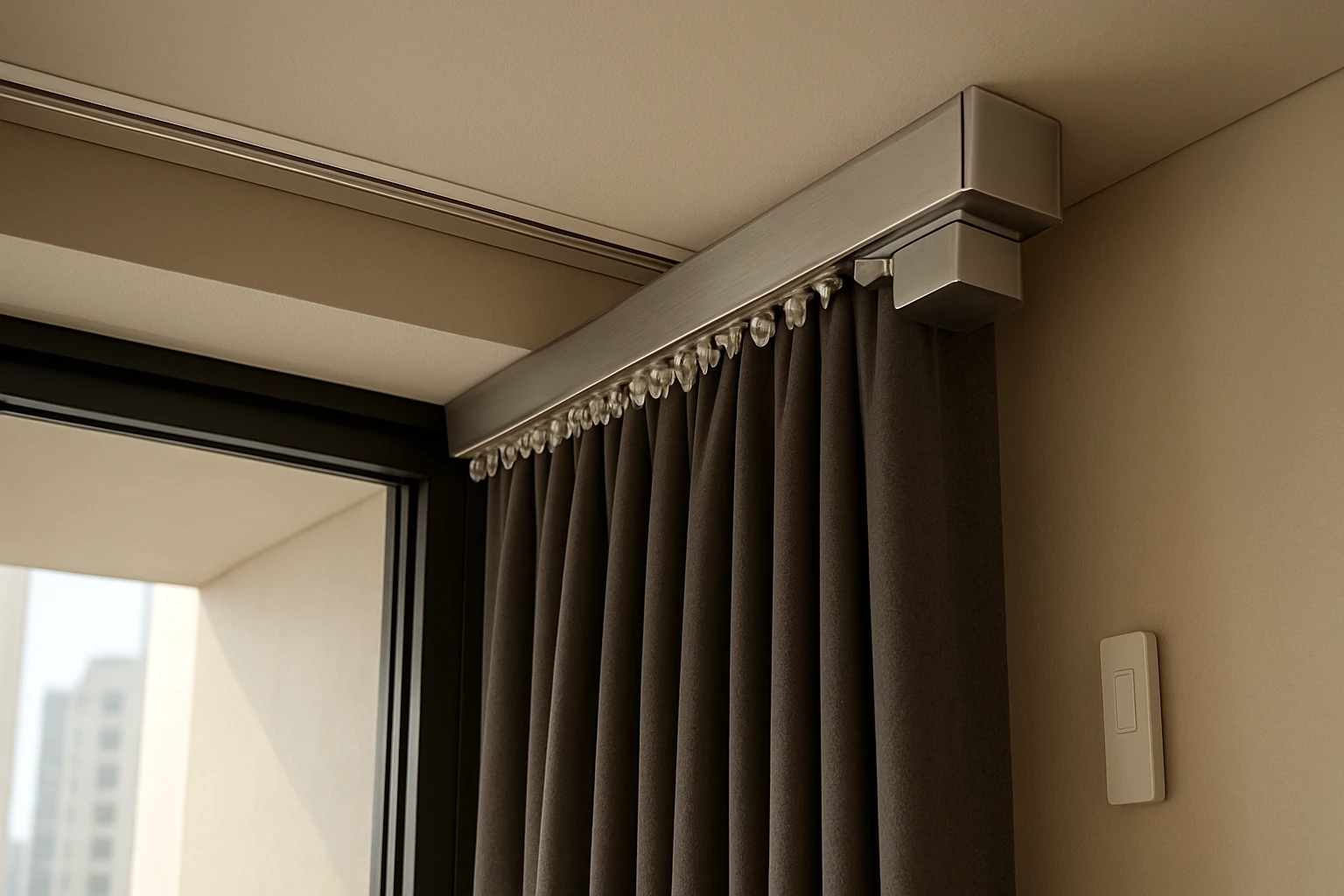
Often the convenience and longer life of a motorized track make the higher upfront cost worth it. For more on motorized systems in the local market see Motorized & Smart Curtains Dubai: Cost, Installation and Best Options. Also review the vendor specification for torque, track type, and recommended maintenance schedules.
Maintenance and Troubleshooting
Routine checks keep the system working well. Inspect the fixings, supports, and gliders every six months and after any storm or building movement.
Common Problems and Fixes
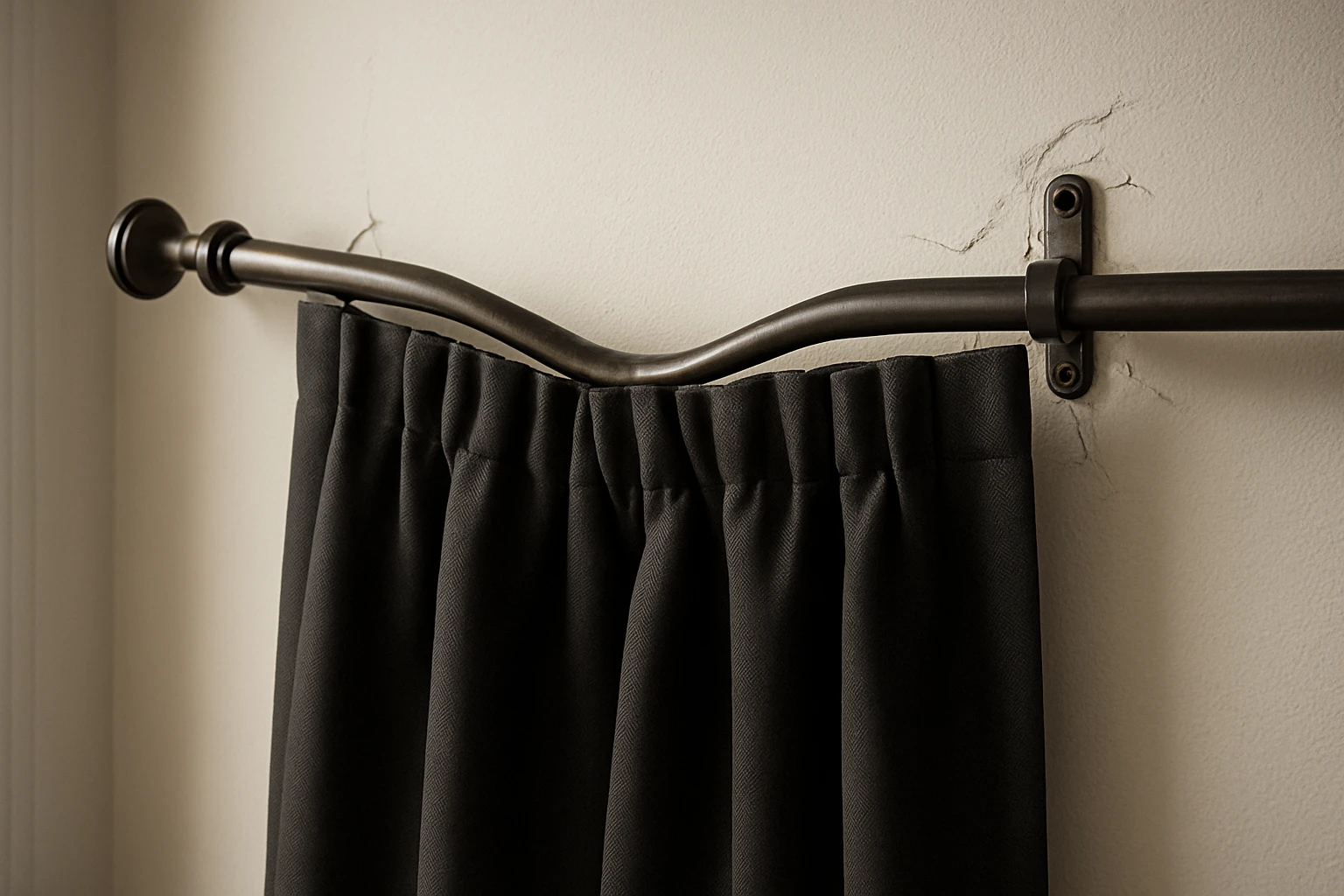
- Sagging center: add a center support or stronger bracket.
- Noisy operation: clean the track, replace worn gliders, or use a manufacturer-approved lubricant.
- Loose brackets: replace screws with longer or higher grade fasteners and confirm anchors are in good condition.
If you see fabric wear at the heading, reduce friction by adding more rings or switching to gliders that move smoothly along a track.
Buying Checklist for Heavy Curtain Rods
Before you buy, tick these items to reduce returns and surprises.

- Confirm total curtain weight and add 20 to 30 percent safety margin.
- Choose a rod or track rated above that margin.
- Plan bracket positions and check for studs or suitable anchors.
- Decide on manual or motorized operation and verify power and clearance needs.
- Check return policy and warranty for both rod and installation work.
- For luxury heavy fabrics like velvet consider professional installation and ask about specialist gliders or carriers.
If you want a local supplier or showroom reference, Curtains and Blind recommends vendors and installation services on their Home page.
Related Curtain Types and When They Matter
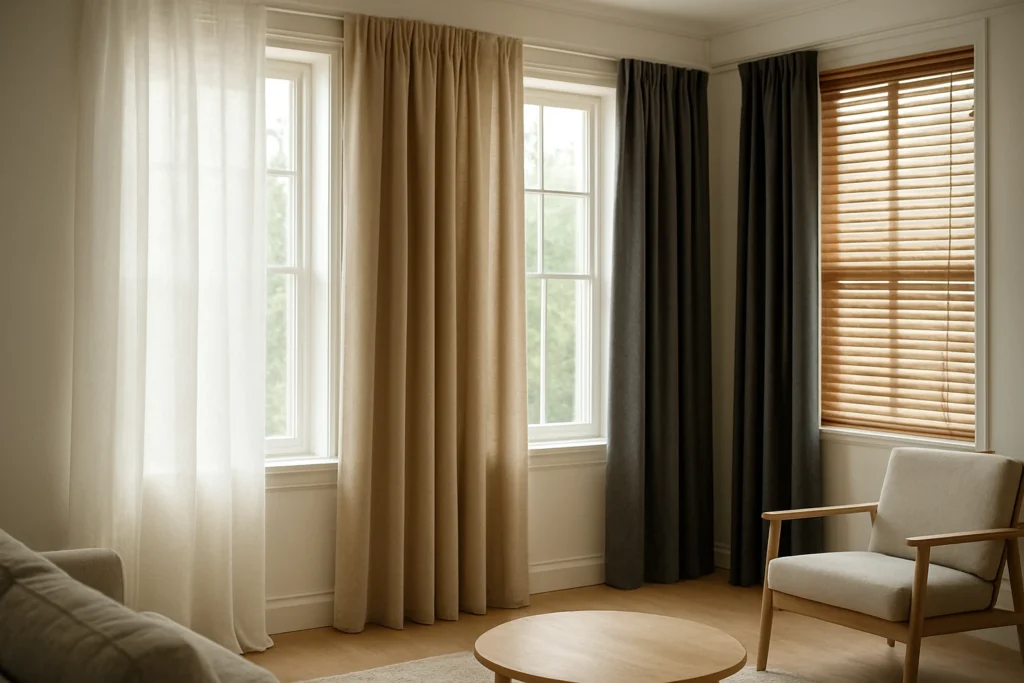
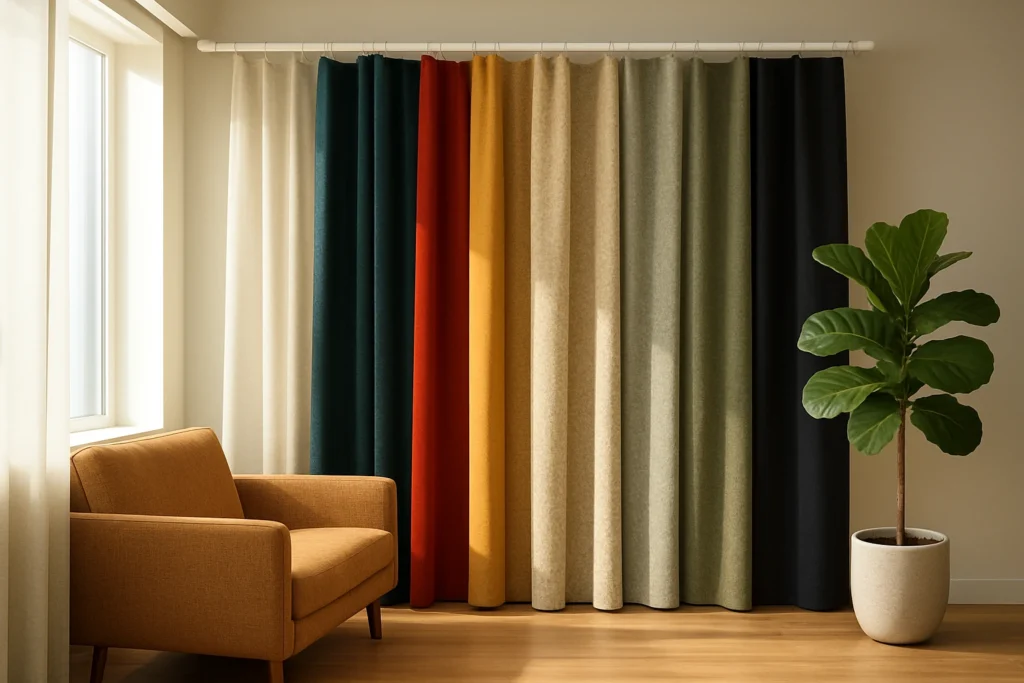
Fabric choice affects rod selection. Heavy fabrics need stronger fixings and sometimes different heading styles.
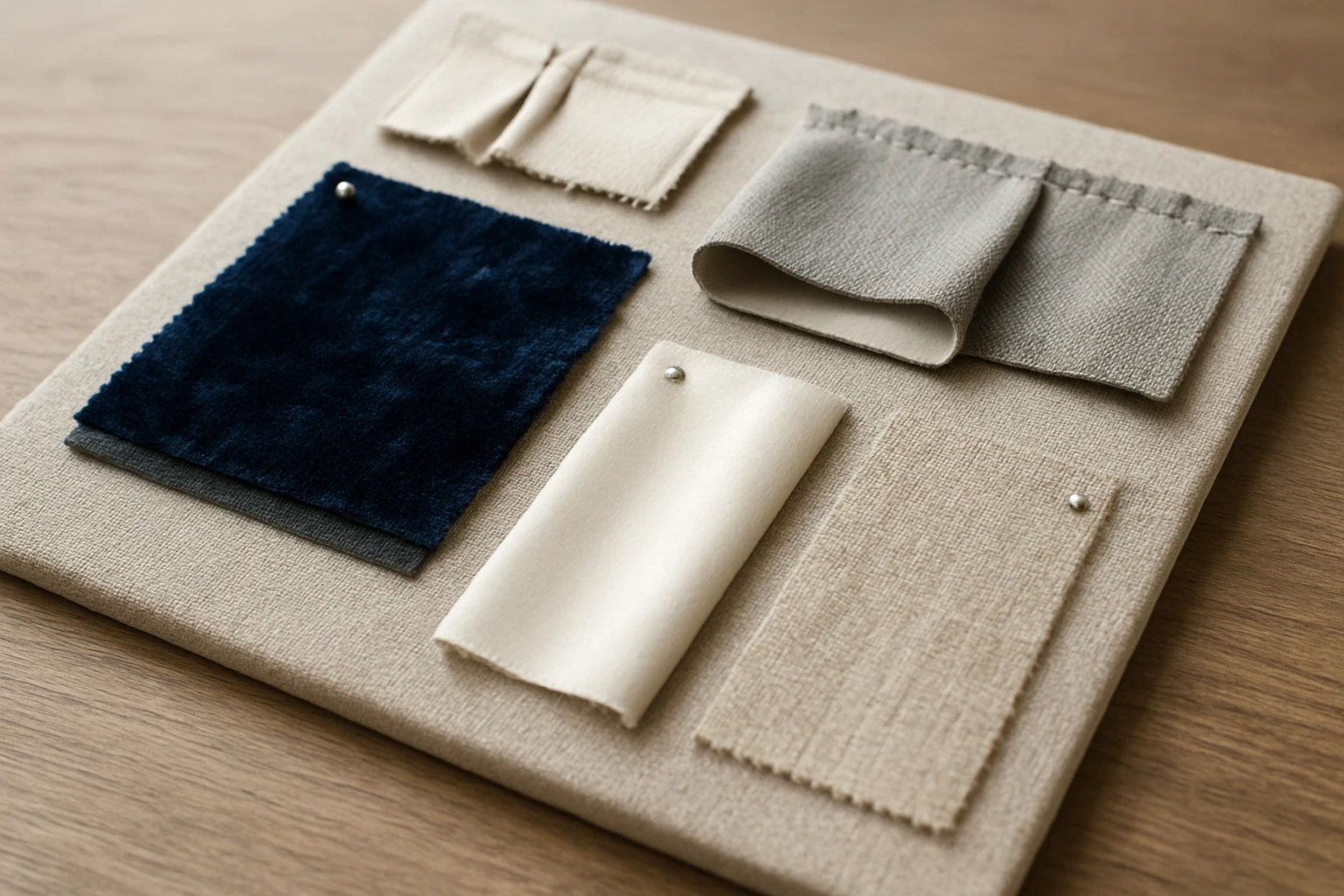
- Velvet Curtains: dense pile and lining add weight, pair with steel poles and frequent supports. See Velvet Curtains.
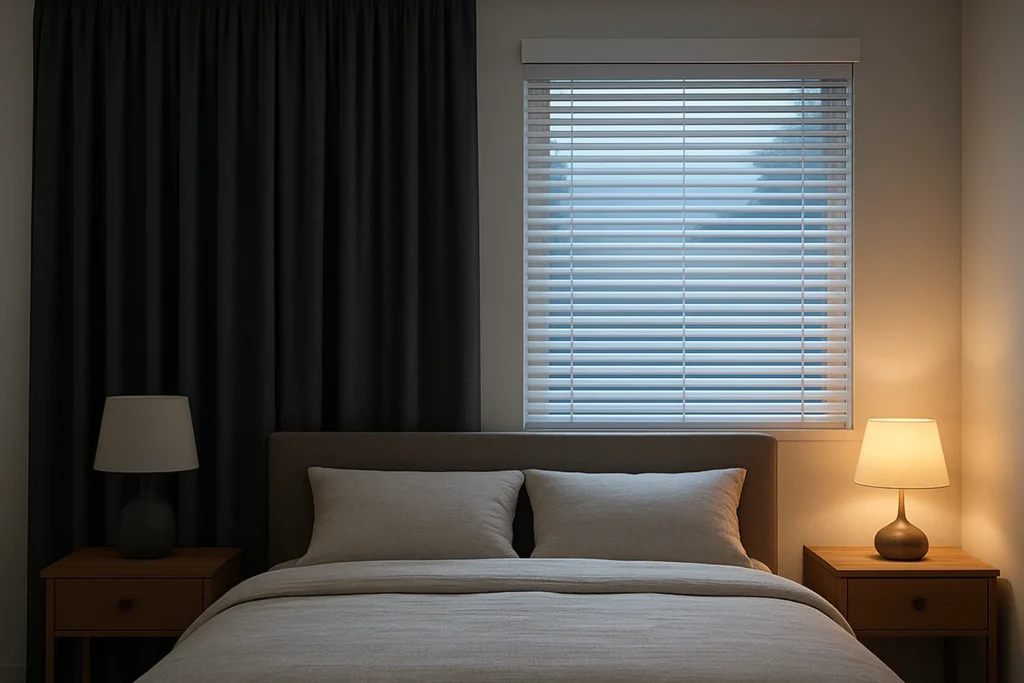
- Blackout Curtain: lined blackout adds weight and blocks light, choose stronger rods. See Blackout curtain.
- Silk Curtains: often lighter but may need delicate heading hardware, use smooth gliders. See Silk Curtains.
- Soundproof Curtains: these may be heavy multilayer panels, plan for higher capacity rods. See Soundproof Curtains.
Final Recommendations
For most heavy home curtains a thick steel pole or an extruded aluminium traverse track gives the best mix of strength and smooth operation. Mount brackets into studs where possible, use center supports on long spans, and leave a safety margin above the measured weight. If you want the best curtain rod for heavy curtains, spend a little more on a correctly rated system and consider professional fitting to avoid problems later.
If you are choosing between styles and need more detail on curtain types and uses around the house, read Window Curtains for Home: Practical Choices for Fabrics, Styles, and Fit.
Summary Table Quick Reference
| Question | Quick Answer |
|---|---|
| Best quick choice for very heavy curtains | Heavy duty steel pole with centre supports or an extruded aluminium traverse track |
| Fixing into hollow block | Use toggle bolts or chemical anchors sized to the rated load |
| Motorization needed? | For very wide spans and frequent use, yes, choose a motor rated for the curtain weight |
| Minimum center support spacing | Every 90 to 120 cm for spans over 2 m |
Where to Get Professional Help
If you prefer a showroom visit or full service installation, the team at Curtains and Blind can advise on local options and supply. Their site lists product categories and services to match your needs.
Frequently Asked Questions
What Is the Best Rod Material for Heavy Curtains?
Steel poles or heavy extruded aluminum tracks are best because they resist bending and work well with center supports. Timber can work but needs larger diameter and closer supports.
How Do I Know the Rod Will Support My Curtain Weight?
Weigh a finished panel, add the hardware weight and multiply by the number of panels. Choose a rod whose manufacturer rating is at least 20 to 30 percent higher than that total and plan center supports every 90 to 120 cm for long spans.
Can I Use a Tension Rod for Heavy Curtains?
No. Tension rods usually do not hold heavy fabric reliably and can slip or damage frames over time. Use mounted brackets into studs or heavy duty wall anchors.
Do Motorized Tracks Work with Heavy Curtains?
Yes, when the motor and track are rated for the curtain weight. Motorized systems spread the load and reduce wear from manual handling, so they are often a good choice for very heavy panels.
How Often Should I Check Brackets and Gliders?
Inspect fixings and gliders every six months and after any strong building movement or storm. Tighten loose screws and replace worn gliders to prevent fabric damage.