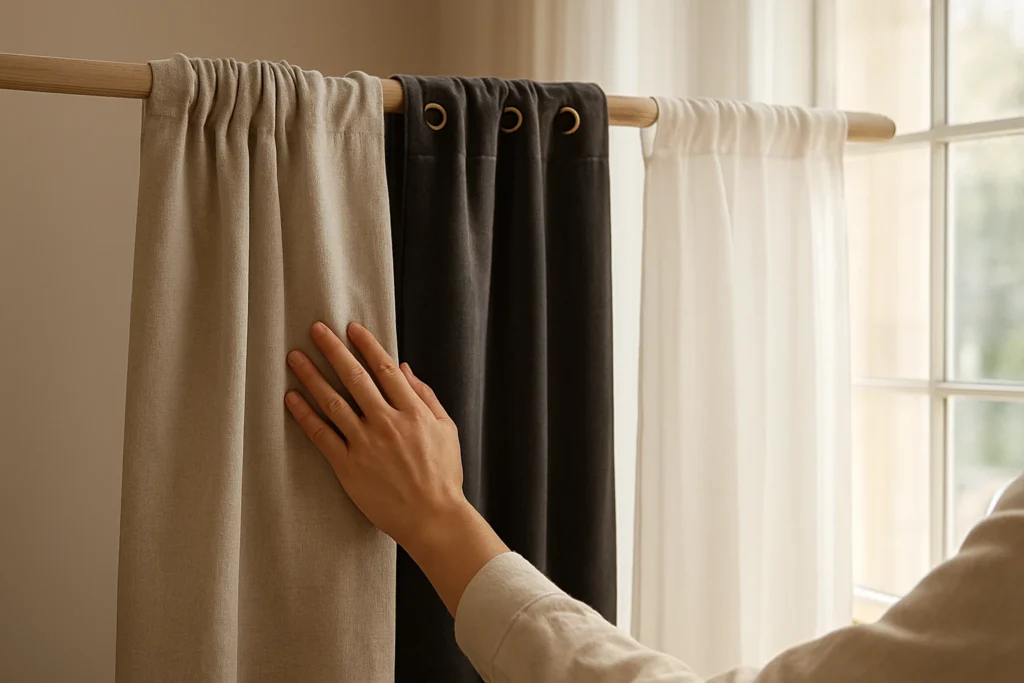
No, curtains are not out of style. They still suit both modern and traditional homes because they soften a room and help control light and privacy. Curtains tend to look dated when their length, fullness, or decorative details do not suit the space, not simply because they are curtains.

What Makes Curtains Look Dated?
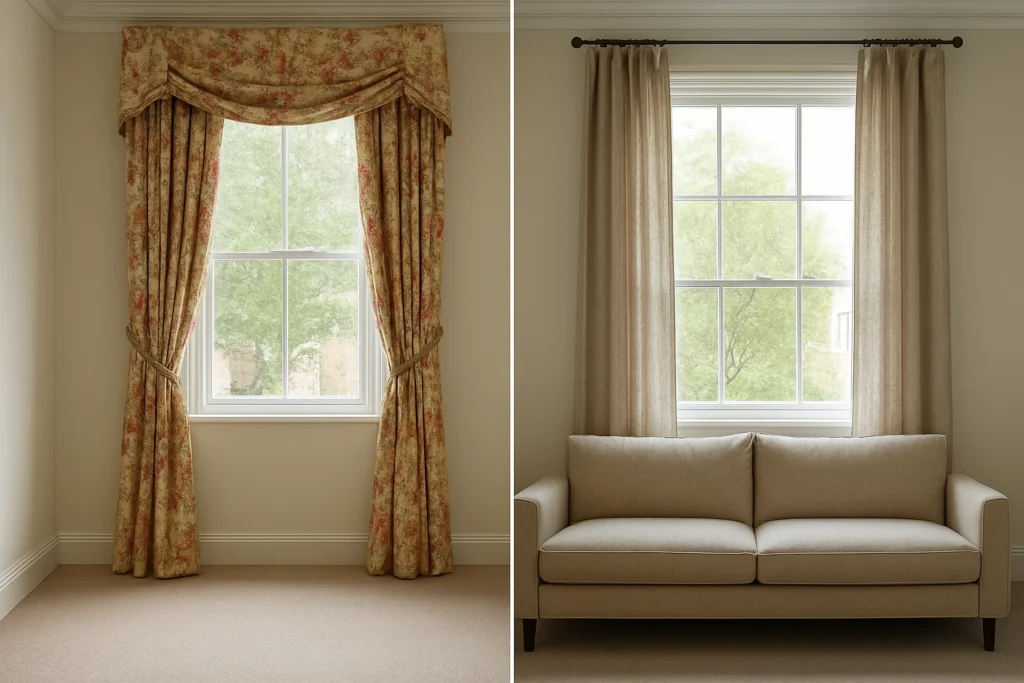
Curtains usually look dated when several details compete with the room, such as a heavy pelmet, shiny fabric, large tiebacks, and a strong pattern used together. Any one of those details can work in the right setting, but the whole arrangement needs to suit the furniture and architecture.
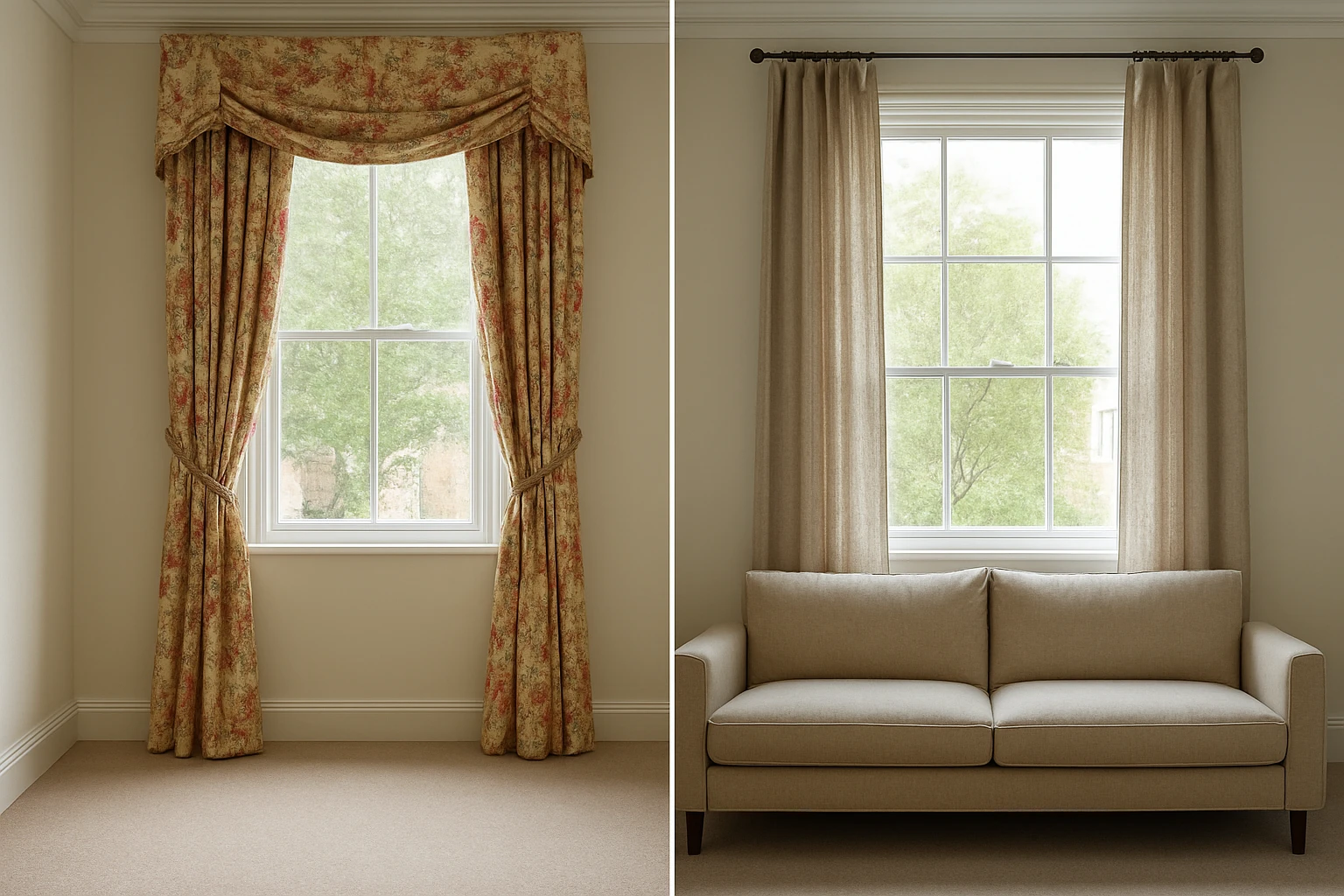
A formal curtain style can look right in a room with antique furniture, while the same style may feel out of place beside a low sofa and plain walls. Patterned curtains are not automatically old-fashioned either. A checked or floral fabric can work well when its colors tie in with the rest of the room.
The more useful question is whether the curtains fit the space. Look for these common problems before replacing them:
- Panels stop awkwardly between the sill and floor, with no radiator or furniture to explain the length.
- The fabric stretches almost flat when closed because there is too little width.
- Open curtains cover much of the glass because the pole or track is too short.
- Several strong details compete, with an ornate pole, busy fabric, and heavy trim all drawing attention.
When choosing a curtain from Curtains and Blind, start with the window and how you use the room, rather than a trend label.
Which Curtain Styles Still Look Good?
Simple folds, well-chosen fabric, and the right proportions help curtains look good long after a trend has passed. Wave curtains suit clean-lined rooms, while pleated curtains can add neat, defined folds without looking overly formal.
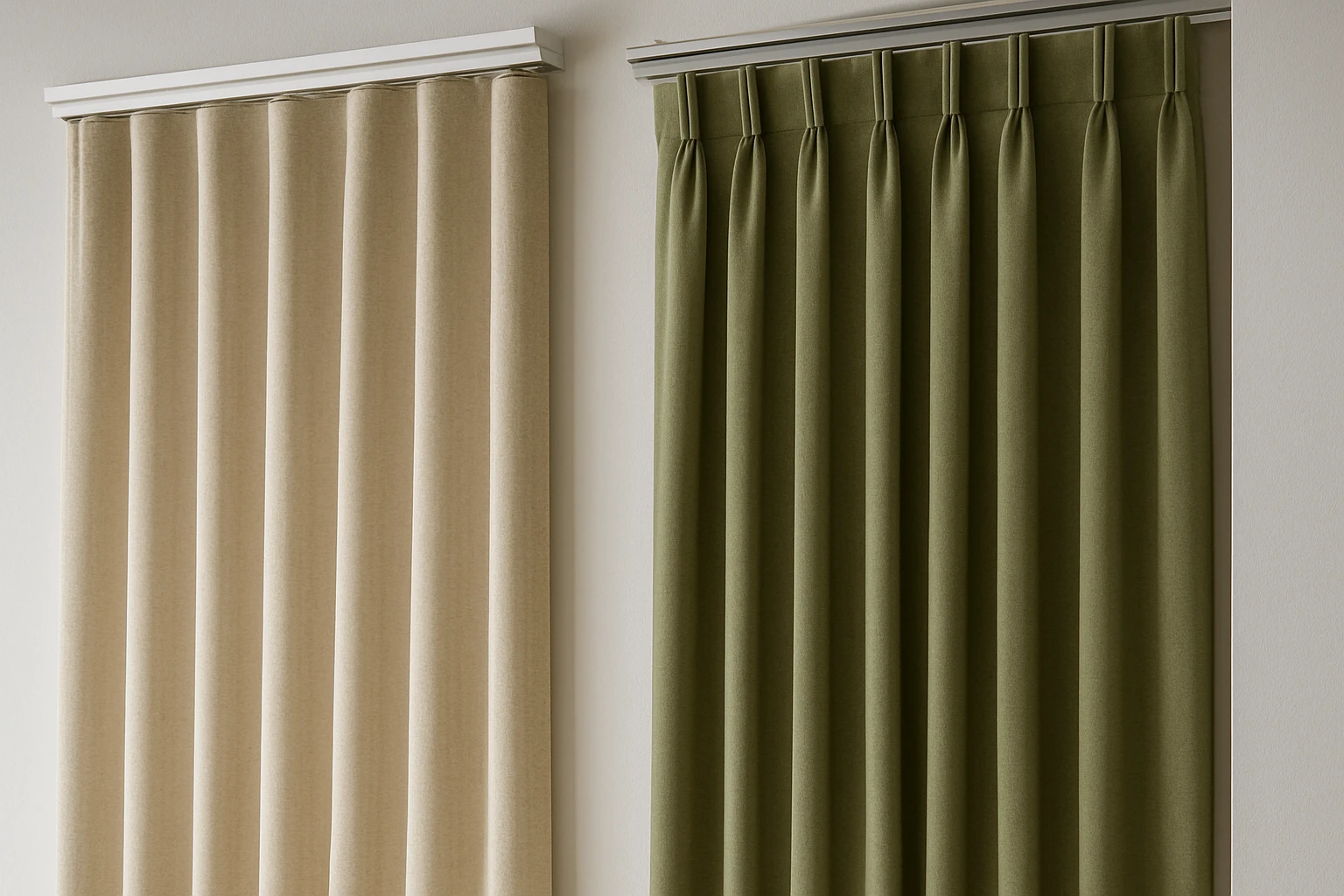
A curtain heading is the way the fabric is gathered at the top. It changes both the look and how the curtain moves, so choose it before ordering fabric or hardware.
| Curtain Style | Where It Works Well | What to Check |
|---|---|---|
| Wave curtains | Modern rooms and wide windows | The track and gliders must suit the wave system, and the folds need enough depth to clear handles. |
| Pinch pleat curtains | Classic or modern rooms that need a neat, tailored finish | Made-to-measure pleats need the correct finished width and enough space beside the glass. |
| Eyelet curtains | Relaxed rooms with a visible curtain pole | The rings must fit the pole, and the fabric above it needs ceiling clearance. |
| Pencil pleat curtains | Simple rooms and more traditional settings | Spread the gathers evenly so the top does not look bunched in patches. |
| Velvet curtains | Bedrooms and rooms that suit a rich, soft finish | Heavy fabric needs suitable brackets and fixings, and it forms a bulky stack when open. |
| Silk curtains | More formal rooms with a light sheen | Direct sun can damage silk, so discuss lining and sun exposure before choosing it. |
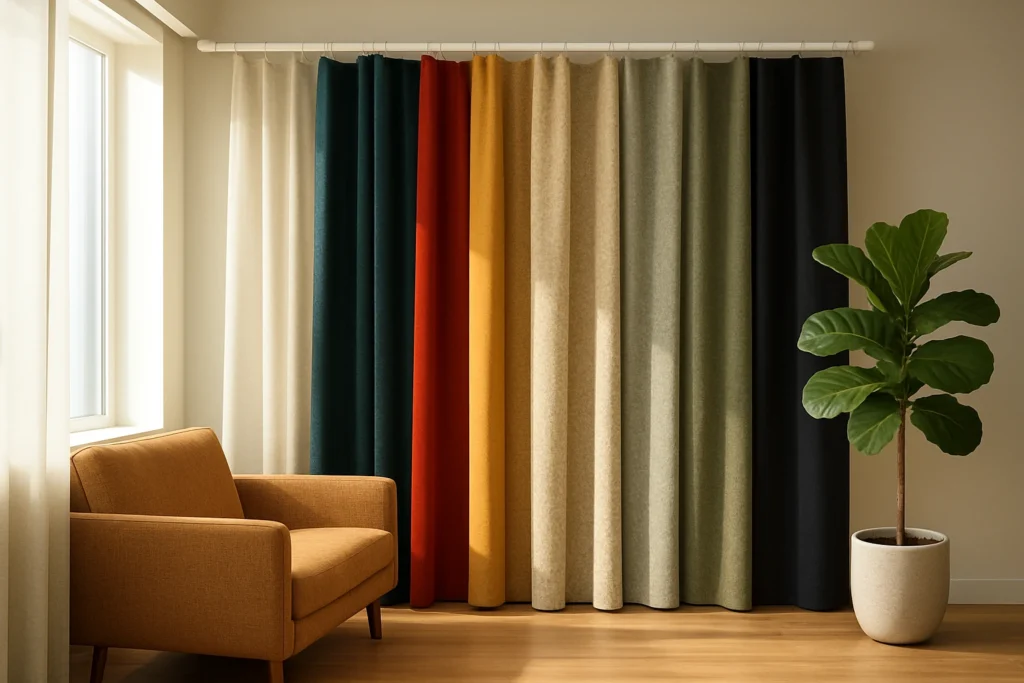
Color alone does not make curtains modern. Warm white, stone, and soft gray are easy to match, but olive, blue, and deeper shades can look just as well chosen. In a small room, curtains close to the wall color create less contrast, while darker curtains make the window a stronger feature.
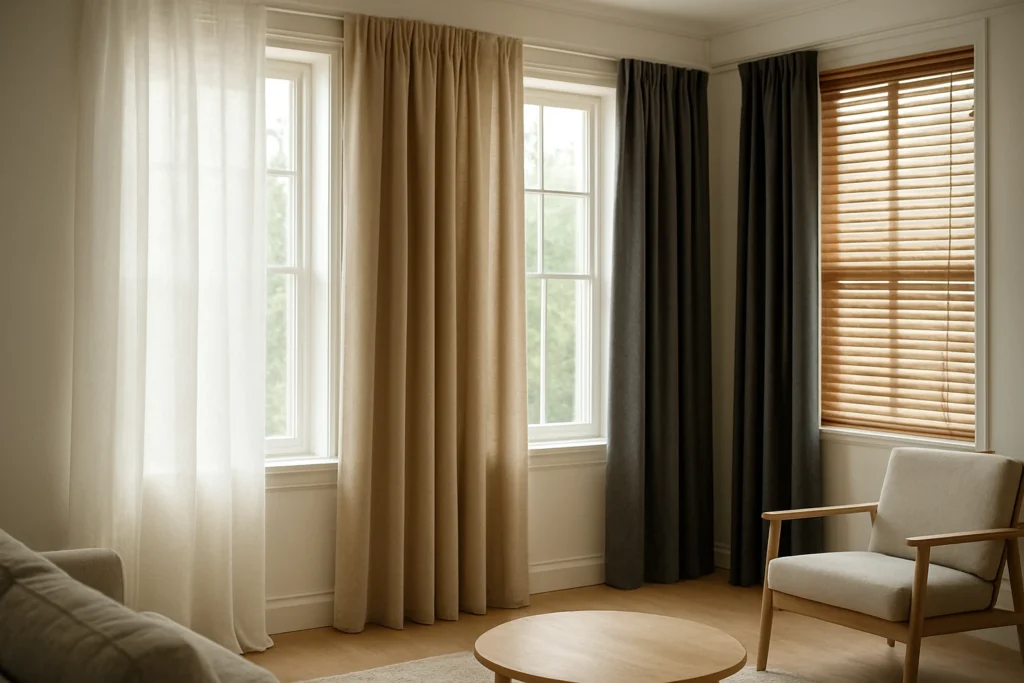
For a softer finish, sheer curtains filter daylight without looking as heavy as thick fabric. Lightweight chiffon curtains offer a delicate look, though sheer fabric does not provide reliable nighttime privacy.
How Should You Hang Curtains for a Modern Look?
For most living rooms and bedrooms, curtains look more balanced when they hang above the window and reach close to the floor. The right width matters just as much because panels that look full when open can still look thin when closed.

Use these steps before buying new panels:
- Set the pole or track position first. Where space allows, roughly 10 to 20 cm above the window frame is a useful starting point, not a fixed rule. A ceiling track may suit tall windows better.
- Allow room beside the glass. Extending a pole roughly 15 to 30 cm past each side can help, but thick fabric may need more space. Check where the gathered fabric will sit when fully open.
- Measure from the actual hanging point. Hooks, rings, and tracks hold fabric at different heights, so measuring from the ceiling or top of the pole can give you the wrong curtain length.
- Choose a practical hem. About 1 cm above the floor is easy to clean around. Fabric pooling on the floor suits some formal rooms but collects dust and gets in the way near balcony doors.
- Check the required fullness. Many gathered curtains use roughly 1.5 to 2.5 times the track width in flat fabric, depending on the heading and material. Follow the supplier’s specification for wave systems and fixed pleats.
For example, a 2-meter track with a specified fullness of two times needs about 4 meters of total flat curtain width, split across the panels. Use that as a planning example, not a cutting measurement, because seams, hems, and pattern matching also use fabric.
For tall or hard-to-reach windows, motorized curtains can make daily use easier. Decide on the motor and track before ordering the curtains because the system affects the fittings and space needed.
Are Blinds More Modern Than Curtains?
Blinds are not automatically more modern than curtains. Blinds give a window a compact finish, while curtains add softness. The better choice depends on the space around the window, the light control you need, and how you use the room.
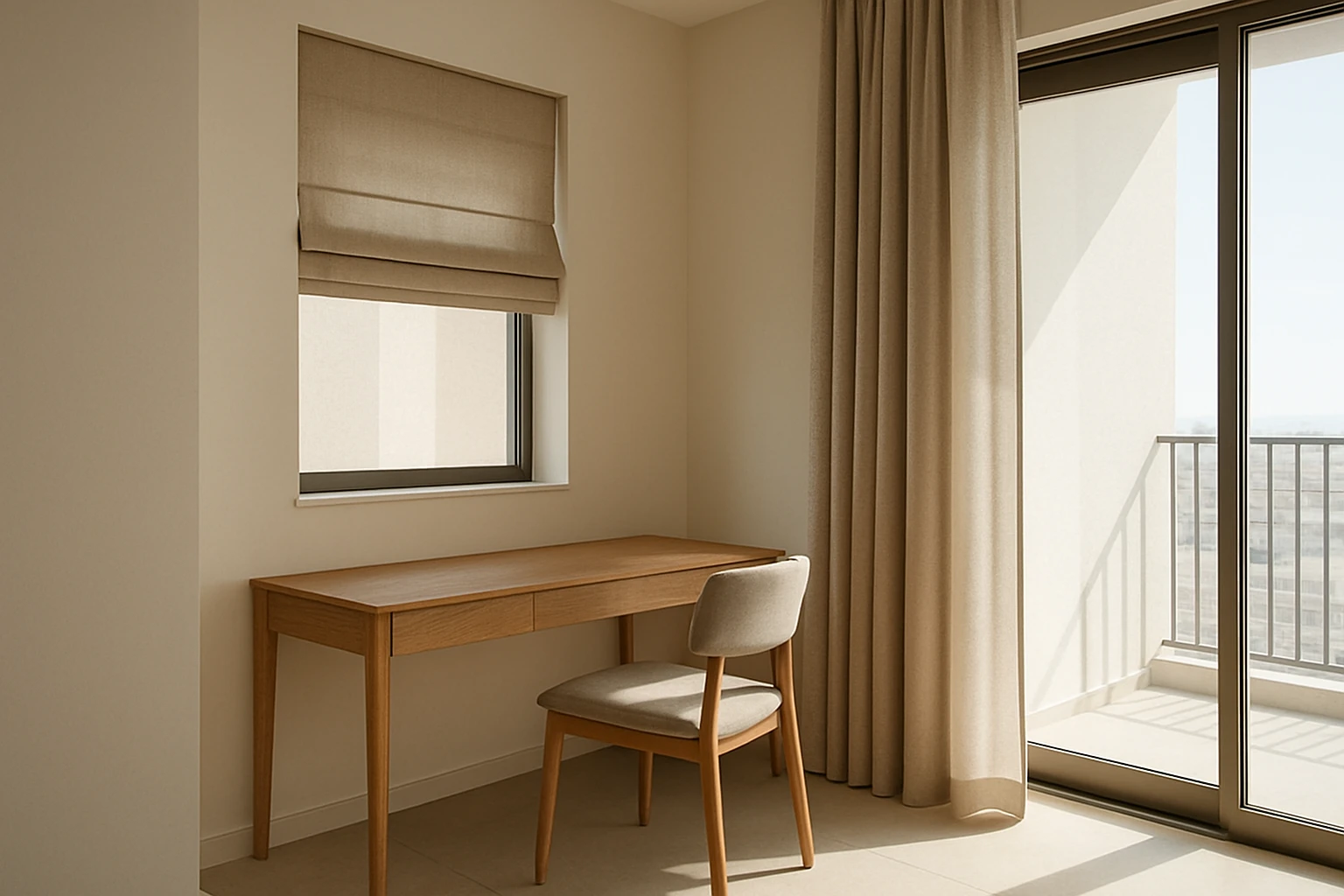
| Window or Room Need | Useful Choice | Reason |
|---|---|---|
| Desk, radiator, or cabinet under the window | A fitted blind or Roman curtain | Fabric stays clear of furniture and heat sources. Follow any required clearances. |
| Large living room glazing | Curtains, with a separate privacy layer if needed | Fabric softens a broad expanse of glass and can draw clear of doors. |
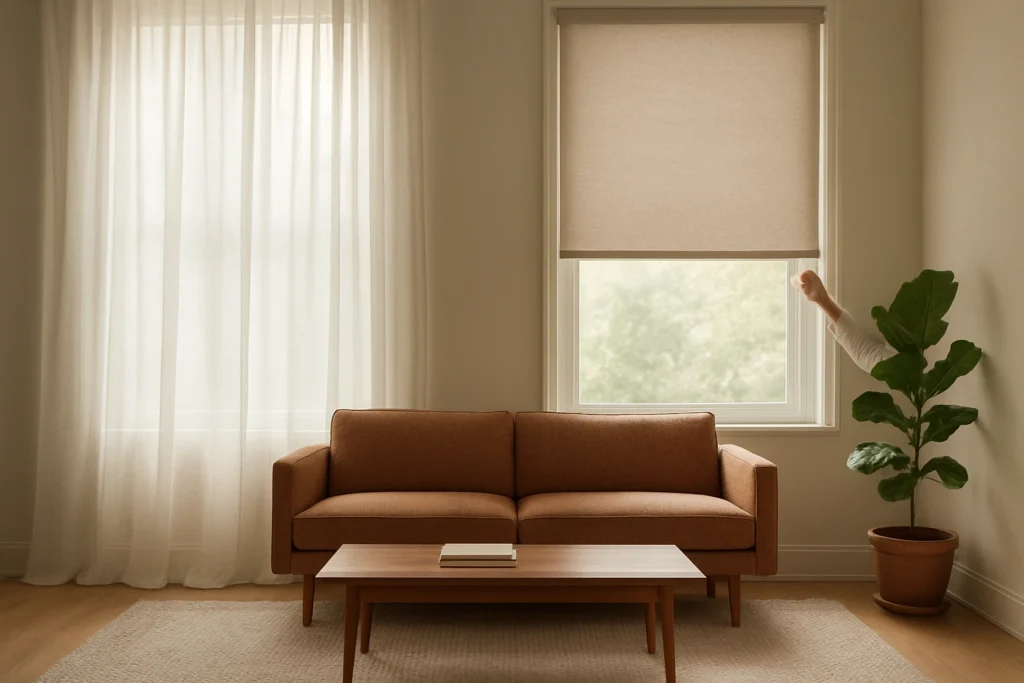
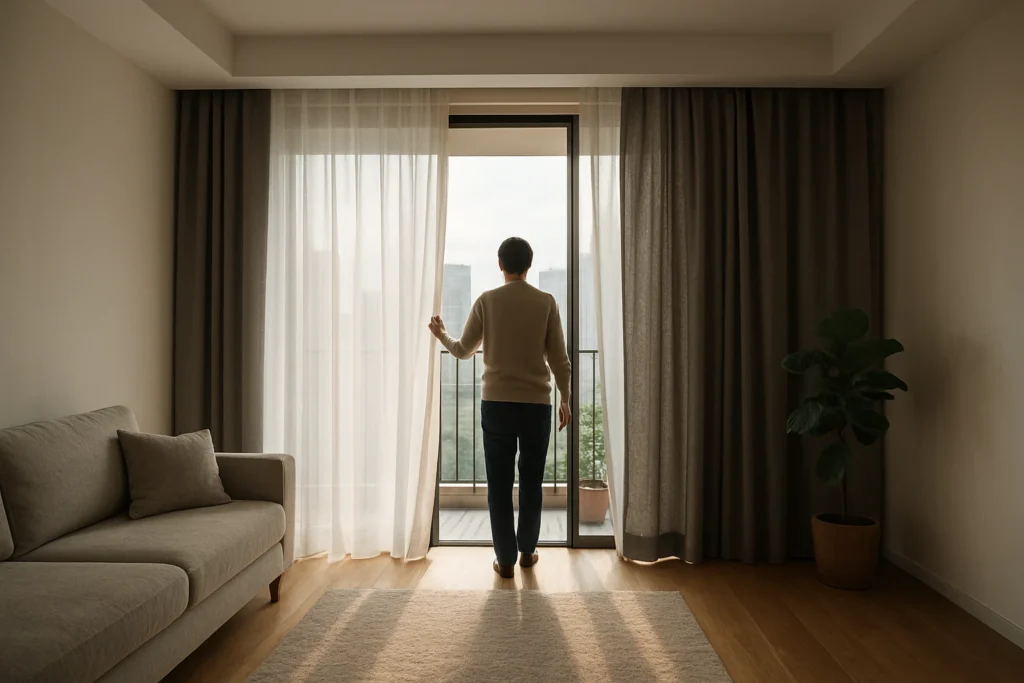
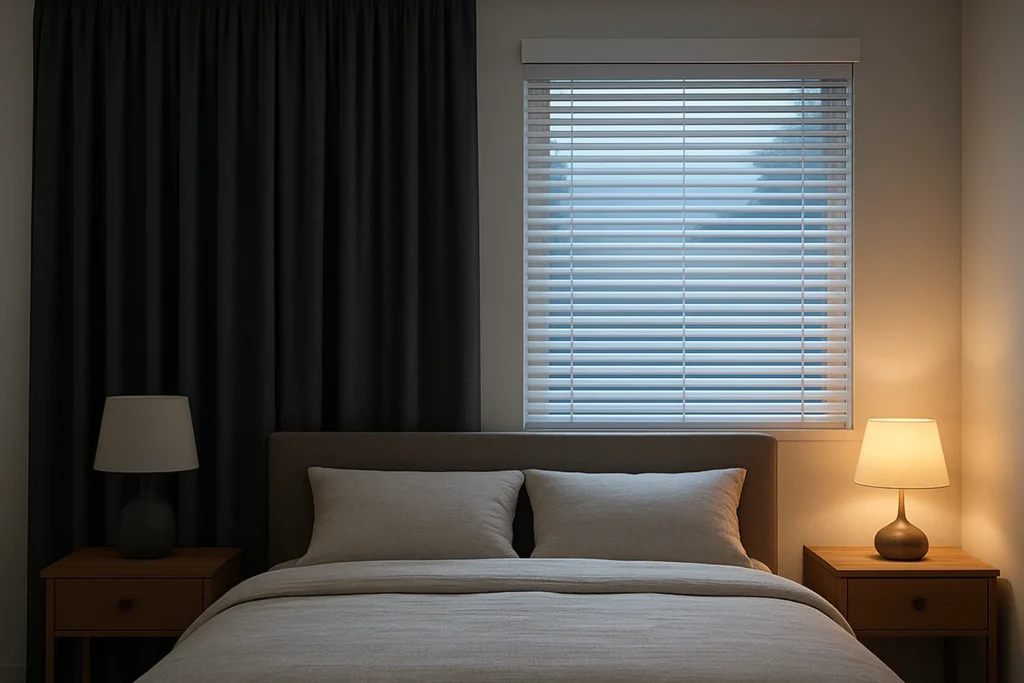
| Bedroom needing daytime light and nighttime privacy | Sheers with opaque curtains | Each layer does a different job, so you do not have to choose between daylight and privacy all day. |
| Kitchen window near a sink or cooking area | An easy-clean blind suited to that location | Long fabric is more exposed to splashes, grease, and nearby heat. |
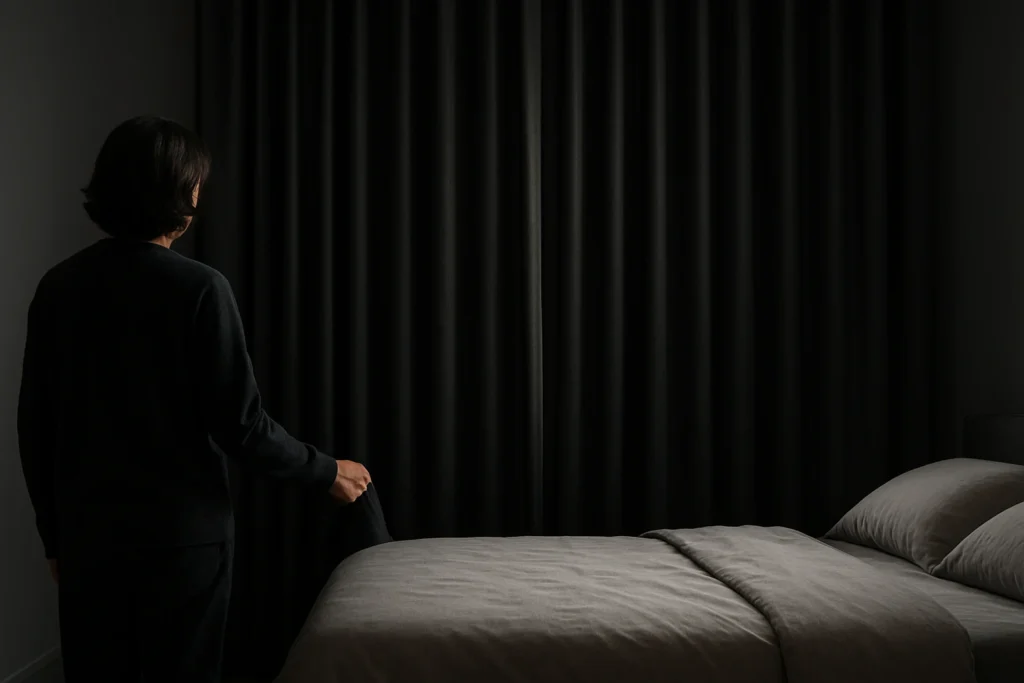
For bedrooms, blackout curtains reduce light through the fabric, but light can still enter around the top and sides. A close-fitting blind behind the curtains may help when light from those gaps disturbs sleep.
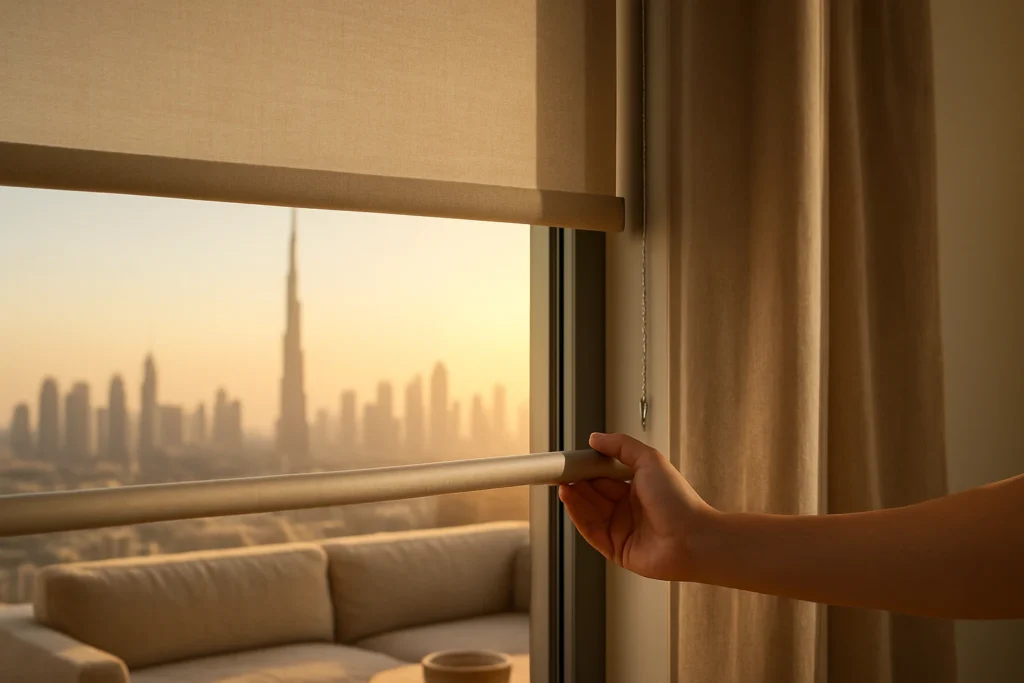
In a Dubai apartment with strong afternoon sun, do not choose on appearance alone. Fabric, lining, window glass, and fitting all affect comfort, and dark fabric is not automatically a better heat barrier.
The guide to layering sheer and blackout curtains explains how to keep both layers easy to use. For windows with limited space, the blinds vs curtains comparison can help narrow your choice.
Should You Keep or Replace Your Curtains?
Keep your curtains if the fabric is in good condition and the color still works with the room. Correcting the hanging height, adjusting the hem, or changing bulky hardware may solve the problem without replacing the panels.
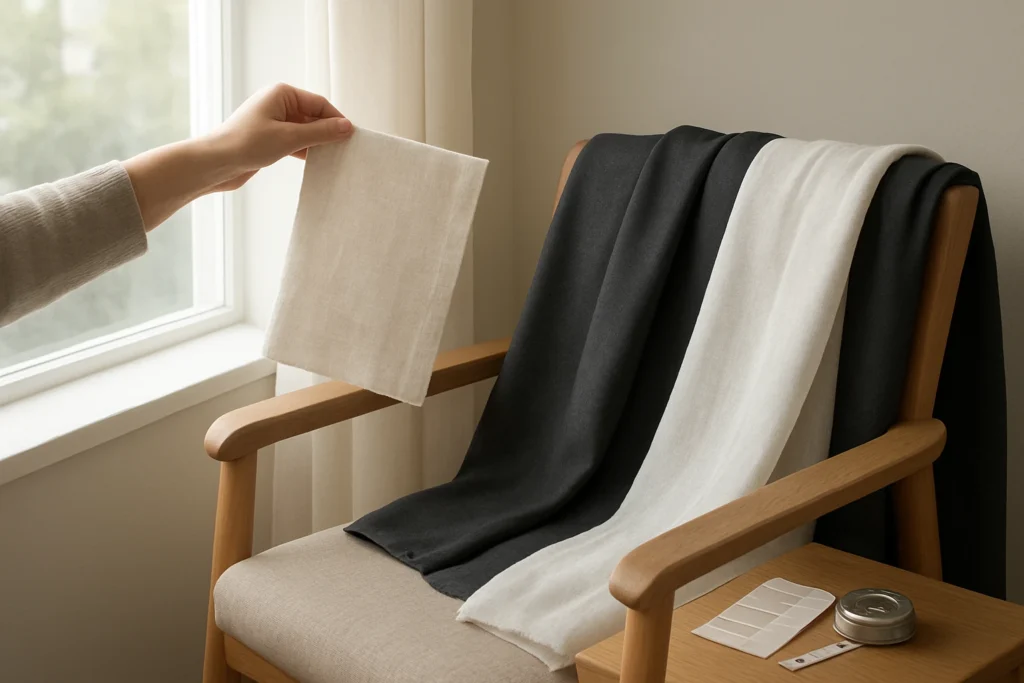
Check the fabric in daylight before spending money on alterations. Fading along the front edges, brittle fibers, damaged lining, or panels that cannot cover the track properly may make replacement more sensible.
Be careful when raising an existing pole because the curtains will rise with it. Check for spare fabric in the hem first, or the change meant to improve their proportions could leave them too short.
If cost is the main concern, consider these affordable curtain options before choosing a more complex style. Plain fabric with a good fit often gives a more polished result than expensive fabric hung poorly.
Curtains do not need to follow every new look to belong in your home. Keep the details that suit the room, fix the fit, and replace only what no longer works.
Frequently Asked Questions
Do All the Curtains in a House Need to Match?
Curtains do not need to match throughout a house, though nearby rooms often look calmer when they share a color or fabric detail. Bedrooms can have different needs from living areas, so matching every treatment may be less useful than choosing each one well. In an open-plan space, keep visible headings and hanging heights consistent where possible.
Are Curtains Over Vertical Blinds Old-fashioned?
Curtains over vertical blinds are not automatically old-fashioned if both layers fit neatly and serve a purpose. A plain curtain can soften the blinds while they handle daytime light control. Check that the curtain track projects far enough forward so the fabric does not catch on the blind slats or control mechanism.
Can Short Curtains Ever Look Stylish?
Short curtains can look stylish when their length has a clear purpose, such as clearing a built-in seat or a kitchen worktop. Aim for a deliberate finish near the sill rather than an awkward halfway point. Keep fabric away from cooking surfaces and follow the required clearance around any heater.
Can I Leave Some Windows Without Curtains?
You can leave windows without curtains when privacy, glare, and sleep are not concerns. An open view or attractive window frame may be worth keeping visible, but check the room after dark before deciding. Also consider whether direct sun reaches furniture or screens, since a window that looks good bare may still need shade.