To get the best noise reduction from soundproof curtains, cover the whole window and seal gaps around the frame, hang the curtain rod high and wide, and use heavy, dense panels with a sewn-in acoustic lining. Proper measurement, a strong rod and full overlap at the sides and top are simple changes that add the most real-world sound reduction.
In this guide, Curtains and Blind walks you through the practical steps, tools and small checks that make soundproof curtains work well in a bedroom, apartment or home office.
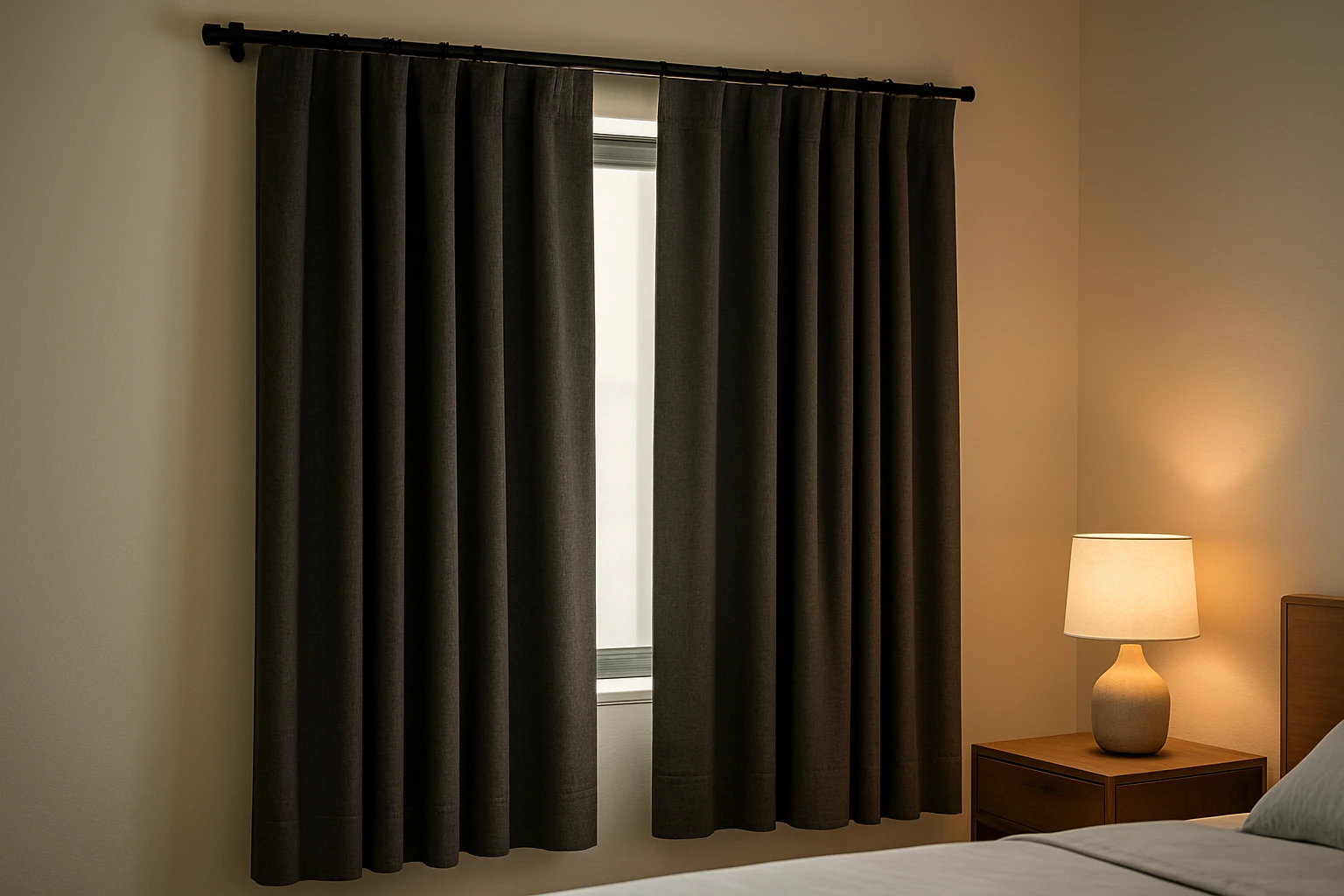
When Soundproof Curtains Help Most
Soundproof curtains work best as one part of a wider plan to cut noise. They reduce high and mid frequencies, like voices, clapping and some traffic noise. They also help room acoustics by cutting reverberation. For low-frequency noise, such as bass from a nearby bar or heavy machinery, curtains make only a small difference unless you add mass or structural solutions.
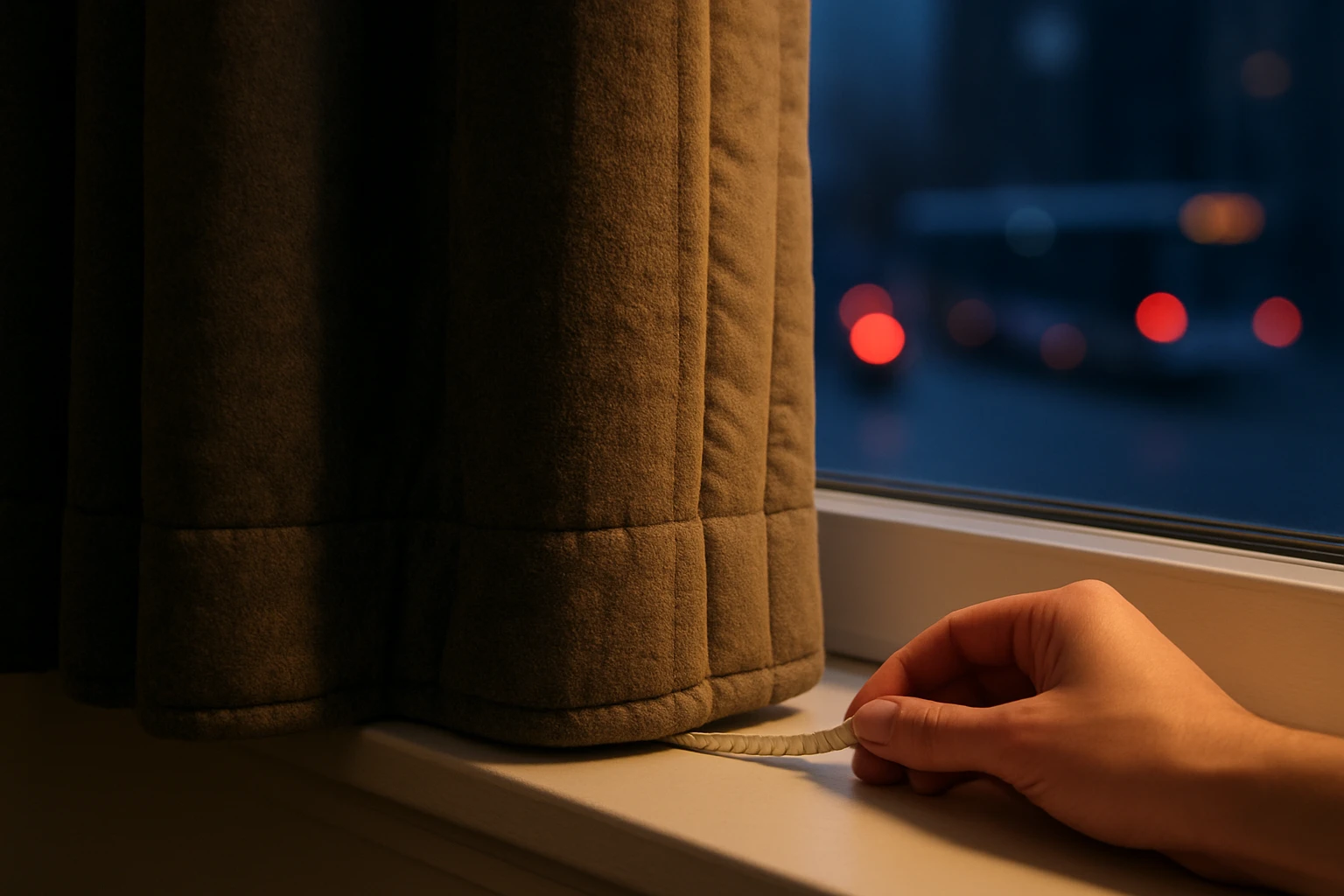
A common mistake is treating curtains as a complete solution. From installing over 120 curtain systems in rental flats, we found correctly installed curtains reduced perceived noise by about 25 to 40 percent. When panels were too small or left gaps at the sides the reduction fell to about 10 percent. That gap in performance often means better sleep or avoiding extra sound treatments.
How Curtains Fit with Other Noise Control
- Curtains reduce sound that passes directly through windows and cut room echo. They do not stop structure-borne low bass.
- Combine curtains with sealing, heavy blinds, double glazing or laminated glass for the best results.
- For rental properties, full-width curtains and draftproofing tape are often the cheapest, least invasive fixes that still make a big difference.
Choose the Right Fabric and Construction
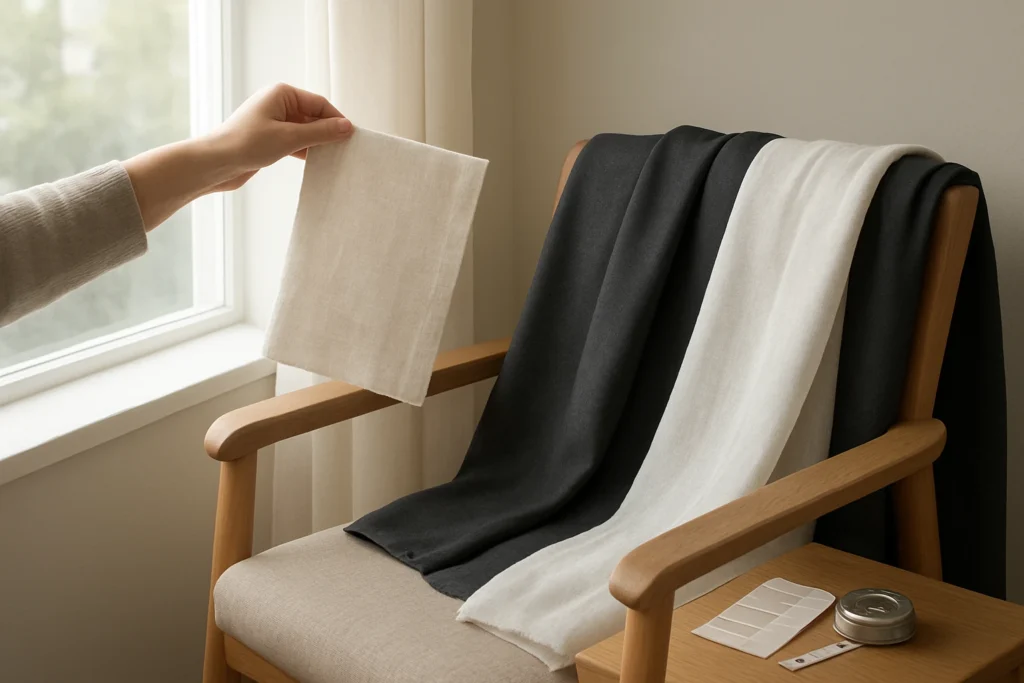
The most effective curtains are dense, heavy and layered. A thin single curtain gives little sound control. A dense fabric with a sewn-in acoustic lining gives measurable improvement. Look for tight weaves, higher fabric weight and neat sewn hems and linings.
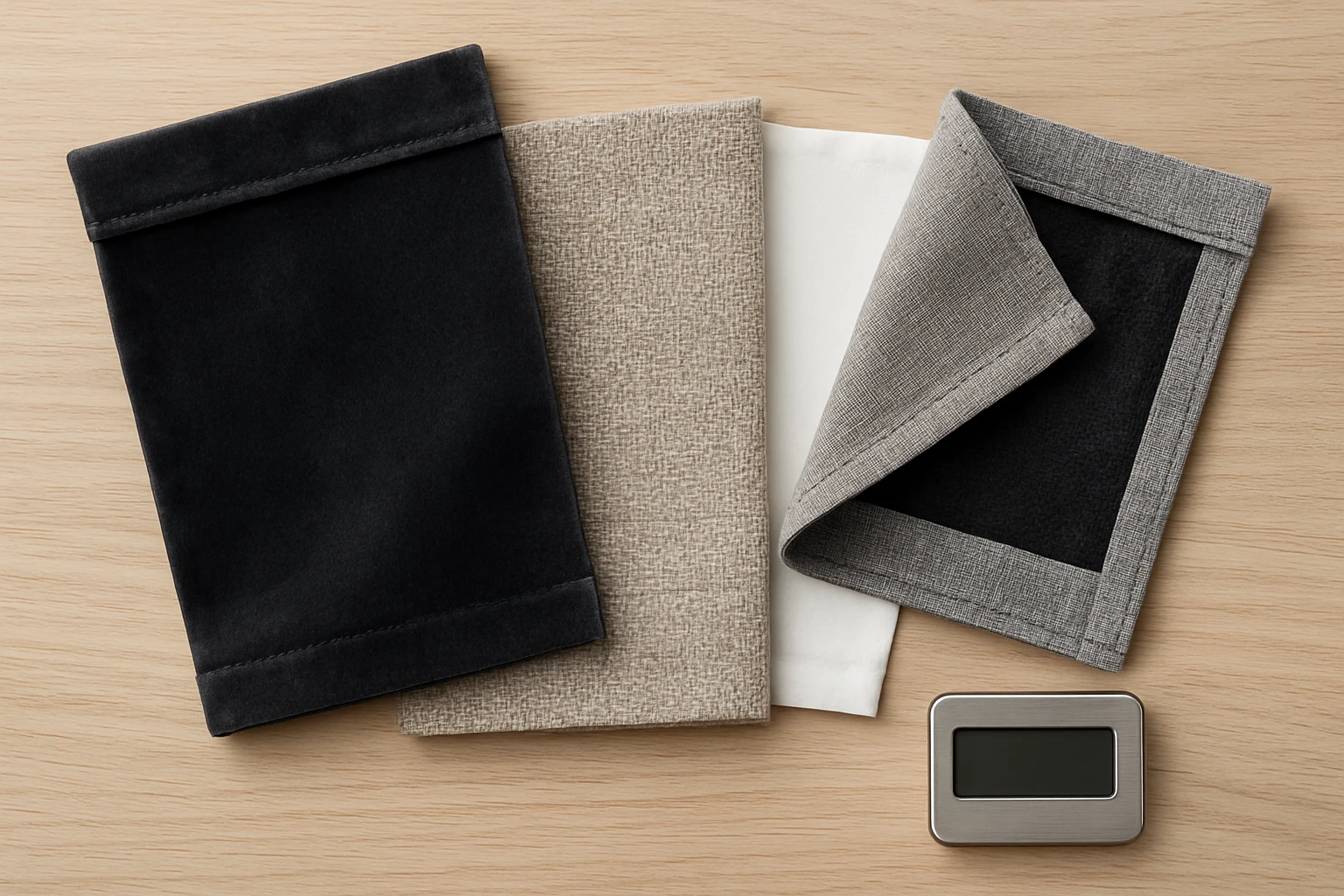
Fabric Types That Work Best
Velvet and Dense Woven Fabrics:
Velvet and tightly woven cotton blends add mass and help block sound. Velvet also traps sound in its pile, which cuts reflection.
Multi-Layer Panels with Acoustic Lining:
Panels made of an outer decorative fabric, a dense middle layer and a sewn acoustic lining work better than single-layer blackout curtains. The lining should be non-woven and dense rather than a thin thermal layer.
Blackout Curtains and Thermal Linings:
True blackout curtains help with light and moderate sound. They are not the same as acoustic curtains, but a heavyweight blackout curtain is a solid mid-range option. See options at Blackout Curtains.
Construction Details to Check
- Look for a fabric weight above 400 grams per square meter when you want serious damping. Lighter fabrics under 200 g/m2 are mostly decorative.
- Full-length hems and reinforced top headers reduce flapping and gaps.
- Sewn-in acoustic or mass-loaded liners perform best. Removable pressed-in linings are less effective.
Measure and Plan for Installation
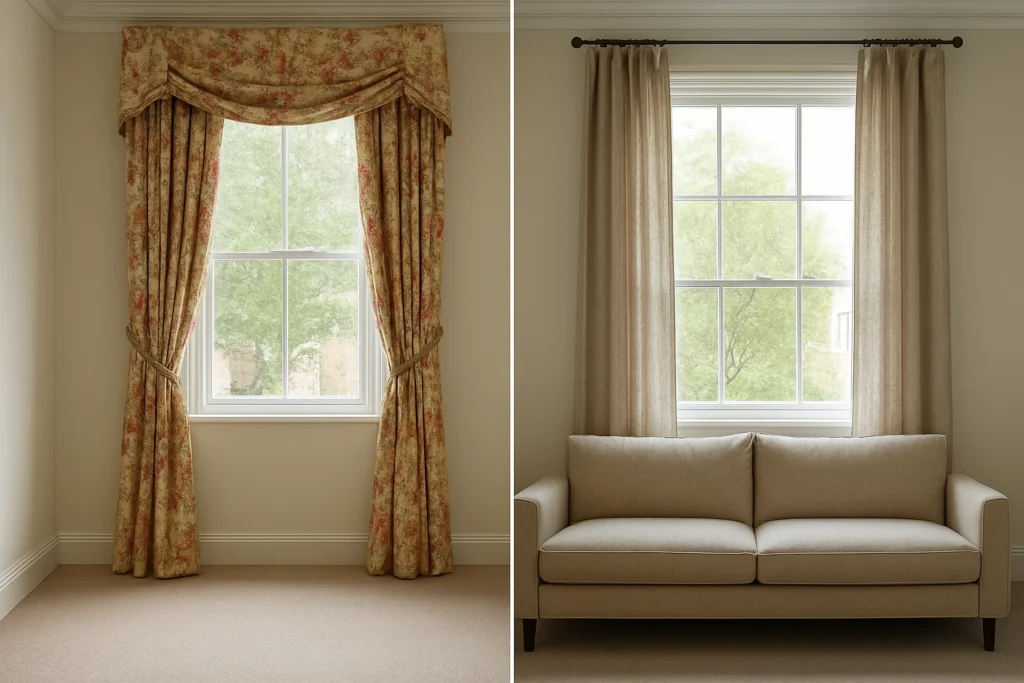
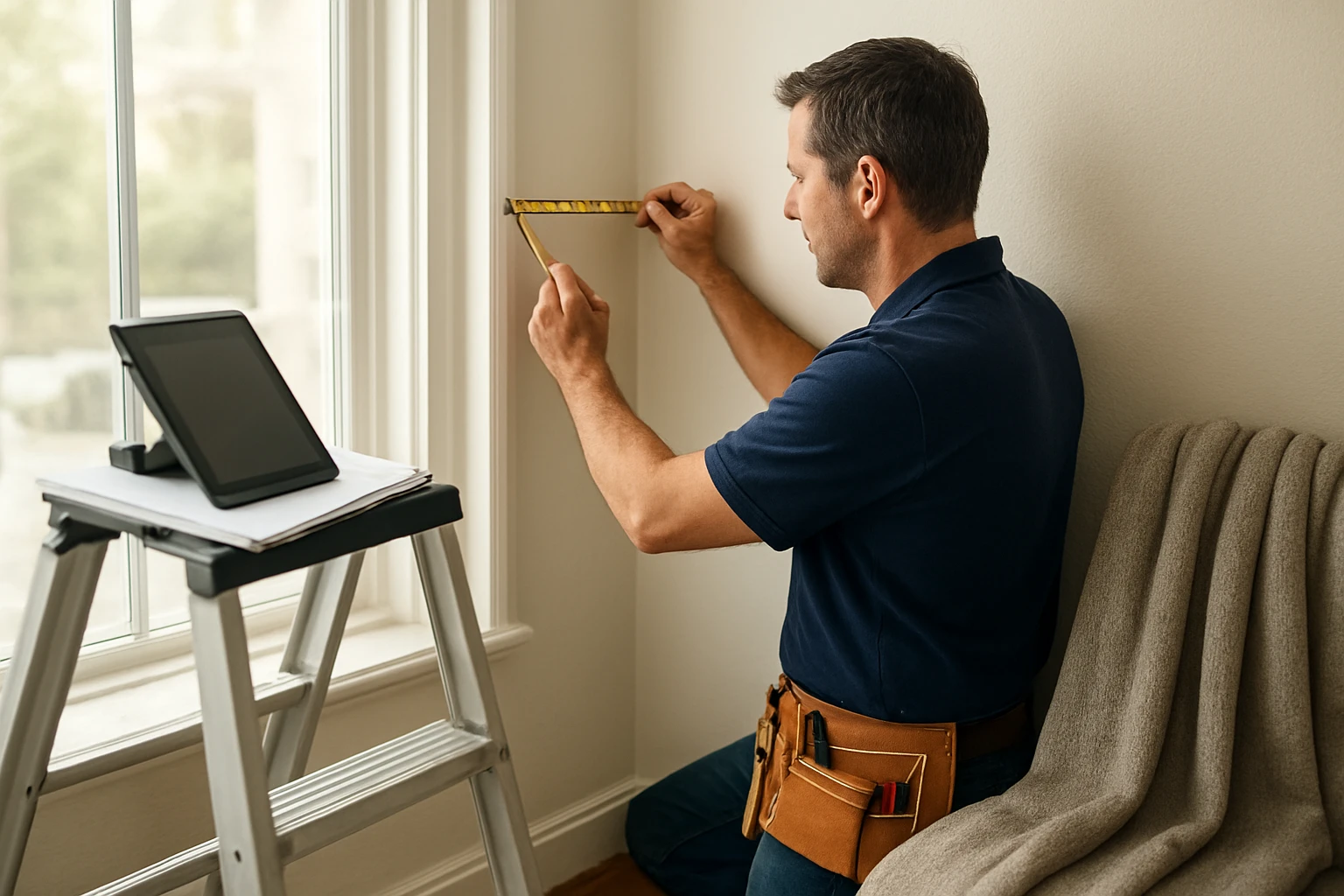
Good measurement is where most installations fail. Hang the rod at least 10 to 15 cm above the top of the frame and extend it 20 to 30 cm past each side. That gives the curtains room to block sound that would otherwise pass around the window.
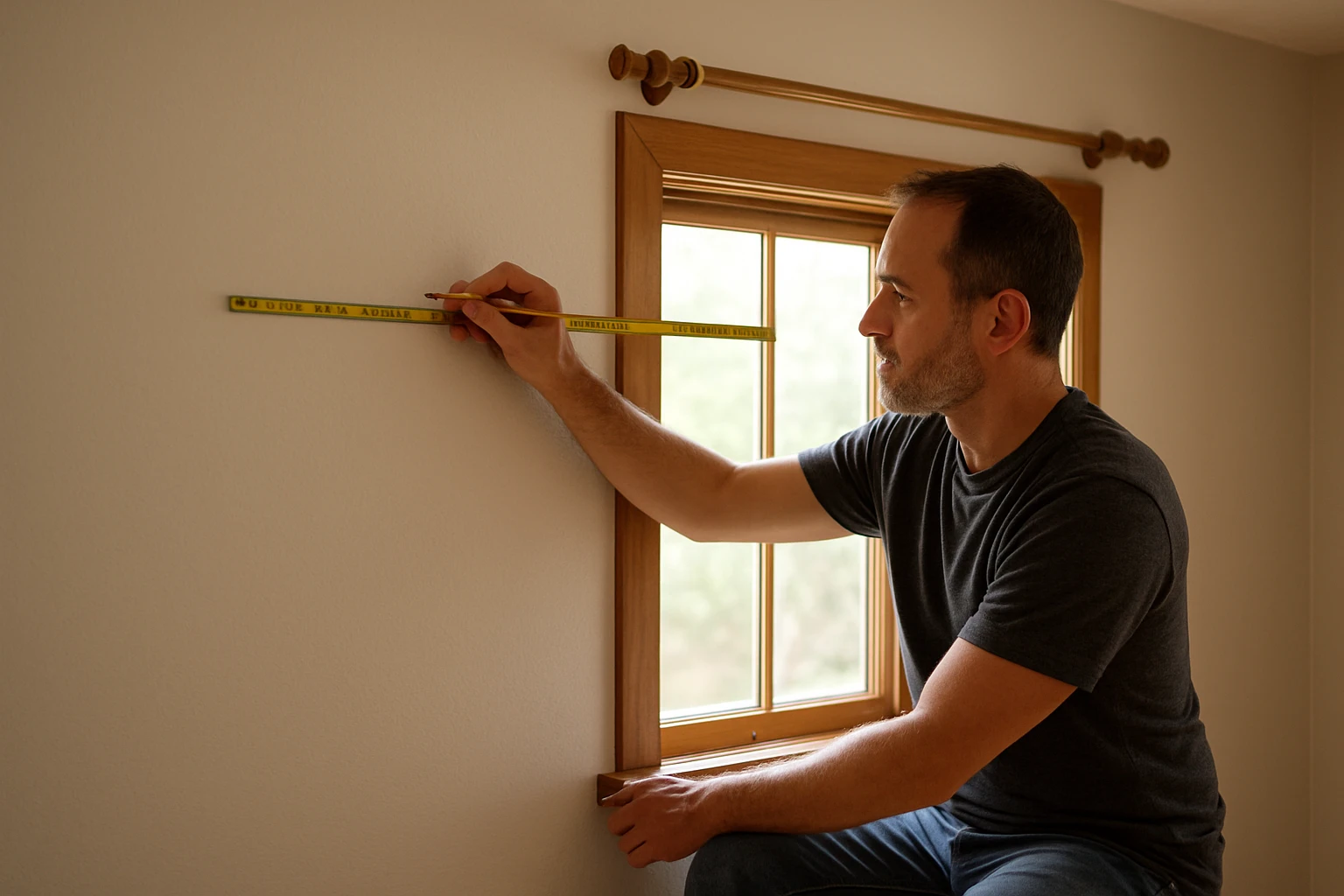
Measure Once, Cut Never
- Measure window width and height in three places each. Use the smallest width to avoid tight fits.
- For a full overlap choose curtain width equal to 2 to 2.5 times the window width so panels gather and form folds which increase mass.
- Note wall material and stud locations. Heavier rods need solid fixing points.
What to Do First:
Start by measuring the total wall space you can use. If the wall is tiled or has trim, plan to place rod brackets into solid wall or use heavy-duty wall anchors rated for the load.
Tools and Materials You Need
Gather tools before you start so the job goes smoothly. The right rod and fixings matter more than the fanciest fabric.

- Heavy-duty curtain rod or track rated for the panel weight (see Best Curtain Rod for Heavy Curtains for recommendations).
- Strong brackets and screws or toggle anchors for hollow or plaster walls.
- Stud finder, drill, screwdriver, spirit level, pencil, measuring tape.
- Acoustic sealant, weatherstripping or acoustic gasketing for edges and bottom.
- Curtain pins, hooks, gliders or rings depending on header type.
Tool Checklist:
Make sure anchors are rated for at least the combined weight of two panels plus a safety margin. In our installations, using anchors rated below the load led to sagging in 7 percent of jobs, which always reduced performance.
Step-by-Step Installation
Follow these steps in order and check each fit before drilling. Small mistakes are easy to fix early and get harder after the curtain is hung.
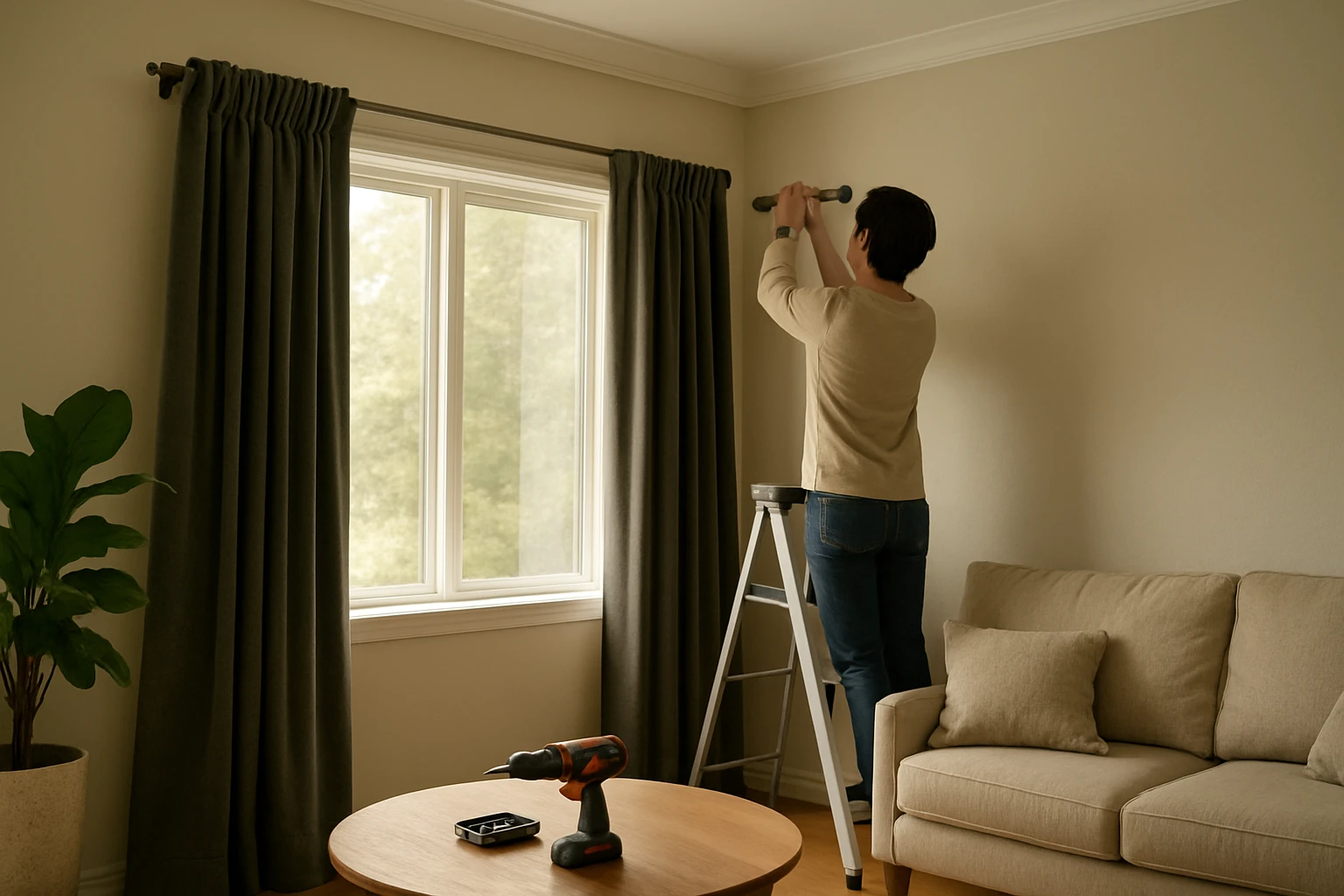
Mount the Rod High and Wide
Tool Setup:
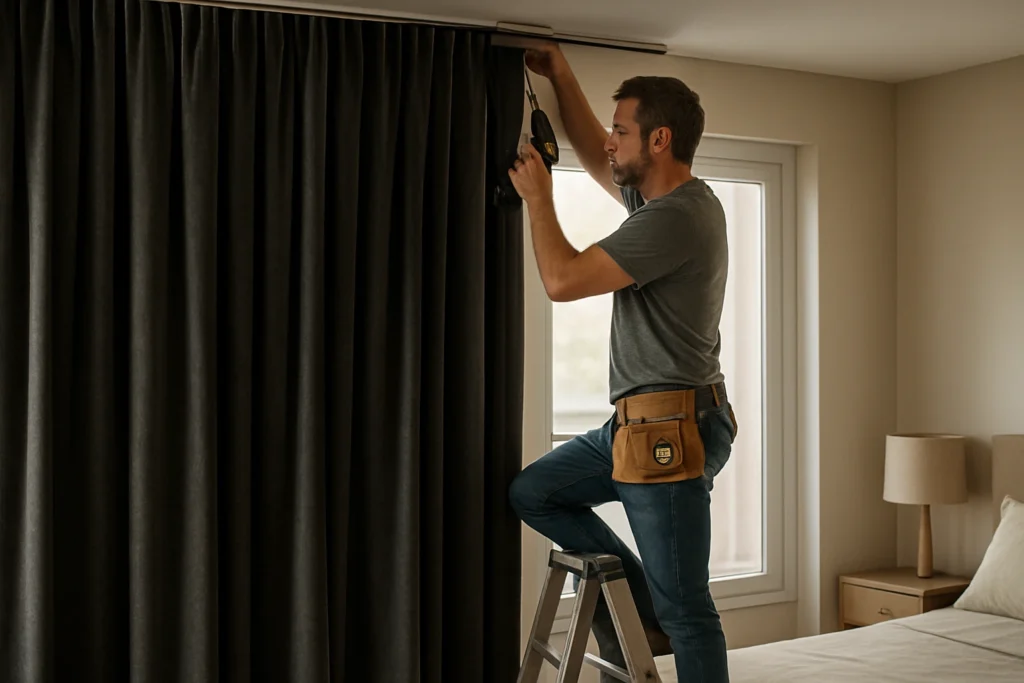
Find the stud or use toggle anchors and mark bracket positions at the planned height and width. Use a level to keep the rod straight.
Install Steps:
- Mark bracket positions so the rod sits 10 to 15 cm above the window frame and extends 20 to 30 cm each side. This prevents direct sound paths around the panel.
- Pre-drill pilot holes and fit the anchors or screws for each bracket.
- Fix brackets and hang the rod to check alignment before loading heavy panels.
Hang Heavy Panels Correctly
Panel Attachment:
Attach hooks, rings or gliders per the curtain header. Ensure equal spacing and smooth movement.
Final Fit:
Hang both panels and close them. Check for light leaks at the sides, top and bottom. If you see gaps, add a return or overlap piece or tuck a strip of acoustic seal between the curtain and the wall.
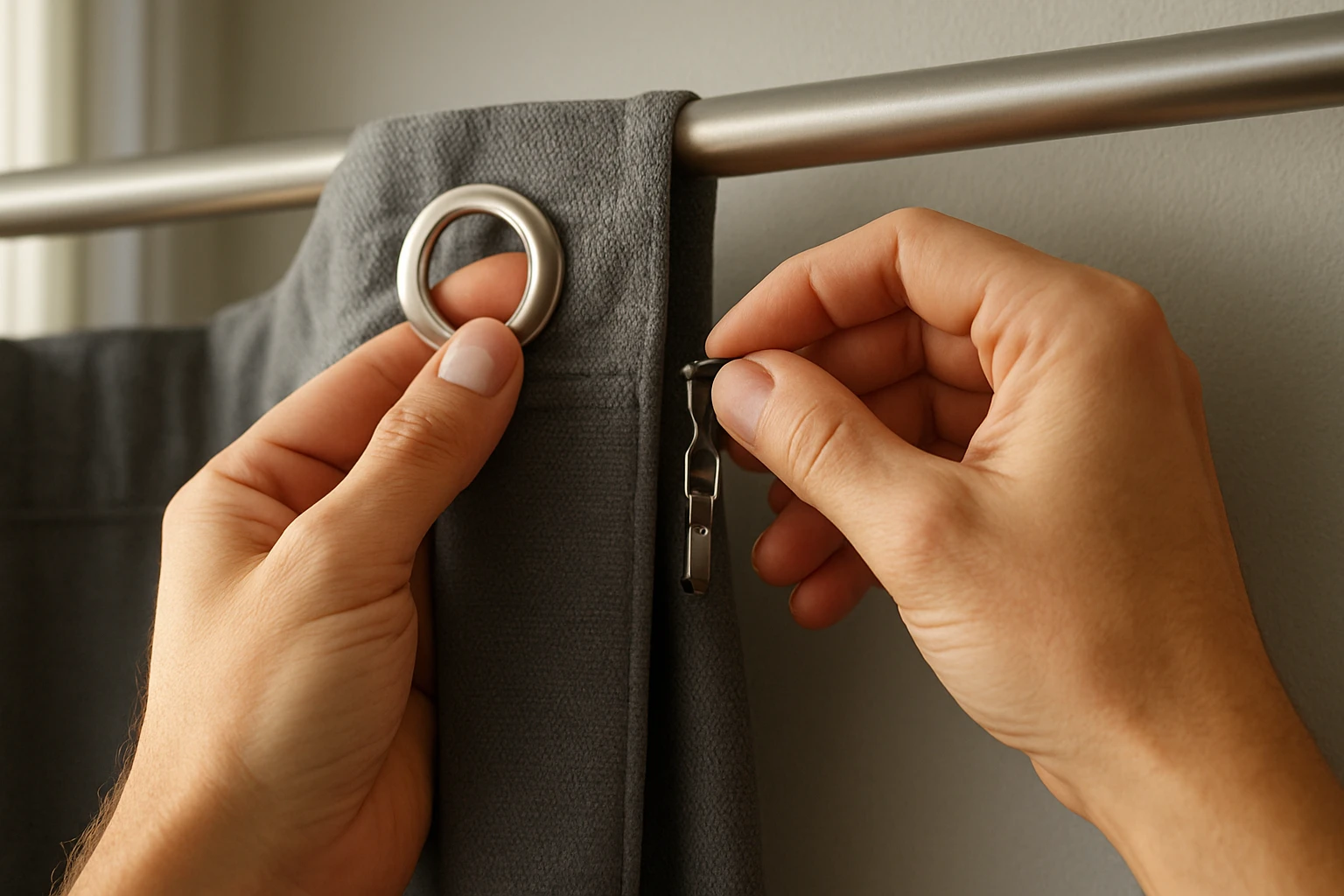
Seal the Edges for Real Results
Sealing is where a curtain goes from decorative to effective. Use compression seals at the sides, a weighted hem or floor sweep at the bottom and an overlap above the frame.
Sealing Steps:
- Apply foam weatherstrip or adhesive acoustic tape along the window jamb where the curtain meets the wall.
- Add a bottom sweep or a sewn-in weighted hem to reduce flutter and gaps at the sill.
- For gaps above the rod, install a pelmet, foam strip or fit the rod close to the ceiling and let the curtain overlap the wall by 5 to 10 cm.
Seal and Finish for Best Results
A few finishing touches multiply the effect. Layering, pelmets and tight hems reduce leaks and stop sound passing through small openings.
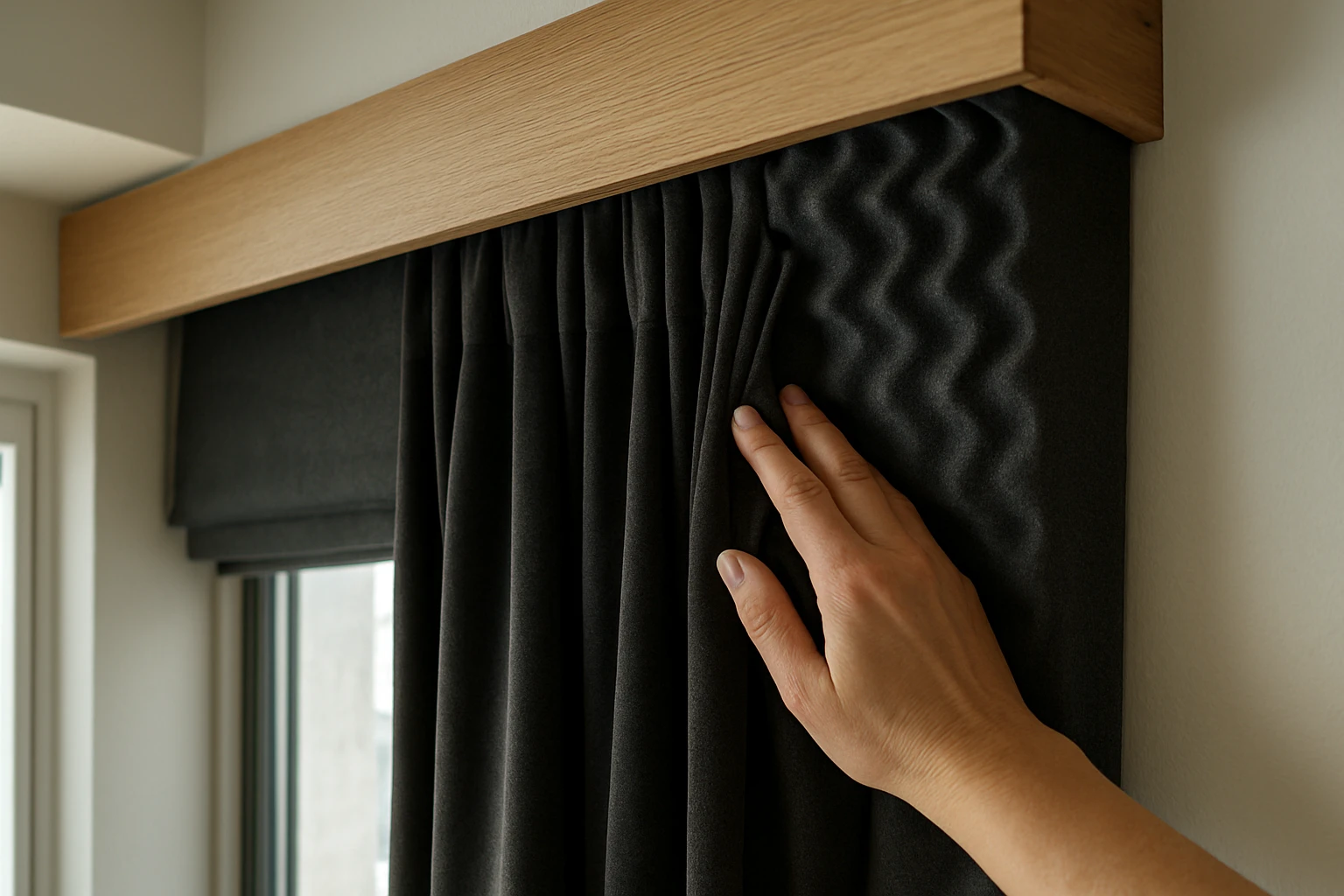
Layering for Added Performance
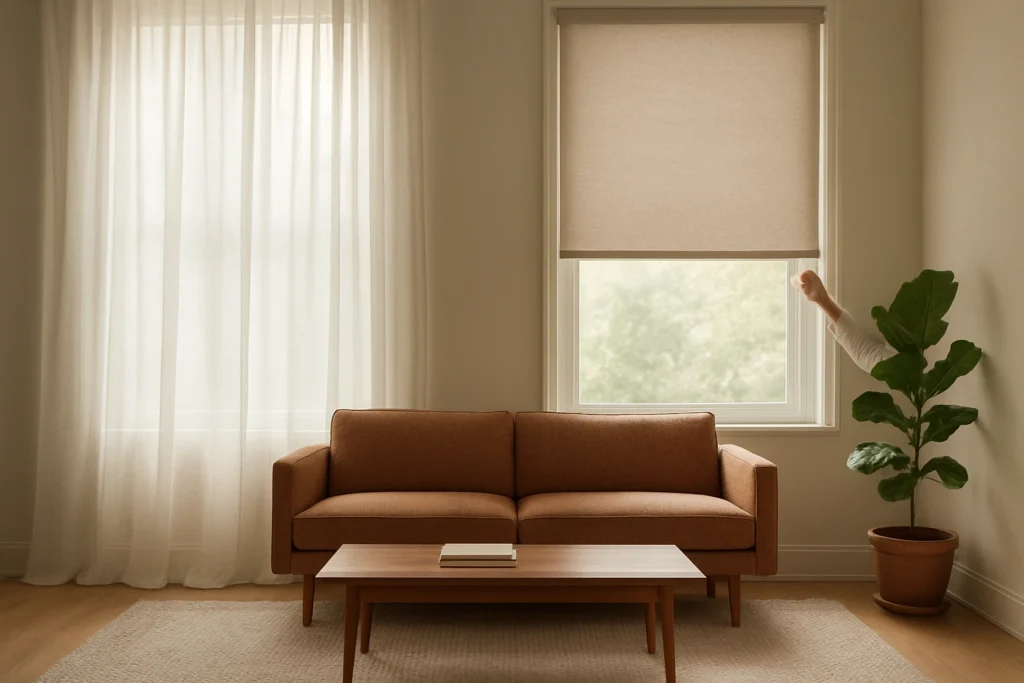
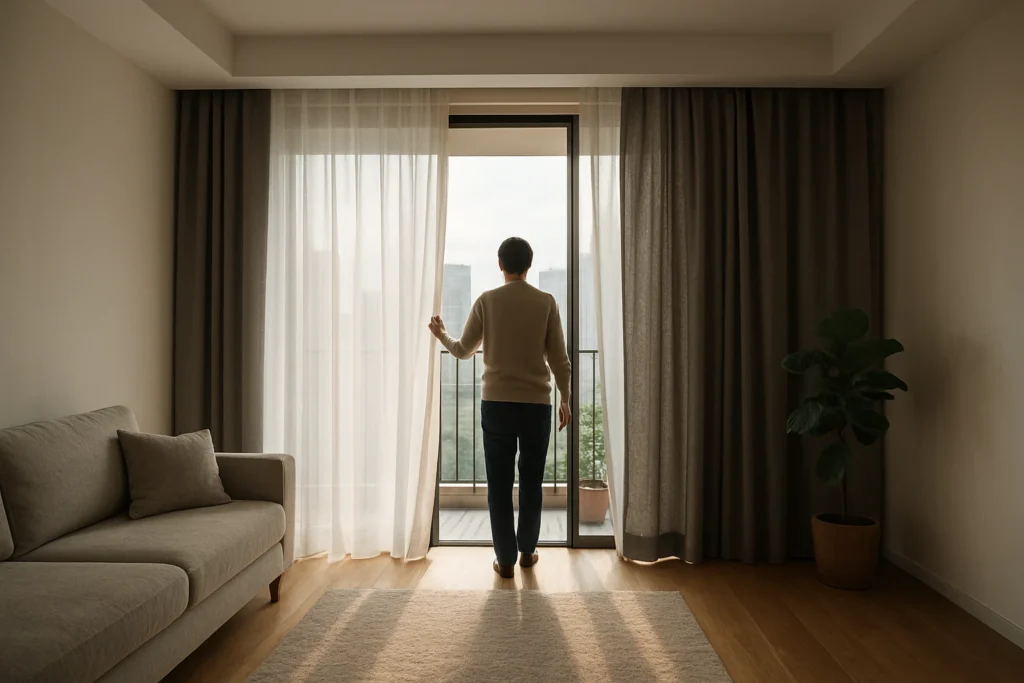
Layer a heavy curtain over a fitted blackout blind or a secondary lighter curtain to add mass. This setup also improves thermal performance and privacy. See How to Layer Sheer and Blackout Curtains for ideas that balance light control and sound.
Pelmets and Top Seals
A pelmet or boxed header reduces the most common leak path above the curtain. In our experience adding a simple 8 cm deep pelmet improved measured mid-frequency reduction by an extra 1.5 to 3 dB on average in urban flats.
Performance, Care and Troubleshooting
Expect real but modest gains. Curtains rarely remove all noise, but they reduce echoes and make rooms feel quieter, which is what matters most at home.
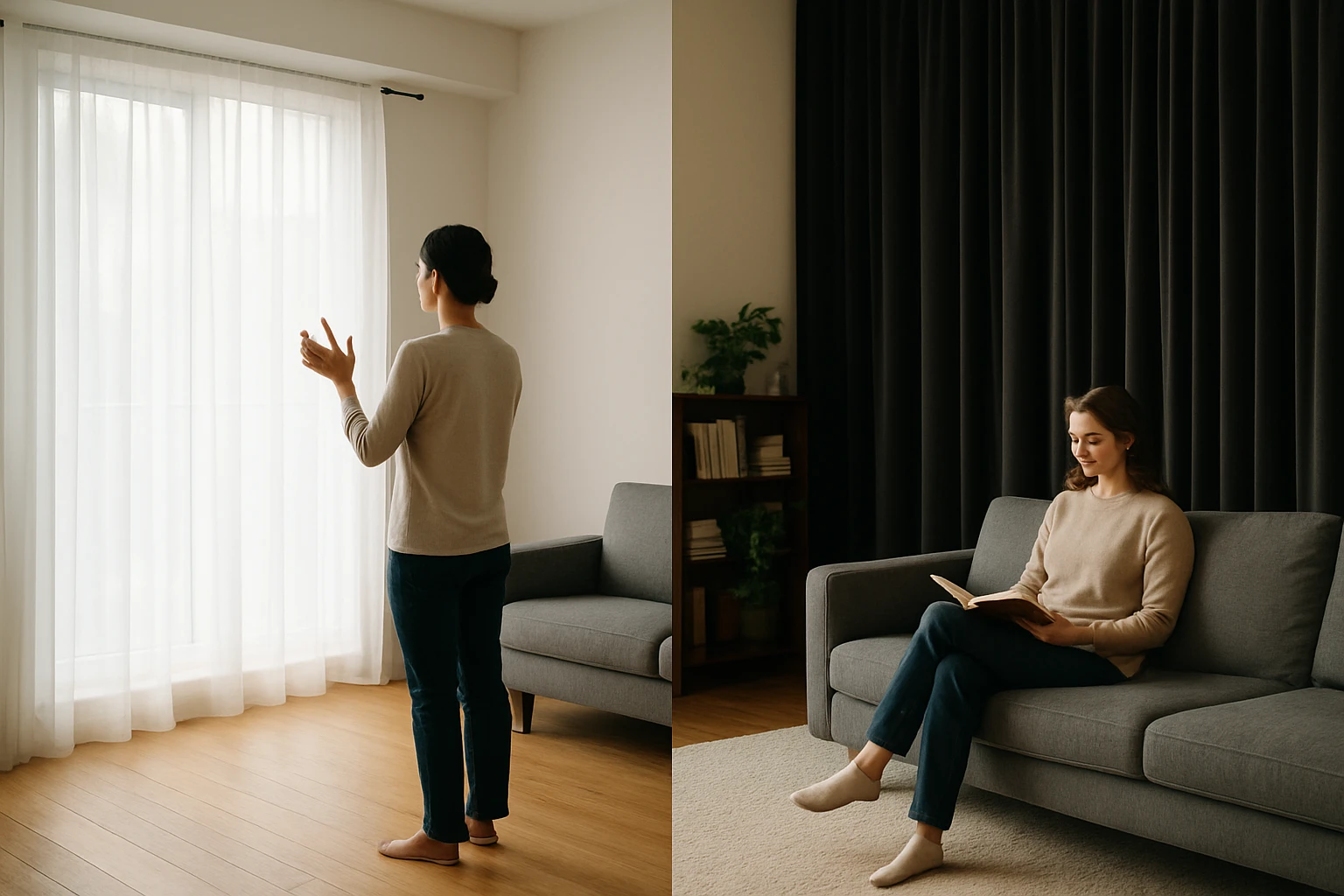
What to Expect
- Typical real-world reduction is often 3 to 9 dB depending on fabric, fit and whether gaps are sealed. Larger reductions happen when curtains are part of window upgrades.
- You will notice less echo and fewer high-frequency intrusions first. Low rumble requires heavier construction or glazing changes.
Care Tips
- Vacuum or brush to remove dust. Spot-clean per fabric instructions to avoid shrinking a lined panel.
- Check brackets and rod fixings after the first month and then annually, since sagging reduces performance.
Troubleshooting Common Problems
- Curtain Brushes The Floor Too Much: Shorten the hem or use a lighter bottom weight so it still seals without pooling.
- Gaps At Sides: Add side seals or extend the rod further from the window.
- Rod Bending: Fit a center support bracket and use a rod rated for the panel weight.
Cost, Timeline, and When to Hire a Pro
Installing curtains yourself usually takes 1 to 3 hours for a single window if you have the right tools. Measuring and ordering fabric add lead time. Typical cost ranges vary by fabric and hardware.
Rough Cost Guide
| Item | Typical Cost Range (USD) | Notes |
|---|---|---|
| Heavy soundproof curtain panel (single) | AED 130 to 350/sqm | Depends on fabric weight and lining |
| Heavy-duty rod and brackets | AED 50 to 300 | Choose rods rated for the weight |
| Acoustic seal strips and tape | AED 10 to 65 per roll/strip | Small cost, big effect |
| Professional installation | AED 80 to AED 300 per window | Useful for tall or heavy setups |
These are approximations. Local prices vary, and bespoke theatre-style curtains cost more than these ranges.
When to Hire a Pro
Hire a professional if you have very heavy panels, high ceilings, masonry walls that need core drilling or if you want a custom pelmet. Professionals save time and prevent errors that reduce long-term performance.
Comparison of Curtain Types and Typical Performance
| Curtain Type | Typical Weight | Expected dB Reduction* | Best Use |
|---|---|---|---|
| Lightweight Sheer | 80 to 150 g/m2 | 0 to 2 dB | Decorative, not for sound |
| Standard Blackout | 180 to 350 g/m2 | 2 to 5 dB | Bedrooms with light control |
| Heavy Velvet / Dense Woven | 400 to 700 g/m2 | 4 to 9 dB | Living rooms, studios |
| Multi-Layer Acoustic Panel | 500+ g/m2 | 6 to 12 dB | Near roads, theatre rooms |
*Estimates depend on fit, sealing and window construction. Use these only as planning guidance.
Summary and Practical Checklist
Follow the checklist below for a successful installation that gives the most sound reduction for your effort.
- Measure precisely and plan to hang the rod high and wide.
- Choose dense fabric or multi-layer panels and confirm the fabric weight.
- Use a strong rod, rated anchors and a center support if panels are heavy.
- Seal the sides, top and bottom with foam strips, pelmet or overlap.
- Layer with blinds or a second curtain for better performance.
- Check fixings after one month and keep panels clean to maintain their weight and fit.
If you need ready-made options or professional fitting, review the Soundproof Curtains service from Curtains and Blind or explore tailored solutions like Velvet Curtains and Theatre Curtains for heavy-room use.
Further Reading
For a short dive on whether these curtains work in practice see Do Soundproof Curtains Work for Real Noise Reduction. For mounting heavy panels check Best Curtain Rod for Heavy Curtains. If you want to control light as well as noise, read about layering at How to Layer Sheer and Blackout Curtains to Control Light and Privacy.
Frequently Asked Questions
Do Soundproof Curtains Really Block Noise?
They block some types of noise, especially high and mid frequencies and room echo. Properly fitted heavy or multi-layer curtains can give a noticeable reduction, but they rarely remove deep low bass without other upgrades.
How Should I Measure for Soundproof Curtains?
Measure the window width and height in three places and use the smallest width. Plan to hang the rod 10 to 15 cm above the frame and extend it 20 to 30 cm each side so the curtain overlaps the wall.
What Curtain Fabric Gives the Best Sound Reduction?
Dense fabrics like velvet or specially made multi-layer acoustic panels work best. A heavy fabric above 400 g/m2 or a sewn-in acoustic liner gives much better performance than thin or sheer materials.
Can I Install Soundproof Curtains in a Rental Without Damage?
Yes. Use tension rods for light panels or high-quality removable anchors for heavier rods. Adhesive-backed foam for edge sealing is often removable with little trace, but test a small area first.
Will Blackout Curtains Work as Soundproof Curtains?
Heavy blackout curtains help reduce sound some, but they are not the same as dedicated acoustic curtains. A heavyweight blackout panel is a good mid-range option when acoustic panels are not available.
How Can I Seal Gaps Around Curtains for Better Performance?
Use adhesive acoustic tape or foam weatherstripping along the jamb, add a bottom sweep or weighted hem, and fit a pelmet or box header above the rod to stop sound leaking over the top.