If your blinds will not go up, start by checking the cord, the ladder tape or slats, and the headrail for visible jams, then try simple resets like releasing the mechanism or raising each side by hand. Small problems often clear in a few minutes, and the steps below cover corded, cordless, spring, roller, venetian and motorized systems so you can find the right fix for your exact blind type.
In this guide, Curtains and Blind explains practical fixes you can try at home and when to call a pro so you save time and avoid damage.
Quick Checks Before You Start
Before any repair, make these quick checks so you do the simplest thing first and avoid extra work.
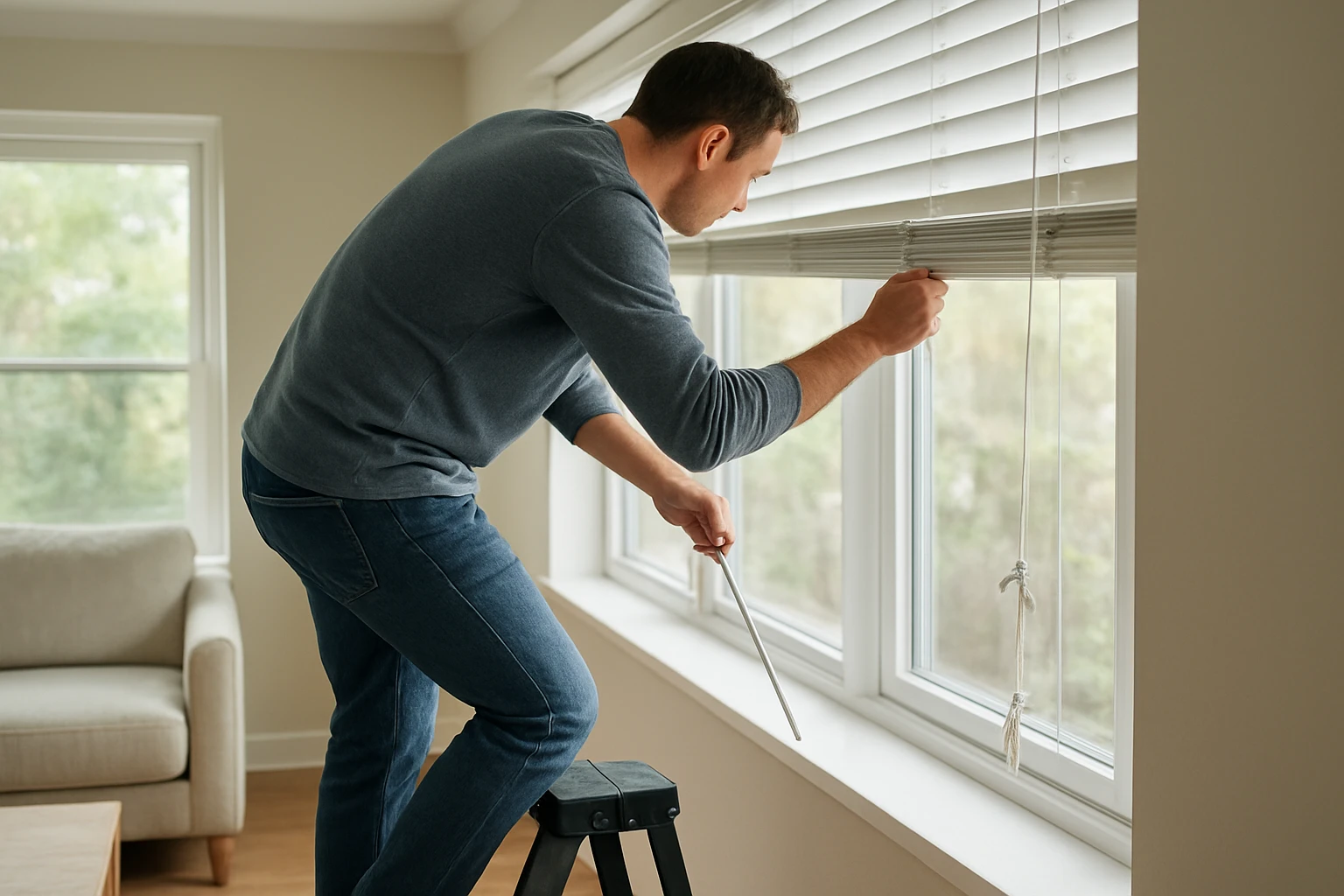
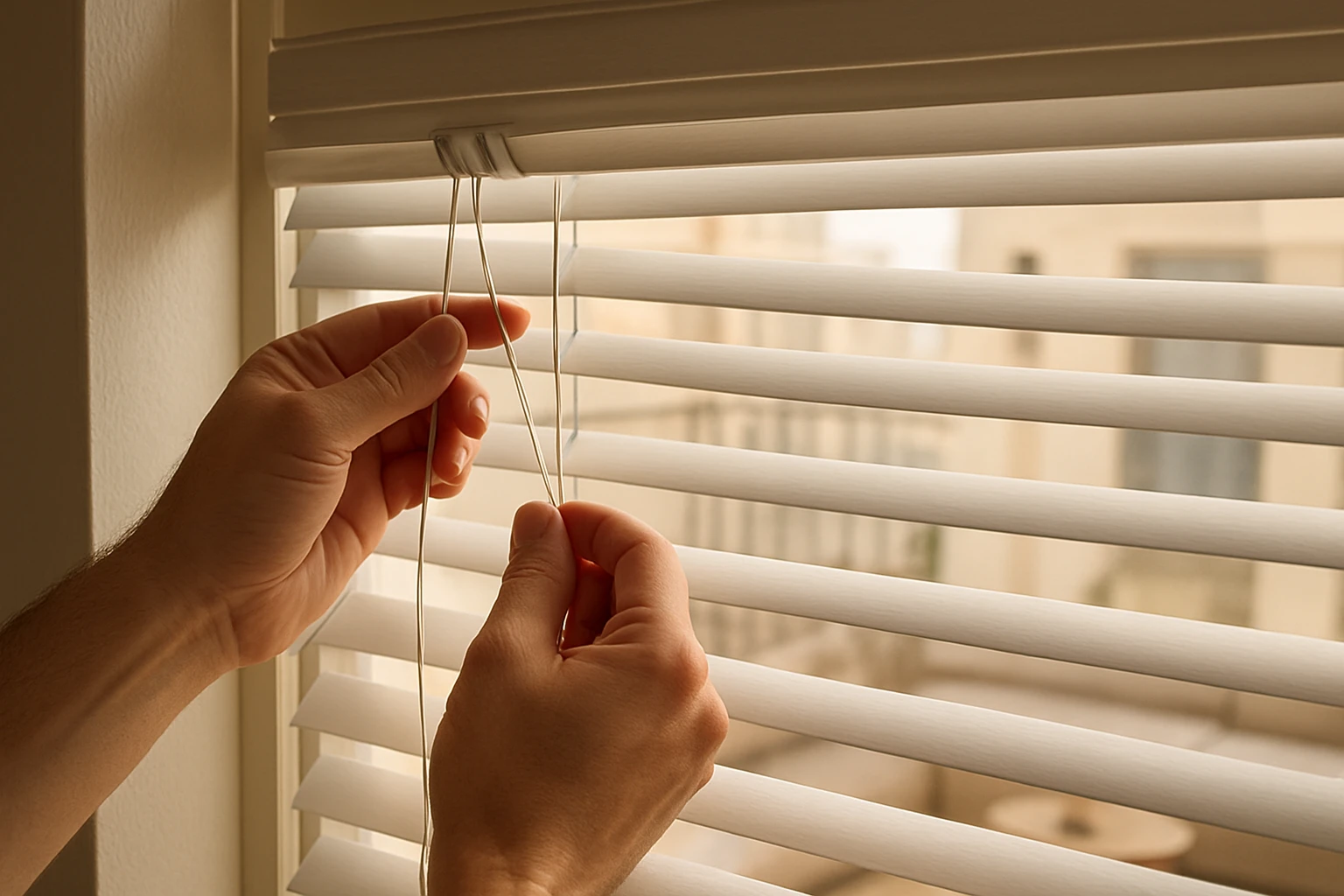
- Look for an obvious jam where the cord enters the headrail or where the lift mechanism sits. A twisted cord or a trapped slat often stops upward motion.
- Make sure any lock is released. Some headrails have a small latch or clutch that keeps the blind down while you clean it, and it can be easy to miss.
- Check for knotted or frayed cord near the bottom rail. That can block movement when you pull.
- Try lifting from the center and then each side. The blind may be caught on one bracket or bent on one end.
If these quick checks do not work, move to the section that matches your blind type below.
How to Fix Corded Blinds That Won’t Go Up
Corded blinds use a loop or two cords that operate a clutch in the headrail. Most problems are a jam, a slipped cord, or a worn clutch.

Tools and Safety
Tool Checklist:
- Small flat screwdriver
- Needle-nose pliers
- Scissors
- Soft cloth to rest parts on
What to Do First:
Release any lock on the headrail and pull the lift cord gently to see if it slips. If the cord feels stuck, follow the steps below.
Safety Tips:
Keep children and pets away while you work. Use a stable step stool so you do not lean or strain when reaching the headrail.
Step 1 Inspect the Cord and Headrail for Jams
If the cord is frayed or knotted, it can catch inside the clutch and stop the blind. Remove visible knots and straighten the cord first.

Steps:
- Raise the bottom rail a little by hand while you hold the cord so tension is clear, and look inside the headrail for trapped cord.
- Clear any debris and gently pull the cord to see if it moves through the clutch.
- If the cord moves but the blind still will not go up, the clutch may be worn and need replacement.
Step 2 Release and Test the Clutch
A stuck clutch often feels stiff or clicks without lifting the blind.
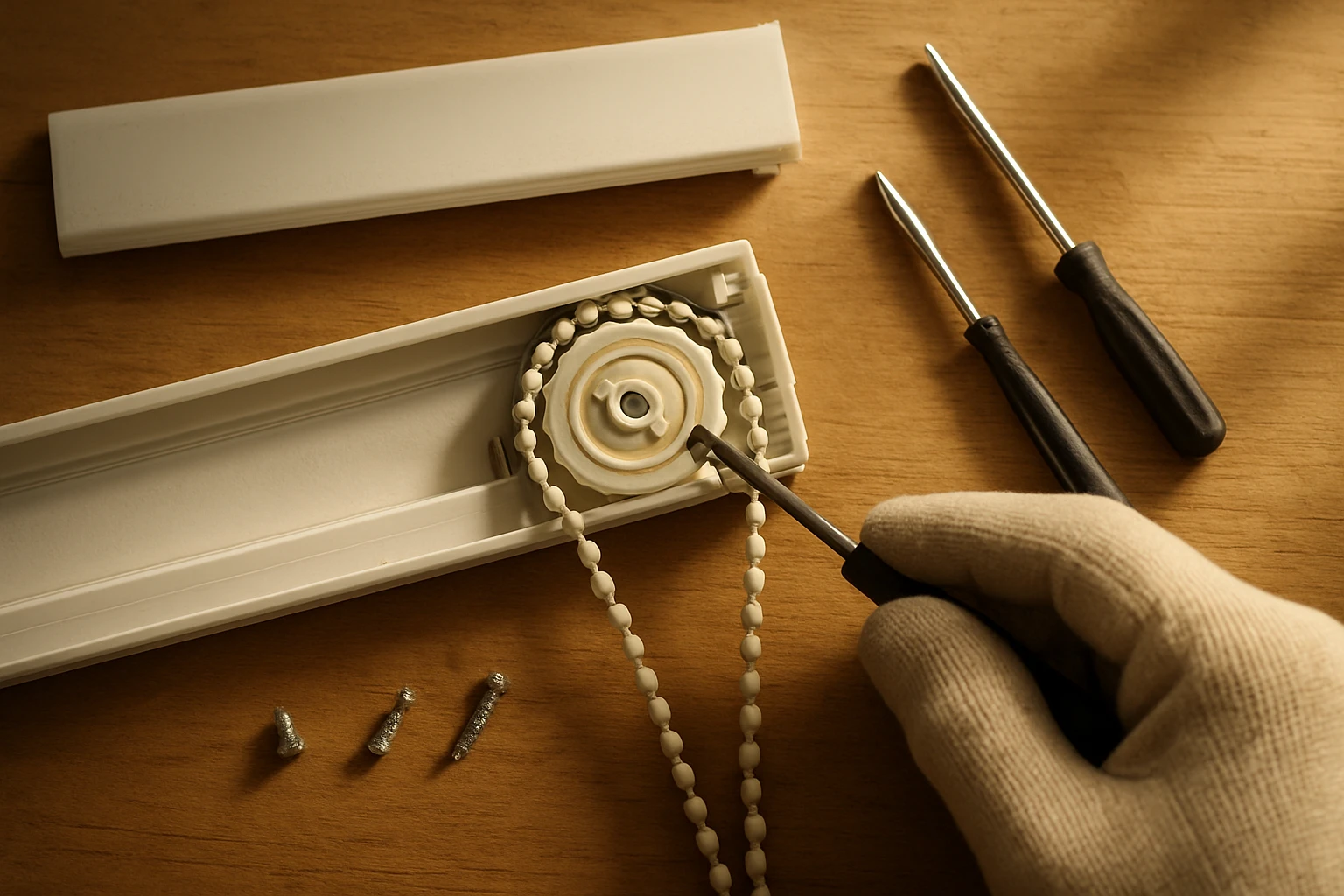
Steps:
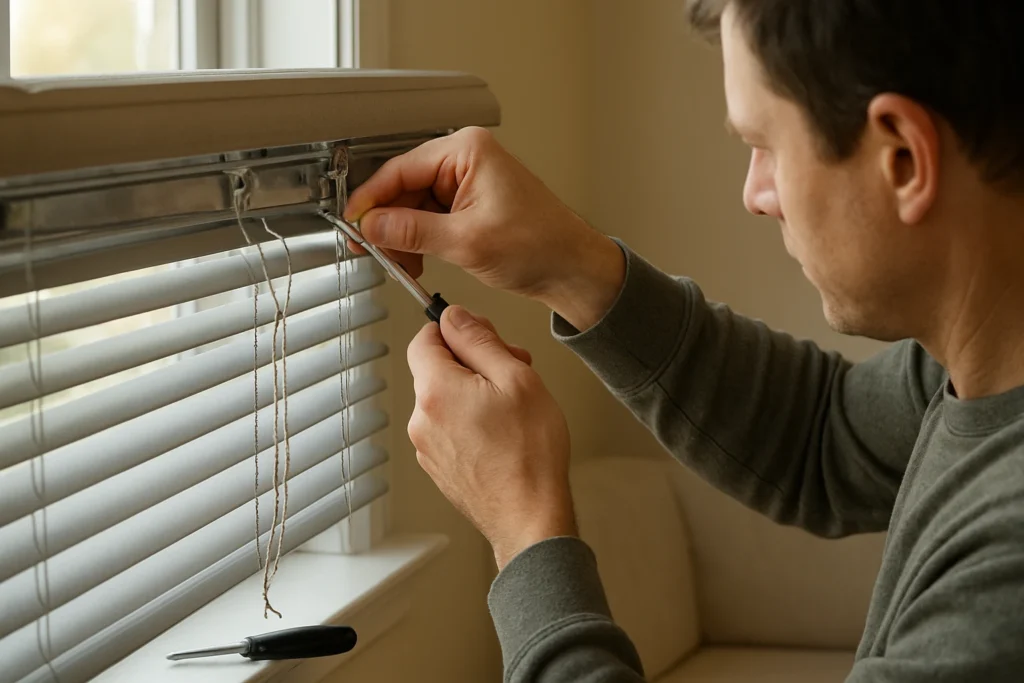
- Remove the headrail cover with a screwdriver, following the visible screws on the headrail.
- Inspect the clutch for broken gears or worn parts, and rotate it gently by hand to check free movement.
- If gears are damaged, replace the clutch assembly with the same model or the manufacturer’s recommended part.
Step 3 Replace the Cord If It Is Worn
A worn or stretched cord can slip in the clutch and stop lifting action.
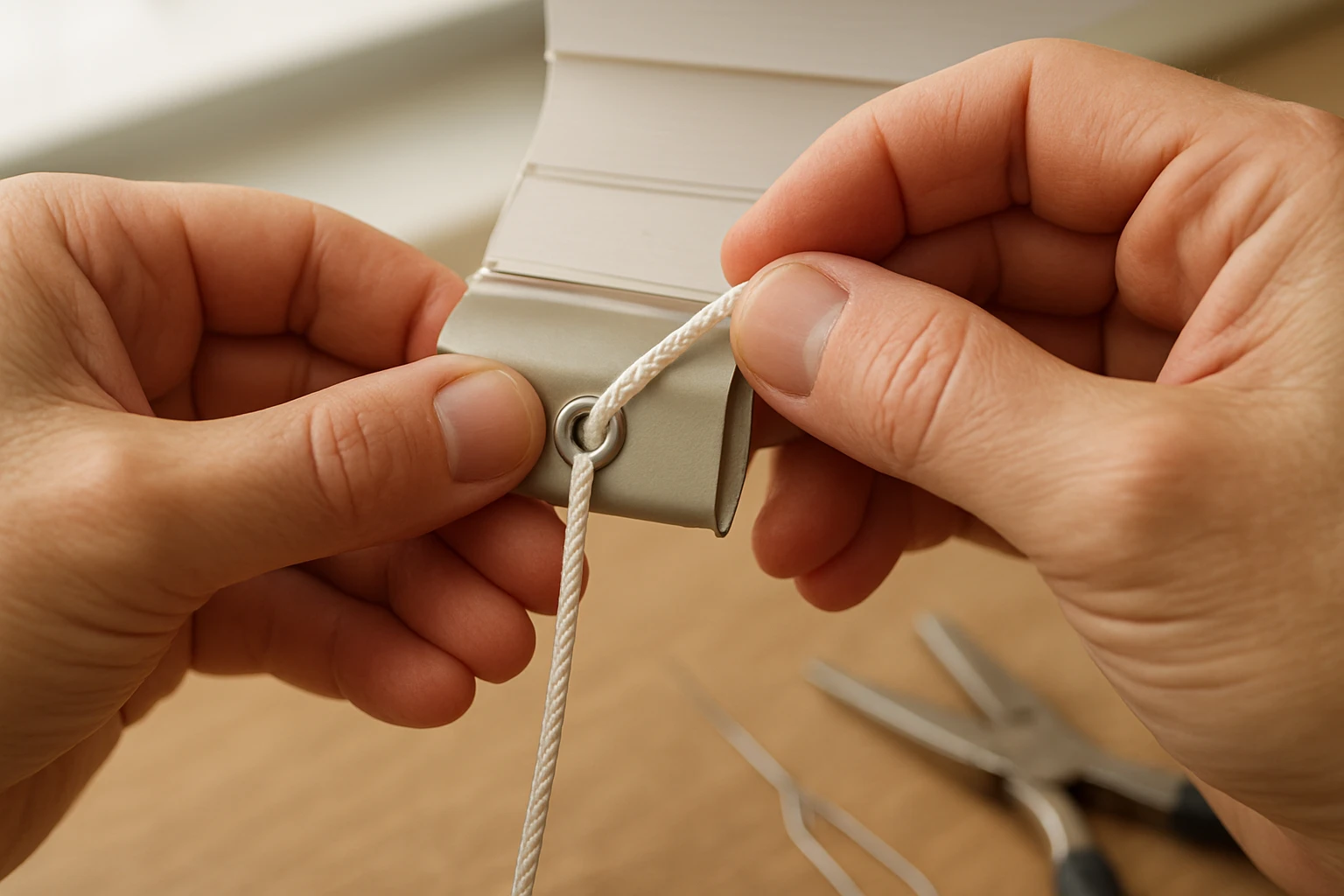
Steps:
- Unhook the bottom rail and free the old cord by loosening knots.
- Measure and replace with the same cord thickness and material, and knot securely so it seats in the clutch.
- Test the blind several times to be sure the cord runs smoothly through the entire travel.
If the clutch or headrail is badly damaged, a full replacement is often cheaper than repeated repairs. Your blind’s brand may offer spare parts, or a local supplier can match the clutch type.
How to Fix Cordless and Spring-Loaded Blinds
Cordless blinds use a spring inside the rail or a friction lock, and they need careful tension adjustments rather than cord work.

Step 1 Reset the Spring Tension
A common fix is to lower the blind fully and then rewind it to reset tension.
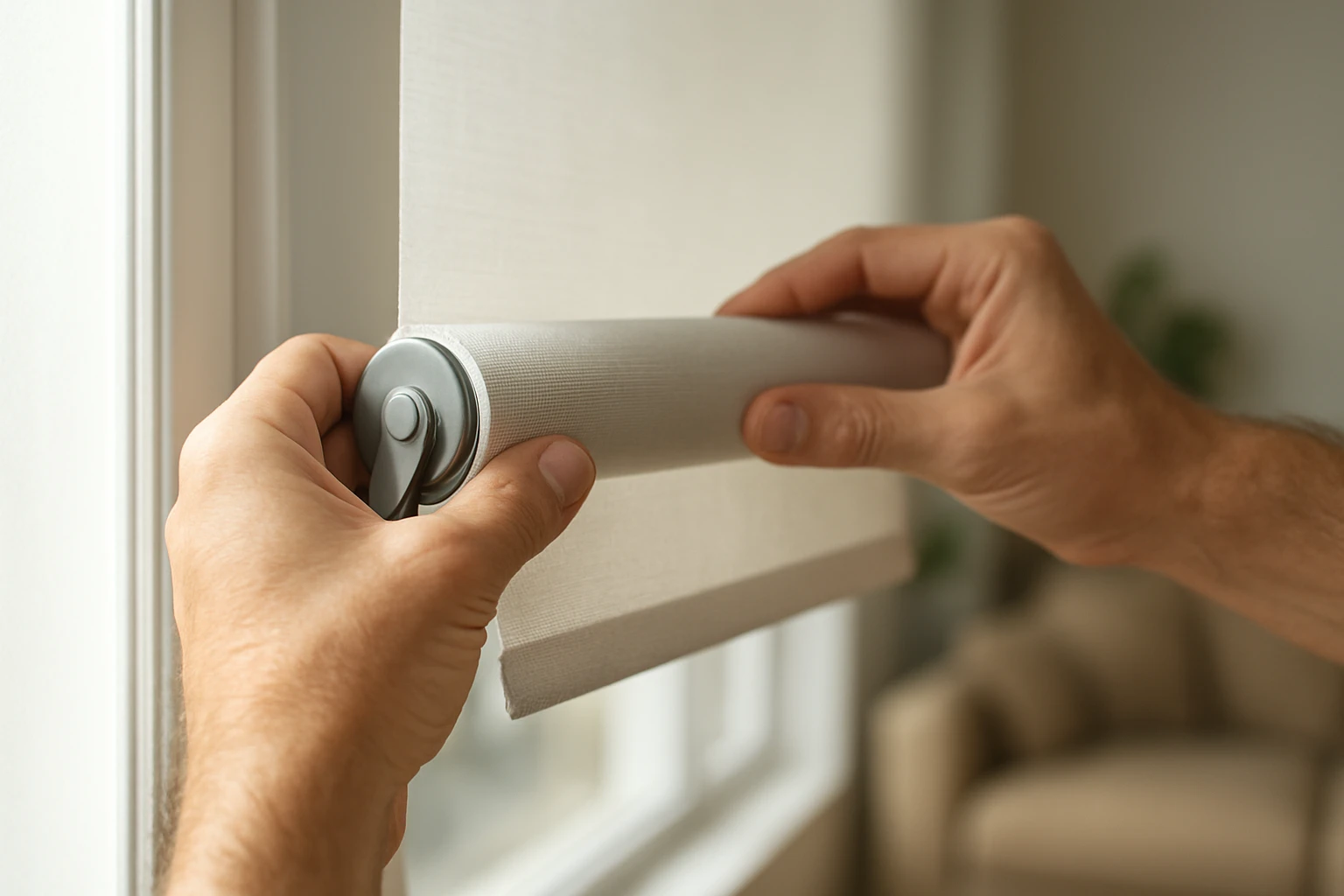
Steps:
- Pull the blind down fully so the fabric is flat, then hold the bottom rail and lift slightly while letting the spring wind or unwind until the blind moves smoothly.
- If the blind jumps or will not stay, the spring may be weak and the tube should be replaced.
- For some models, small tension screws in the end caps change how tightly the spring winds. Turn these a quarter turn at a time and test.
Step 2 Check the Mounting Brackets
If one end of the roller is loose, the blind will bind and not roll up properly.
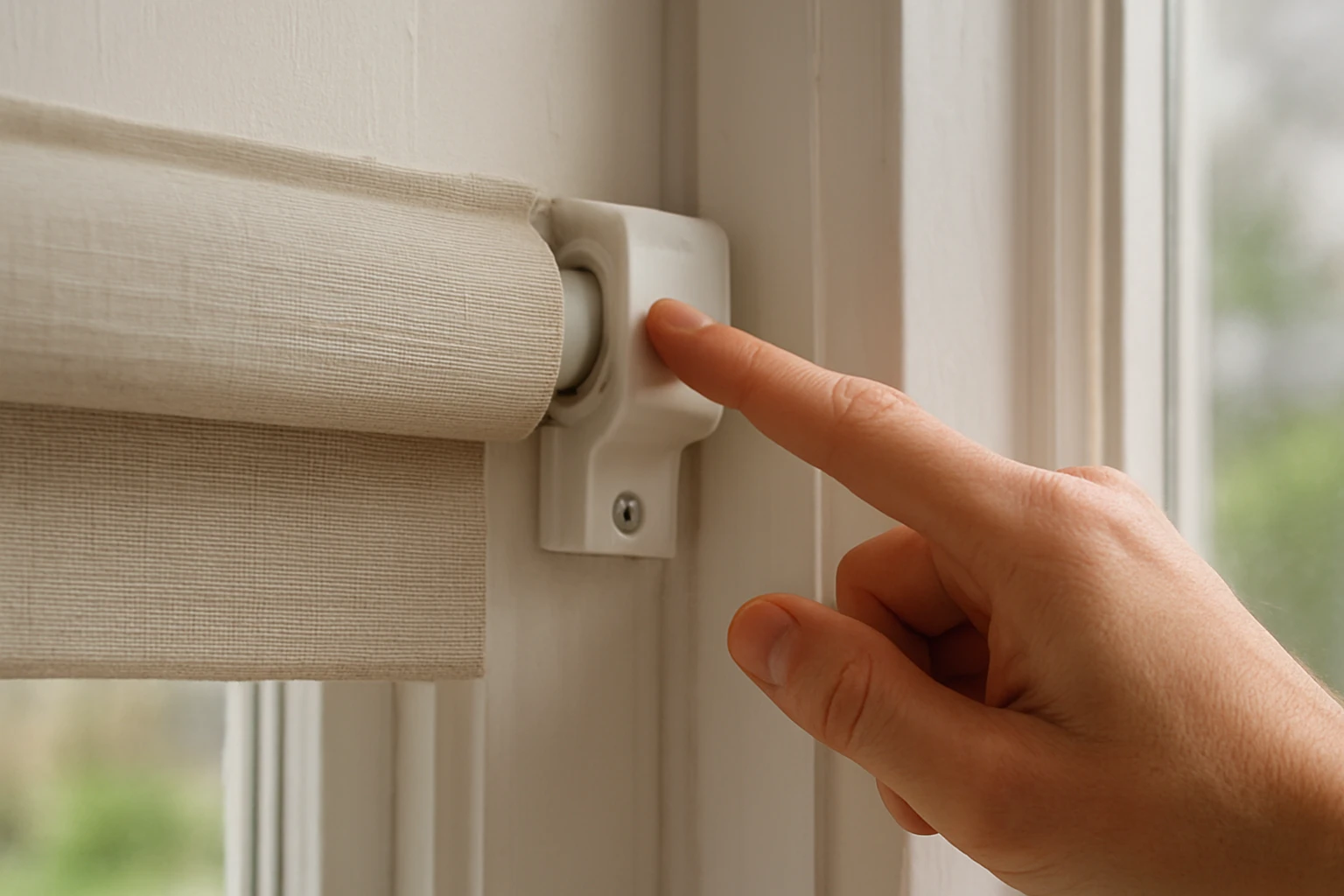
Steps:
- Remove the blind from the brackets and check for cracked or bent brackets.
- Replace or remount the bracket so the tube sits level. Level mounting avoids binding as the fabric winds.
If a cordless spring blind still will not go up after these checks, the internal spring is likely at the end of its life and replacement is the recommended fix.
How to Fix Motorized Blinds
Motorized blinds use a battery or wired motor inside the tube or headrail. Problems are often power related or due to a limit switch that needs resetting.
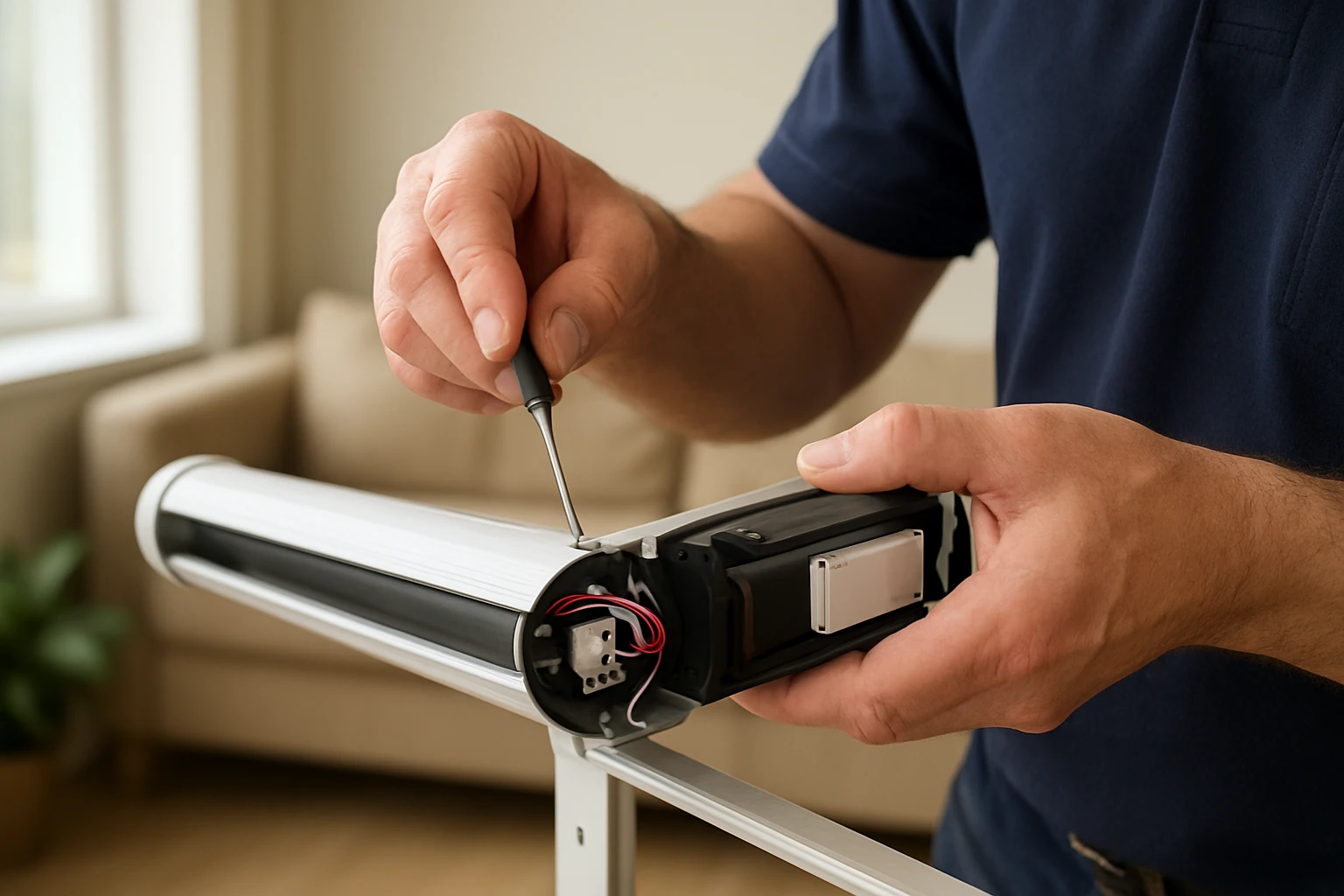
Step 1 Check Power and Remote
Start simple and confirm the motor has power.
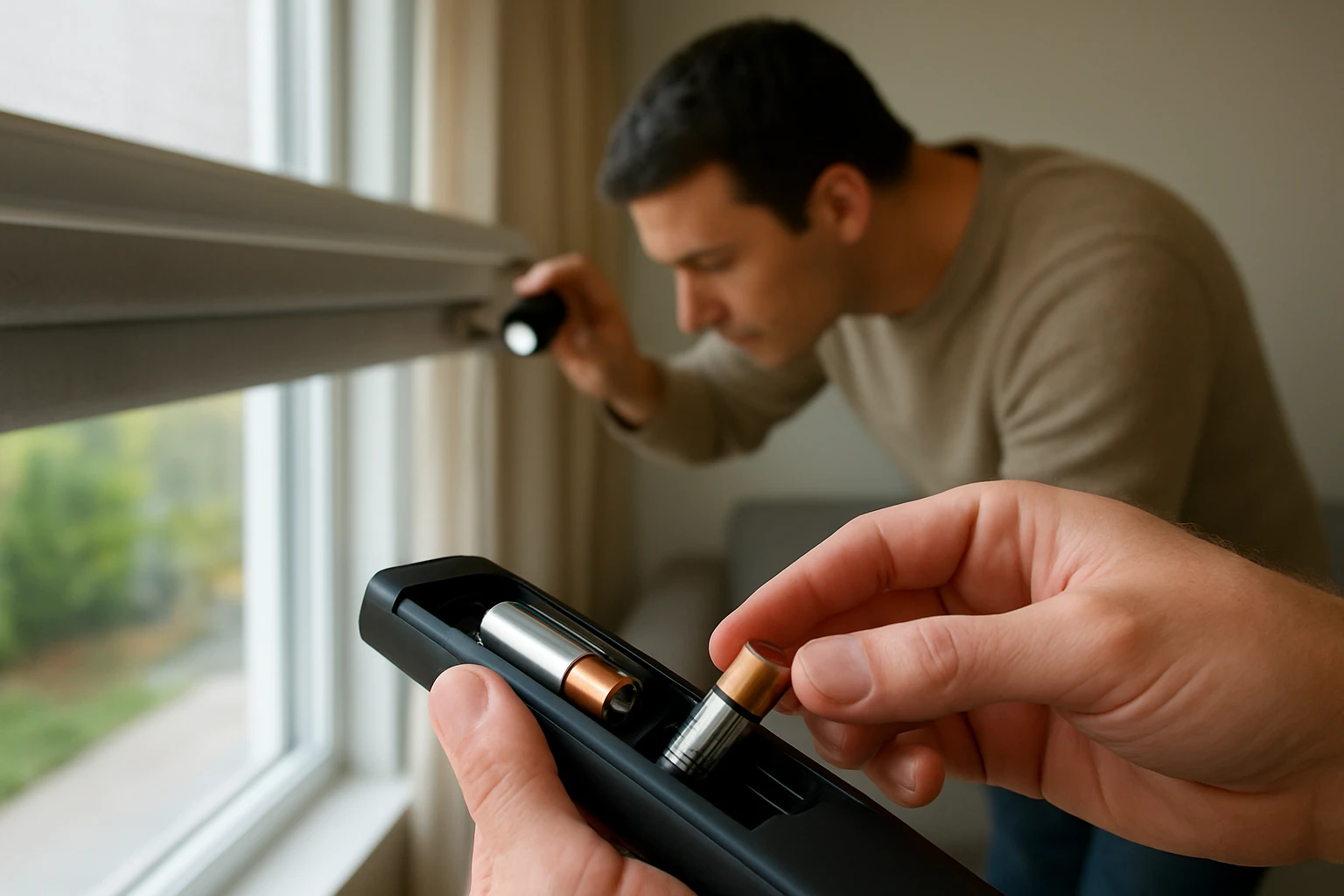
Steps:
- Replace remote batteries and try the remote at close range.
- If the blind runs only a little or not at all, check any inline battery pack or wired power supply and test with known good cells or a multimeter.
- Reset limits by following the manufacturer steps, usually a short press sequence on the remote or a small button on the motor end cap.
Step 2 Inspect the Motor and Gears
If the motor hums but the blind will not move, the gearbox or spline that connects motor to tube can be stripped.
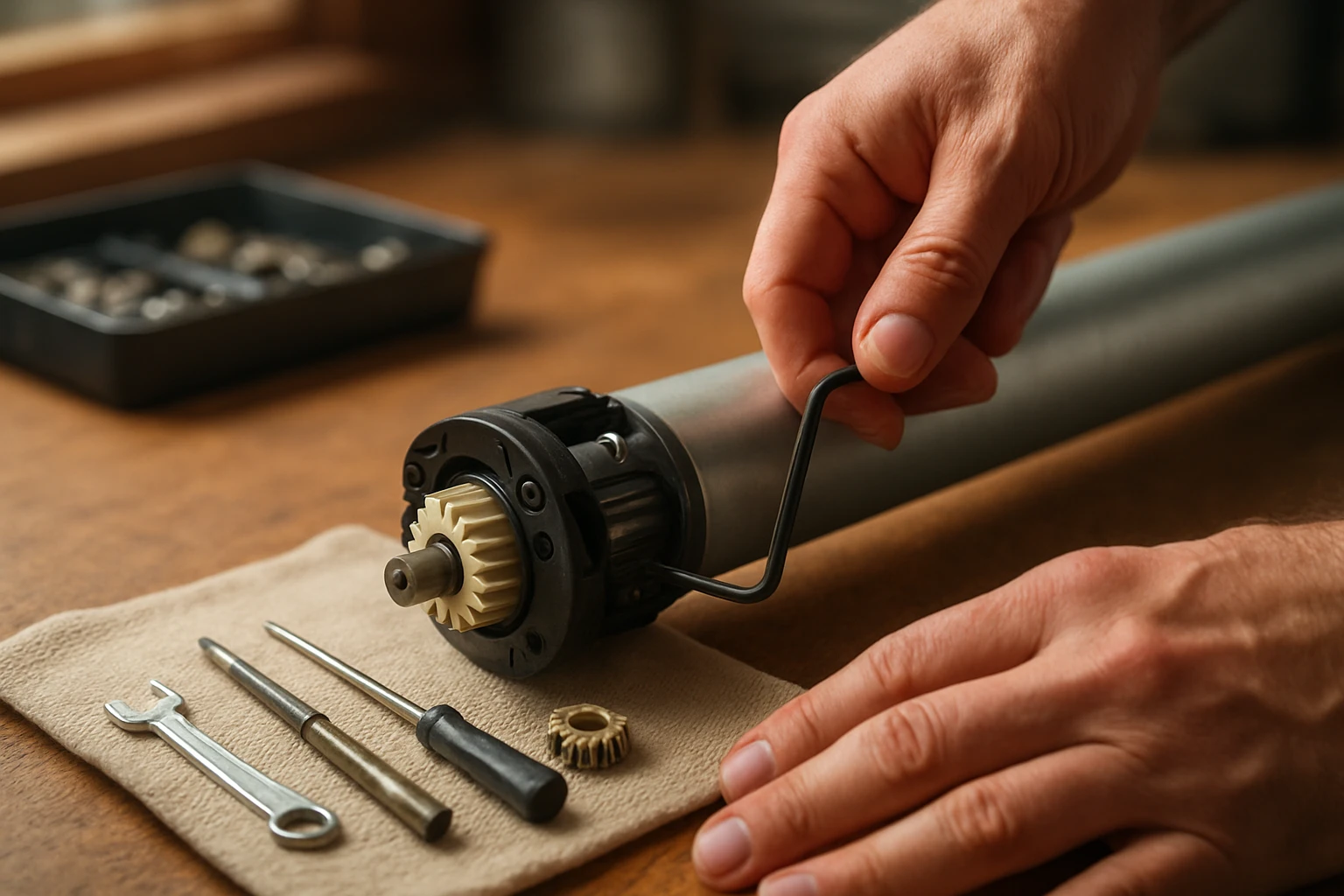
Steps:
- Remove the motor and inspect the spline and gearbox for stripped teeth.
- Replace the damaged part or the motor assembly if parts are not sold separately.
If you are not comfortable working with electric motors or wiring, call a trained technician or your blind supplier. For motorized models consider checking the manufacturer’s warranty before opening sealed components. For more on motorized options see Motorized Blinds.
Troubleshooting Common Blind Types
Different blind styles fail for different reasons. These notes help you focus on the right fix.
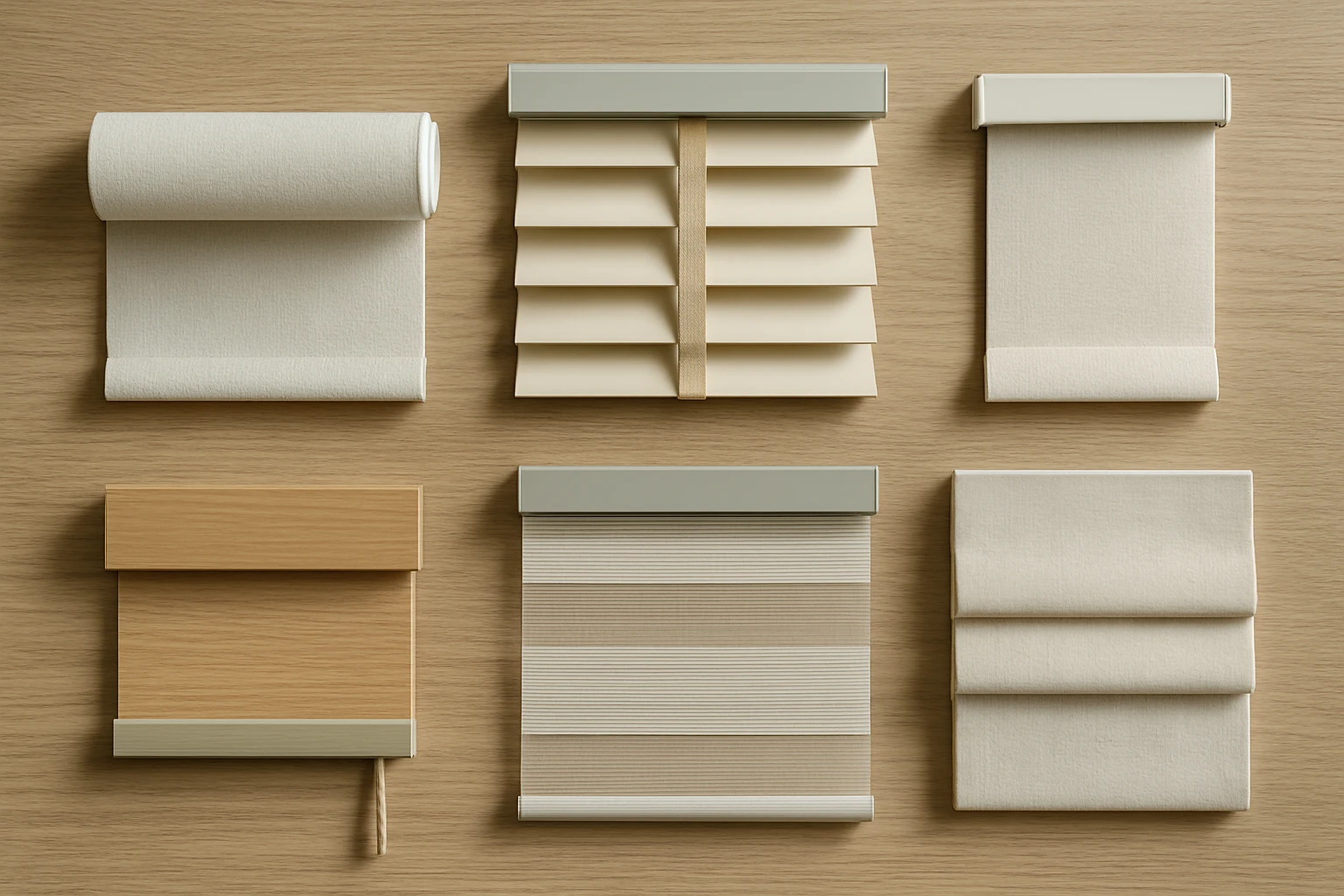
Roller Blinds
Problem: Fabric will not roll up evenly or stops.
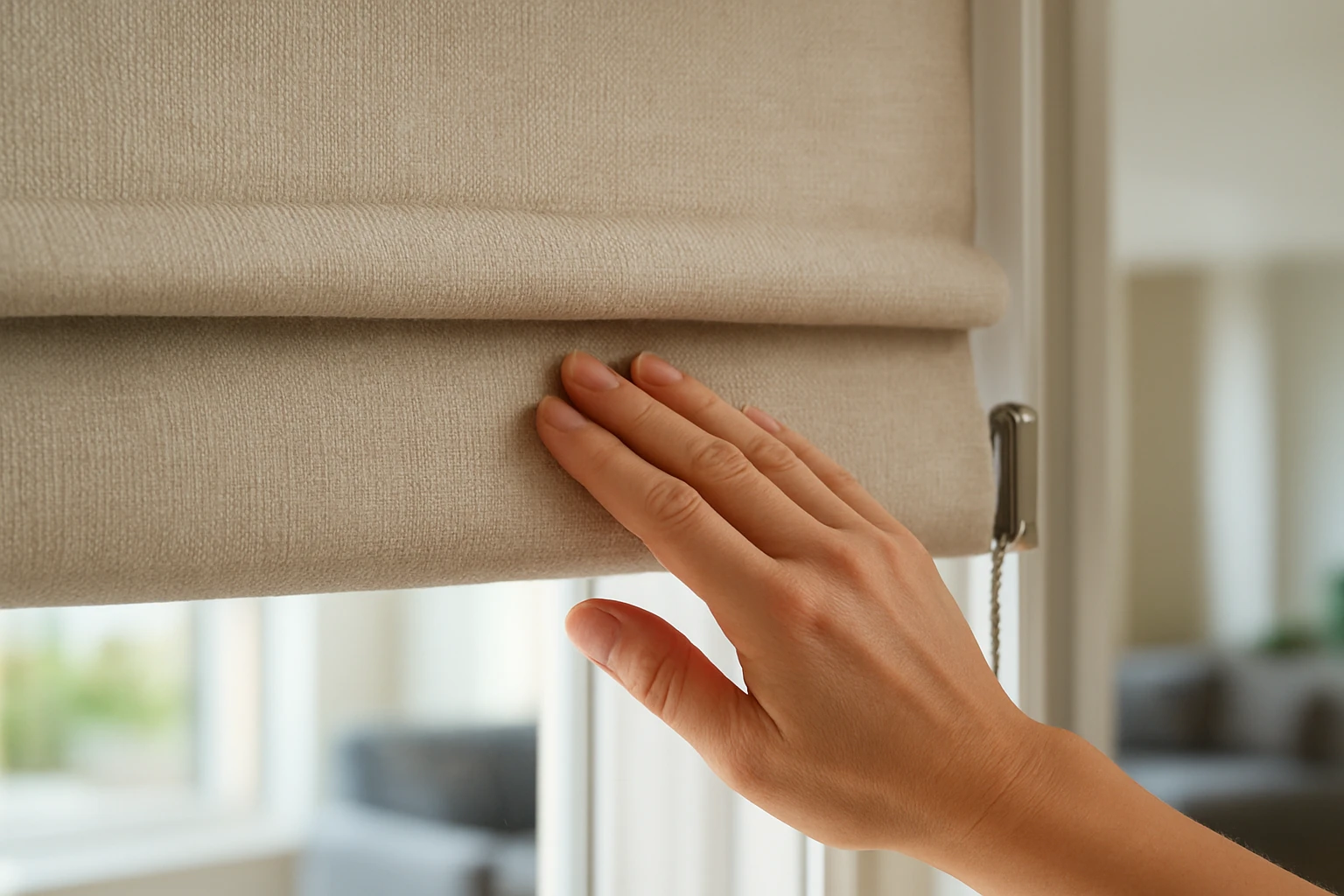
Likely causes and fixes:
- Tube is not level. Reposition brackets so the tube is perfectly horizontal.
- Fabric edge is caught. Unmount and re-roll carefully by hand.
- Spring is weak. Replace the tube or spring assembly.
See the Roller Blinds: Choose, Measure, Install and Care for Lasting Results post for measuring and mounting tips.
Venetian Blinds
Problem: Slats will not rise or they bunch on one side.
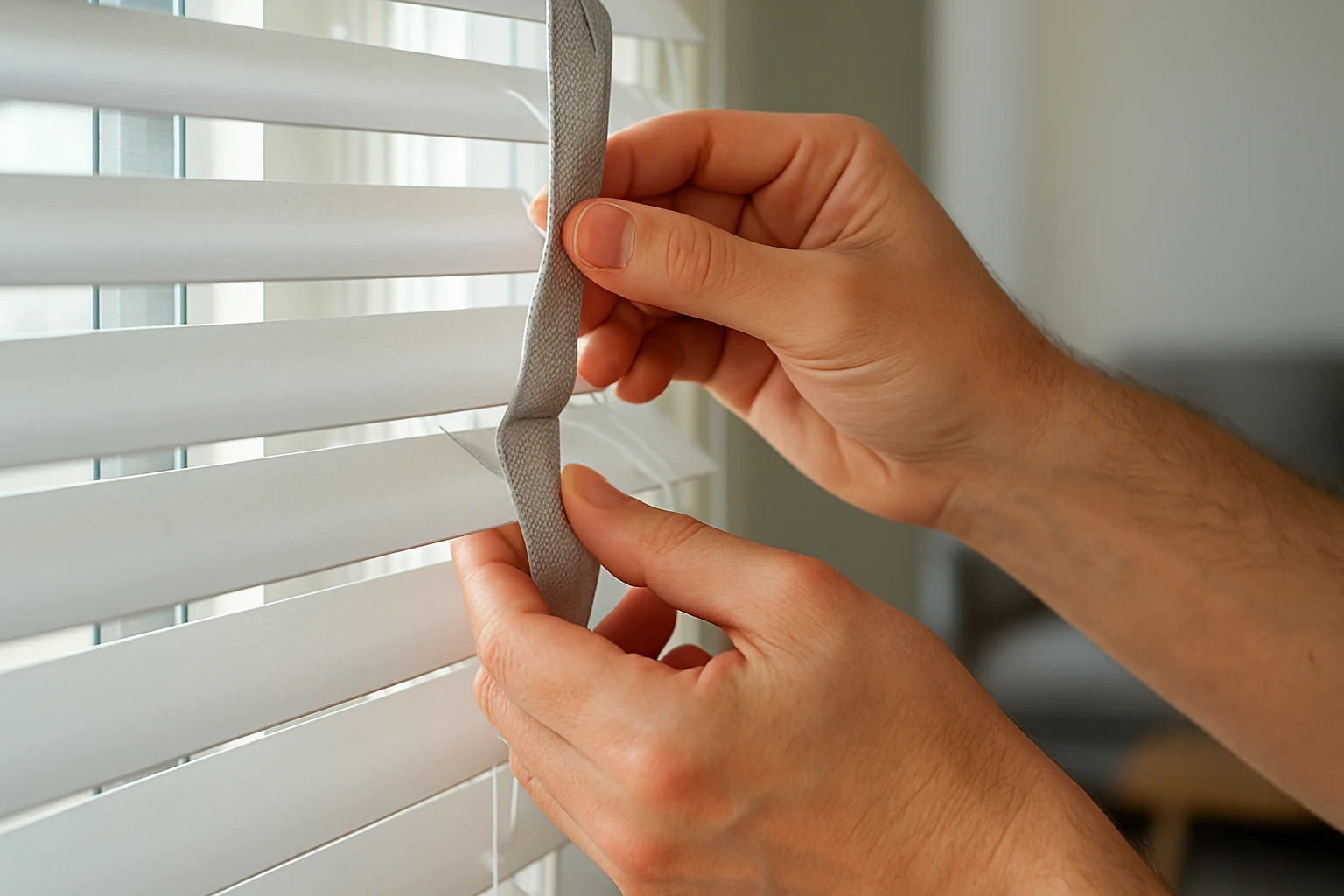
Likely causes and fixes:
- Ladder tape is tangled. Untangle or replace the ladder tape.
- Cord has jumped a hole in the slat stack. Re-thread the cord through the slat holes.
- Bottom rail is crooked. Straighten or replace it.
For wooden slats see Wooden Blinds and for venetian choices see Venetian Blinds.
Vertical Blinds
Problem: Slats do not slide up or they twist and stick.
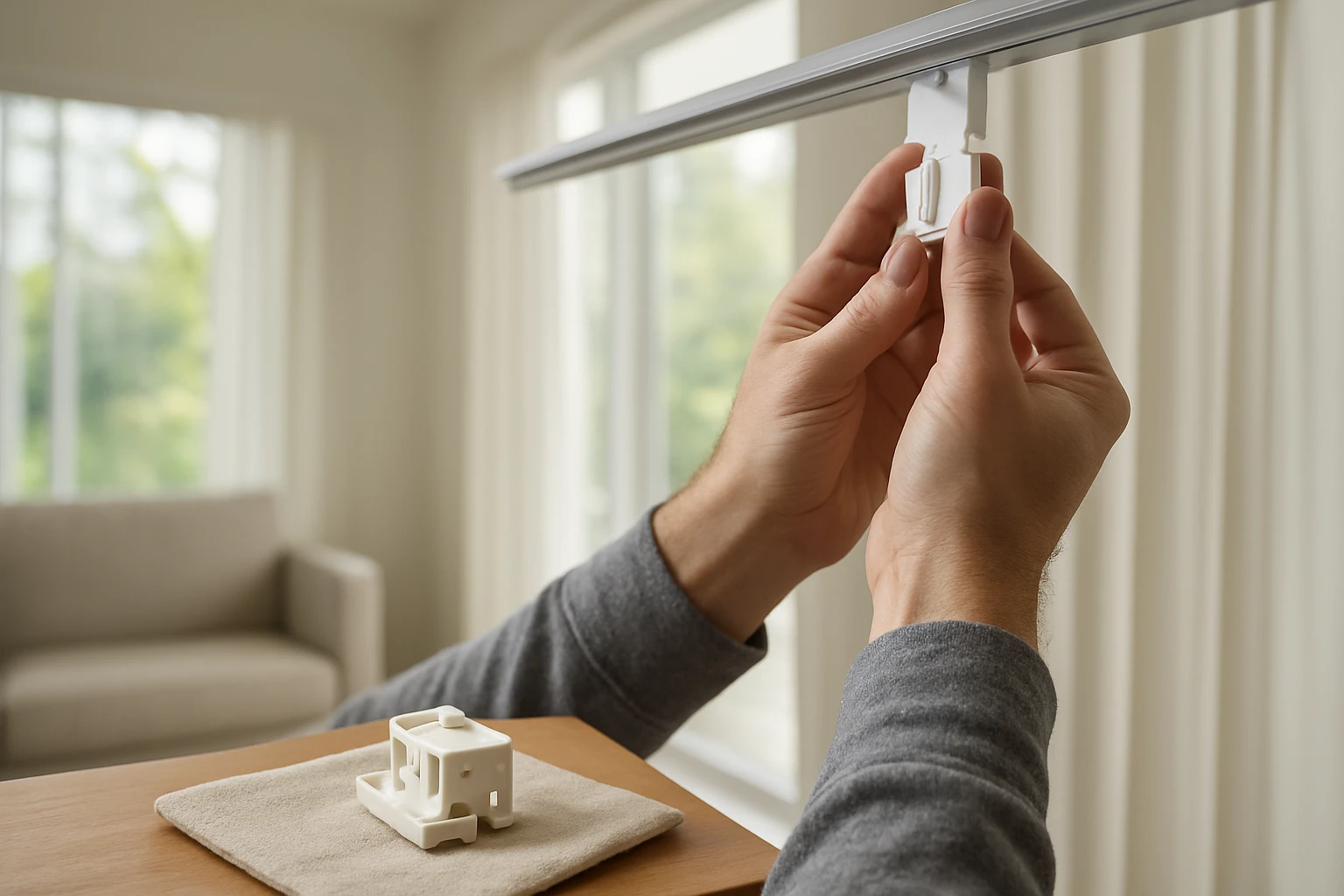
Likely causes and fixes:
- A carrier has come off the track or the stopper has broken. Replace the carrier or stopper.
- Track needs cleaning. Vacuum or wipe the track and apply a small amount of silicone spray for smoother travel.
- Slat head clips worn. Replace clips to keep slats secure.
See Vertical Blinds for replacement parts and track options.
Zebra, Roman and Blackout Blinds
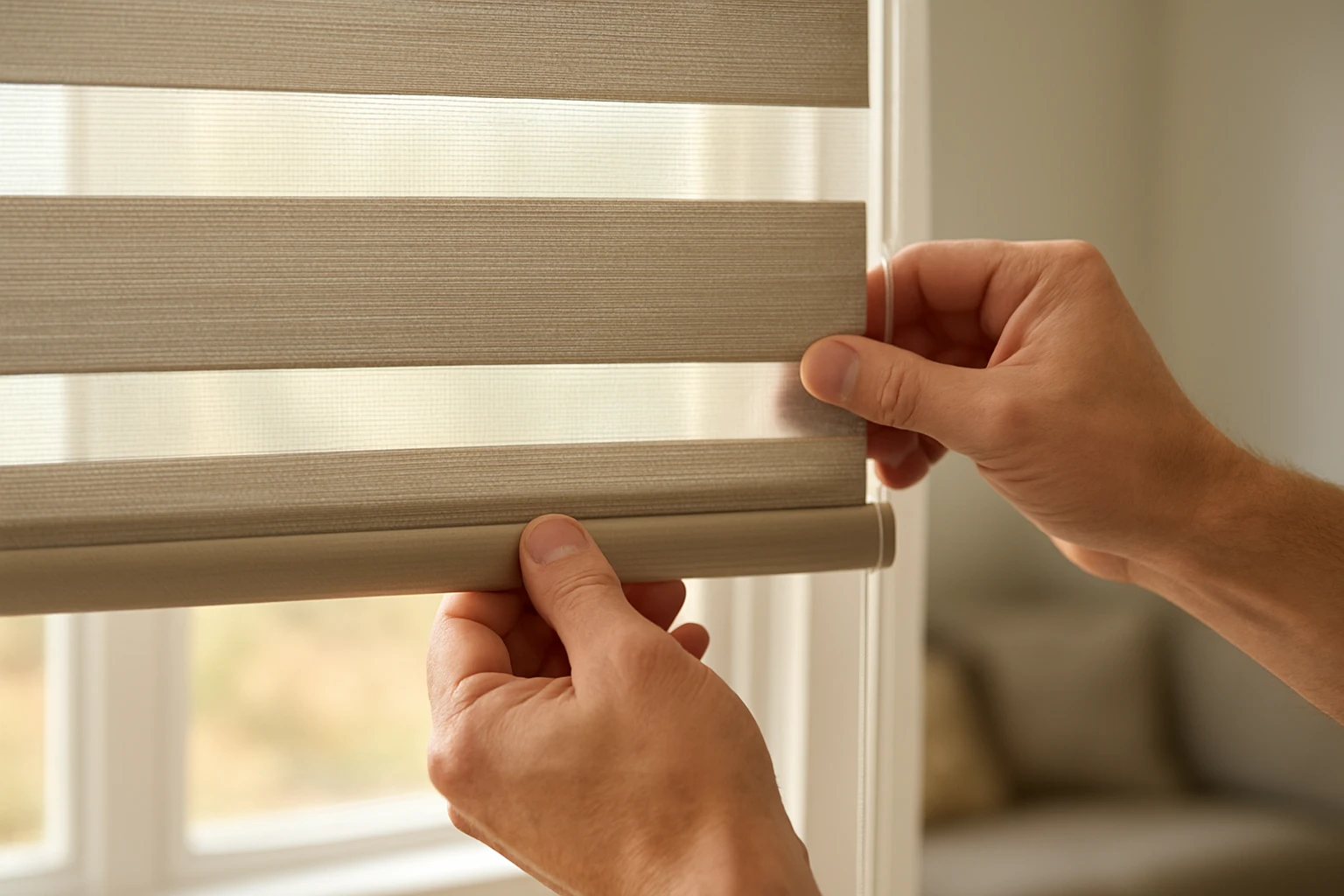
Problem: Fabric layers do not align or the lift cord does not take up evenly.
Likely causes and fixes:
- Fabric slipped on the tube. Remove and reattach the fabric carefully, keeping the tension even.
- Stitching or a cord inside the fabric has broken. Repair or replace the fabric panel.
Links: Zebra Blinds and Roman Blinds.
Outdoor and Office Blinds
Problem: Mechanism rusts or grit builds up and stops sliding.

Likely causes and fixes:
- Dirt and grime in the track. Clean and lubricate with a dry silicone spray.
- Corrosion on metal parts. Replace corroded parts and consider stainless steel fittings for outdoor use.
See Outdoor Blinds and Office Blinds for product options built for heavier use.
Cost and Time Estimates for Common Fixes
This table shows typical ranges for quick DIY fixes and professional repairs. Times assume a single blind on one window.
| Issue | Typical DIY Time | DIY Cost Range | Professional Repair Time | Pro Cost Range |
|---|---|---|---|---|
| Cord Untangle Or Knot | 10 to 30 minutes | Free to 40 AED | 20 to 40 minutes | 120 to 260 AED |
| Replace Cord Or Ladder Tape | 20 to 60 minutes | 20 to 150 AED | 30 to 60 minutes | 180 to 440 AED |
| Replace Clutch Or Spring | 30 to 90 minutes | 40 to 180 AED | 45 to 120 minutes | 290 to 660 AED |
| Motor Or Motor Replacement | 30 to 120 minutes | AED 120 to 300 (parts) | 60 to 180 minutes | AED 350 to 800+ |
| Track Or Carrier Replacement | 20 to 60 minutes | AED 40 to 200 | 30 to 90 minutes | AED 230 to 700 |
These ranges depend on blind size, local labor rates and part availability. In our experience, simple untangles and bracket adjustments are quick and low cost, while motor replacements are the most expensive repairs.
Troubleshooting Table
| Symptom | Likely Cause | DIY Fix | Call A Pro If |
|---|---|---|---|
| Blind will not move at all | Power or broken clutch | Check batteries, reset clutch, inspect cord | Motor hums but no movement, internal gearbox damage |
| Blind lifts unevenly | Bent tube or misaligned brackets | Re-level tube, remount brackets | Tube cracks or complex fabric reattachment required |
| Slats bunch on one side | Tangled ladder tape | Untangle or replace ladder | Repeated failures after tape replacement |
| Cord slips through clutch | Worn cord or clutch | Replace cord or clutch | Clutch is obsolete or headrail damaged |
When to Call a Professional
Some situations are best left to an experienced fitter.
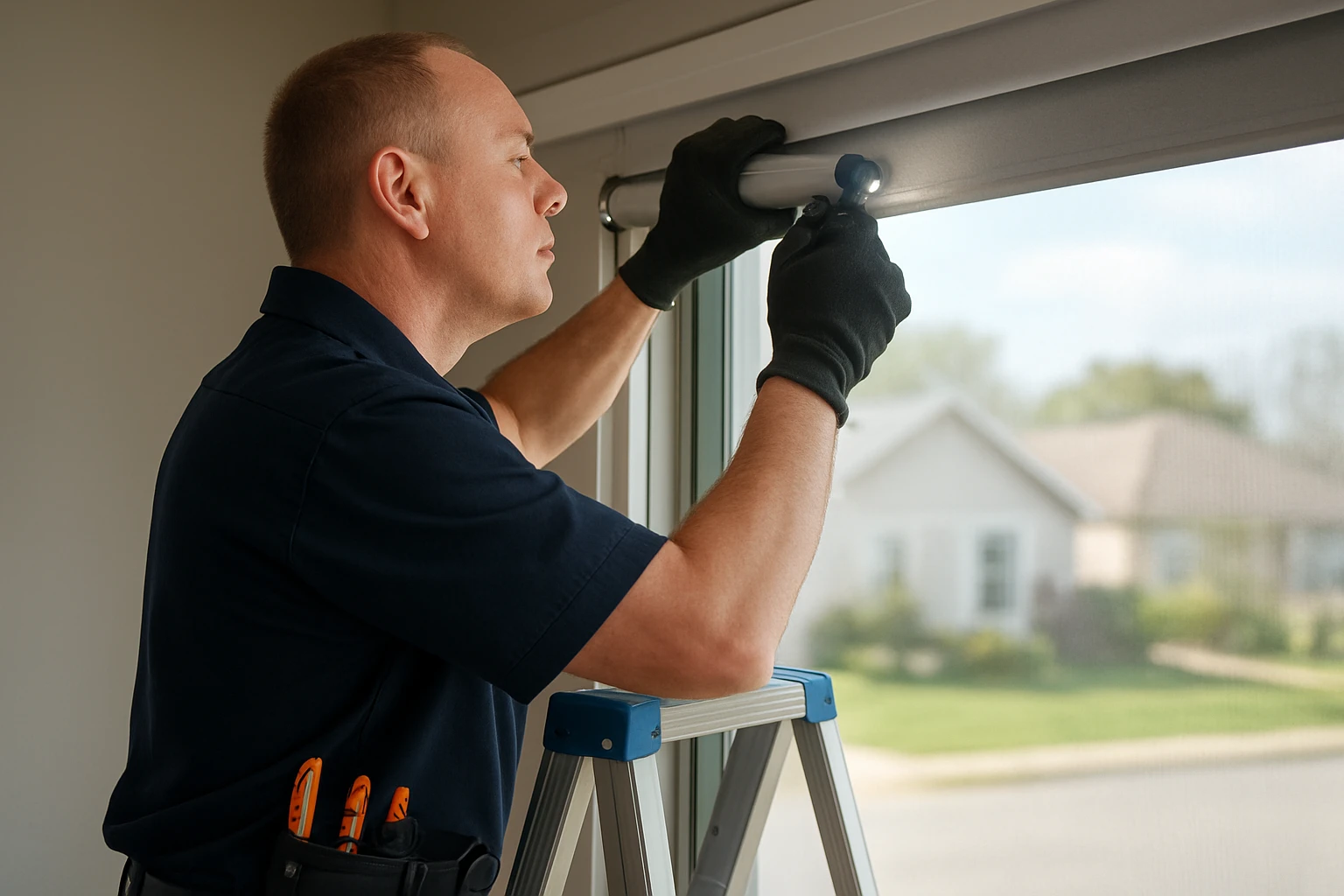
- The motor hums but the blind does not move. Internal gears may be stripped.
- The headrail or mount is cracked and carrying a heavy blind. A fall could be dangerous.
- Multiple blinds on the same system fail together. That suggests an electrical or structural issue.
- You are unsure how to reattach the fabric to a roller tube without causing a permanent crease.
Professional repair can save time and prevent damage. For replacement or matching parts your supplier may be able to source exact components quickly.
Preventive Care to Keep Blinds Working
A little routine care prevents most failures.
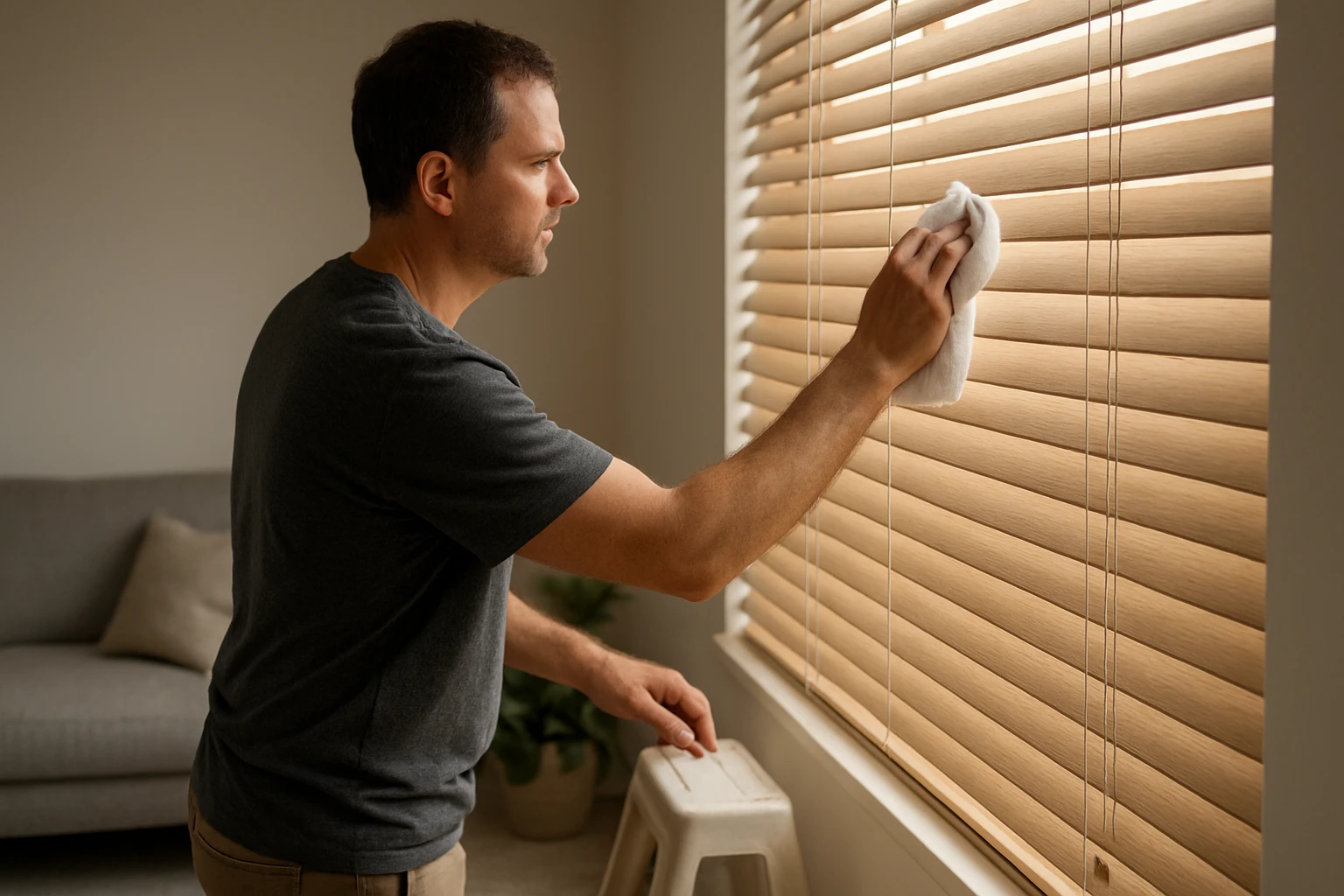
- Dust monthly with a microfiber cloth or brush tool, and deep clean fabric blinds per their care label. For cleaning methods see How to Clean Blinds Safely: Methods for All Blind Types.
- Test operation after seasonal changes because humidity and heat can change fabric tension and wooden slat shape.
- Tighten brackets and check screws twice a year so the tube stays level and the blind runs smoothly.
- Avoid excessive force when a blind feels stuck, because pulling hard can break the clutch or strip gears.
If you are choosing new blinds to reduce repair needs, read about options in Best Curtains and Blinds in Dubai 2026: Buying Guide. For blackout or specialized fabrics that resist wear, see Blackout Blinds and for bamboo or natural options see Bamboo Blinds.
If a repair seems beyond your comfort, engage a local fitter with experience in your blind type so the work is done safely and lasts.
Frequently Asked Questions
Why Won’t My Blinds Go Up When I Pull the Cord?
Most often the cord is knotted, the clutch is worn, or the cord has slipped out of its guide. Check the cord for knots and the headrail for a jam, then test the clutch by opening the headrail cover.
Can I Replace a Broken Blind Cord Myself?
Yes for most models. You will need to remove the bottom rail, free the old cord, thread a new cord of the same thickness and knot it securely. If the clutch is damaged, you may also need to replace that part.
What Should I Do If a Motorized Blind Hums but Does Not Move?
First check batteries or power supply and reset the limits if the manufacturer provides a reset. If the motor still hums without movement, the gearbox or spline may be stripped and a technician should inspect it.
How Long Does It Take to Fix a Blind That Is Stuck?
A simple untangle or bracket adjustment often takes 10 to 30 minutes. Replacing parts or motor work can take one to three hours depending on part access and whether the technician needs to order components.
When Should I Replace the Blind Instead of Repairing It?
Replace the blind when the headrail is cracked, the motor is obsolete or very costly to replace, the fabric is badly damaged, or repeated repairs cost more than a new blind of similar quality.