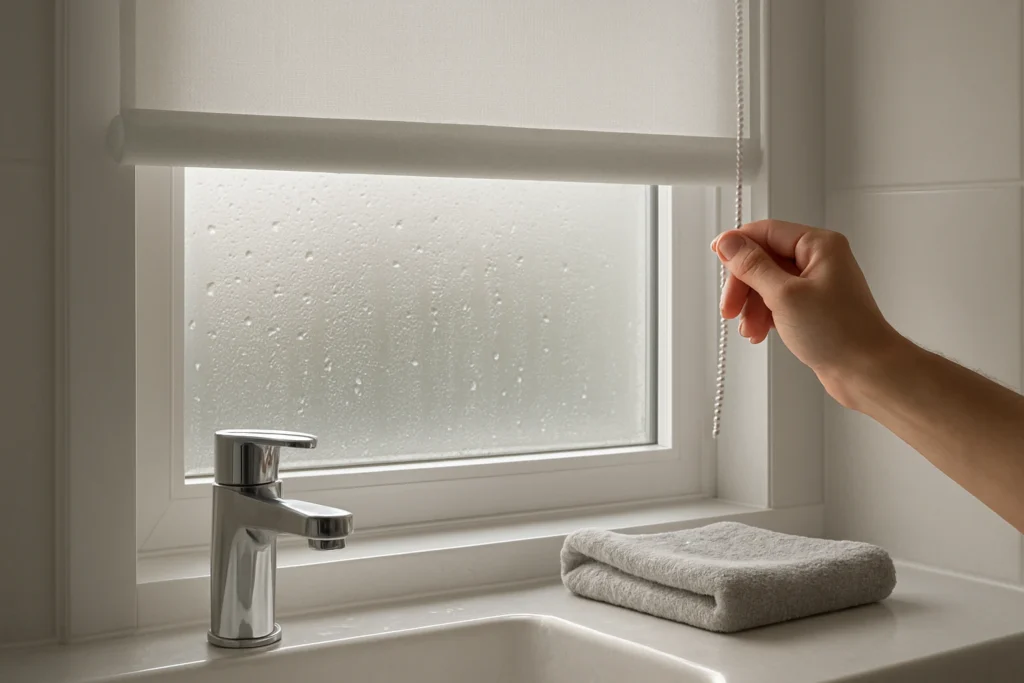
Waterproof blinds are window coverings made from materials that resist moisture, so they last in damp rooms and outdoor spaces. Pick the right material and fittings for each room, clean them regularly and check seals to prevent mould and corrosion.
Key Statistics
- PVC and aluminum blinds resist water and can last 5 to 15 years in wet locations when fitted correctly.
- Typical cost range for waterproof blinds is AED 120 to AED 1,800 depending on size and type.
- In our experience, daily steam exposure shortens fabric blinds’ life by about 30 percent compared with protected installations.
This article covers types, materials, where to use waterproof blinds, a comparison table, buying tips, installation and care. For local supply and fitting, Curtains and Blind offers a wide selection and advice on matching blinds to each room.
What Are Waterproof Blinds?
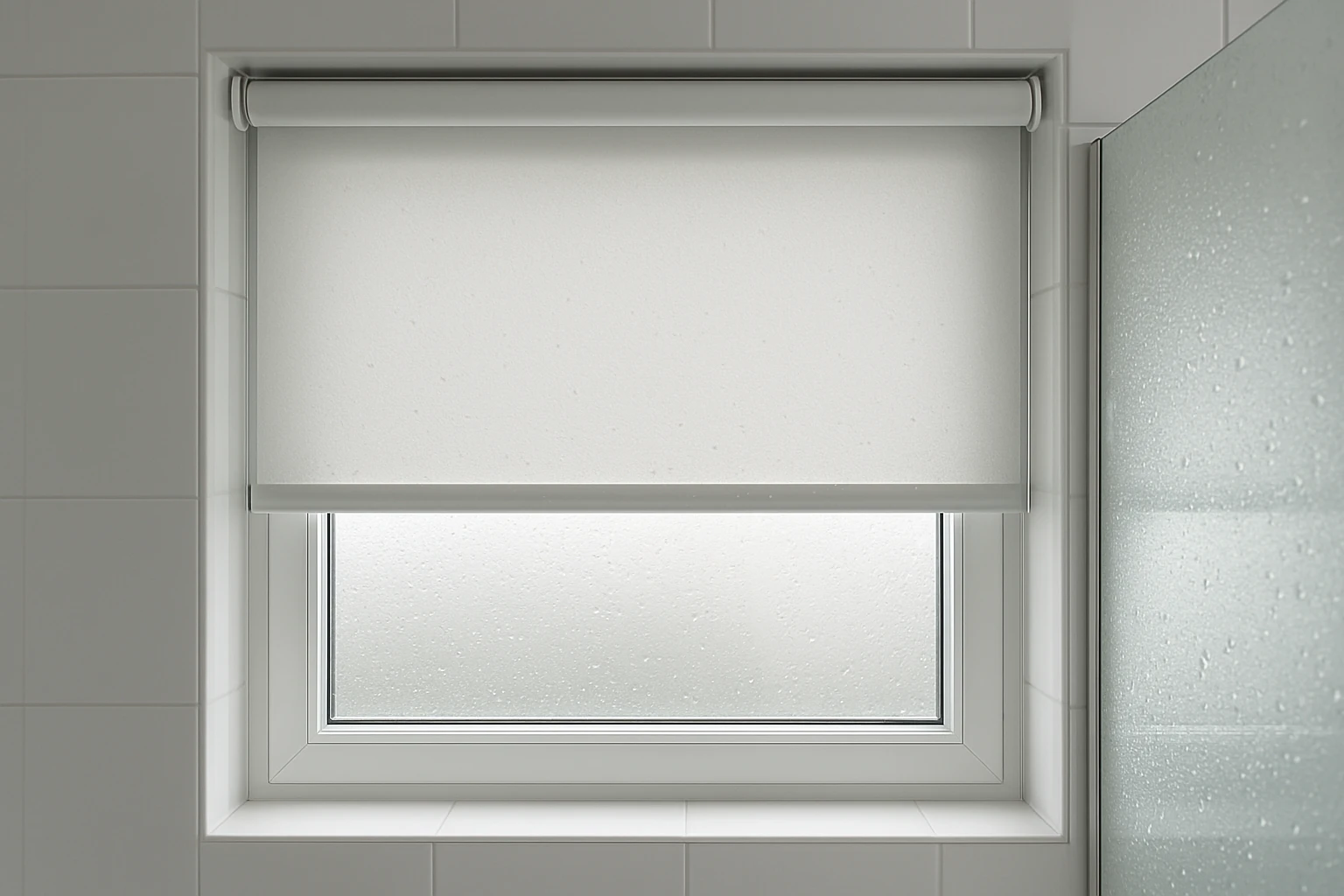
Waterproof blinds are made to resist moisture, humidity and occasional splashes so you can use them in bathrooms, kitchens, balconies and covered outdoor spots. They use synthetic fabrics, coated textiles, PVC or metal slats that do not absorb water or grow mould easily. The materials and finishes help water bead and run off, and they dry quickly.

Why Choose Waterproof Blinds
Waterproof blinds keep a tidy look in humid rooms and reduce the chance of mildew on window coverings. They also protect moving parts from rust and usually need less deep cleaning. A common mistake is fitting ordinary fabric blinds in high-humidity rooms, which shortens their life.
Best Materials and How They Resist Water
Different materials behave very differently around water. Pick the right one based on how much wetness the blind will face and the look you want.
Common Materials
PVC:
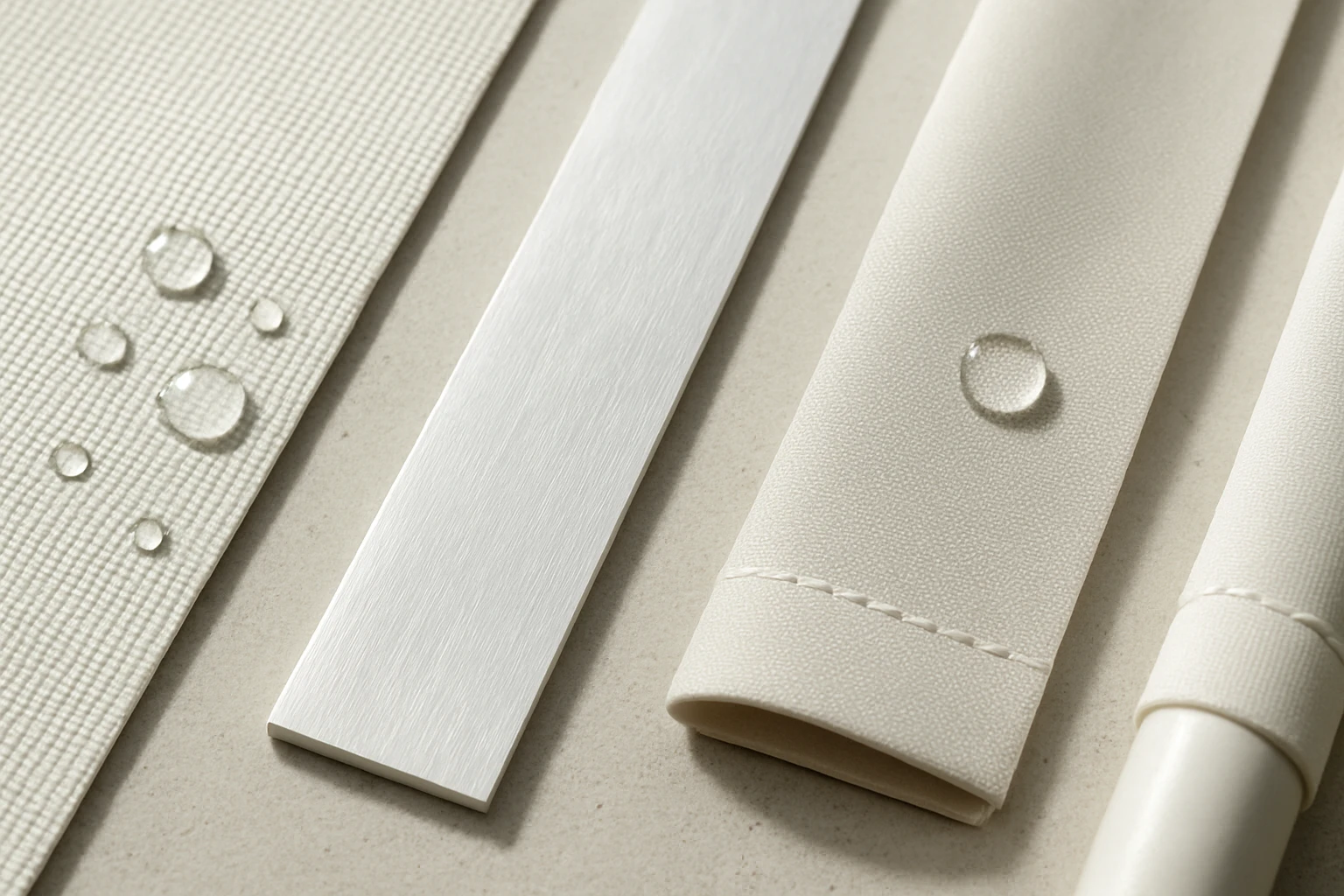
PVC is fully synthetic and not porous, so water beads on the surface and can be wiped away. It is the most water-resistant option and works well near showers, sinks and covered patios.
Aluminum:
Aluminum venetian slats do not absorb moisture and do not rot. They can corrode if exposed to salt air without protective finishes, so choose coated aluminum for coastal use.
Coated Polyester and Acrylics:
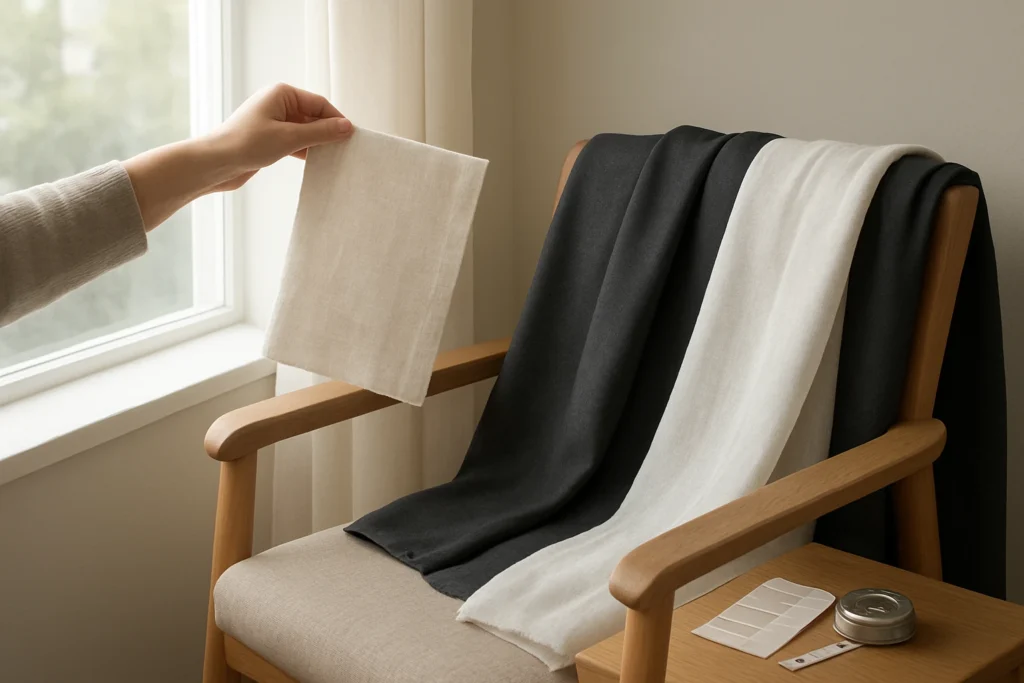
These fabrics have a water-repellent finish. They look softer than PVC and can be made blackout, but heavy or prolonged steam may wear the coating over time.
Composite and Vinyl-Coated Fabrics:
These combine textile strength with a vinyl outer layer, so they look like fabric but handle moisture like PVC. They are a good middle ground for kitchen blinds.
Material Strengths at a Glance
| Material | Water Resistance | Typical Rooms | Lifespan (wet areas) | Cleaning Ease |
|---|---|---|---|---|
| PVC | Very high | Bathroom, patio | 8–15 years | Wipe clean |
| Aluminum | Very high | Kitchen, office, outdoor | 10–20 years (coated) | Dust and wipe |
| Coated polyester | High | Kitchen, bathroom (low steam) | 5–10 years | Gentle wipe or rinse |
| Vinyl-coated fabric | High | Kitchen, covered patio | 6–12 years | Wipe and mild detergent |
Where to Use Waterproof Blinds
Waterproof blinds fit where dampness, splashes or wind-blown rain are common. They are practical and can look polished when chosen to match the room.
Typical Uses
- Bathrooms and en-suites where steam and splashes happen often.
- Kitchens close to sinks, dishwashers or cookers where steam rises.
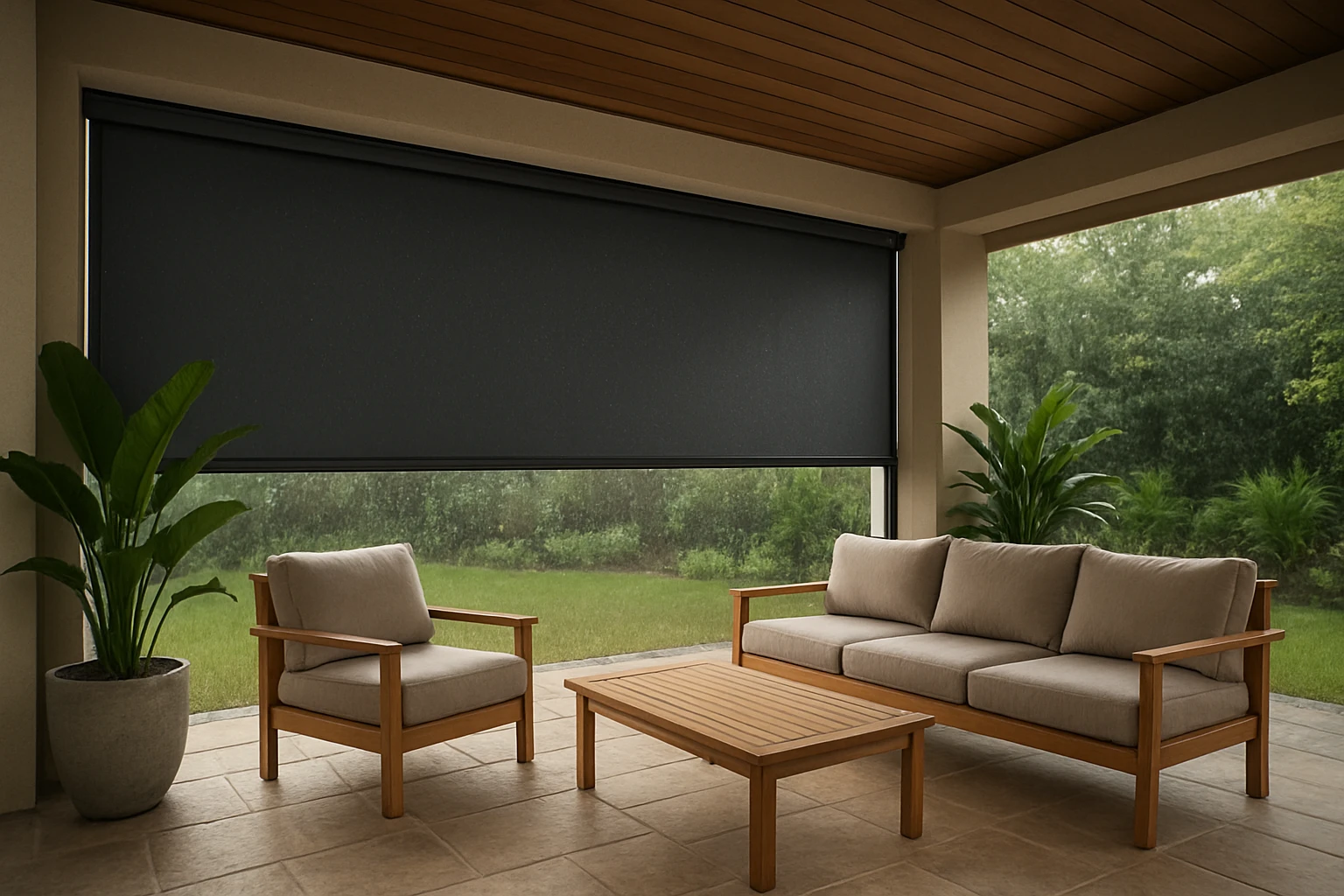
- Covered patios and balconies that need shade and protection from rain.
- Ground-floor windows where contact or accidental splashes are likely.
- Offices or commercial kitchens where durability and hygiene matter.
Tip: For fully exposed outdoor use, choose purpose-made outdoor blinds and fittings rated for weather. See options like Outdoor Blinds for designs made for patios and verandas.
Waterproof Blind Types Compared
This table compares popular waterproof blind types so you can match performance with price and appearance.

| Blind Type | Water Resistance | Look | Cost Range (AED) | Best For |
|---|---|---|---|---|
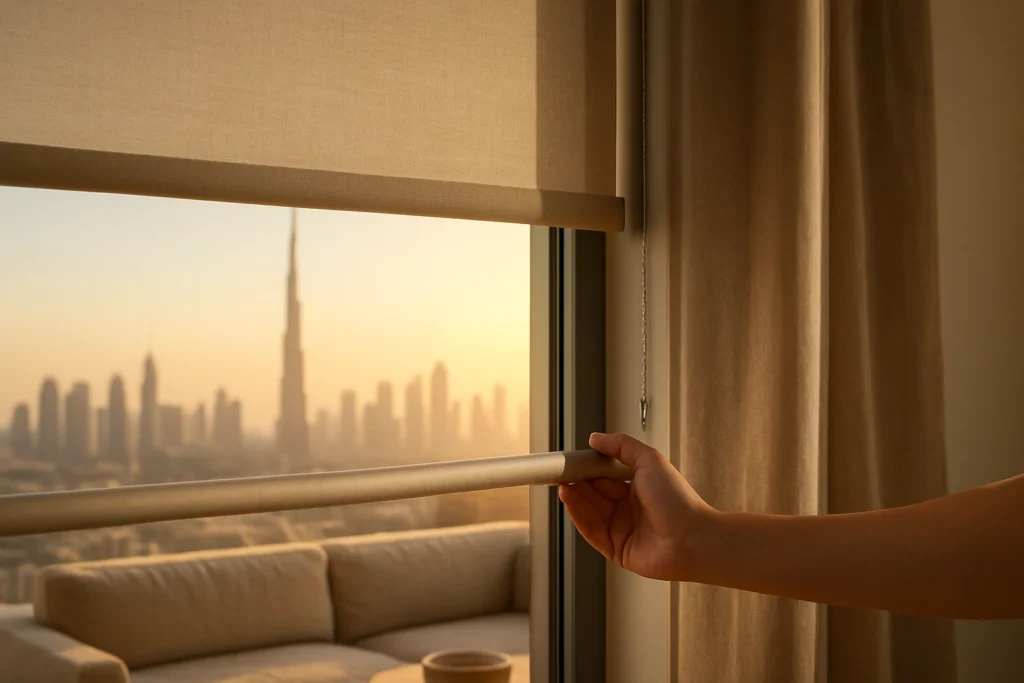
| Roller Blinds | High (PVC/coated) | Clean, modern | 120–1,000 | Bathroom, kitchen |
| Venetian Blinds | Very high (aluminium) | Classic, adjustable light | 180–1,200 | Kitchen, office |
| Vertical Blinds | High (PVC/fabric) | Tall windows, sliding doors | 250–1,500 | Patio doors |
| Outdoor Blinds (cassette) | Very high | Weatherproof, heavy-duty | 800–1,800 | Balconies, terraces |
| Motorized Waterproof Blinds | Depends on fabric and motor sealing | Convenient, neat | 900–3,500 | Large windows, patio openings |
Notes: Roller blinds often give the best price to performance for bathrooms and kitchens. For large outdoor openings, purpose-made Outdoor Blinds or motorized options work best.
How to Choose the Right Waterproof Blind
Choosing comes down to where the blind will go, how much time you want to spend on care, and your budget. Think about vapour exposure, cleaning access and style.
Key Factors to Consider
Room Exposure:
Decide whether the blind will face direct water, heavy steam or only occasional humidity.
Material Match:
Use PVC or aluminum for heavy exposure and coated fabrics for milder locations.
Mechanism and Fittings:
Choose sealed brackets and stainless or powder-coated fittings to avoid corrosion. For large or high windows, consider Motorized Blinds for ease of use.
Light Control and Privacy:
If you need full blackout in a wet room, some coated roller fabrics and Blackout Blinds come with moisture-resistant finishes.
Style and Match:
Aluminum suits modern kitchens, while faux-fabric coated options work with softer interiors. See related styles like Roller Blinds and Venetian Blinds for ideas.
Budget:
Decide whether to invest in heavy-duty outdoor-rated fittings or save with a coated roller for indoor wet spaces.
For a broader look at top picks and styles in the region, the Best Curtains and Blinds in Dubai 2026: Buying Guide lists current trends and suppliers.
Installation and Maintenance
Good installation and sensible care matter as much as the material. Correct fittings stop water from pooling and keep the blind moving freely.
Installation Basics
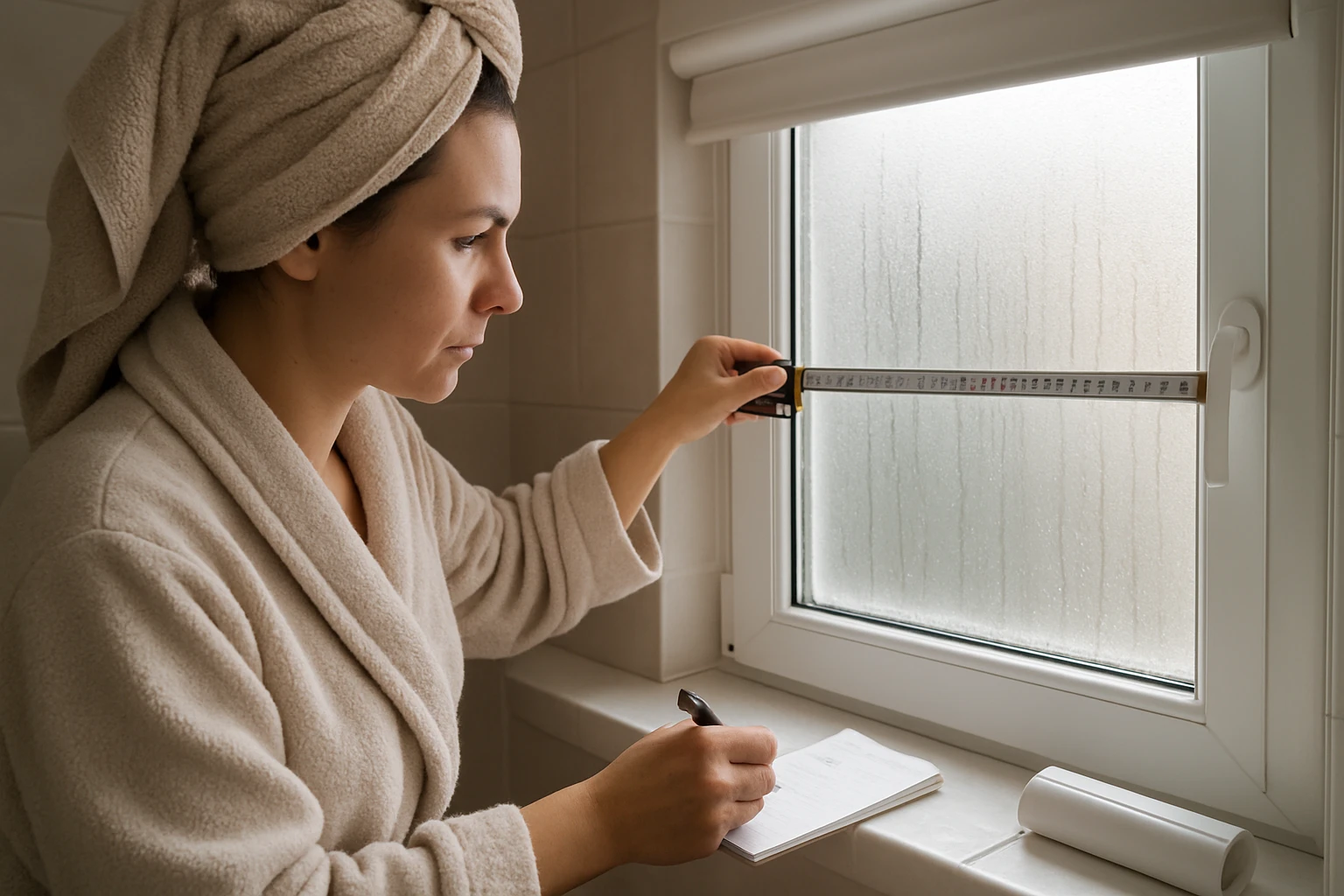
Measure Twice, Order Once:
Measure the window frame and decide whether you want an inside or outside mount. Inside fits look neat but outside mounts can protect the blind from direct splashes.
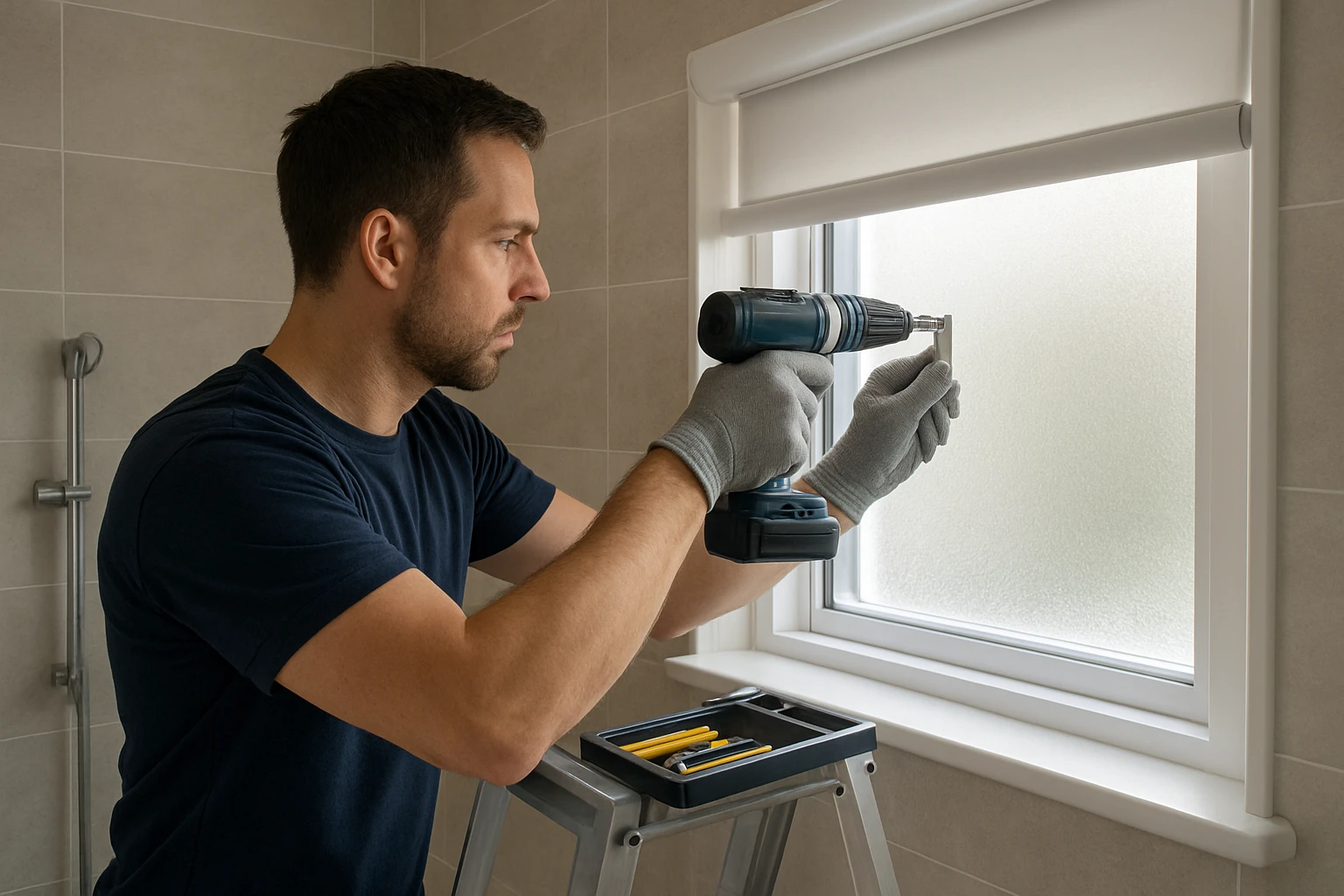
Use Rust-Resistant Fittings:
Pick stainless steel or powder-coated brackets and screws for kitchens and bathrooms.
Seal Edges When Needed:
For outdoor or balcony fitments, use weather seals or trims so water does not reach the top mechanism.
When to Call a Pro:
If the blind is large, motorized or in a tricky spot, a professional fitter avoids mistakes and keeps warranties valid.
Maintenance and Cleaning
Regular Care:
Dust or wipe with a damp cloth weekly to stop grime build-up. In bathrooms, open the window or run extraction after showers to reduce steam.
Deep Cleaning:
For PVC and aluminum, use mild detergent and rinse, then dry. For coated fabrics, follow the manufacturer’s instructions and test a small area first. For step-by-step methods on all blind types see How to Clean Blinds Safely: Methods for All Blind Types.
Small Repairs:
Tighten loose brackets and replace rusted screws right away. For motorized units, follow the service schedule recommended by the supplier.
Cost, Warranty and Lifespan
Costs depend on size, material and extras like motorization or weatherproofing. Warranties also vary and can affect total value.
Typical Price Drivers
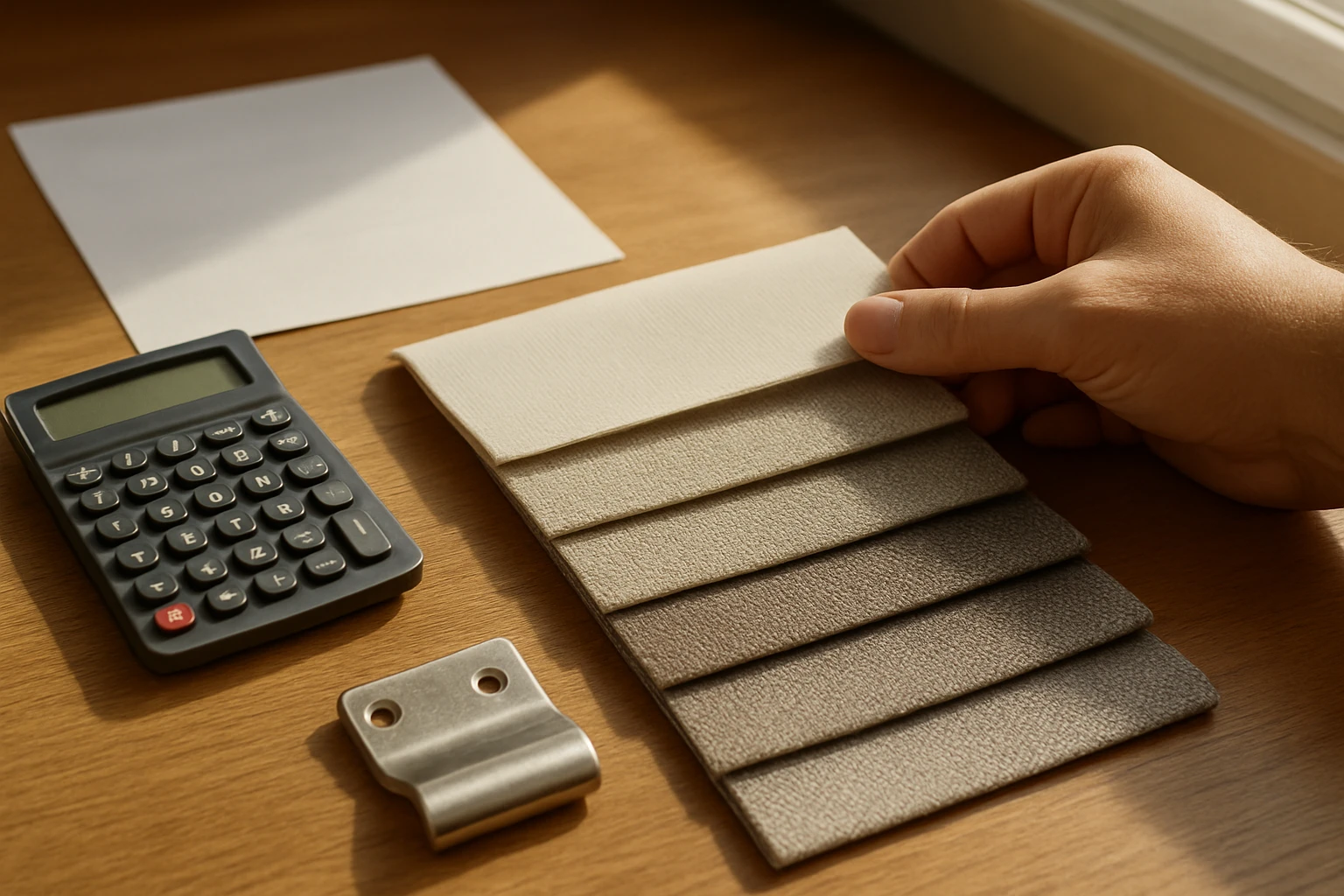
- Material choice: PVC is cheapest, special outdoor fabrics cost more.
- Size and complexity: custom large openings raise price.
- Mechanism: manual is cheaper, motorized units add cost and may need weatherproof motors.
- Fittings: stainless or coastal-grade finishes cost more but reduce corrosion risk.
| Aspect | Typical Range | Notes |
|---|---|---|
| Basic indoor PVC roller | AED 120–400 | Good for small bathrooms |
| Aluminum venetian | AED 180–1,200 | Slat width and finish affect cost |
| Outdoor cassette blind | AED 800–1,800 | Often includes weatherproof housing |
| Motorized blind | AED 900–3,500 | Depends on motor and control system |
Warranties commonly run from 1 to 7 years; ask what the warranty covers for motors and fabric. In our experience, a local fitter who offers aftercare reduces long-term problems.
Common Mistakes and Troubleshooting
Knowing what to avoid will keep your blinds working and looking good for longer.
Mistakes to Avoid
Choosing the Wrong Material:
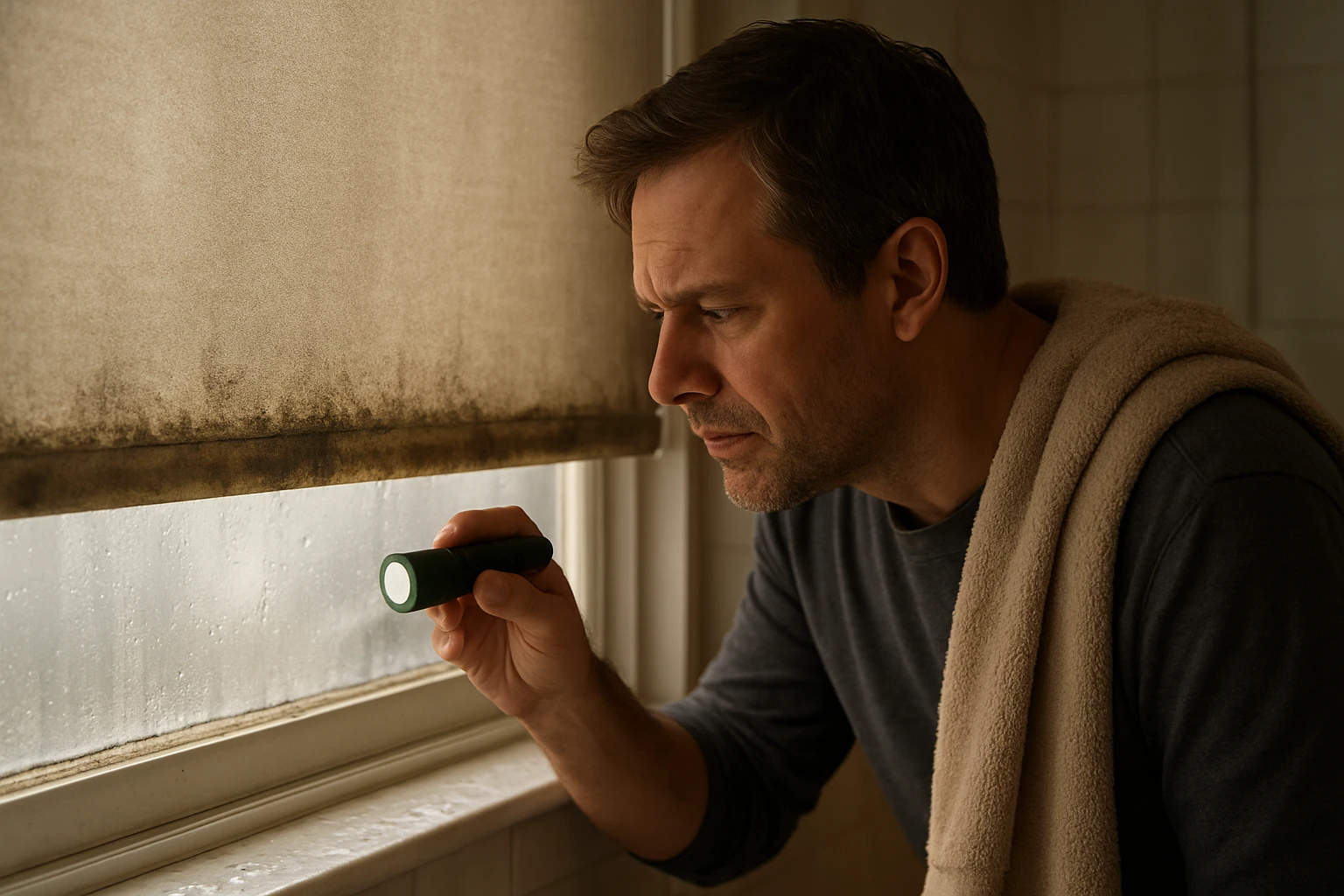
Buying ordinary fabric for a steamy bathroom leads to stains and rot. Pick PVC, aluminum or coated fabrics instead.
Poor Ventilation:
Even waterproof blinds can suffer in rooms with no extraction. Keep airflow after showers and cooking.
Skipping Marine or Coastal Finishes:
Near the sea, untreated metal parts corrode fast. Choose coastal-grade coatings.
Quick Troubleshooting
- Blind sticks when rolling: clean the tube and check for soap film or grime, then rinse and dry.
- Motor drags: check power, remote batteries and that the motor casing is dry and clear of debris.
- Mould spots: clean small areas with a mild bleach solution following the manufacturer’s guidance and improve ventilation.
Next Steps and Practical Tips
If you want waterproof blinds, start by measuring and listing the exact exposure each window has. Decide whether you need a simple roller, an aluminum venetian or a heavy-duty outdoor cassette system.

- Measure windows and note where water or steam touches the blind.
- Choose materials suited to the exposure and cleaning needs.
- Pick rust-resistant fittings if near kitchens, bathrooms or the coast.
- Consider motorization for large or hard-to-reach windows and view Motorized Blinds options.
If you prefer to see materials in person or get a professional measure and quote, contact a local supplier. Curtains and Blind can advise on the right blind and arrange supply and fitting.
Frequently Asked Questions
Are Waterproof Blinds Safe for Bathrooms?
Yes. Waterproof blinds made from PVC, coated polyester or aluminum are safe for bathrooms when fitted correctly and there is good ventilation. These materials resist moisture and dry quickly, but you should still clean them periodically and ensure brackets are rust-resistant.
Which Blind Type Lasts Longest in Damp Locations?
Coated aluminum and high-quality PVC blinds typically last the longest in wet areas. With correct fittings and regular care, they can last 8 to 15 years depending on exposure and maintenance.
Can I Install Waterproof Blinds Myself?
You can fit many roller and venetian blinds yourself if you have basic tools and follow instructions, but for large, motorized or outdoor installations it is safer to use a professional installer to protect the warranty and ensure weatherproofing.
How Do I Clean Mildew from a Waterproof Blind?
Wipe the area with a mild bleach solution or a specific mould cleaner following manufacturer instructions, rinse thoroughly and dry. Improve room ventilation to prevent reappearance.
Do Motorized Blinds Work in Outdoor Conditions?
Some motorized systems are designed for outdoor use and have weatherproof motors and housings. Check the product rating and pick motors and fittings rated for exterior or coastal use.