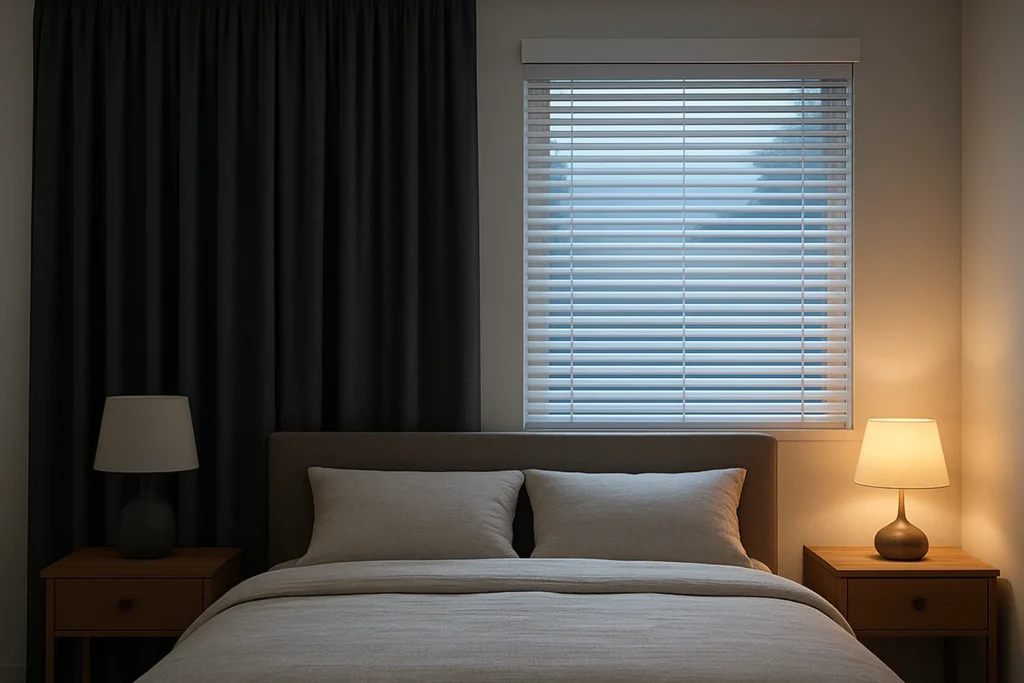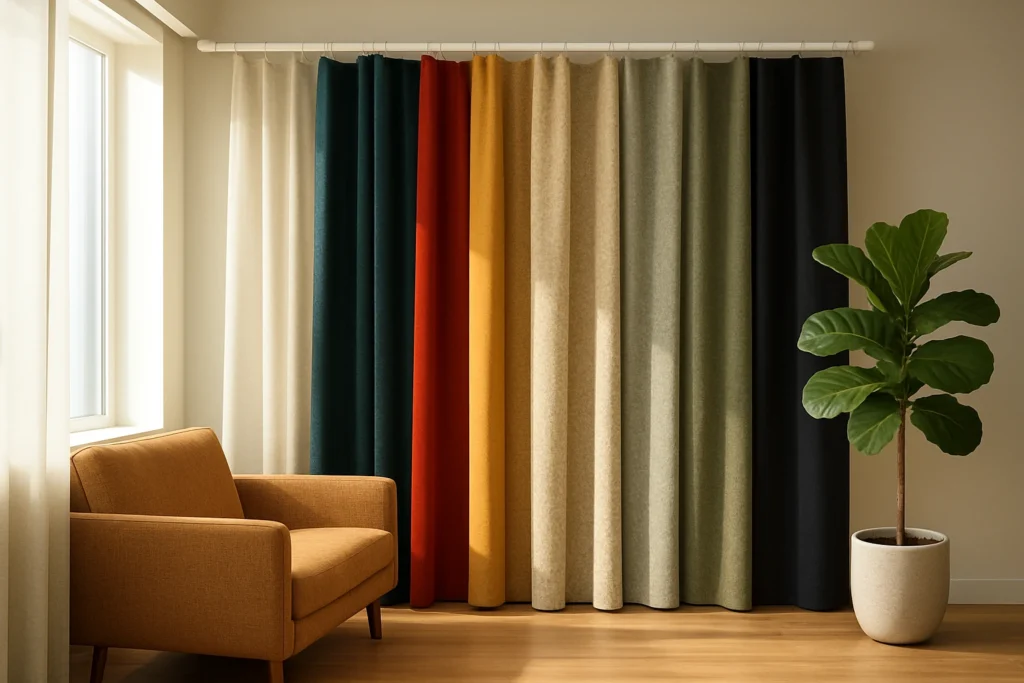
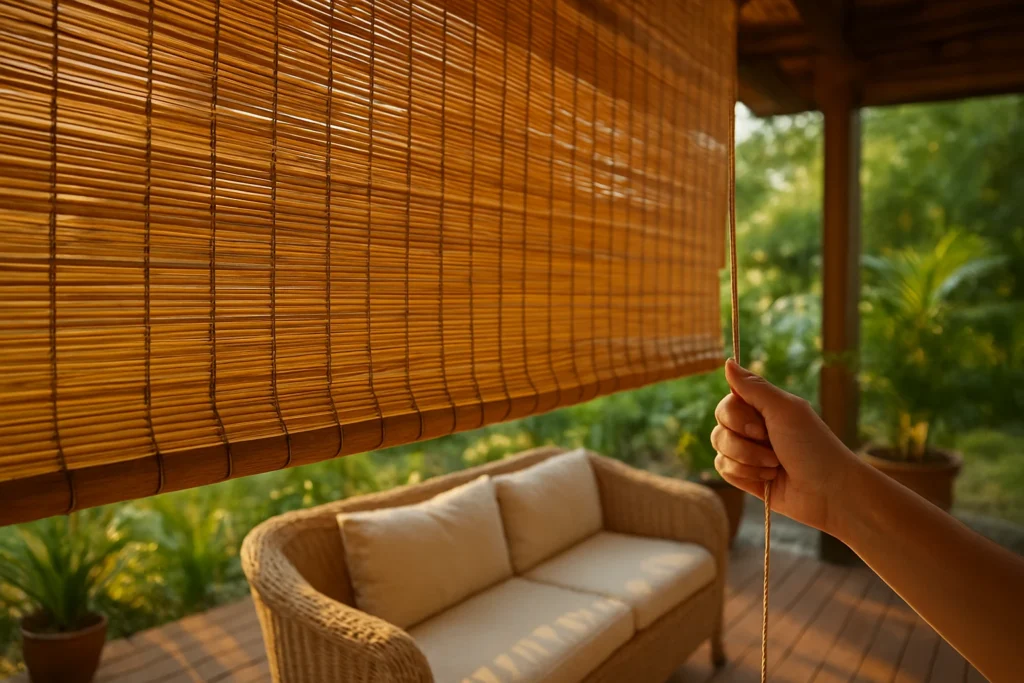
Outdoor bamboo blinds are woven or slatted shades made from bamboo or bamboo-look materials that give shade, privacy and a natural look on patios, pergolas and porches. They block sun and glare while allowing air to pass through, and the right choice resists moisture and sun damage so the blinds last for years.
In this article the team at Curtains and Blind explains how to choose, fit and care for outdoor bamboo blinds so you get good value and long life.
Why Choose Outdoor Bamboo Blinds
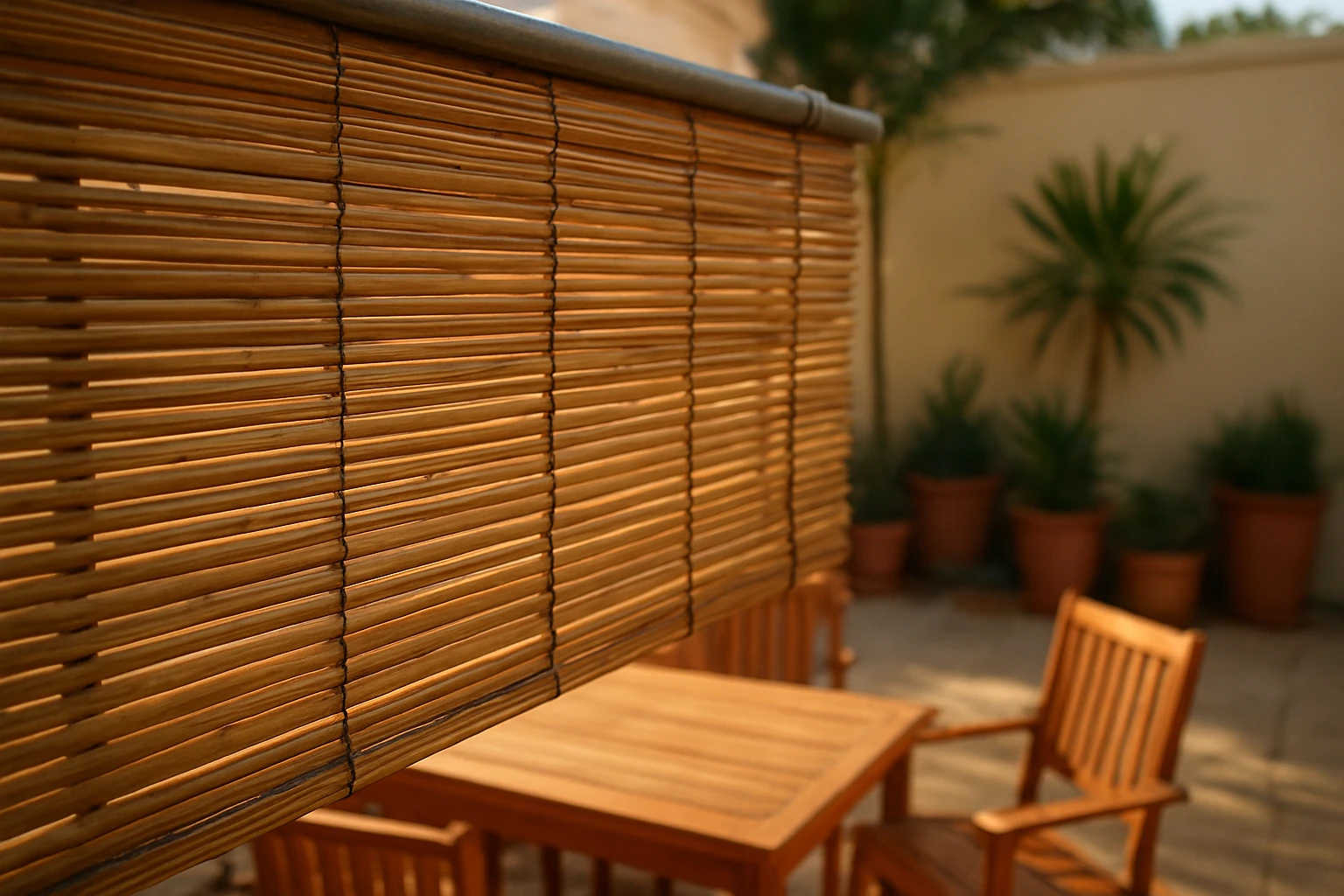
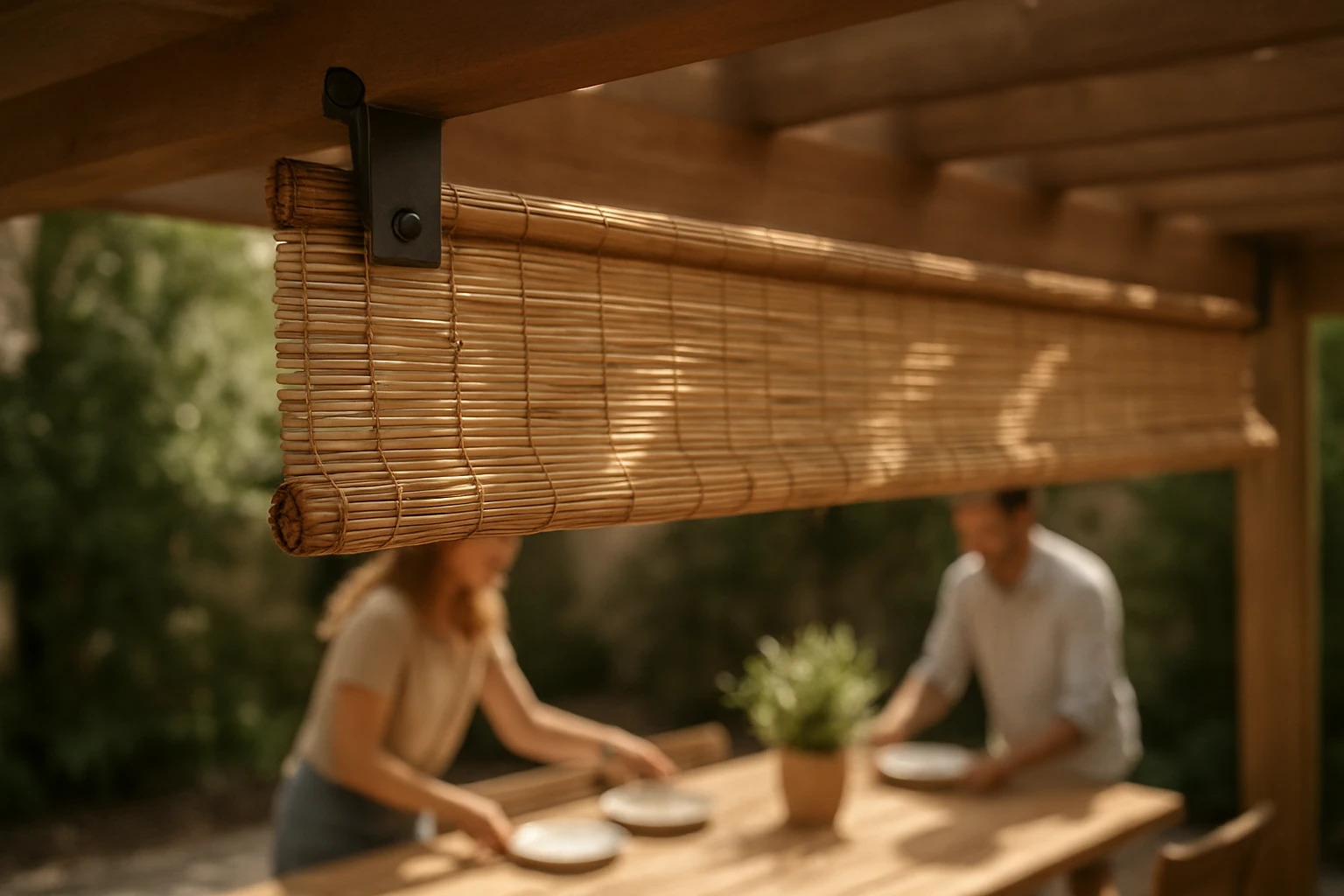
Outdoor bamboo blinds give a warm, natural look and steady sun control while letting air move through, which helps keep covered spaces cooler and more pleasant. They suit patios, pergolas, balcony railings and café terraces where you want shade without losing the view or the breeze.
Main Benefits
- Natural look that matches wood furniture and plants
- Good glare control while allowing airflow
- Lightweight and easy to raise or lower
- Range of styles from tight weaves to open slats
Who Should Use Them
Outdoor bamboo blinds suit homeowners who want a natural style, small business owners with shaded terraces, and renters who need removable, nonpermanent shade. They are not the best option where full waterproofing or total blackout is needed.
Types and Materials
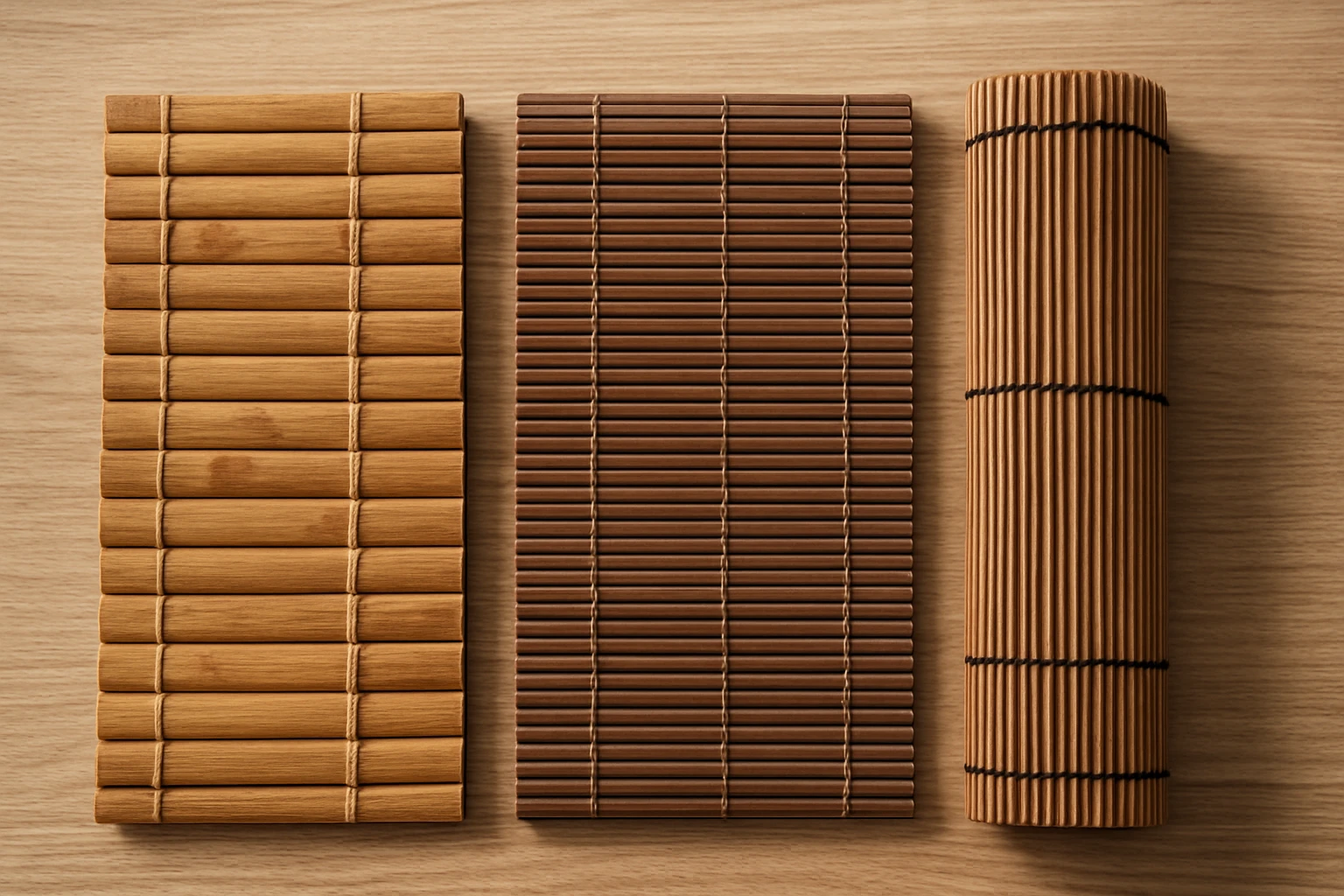
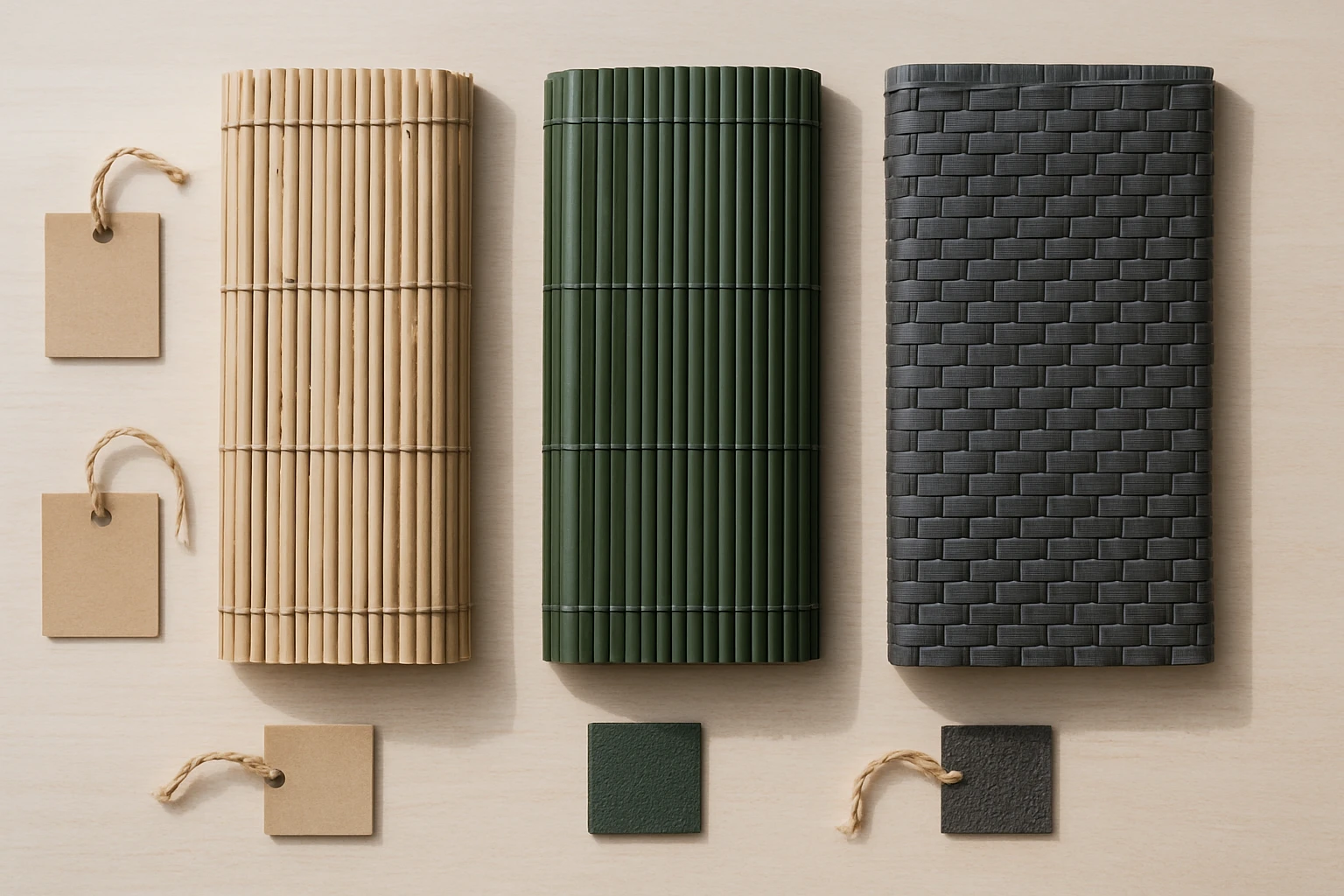
Outdoor bamboo blinds come in natural bamboo, stained bamboo, synthetic bamboo-look rolls and hybrid weaves that mix bamboo with PVC-coated fibers for better water resistance. Choose based on budget, how exposed the site is to weather and the look you want.
Material Notes
Natural Bamboo:
Natural bamboo has a warm color and unique grain but will soak up moisture and fade in strong sun unless sealed. It is lightweight and often the most affordable.
PVC-Coated Bamboo-Look:
PVC-coated weaves resist moisture and clean easily, which makes them a smart choice for humid climates or areas that see rain splash. They keep the bamboo look with more durability.
Synthetic Weave:
Fully synthetic outdoor blinds copy the bamboo look but offer the best resistance to rot and mildew. They can cost more but last longer in wet climates.
Sizing and Measuring for a Good Fit
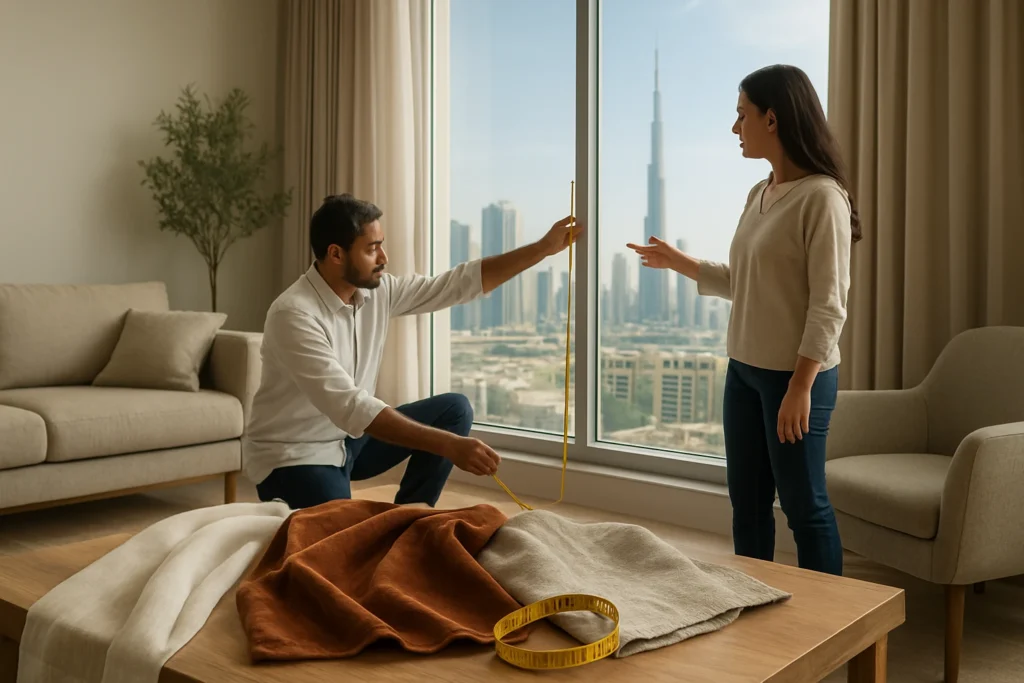
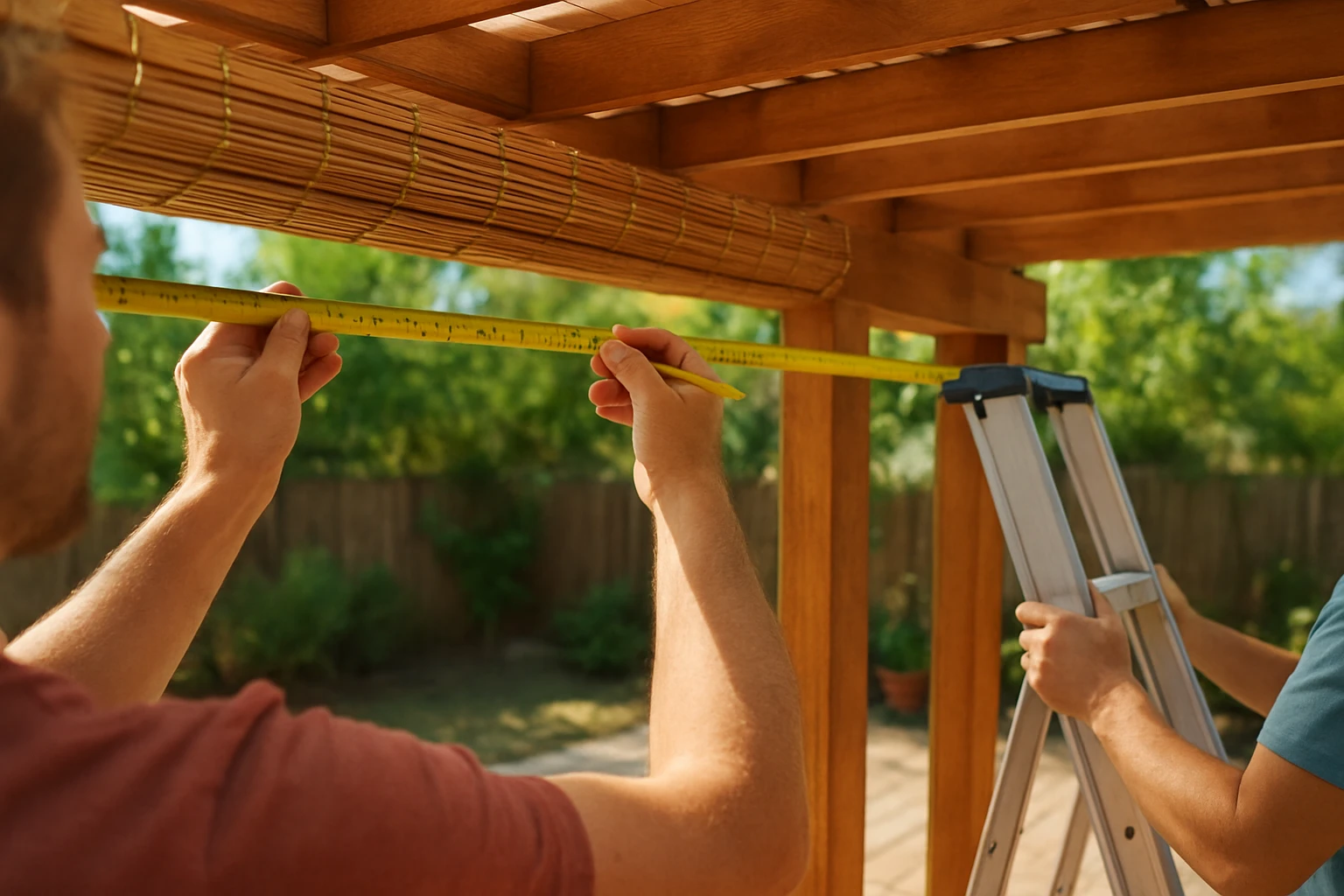
Measure twice and decide whether you want inside mounting (within a frame) or outside mounting (above a window or beam). For outdoor blinds, outside mounting is more common because it avoids frames that trap moisture and lets the blind clear obstacles.
Simple Measuring Steps
What to Measure:
- Width at the top where the blind will hang
- Height from the mounting line down to the desired lower edge
- Any obstructions like handles, trim or lighting
How Much Extra to Allow:
For outside mounts add 2 to 6 centimeters on each side for overlap to block side light and improve privacy. If you want near-total shade, add more overlap.
Installation Basics
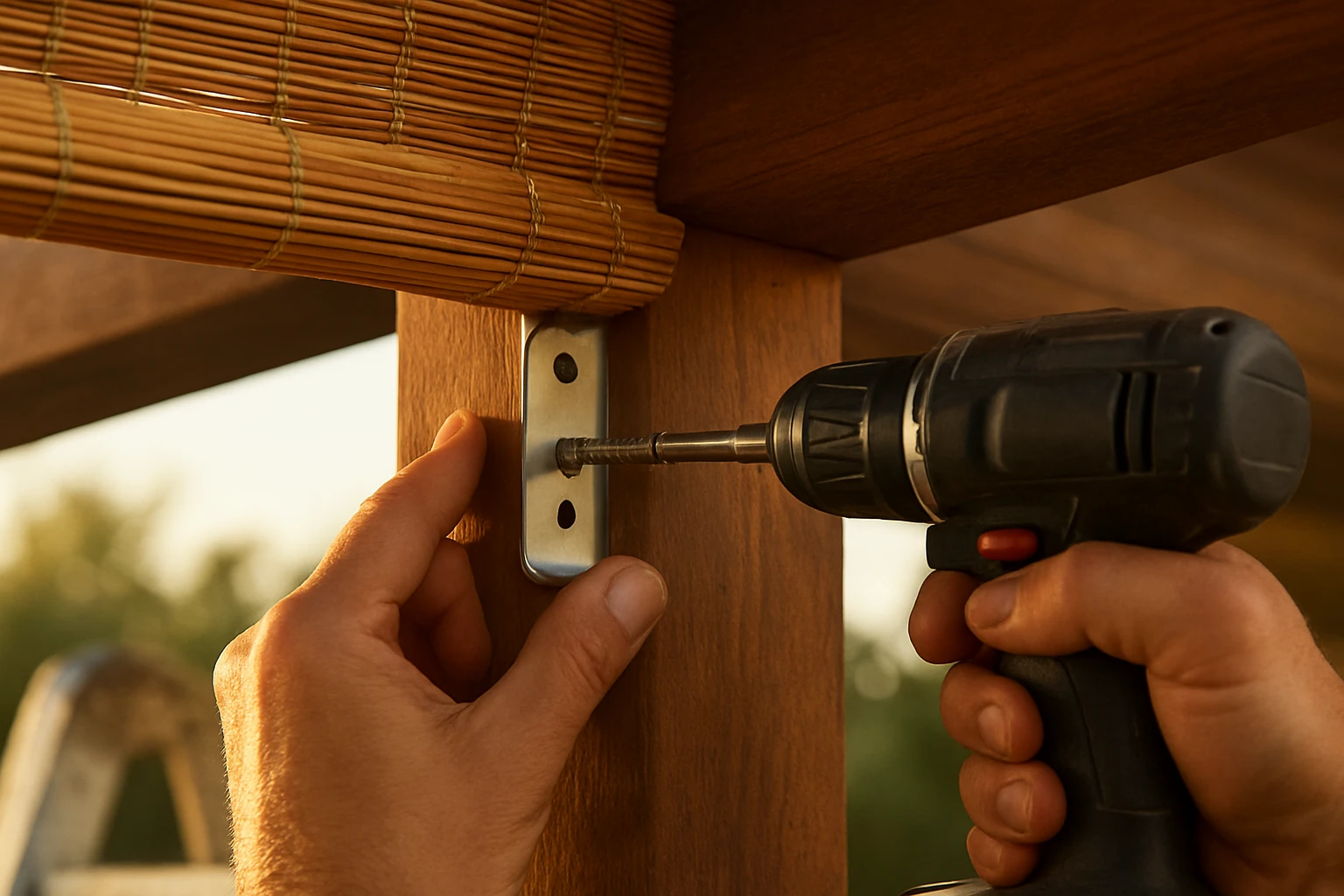
You can fit many outdoor bamboo blinds as a DIY project, but heavy or motorized models often need professional fixings. Good anchors and stainless steel screws help resist rust outdoors.
Tools and Hardware Checklist
Tool Checklist:
- Tape measure and pencil
- Power drill with metal and wood bits
- Spirit level
- Screwdriver or impact driver
- Ladder or stable platform
Fixings Checklist:
- Stainless steel screws and washers
- Expandable wall plugs for masonry
- Heavy-duty brackets for wide blinds
- Chains or cleats for safe cord storage
Step-By-Step Installation (Short)
- Mark bracket positions so they are level and square.
- Pre-drill holes and fit plugs or anchors.
- Fix brackets and hang the blind, checking operation.
- Secure cords and test for smooth rolling.
Weatherproofing and Durability
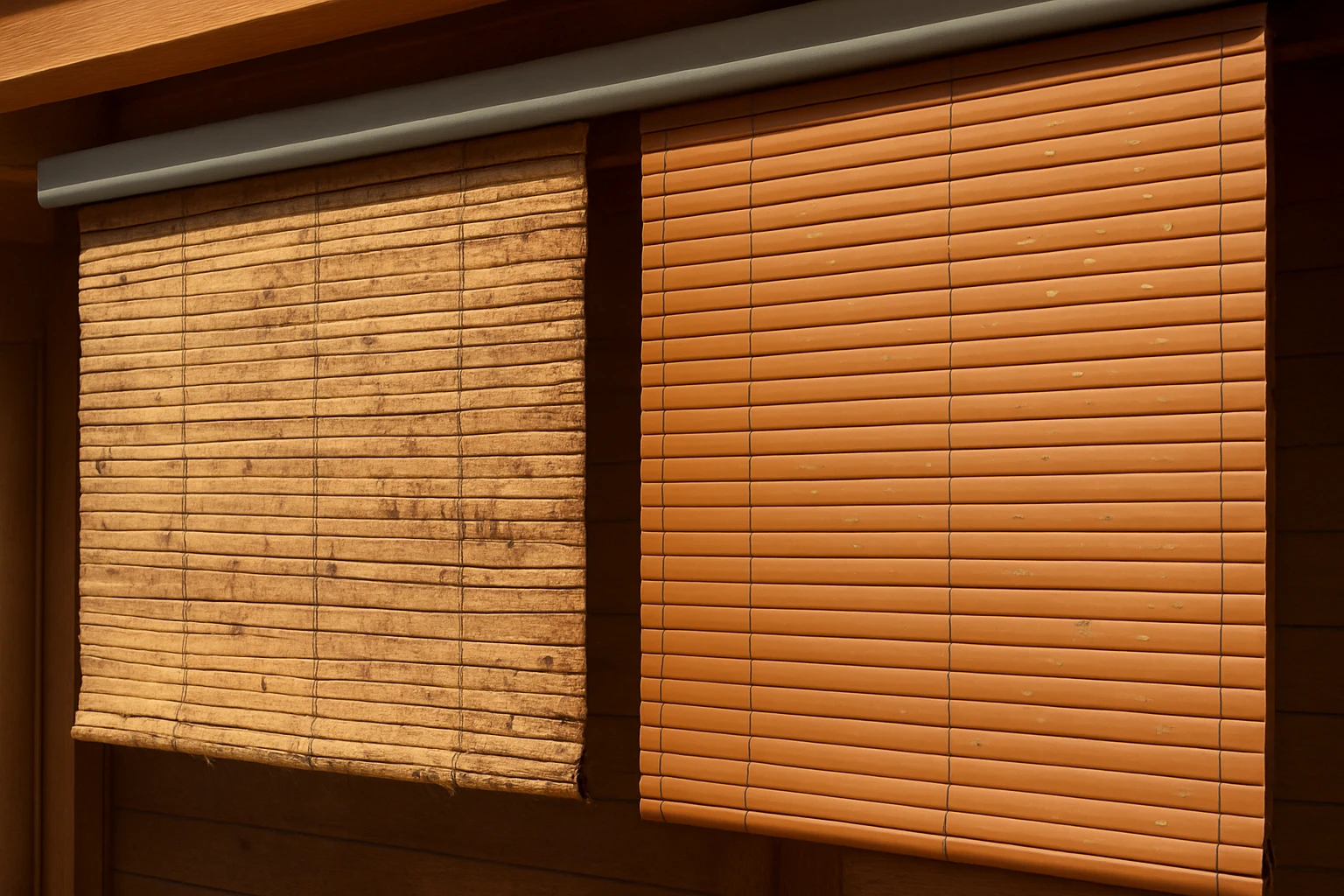
Outdoor exposure is the main challenge. Sun fades and weakens fibers while moisture encourages mould and rot, so pick materials and finishes suited to your climate and give regular care.
Weatherproofing Tips
- Apply a clear UV sealant to natural bamboo to slow fading and water absorption.
- Use PVC-coated or synthetic blinds in rainy regions.
- Remove or store roll-up blinds during storms or in winter when not in use.
- Fit a small drip edge or gutter above mounted blinds to reduce direct rain splash.
Maintenance and Cleaning
Routine care keeps outdoor bamboo blinds working and looking better for longer. A quick sweep, gentle wash and timely repairs stop small issues from becoming big ones.
Daily to Weekly Care:
Quick Brush Down:
Brush dust and leaves away with a soft brush or broom to stop grit from wearing the fibers.
Spot Clean:
Wipe small stains with a soft cloth and mild soapy water, rinse and let dry fully in shade.
Deep Cleaning and Repairs:
Deep Clean Steps:
- Lower the blind flat and lay it on a clean surface if space allows.
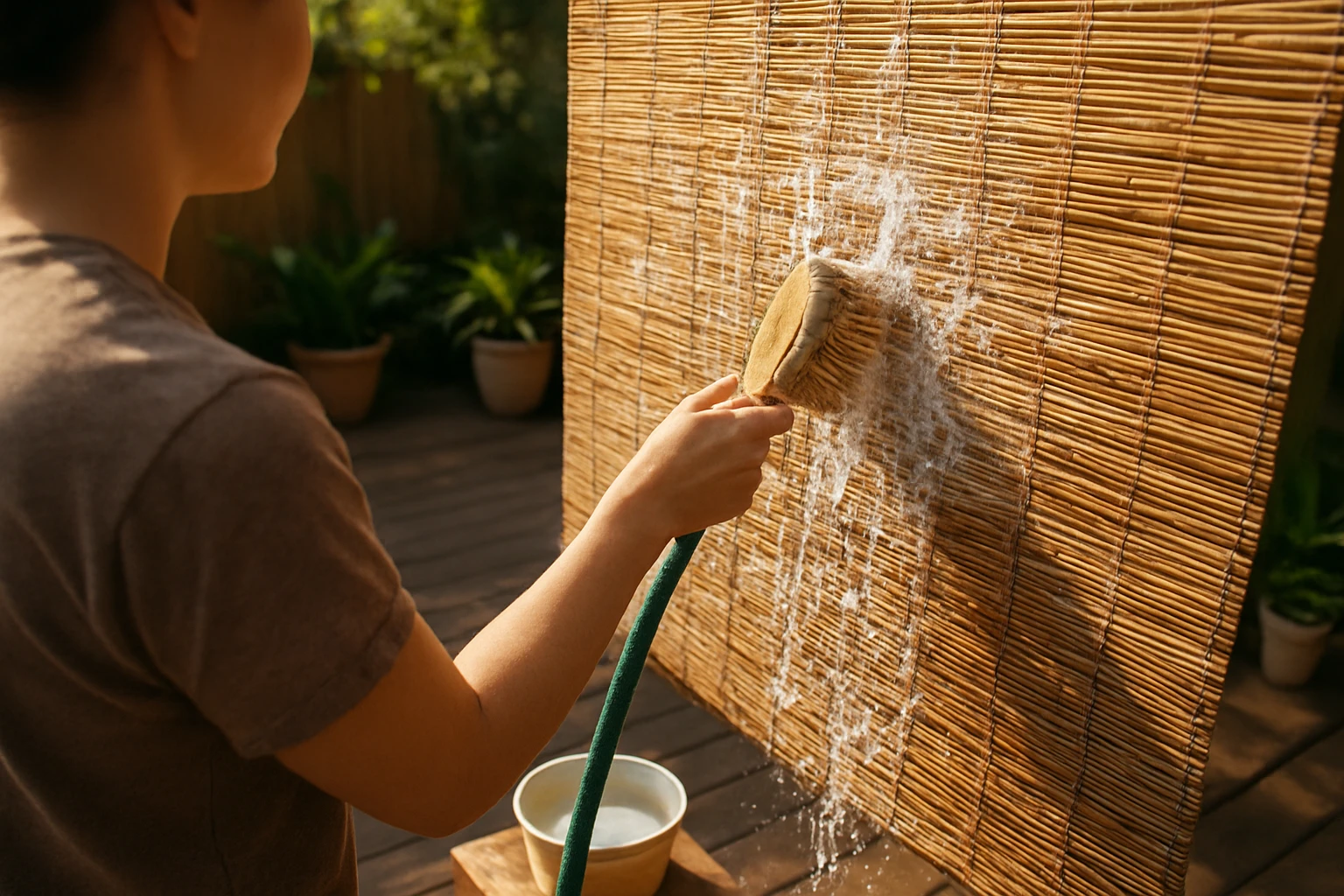
- Use mild detergent in warm water and a soft brush to clean the weave.
- Rinse thoroughly and dry in the shade to avoid warping.
- Replace damaged slats or broken strings promptly with matching parts.
For instructions on cleaning other blind types and safe methods, see How to Clean Blinds Safely: Methods for All Blind Types.
Cost, Value and Typical Lifespan
Costs vary with material, width, hardware quality and any motorization. Below are approximate ranges to set expectations; actual local prices may differ.
| Category | Typical Price Range (USD) | Expected Lifespan (Outdoors) |
|---|---|---|
| Natural Bamboo Roll-Up | 30 to 150 | 2 to 5 years with sealing and sheltered use |
| PVC-Coated Bamboo-Look | 60 to 250 | 4 to 8 years with routine cleaning |
| Synthetic Outdoor Weave | 100 to 400 | 6 to 12 years in exposed conditions |
A common mistake is buying thin, untreated natural bamboo for an exposed spot, which often leads to early rot and replacement costs that end up higher than buying a weatherproof option up front.
Compare Bamboo to Other Outdoor Blinds
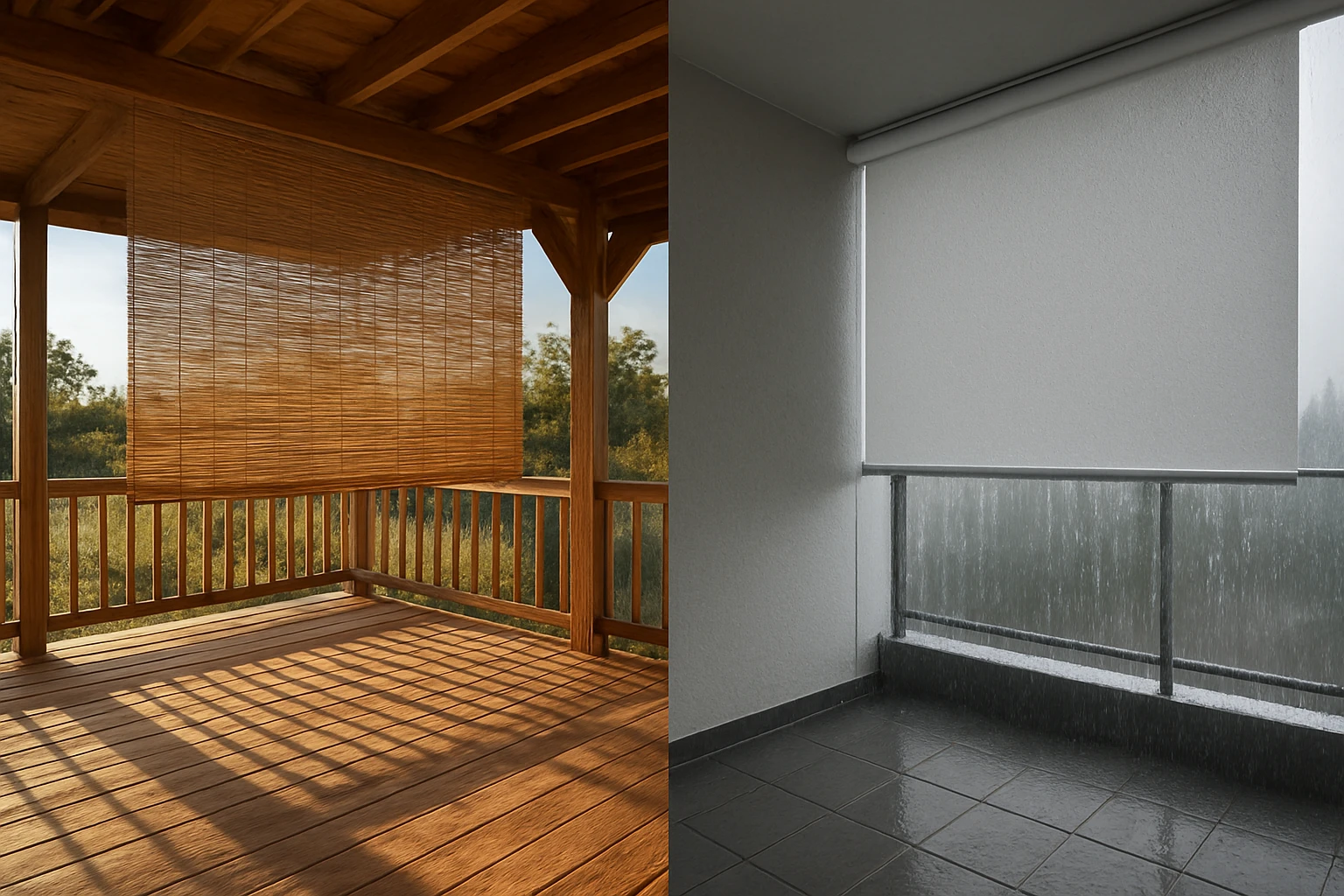
The table below helps match blind type to need and local climate.
| Feature | Outdoor Bamboo Blinds | PVC Roller Or Waterproof Blinds | Wooden Slatted Outdoor Blinds |
|---|---|---|---|
| Natural Look | Very high | Medium | High |
| Water Resistance | Low to medium (depends on treatment) | High | Low to medium |
| Maintenance | Medium | Low | Medium to high |
| Cost Range | Low to medium | Medium | Medium to high |
| Best Use | Sheltered patios, pergolas | Wet or coastal areas | Sheltered upscale terraces |
For more on waterproof options see Waterproof Blinds for Bathrooms, Kitchens and Outdoors.
Automation and Extras
Motorized outdoor bamboo blinds add convenience, especially for wide spans or high mounts, and a motorized option helps protect blinds by letting you retract them quickly when the weather changes.
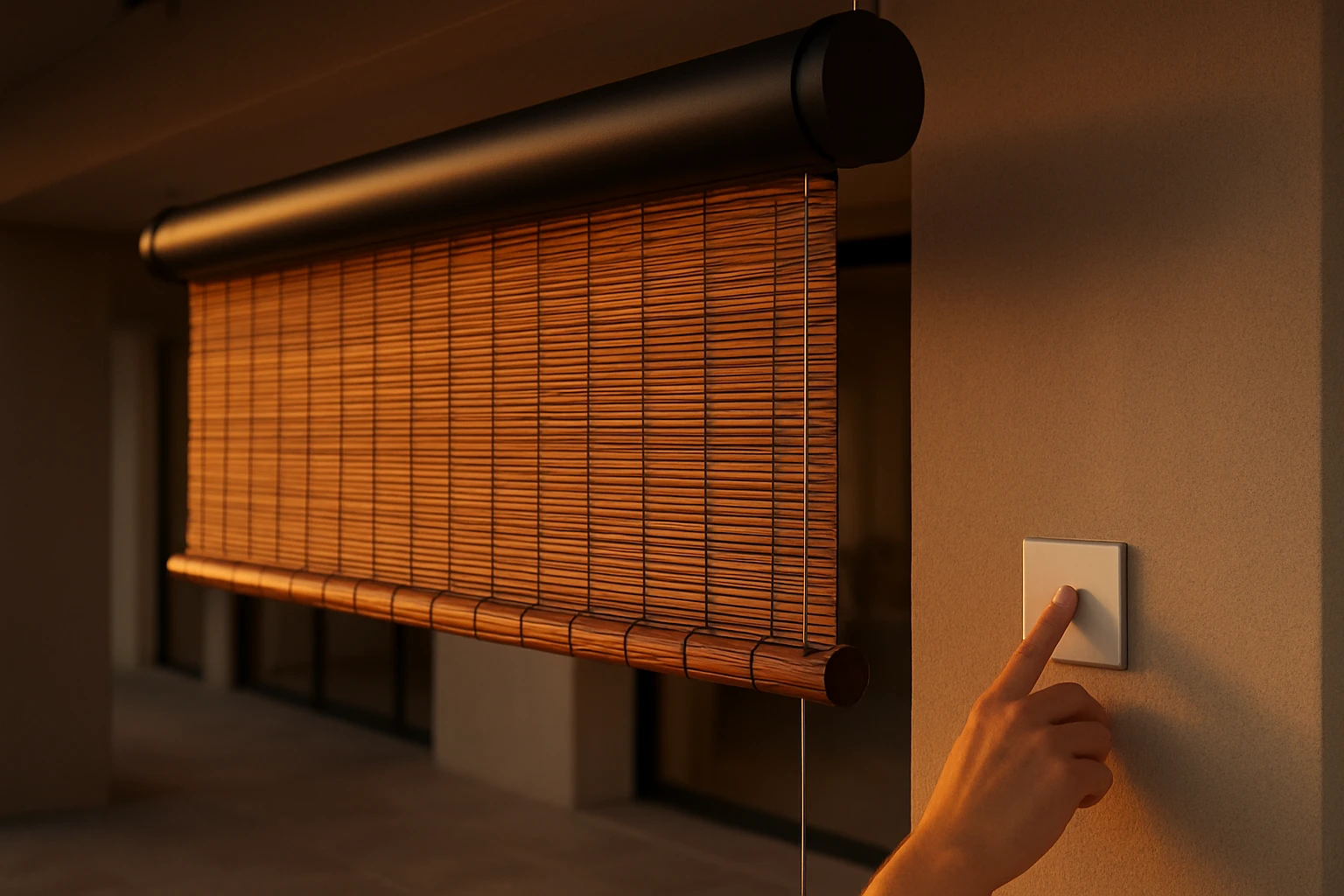
Consider motorized units when you have several blinds that need to move together or when you want remote control and timers. For a focused look at these choices see Are Motorized Blinds Worth It for Your Home.
Where to Buy and Local Considerations
Shop with Curtains & Blinds who show material samples and offer warranties that suit outdoor use. If you want a natural look with more protection, ask for PVC-coated or synthetic options and request stainless steel fixings.
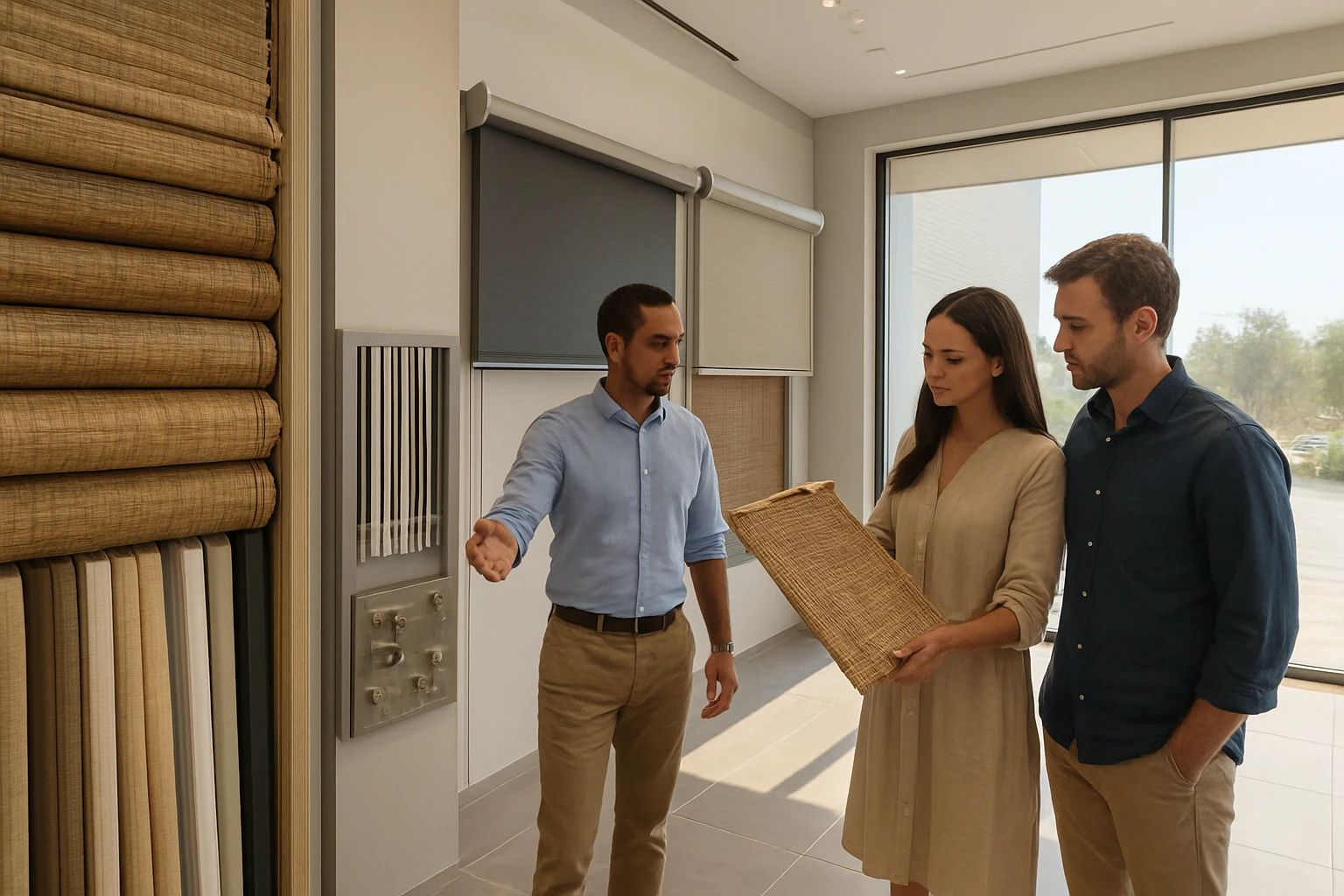
If you want to see styles and professional fitting options, check the site’s outdoor collection at Outdoor Blinds and the specialist bamboo range at Bamboo Blinds. For a wood-style alternative see Wooden Blinds.
Final Selection Checklist
- Match material to local weather and exposure.
- Pick fittings and fixings rated for outdoor use.
- Measure for overlap to block side glare.
- Choose PVC-coated or synthetic weave in wet areas.
- Consider motorization for large or high blinds.
- Follow a simple cleaning routine and store blinds in storms.
If you still need help deciding, a site visit and a sample trial often make the difference between a short-lived purchase and a reliable, attractive installation.
Frequently Asked Questions
Are Outdoor Bamboo Blinds Waterproof?
Most natural bamboo blinds are not fully waterproof and will absorb water unless treated. PVC-coated or synthetic bamboo-look blinds give better water resistance and are a safer choice in wet climates.
How Long Do Outdoor Bamboo Blinds Usually Last?
Lifespan depends on material and exposure. Natural bamboo in a sheltered spot can last around 2 to 5 years, while PVC-coated or synthetic options often last 4 to 12 years with proper care.
Can I Install Outdoor Bamboo Blinds Myself?
Yes, many people install them as a DIY project if the mount is straightforward. Use stainless steel fixings and predrilled holes for masonry. For very wide blinds or motorized units consider professional installation.
How Should I Clean Outdoor Bamboo Blinds?
Regularly brush off dust and debris, spot-clean with mild soapy water, and deep-clean on a flat surface when needed. Dry the blind in shade to avoid warping. For step-by-step methods see the linked cleaning guide in the article.
Are Motorized Outdoor Bamboo Blinds Worth the Extra Cost?
Motorized blinds add convenience, quick retraction for sudden weather and coordinated control for wide openings. They are worth it when blinds are hard to reach or when you want automated protection from sun and storm.
Which Blind Material Is Best for a Coastal Balcony?
Choose PVC-coated or synthetic weaves and stainless steel hardware because they resist salt air and moisture better than untreated natural bamboo.